Qal’at Al-Bahrain – Bahrain
This is a 12m high mound that was created by human inhabitants from 2300 BC up to the 1700s. Most recently the site served as a Portuguese fort but it was once the capital of the Dilmun, one of the most important ancient civilizations of the region. Excavation has revealed differing structures such as residences, public structures, religious monuments and military edifices all carefully built one over the other. Over the centuries this has been an undeniably important trading port.
Date of Inscription: 2005
Bahla Fort – Oman
The Qal’at Bahla’ in Oman is one of four historic fortresses situated at the foot of the Djebel Akhdar highlands in Oman. It was built in the 13th and 14th centuries, when the oasis of Bahla prospered under the control of the Banu Nebhan tribe. With some of the adobe walls and towers rising some 50m above the sandstone foundations it is surprising that no restoration (or conservation) was ever initiated until its date of inscription. It is now fully renovated and open to the public.
Date of Inscription: 1987
Ancient City of Aleppo – Syria
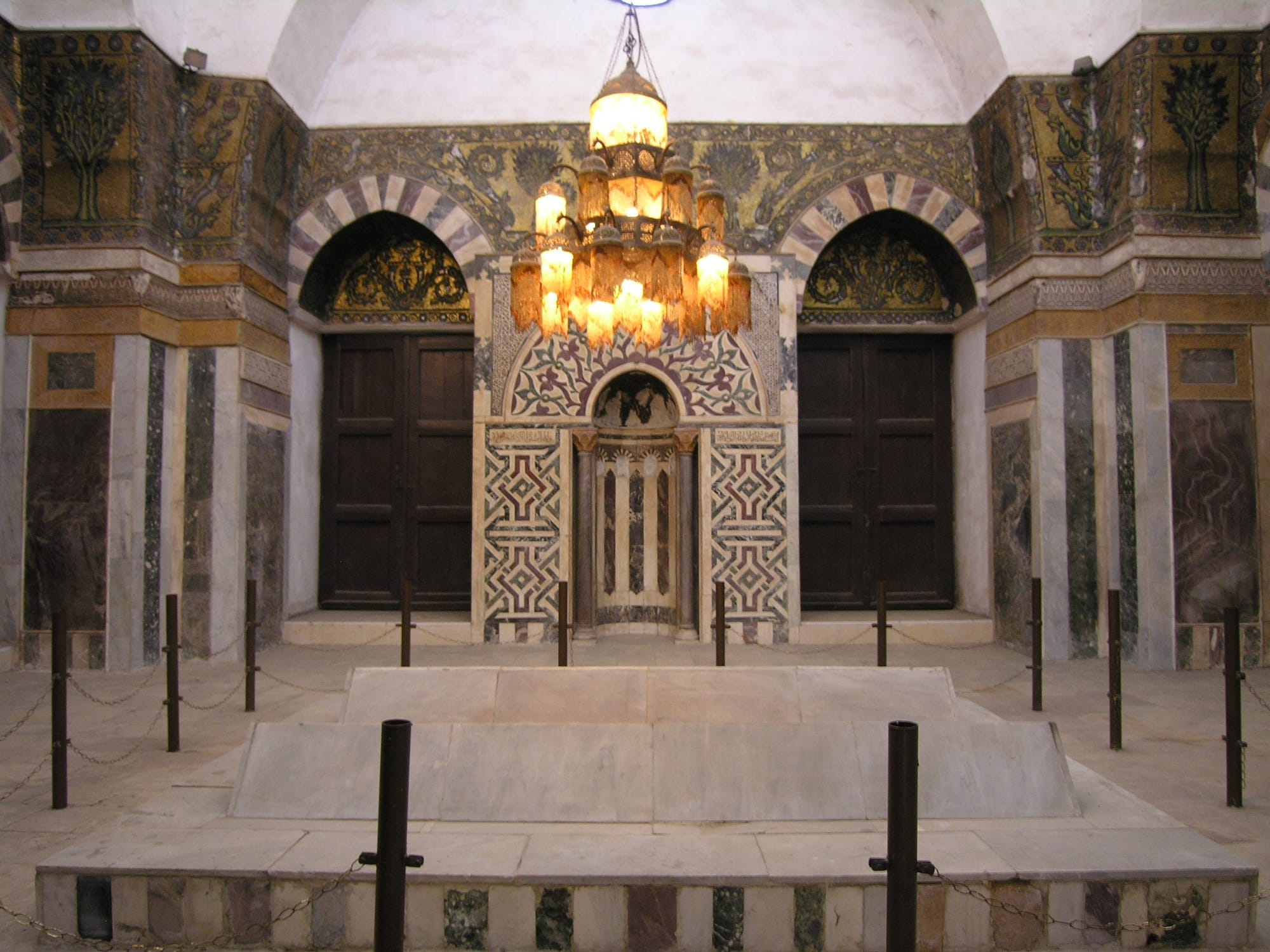
The city of Aleppo was a major trade route for centuries, and was ruled by countless dynasties. The civilisations that have taken control of Aleppo have left behind the most exquisite of architecture, both rich in design and heritage. Being one of the oldest cities in the world, remains from the 1100s can still be visited. The ancient city of Aleppo houses the 12th century Great Mosque, a 13th century citadel, various madrasas (Koranic schools) dating back to the 17th century, as well as palaces and traditional Arabian hammams. Today, however, the city is threatened by overpopulation.
Date of Inscription: 1986
Baalbeck ruins – Lebanon
When the Phoenicians conquered the city of Baalbek, located northeast of Lebanon’s capital, Beirut, little did anyone know that another colossal civilisation was on its way. Decades later, the Roman Empire expanded remarkably across the Middle East. One of the major remains of this civilisation is preserved in Baalbek, which was the sanctuary of the Heliopolitan Jupiter (the city of the sun), once attracting thousands of pilgrims. The massive structures in Baalbek are testimony to the fine architecture of the Imperial Romans.
Date of Inscription: 1984
Medina of Fez – Morocco
Fez, founded in the 9th century, is home to the oldest university in the world. The city flourished under the Marinid rule in the 13th century, when Marrakesh was replaced by Rabat as Morocco’s capital. The monuments in the medina are of palaces, residences, fountains and madrasas (Koranic schools). Fez is still considered the centre of culture and spiritual activities in Morocco. However, the preservation of this city is wavering, as some of the ancient houses are being renovated and rented out to tourists.
Date of Inscription: 1981
Petra – Jordan
A caravan city, situated between the Red Sea and the Dead Sea was an important trading point, linking the many major surrounding civilisations. Petra is surrounded by vast mountains and canyons. But putting aside the beautiful natural landscape, the architectural remains are remarkable. The ancient amphitheatre in Petra was carefully carved into the hillside and into several of the nearby tombs. Distinguished in its rock-cut architecture, different traditions are fused into this famous archaeological city.
Date of Inscription: 1985
Nubian Monuments – Egypt
Located in Southern Egypt, this area was threatened with annihilation as the waters of the Nile were on the rise. However, UNESCO launched an International Campaign in 1960 and 1980 to save these monuments. Aside from the rich natural lands, abundant with ebony, incense and gold , this area also houses the famous Temples of Ramses II at Abu Simbel and the Sanctuary of Isis Philae. Upon entering the temple, scenes of Ramses slaying his enemies adorn the walls. Other depictions of deities and animals have also been conserved, bringing an ancient culture to life.
Date of Inscription: 1979
Al Hijr (Madain Salih) – Saudi Arabia
The first World Heritage site to be inscribed in Saudi Arabia is Al-Hijr (Madain Salih). In earlier times, known as Hegra, this site is witness to the remains of the Nabatean civilization. This site features 111 monumental tombs, 94 of which are decorated uniquely, and date back to the period between the 3rd century BC to the 1st century AD. Cave drawings can also be found bearing a history of culture which has swept through this region. The Nabatean architectural accomplishments can certainly be felt throughout Al Hijr.
Date of Inscription: 2008