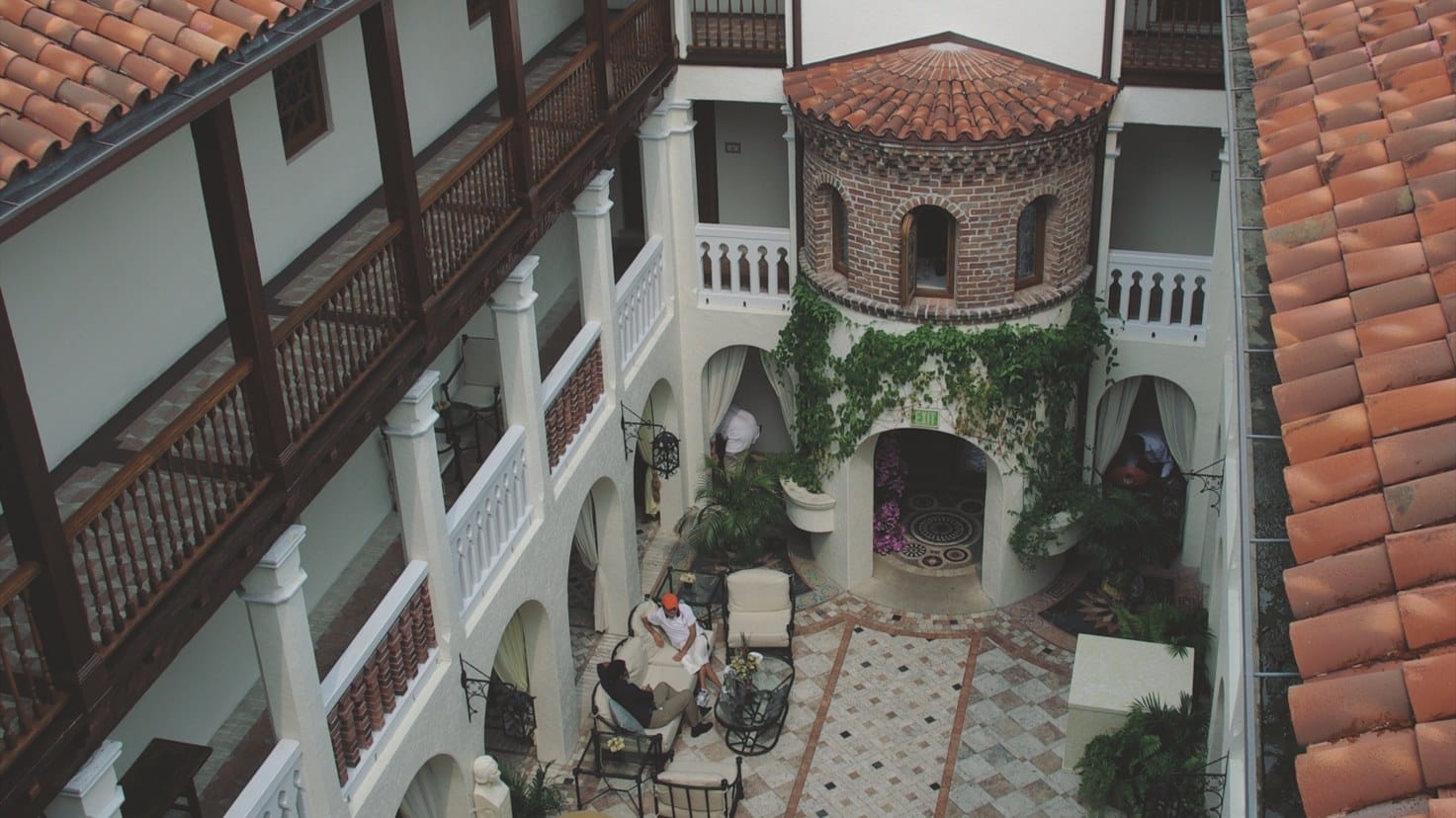
Madonna’s estrangement from brother Christopher Ciccone can be traced to a debauched Millennium Eve Party at South Beach’s most hedonistic hang-out, the former Gianni Versace mansion: Casa Casuarina. That’s where Christopher first met Madonna’s then-new flame, film director Guy Ritchie, over cocktails with Donatella Versace and Gwyneth Paltrow. By the end of the evening, love and hate filled the air. Madonna went on to marry Guy, and Christopher was edged out of Madonna’s life by her vengeful husband. “It was that kind of night,” Christopher wrote in his memoir, Life With My Sister Madonna. And Casa Casuarina is that kind of place.
A fantasy world of opulence, wealth, and glamour, it seems anything can happen behind the Mediterranean mansion’s 3-metre tall, guarded iron gates, and no one will ever be the wiser. My stay at Casa Casuarina - now a private club and boutique hotel - was a happy one, but everywhere I went, from my Wedgewood Suite with its rococo flourishes, to the Morocco Room with its ornate shisha pipes, to the famous Mosaic Pool, built by Gianni Versace himself, I could practically feel the heat and sweat and violence, from decades of decadent parties and trysts dripping from Casa Casuarina’s elaborate walls. Today, drawing on its turbulent past and offering state-of-the-art luxury amenities, Casa Casuarina provides a completely indulgent experience: one that remains available to only a privileged few.
Casa Casuarina was built on the South Beach, in 1930 by Alden Freeman, an architecture enthusiast who happened to be heir to the Standard Oil fortune and one of the richest men in the world. Freeman conceived of Casa Casuarina as an ode to the 16th century Santo Domingo home of Christopher Columbus’ son, Diego, one of the oldest residences in the Americas before it was wiped off the map by a hurricane in the 20th century.
After falling into disrepair - it was even used as a hippie hostel in the 1970s - Freeman’s masterwork was purchased by then king of fashion, Gianni Versace, in 1992 after seeing it while visiting his sister Donatella. Gianni quickly sunk 40 million USD into the property, remaking it into the crown jewel of South Beach’s ever-more-opulent Ocean Drive. He obviously spared no expense. Versace imported five million tiles from Italy for the renovation. He purchased the hotel on the adjacent lot and razed it to make room for Casa Casuarina’s stunning, mosaic tiled pool. The 30-foot date palms planted across the property? They were transported fully grown from Palm Springs, Florida, with workers stopping every three hours to water them. Fifteen of the mansion’s sixteen bathrooms were given gold-plated double showers, and just one, Madonna’s favourite when she stayed there, a bathtub fit for a king.
Gianni Versace was busy adding more luxurious elements to his pride and joy up until his death in 1997, when he was gunned down on Casa Casuarina’s steps by a deranged serial killer. Five years later, the Versace family sold Casa Casuarina to retired telecommunications mogul Peter Loftin, who, after considering turning it into a museum, decided to transform Alden Freeman and Gianni Versace’s ornate, combined vision into the one-of-a-kind, exclusive club and hotel it is today.
When I saw Peter Loftin on the beach, relaxing in one of Casa Casuarina’s private cabanas, he looked completely at home in a swimsuit, t-shirt, and baseball cap. But Loftin’s famously casual appearance belies the fierce passion he brought to rising to the top of the telecommunications industry, and that he now brings to Casa Casuarina. Here, Loftin sees himself as the steward and protector of the now legendary property’s mixed up, Italian and Spanish rococo soul. And it is a charge he does not take lightly.
When he first bought the property, Loftin lived there alone, renting his new home out every once in a while for charity events, parties for dignitaries like Al Gore, and for celebrities like Colin Farrell and Jamie Foxx. He quickly realised that Casa Casuarina only felt right when it was full of people. So Loftin sent out personal invitations to a select group offering them charter memberships. Loftin was going for a diverse crowd, and so invited everyone from writers to artists to athletes to movie stars to business people. Once his charter members were in place (today, new members must be invited by existing members), Loftin also decided to issue ‘temporary’ memberships for people just wanting to stay a night or two, and voila, Casa Casuarina as it stands today, with a jet-setting clientele of members and wealthy guests from all over the world looking to partake in this unique luxury experience, was born.
Ten spectacular suites are now available to members and hotel guests alike. Each of the suites has its own unique décor and personality, and thus its own unique name. For 1,200 to 10,000 USD a night, guests may choose from the Italian, Persian, Egyptian, Wedgewood, Baroque, La Mer, Parrot, Pompeii, Safari or the Owner's Suite. While every room is a work of art unto itself, all share exquisite craftsmanship, murals adorning walls and ceilings, intricately mosaiced tiled floors, and lavish stained glass windows. And while it may sound like you are living in the 16th century, fear not. All of Casa Casuarina’s suites include 21st century necessities like flat-screen televisions, Wi-Fi high-speed Internet access, and satellite radio.
My stay in the Wedgewood Suite was observed by the smiling cherubs, angels, philosophers and winged horses gracing the reliefs and murals etched and painted across every square inch of the walls and ceilings. A stencilled colonnade separated the bedroom from the sitting room, and two roughly 3-metre-deep daybeds built into one wall and covered in silk provided the perfect spot for stealing a luxurious catnap or lounging while my wife readied herself for our evenings out. Each window was a unique stained-glass masterpiece, across which shutters closed to provide the ultimate in privacy, peace and solitude.
Yet, amazingly, the rooms are just the tip of the iceberg when it comes to Casa Casuarina’s lavish offerings. Members and guests may also relax in all of Casa Casuarina’s exclusive member's lounges. The lavish Moroccan Room features the elaborate shisha and offers some of the world’s sweetest tobaccos, cigars are best savoured in the soaring Davidoff Lounge, and cocktails are mixed to order in the Tiffany Bar among the orchids and bougainvilleas of the tropical garden. And if you ever want to grab a breath of fresh air, the hotel’s luxury private rooftop with its own set of daybeds, and its private beach cabanas just steps from the front gates, provide unmatched views of the sparkling South Beach sands and Atlantic Ocean, and of the sparkling, starry skies above.
The Casa’s concierge can arrange any service for any need. In-room spa treatments, limousines, yachts, and helicopters, VIP tables at restaurants and invitations to celebrity events are all just a phone call way. But if its amazing food you’re looking for, I recommend eating in.
Executive Chef Nina Compton creates an unparalleled menu every night served al fresco on the airy upper terrace overlooking the tropical gardens and mosaic pool, or inside Casa Casuarina’s intricate stone mosaic dining room. Wherever you choose to enjoy it, you are in for one of the most magical dining experiences of a lifetime. I had fish served in a block of solid sea salt, which was broken open at my table to reveal my perfectly tender prey inside, wrapped in leaves. Their refreshment list is any collector’s dream, as it holds some of the true gems that you just wouldn’t find at other hotels.
So while the sexy nightlife of Miami’s South Beach awaits you outside (as do throngs of tourists outside, waiting to snap pictures of the rich and famous as they glide in and out of the city’s most famous address), you may find, as I did, that when you leave, all you can think about is coming back. Casa Casuarina owes its existence to such an odd confluence of personalities, eras, money, and tragedy, that nothing like it could, or ever will again, grace this Earth. That Casa Casuarina is here at all is a miracle. That it has been transformed into one of the United States’ most decadent boutique hotels is a blessing.