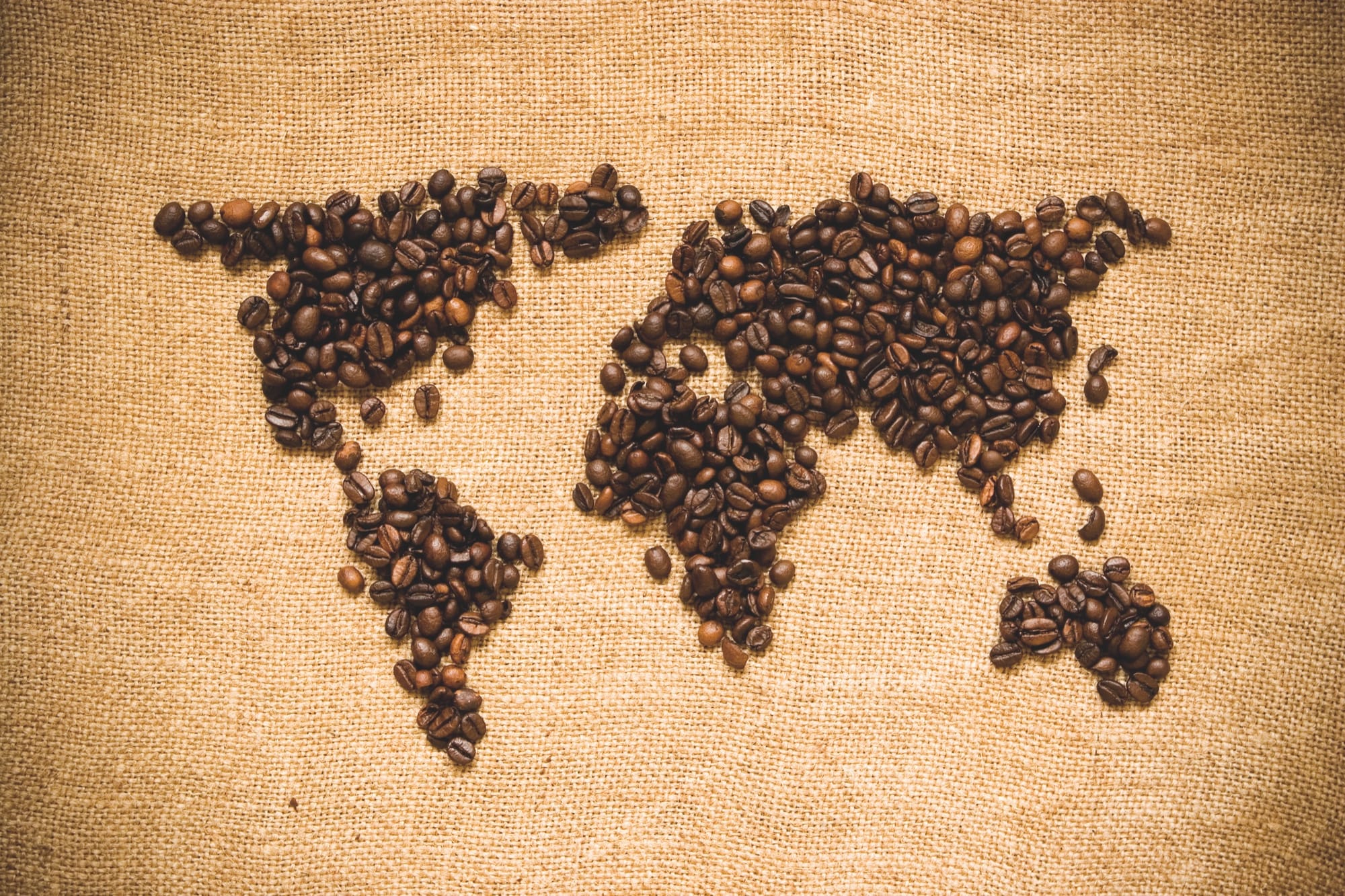
Legend has it that coffee was actually discovered in the 9th century by an Ethiopian shepherd. The shepherd’s name was Kandi and he allegedly only took notice after he observed his goats behaving rather oddly after munching on the berries. And so coffee, the stimulant beverage prepared from roasted seeds, then spread to Egypt and Yemen, and by the 15th century it had reached Armenia, Persia, Turkey, and northern Africa. From the Muslim world, coffee spread to Italy, then to the rest of Europe and the Americas. Today, coffee is one of the most popular beverages worldwide.
Of course, centuries later, the United States got a hold of it, and from a small bean, they built enormous coffee empires such as Starbucks which do very well throughout our region even if we tend to pride ourselves on fresh-ground black Turkish coffee.
No matter which flavour of coffee tickles your taste buds, we are here to identify only the best. Bespoke has sorted out the flavours and in turn deciphered which are the world’s most expensive coffees. The beans were judged on strict criteria, based on fine quality, distinctive aroma, richness in flavour and character.
1. Kopi Luwak
Indonesia
353 USD/kg
Kopi is the Indonesian word for coffee, and luwak is a local name of the Asian Palm Civet. Basically the civet eats raw, red coffee berries as part of its diet but the inner bean of the berry is not digested and is therefore defecated and subsequently collected. It is said that the enzymes in the stomach of the civet add to the flavour by breaking down the proteins that give coffee its bitter taste. The beans are then washed and given only a light roast.
2. Hacienda La Esmeralda
Boquete, Panama
230 USD/kg
Also known as Esmeralda Special, this coffee is harvested in the mountains of Western Panama. It is derived from the Ethiopian Gesha cultivar that was first introduced to Central America from East Africa in the midst of the 20th century. The Esmeralda Special is consistently noted for a recognisable aroma and floral notes. It differs greatly from a typical Panamanian coffee, revealing its Ethiopian roots through cinnamon and citrus traces along with heady fruit flavours.
3. Island of St. Helena Coffee Company
St. Helena, Africa
174 USD/kg
St. Helena, located in the South Atlantic Ocean, is an island of volcanic origin and Britain’s second oldest colony. It is one of the most isolated islands in the world and was, most famously, where Napoleon Bonaparte was held in exile. Coffee was first planted here in 1733 when Green Tipped Bourbon Coffee seeds from Mocha in Yemen were sown at various locations around the island. This coffee has been in demand ever since Napoleon endorsed its fine quality during his time on the island.
4. El Injerto
Guatemala
111 USD/kg
The El Injerto coffee is produced in Huehuetenango, a remote mountainous region of Guatemala. The coffee is named after the farm on which it is grown, whose first owner Mr. Jesus Panama, began sowing the coffee beans in the early 1900s. Today, 750 hectares of land are dedicated to this medium-body blend blessed with hints of fruit and chocolate in its rich flavour. The harvest of El Injerto, that ends every April, is revered for its remarkable and consistent quality.
5. Fazenda Santa Inês
Brazil
110 USD/kg
From the soils of the Santa Inês farm located in the Sul de Minas region in Brazil, comes the Fazenda coffee blend. The Sertão Group plows the land that has been passed down four family generations to date. The Sertão Group is decidedly concerned with environmental considerations, preserving the land and the vast rain forests which surround it, while caring for the families that tend to the coffee cultivation. Fazenda Santa Inês is a very sweet, bright coffee with hints of lemon and clove. It possesses a delicate texture and a layered, complex taste.
6. Blue Mountain
Jamaica
108 USD/kg
The Blue Mountains are located in Jamaica between Kingston to the south and Port Maria to the north. Rising to almost 2,300 metres, they are some of the highest mountains in the Caribbean. The climate is cool and misty with high rainfall; the soil is rich with excellent drainage. This combination of climate and soil is ideal for coffee which was first cultivated here in 1728. Known for their mild flavour and lack of bitterness, these beans are also the flavour base of Tia Maria.
7. Los Planes
El Salvador
88 USD/kg
El Salvador coffee had an undeservingly poor reputation for years, marred mostly by the inability to deliver coffee of high quality in an unpredictable political climate. But the stability nowadays has had a profound effect on the coffee. Los Planes, unlike the more common Salvadorian Bourbon variety of Arabica, is produced from trees of the Pacamara variety at an elevation of approximately 1,600 metres. It is a delicate, gently bright coffee with distinct, cedar-toned dry berry and tangerine notes rounded off with a floral nuance.
8. Kona coffee
Hawaii
75 USD/kg
Kona coffee is cultivated on the slopes of Mount Hualalai and Mauna Loa in the North and South Kona Districts of the Big Island of Hawaii. The rich volcanic soil as well as bright sunny mornings, humid rainy afternoons and mild nights create favourable coffee growing conditions. The Kona district is made up of almost 600 family run plots with an average farm size of less than 5 acres. The coffee is full-bodied and well-rounded. Yet, it is also opulently chocolate-toned and is turned pleasantly bittersweet by the roast.
9. Starbucks Rwanda Blue Bourbon
Rwanda
53 USD/kg
Putting aside Starbucks’ corporate global coffee-market takeover, they are known to have engaged in activities to benefit those behind the coffee beans. Corporate management visited Rwanda in 2004 in order to assess this country’s potential as a coffee maker. Within two years, the first batches of coffee grown from Rwanda’s soils were sold to the world, under the label of Black Apron Exclusives. One of the brews, Rwanda Blue Bourbon, has a herbal essence to it, that makes it highly unusual for an African variety.
10. Yauco Selecto AA
Puerto Rico
24 USD/kg
The fertile lands of Puerto Rico were of much importance to the Spanish immigrants of the 18th century, who sought to grow sugar and crops. Years later, coffee cultivation became popular, and by the 1860s, immigrants from Corsica dominated the industry from a town called Yauco. The aroma of Yauco Selecto is floral and nutty, but not particularly fruity. It has an earthy flavour that is just slightly sweet. The overall taste is good, the body, however, is amazing. Perhaps it is for this reason that it is the coffee of choice at the Vatican.