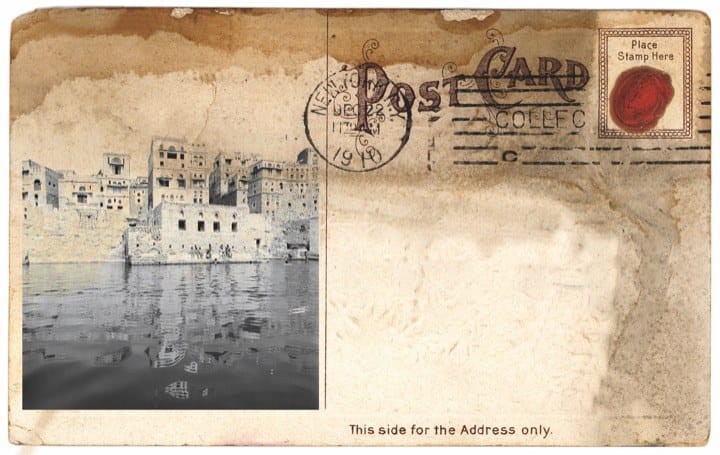
I arrived in ‘Happy Yemen’ as it was called in September 1962 at the tail-end of a bloodless republican coup against centuries of oppressive Imami royal rule. The ruling Imams Yehia and his heir Badr proved no match for the Yemeni military under the steadfast, if eccentric, leadership of President Abdalla Al Sallal. Back then, Yemen was closed to most foreigners, especially its doors bolted from the prying eyes of journalists.
But the changing of the guards gave me the opportunity as a young journalist to get a scoop while experiencing sixteenth century Arabia with its draconian traditions, social codes and basic means of living. This was the beginning of the 1960s, Lebanon was experiencing a social boom and Saudi Arabia was beginning to reap the benefits of its stocks of black gold. Yemen had altogether a different tale to tell.
There were no airlines travelling in and out of Sana’a, so I pulled some strings and managed to get a bumpy six-hour ride from Cairo on a military aircraft carrying tanks and weapons to the pro-Al Sallal Egyptian Army stationed in the country. A parachute on my back in case of ‘unwanted consequences’, I couldn’t wait to get to the Yemeni capital even though the airport consisted of a single dirt runway fit only for small twin-motor planes.
My first introduction to Sanaa was the imposing 20-metre high and fortress-like ‘Gate of Sana’a’. The natives would often tell me stories about how, fearing unwanted guests or worse yet, an expected attack, the Imam built this wall as protection around his palace. I was quite bemused by the fact that this huge barricade had only one door made of thick wood and solid iron. The keymaster being none other than the Imam himself would sometimes keep the door closed for up to a whole week without any explanation, quite literally holding his people prisoners.
I was taken to a makeshift ‘luxurious’ hotel, if you could even call it that. My minder quite appropriately called it the ‘Hospitality Room.’ The run-down building consisted of 40 rooms spanning two floors. Each floor had a common bathroom with a single toilet seat to go round and with water taps that ran dry! I spent three weeks in the hotel without having the pleasure of even taking half a bath. If some water did manage to drip out of the faucets, it was amazingly hailed as “a miracle” by the staff. I was somehow comforted by the fact that running water was a luxury for all citizens; even President Al Sallal himself had to do without.
The day after my arrival, I was invited to meet Al Sallal. There were no phones so a Yemeni officer took me to meet the man. I went into the reception room where I saw his deputy Dr. Abdulrahman Al Bidani. A few moments passed after which I heard a voice shouting my name and asking me to come in. The voice was Al Sallal’s and he was calling me from the bathroom. He sat naked in a large tub. Two menservants were attending to his bathing ritual: one holding a water container and the second soap and a loufah. I got my inaugural interview with the first republican president in Yemen between the foam – the loufah moving up and down on the President’s stark naked body – and Al Sallal occasionally yelling, “Ahhhh! The soap is burning my eye, boy!” Still, he managed to tell me the details of his coup, providing my newspaper, Al-Anwar, with exclusive information on Yemen’s sudden transformation from a backwater existence to the beginnings of the twentieth century.
Nothing illustrated the extraordinary challenge facing the country more than its currency. Having not yet developed or pegged viable paper notes, Yemenis still made payments in coinage. The ‘Mary Theresa’ as it was oddly called, being a silver coin, was Yemen’s biggest monetary denomination. Other coins included an amalgamation of metals forged by the Imam. The only bank I found was one that was dubiously referred to as The National Bank. It consisted of a house, with a rusty iron door reminiscent of a prison from the Dark Ages, surrounded by a small tree-filled garden. And tied to one of the trees was the bank manager’s only mode of transport, a noble donkey.
The manager was garbed in the traditional Yemeni outfit with the curved dagger dangling from his waist. A man of many talents, he was at once guard, concierge, accountant, cashier, bank manager and, of course, proud owner of a noble donkey. Needless to say, he took his time in examining the 100 USD bills I wanted to exchange. Eyeing me suspiciously, he gave me several pouches of ‘Mary Theresa’. Yet, he managed a yellow-toothed smile when I taunted him by asking for a porter to carry my heavy load. Saying goodbye, he popped a piece of qat in his mouth, his right cheek magically puffing out like a frightened blowfish.
I haven’t visited Sanaa since that September. But the changes that I have read about on all levels lead me to believe that the Yemen of today is very happy indeed. I hope to return there someday.