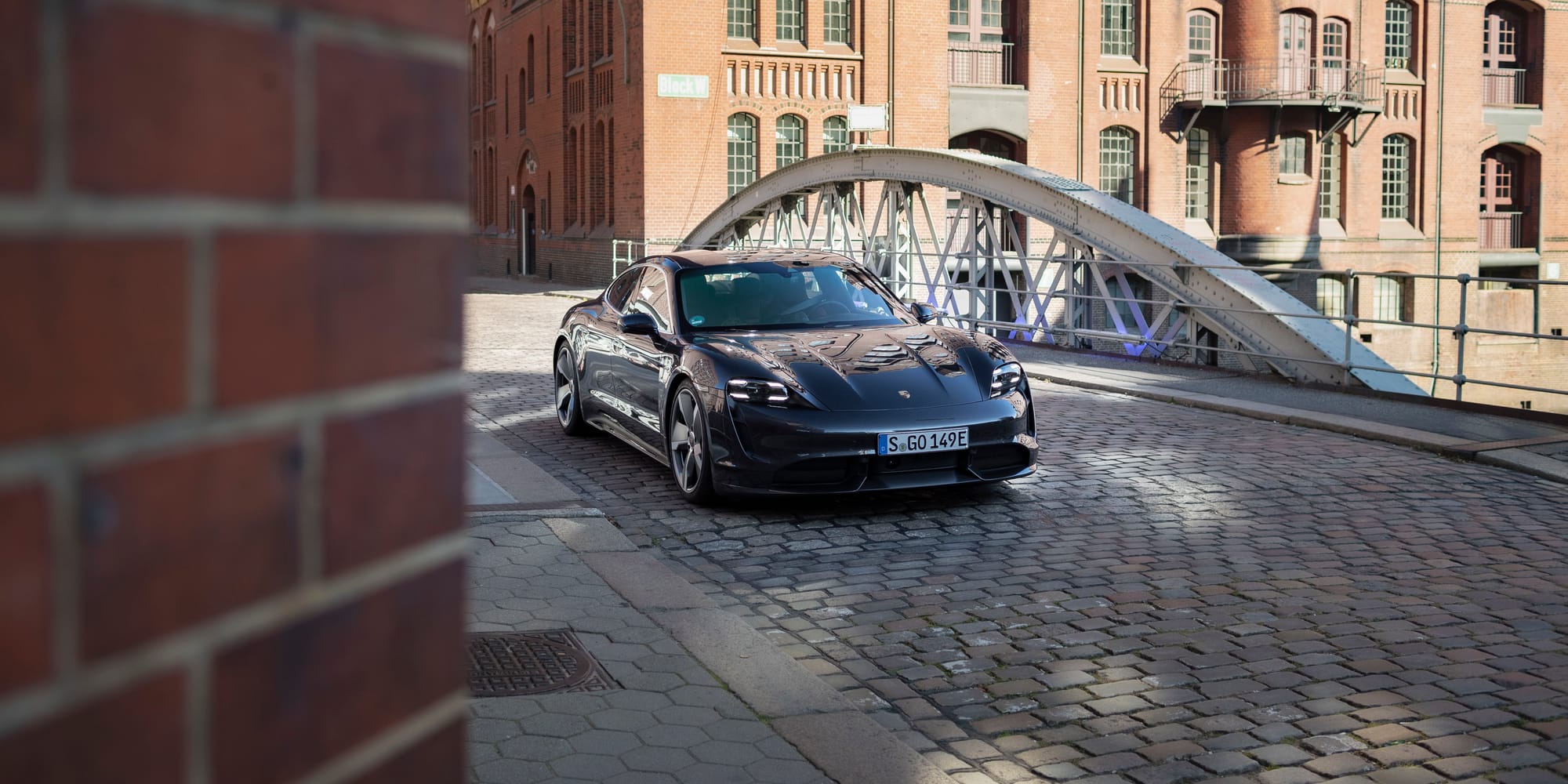
Porsche has gone all-electric with its stunning Taycan super saloon – could it be the zero-emissions sportscar the world has really been waiting for? Or is it an answer to a question no one asked?
Hang on on a second, isn’t an electric Porsche a motoring oxymoron?
That depends. If you’re stuck in the mid-1990s, you probably while away your hours dreaming of air-cooled, flat-six engines and a miniscule model range that can trace its lineage directly back to the Volkswagen Beetle. For the rest of us, though, Porsche has evolved over the past quarter-century to become a multi-faceted and hugely profitable powerhouse of technology and cutting-edge engineering. An all-electric model should be a given then, so long as it’s a riot to drive. The Taycan is that car.
What’s so special about it?
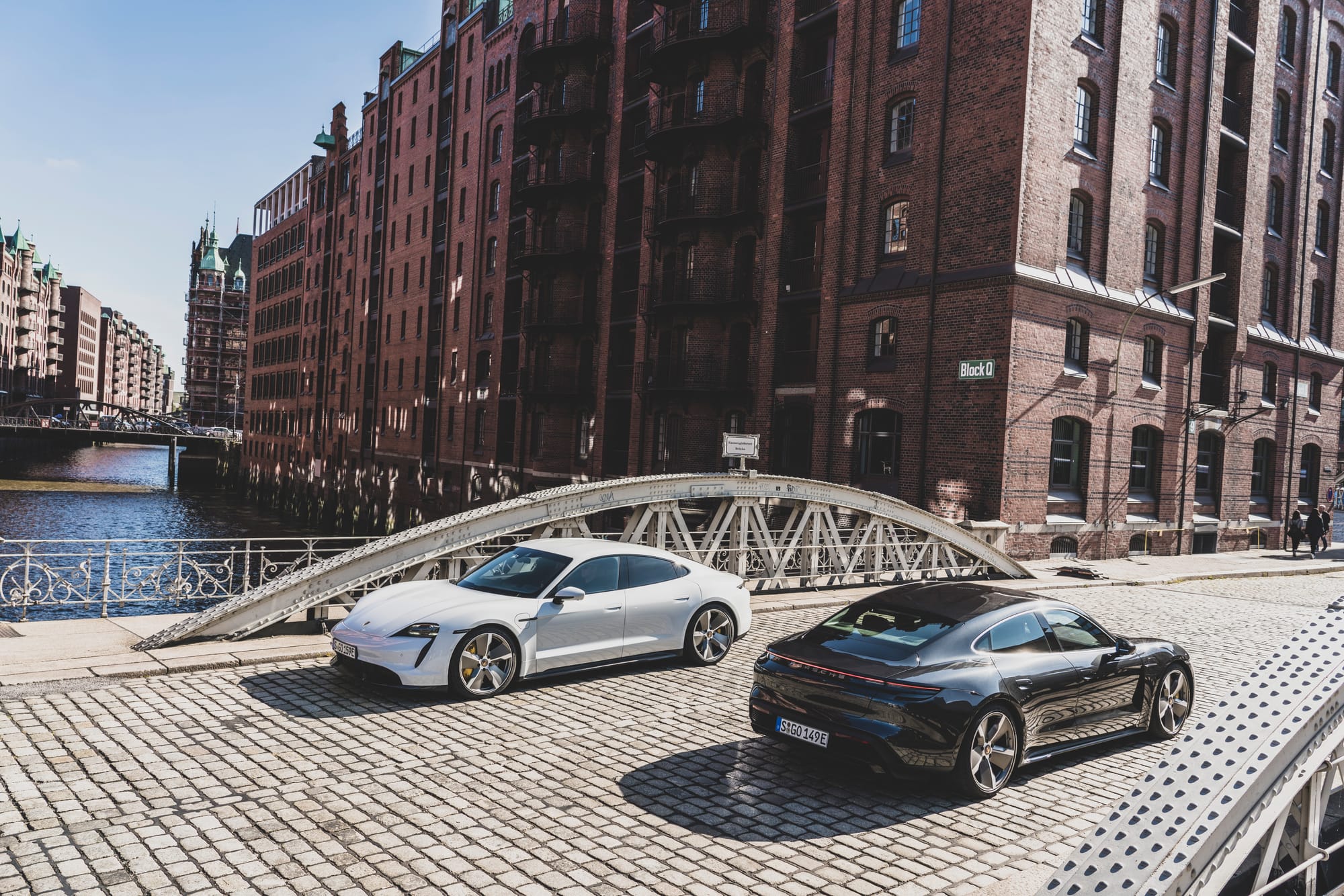
Late to the electric party it may be, but the Taycan (roughly translated from a Turkish dialect as “lively young horse”, referencing the steed on the Porsche crest), is the embodiment of all Porsche’s electric vehicle (EV) know-how. The company has been making hybrid models for years and has been honing its emissions-free drivetrains in endurance motorsport and, lest we forget, the incredible and desirable 918 Spyder hypercar. And all of that development has been squeezed into the Taycan – a four-door, four-seat sports car that’s more compact than a Panamera and has plenty of visual punch, even if it isn’t quite as dramatic as Porsche's Mission-E concept from 2015 that it’s based on.
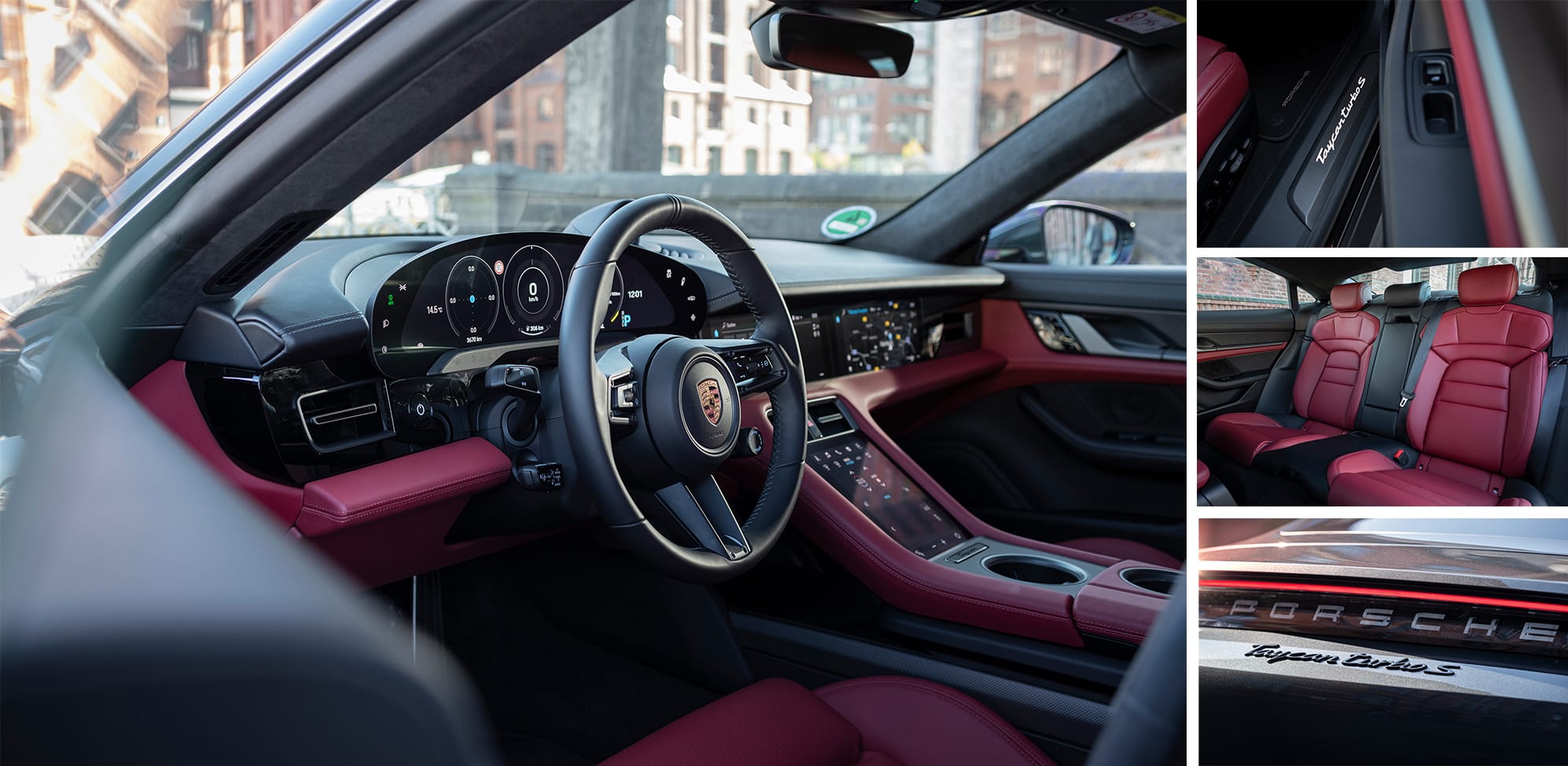
Tesla might have stolen a march with its Model S, Model X and all the rest, with the likes of BMW, Mercedes-Benz, Audi and Jaguar all following up with family-friendly SUVs and crossovers but the Taycan is the first bona fide electric sports car from a mainstream manufacturer. The build quality is light years ahead of Tesla’s dodgy panel gaps and glue-stained interiors, and then there’s the power of that badge and all the heritage contained within the Porsche brand. For some buyers, that’s enough to seal the deal.
Currently (no pun on current intended) there are three model variants available: the 4S, Turbo and Turbo S, all powered by what Porsche – with a straight face – refers to as two “permanently excited synchronous motors” serving either axle. As a result, all are four-wheel drive. The range-topping Turbo S puts down a formidable 750 horsepower onto the road and is able to sprint from rest to 100km/h in 2.8 seconds – numbers that are almost impossible to fathom in a ‘sensible’ production car. No matter which model you go for, you’re unlikely to feel the need for more performance. So, it looks good, it’s incredibly well engineered and goes like stink – what’s not to like?
Wait, did you, say ‘Turbo’?
Err, yes, and we share your misgivings about this one. Porsche has justifiably come in for plenty of flak for naming a car with no engine ‘Turbo’ but hits back with the claim that it doesn’t necessarily mean there’s a physical turbocharger anywhere to be seen. Instead, the company says Turbo has become a sub-brand of sorts, and that it signifies the pinnacle performance model of whatever range it’s part of. No, we’re not buying into that, either. Anyway, moving on…
Ok, is there anything at all radical about the Taycan?
Actually, yes. While having a battery pack under a flat floor, powering two electric motors front and rear is pretty much industry standard these days, the Taycan has moved the game on considerably.
This is the first production vehicle with an 800-volt electrical system, instead of the 400 volts normally used in electric cars – a set-up pioneered by Porsche in its 919 Hybrid racer. In simple terms, increasing the voltage means the current can be lowered without adversely affecting power output, and that means thinner cables, which means less weight and faster charging times. Hook the Taycan up to the right kind of charging facility and you can top up the batteries to 80 per cent capacity in just over 20 minutes. With the batteries fully charged, ‘normal’ driving gives a range of approximately 400 kilometres.
The other major step away from EV convention is a two-speed transmission for the rear axle (almost every other electric car makes do with one). This avails the Taycan with blistering acceleration and greater efficiency when cruising, making it a more viable alternative for everyday use.
Speaking of which, what’s it like inside?
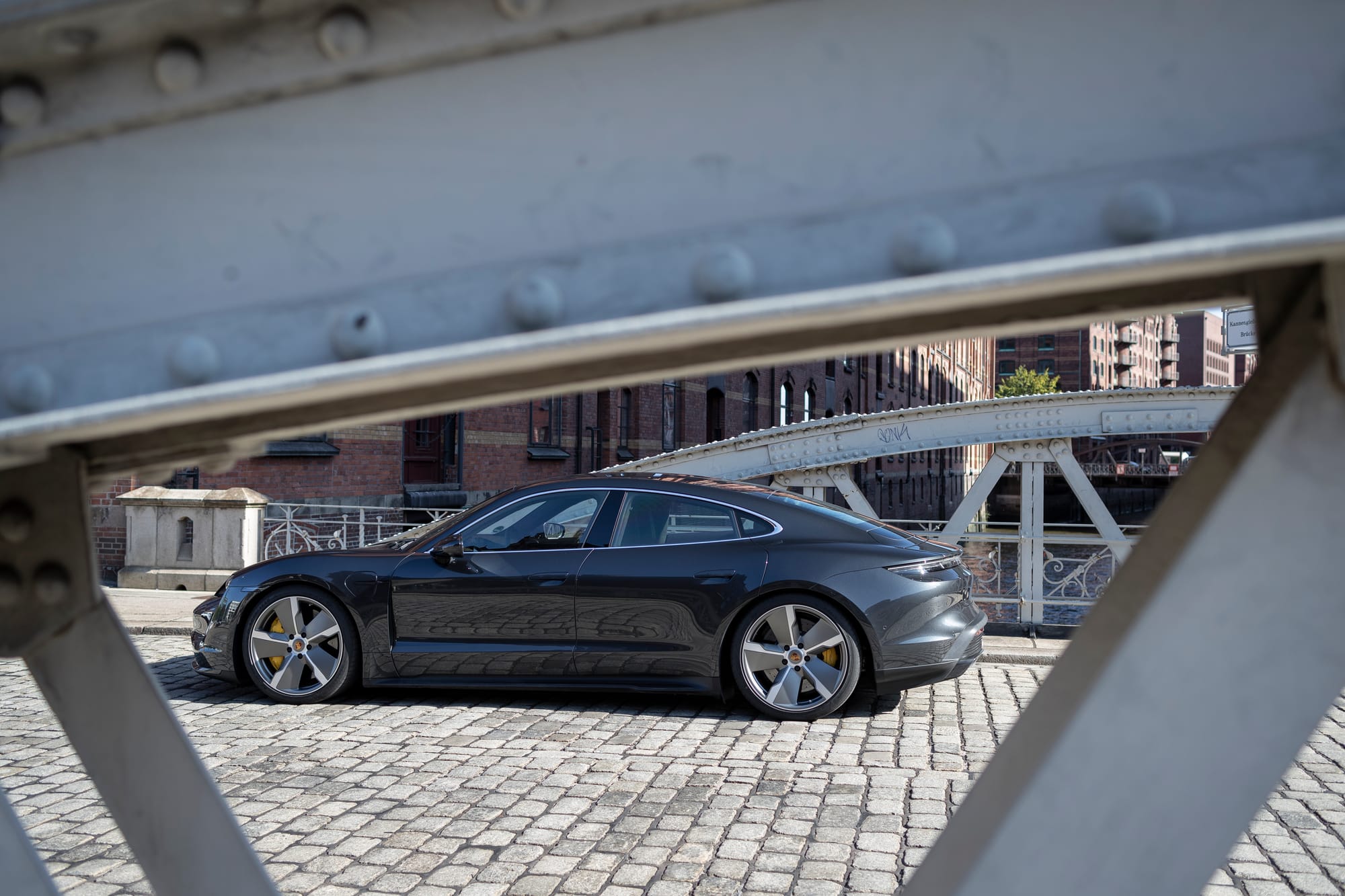
As you might expect, the Taycan’s interior is a masterclass in ergonomics and perceived quality. The comedically oversized touchscreens that dominate Tesla dashboards are conspicuous by their absence, with a more restrained visual approach to technology. After all, few things date a car’s interior like gimmicky electronic devices.
There’s a clean, simple and uncluttered approach to design, with very few buttons cluttering up the place and a free-standing instrument cluster that happens to be wider than its steering wheel. Behind that wheel you’ll find an on/off button rather than a key or push-button start, and the gearshift is dashboard-mounted, as opposed to being on the centre console.
The Taycan’s interior dimensions are halfway between a modern 911 and Panamera, with rear accommodation particularly generous for such a low-slung machine. The underfloor battery has recesses built into it, which add useful space known as ‘foot garages’ that help boost leg room, but the low roofline does make things a bit snug for very tall occupants – something that can be dealt with by ticking the panoramic roof option.
Does it drive like a Porsche, though?
Its maker made sure that driving dynamics were high on the agenda when designing the Taycan because weight is ordinarily the sworn enemy of a sportscar. With the batteries spanning the full wheelbase of the Taycan, however, all that weight is perfectly balanced between its wheels and, crucially, the centre of gravity is as low as possible. And that translates into epic levels of grip and cornering prowess, combined with more power than the majority of Porsche’s most successful racecars.
Brutal slingshot acceleration is always available but it’s also a relaxing cruiser and there are multiple drive modes to get your head around. With this power combined with active aero and massive brake retardation, the Taycan actually does drive like a Porsche with delicate, precise steering and reassuring tenacity when cornering at huge speeds.
Point, squirt, hang on for dear life and giggle while your passengers are reduced to jelly while screaming their lungs out – who says motoring without a motor is boring? Yes, the Taycan is a proper sportscar. A proper Porsche.