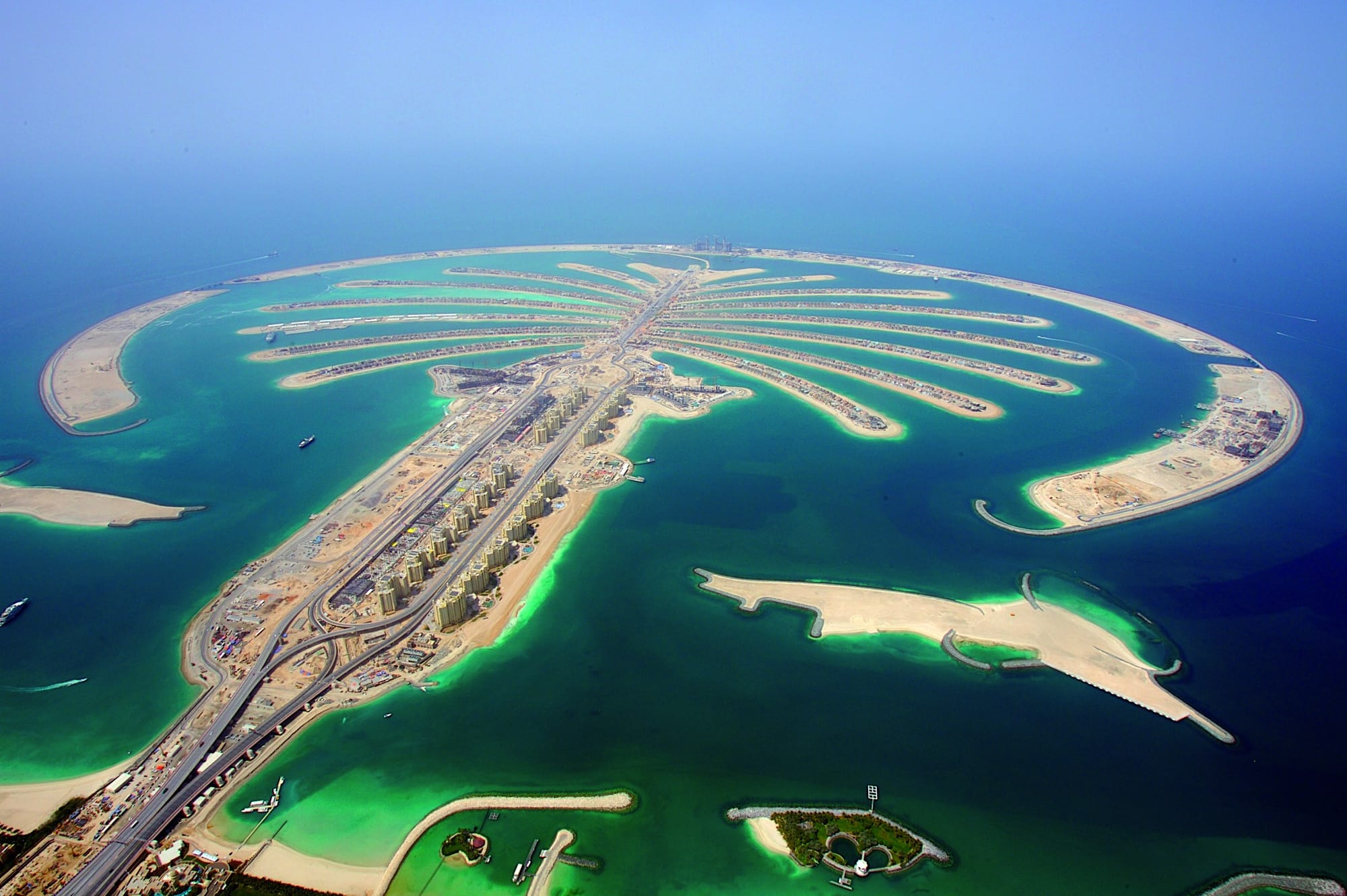
Nakheel has proven its naysayer wrong. The real estate developer owned by the Dubai government has just completed the construction phase of Palm Jumeirah, taking six years including a two-year delay. The idea that it has been humanly possible to realise is worthy of much acclamation.
Nothing represents Dubai’s enormous ambitions as succinctly as Nakheel’s Palm Islands. The three developments – Palm Jumeirah, Palm Jebel Ali and Palm Deira – are the world’s largest man-made islands with the smallest of the three, Palm Jumeirah, launching the mammoth project. Built in the shape of a cultural icon, the extraordinary island increases Dubai’s limited shoreline by an astounding 100 per cent.
Construction was performed only using organic materials such as sand and rock as well as the talents of the best land reclaimers money could buy. Total that in with the cost of creating such a phenomenon and you get a neat bill of 12.3 billion USD.
Jumeirah Palm Island will feature themed boutique hotels, three types of villa properties, shoreline apartment buildings, beaches, marinas, restaurants, cafes and a variety of retail outlets. And of course hotels – lots of them – with over 30 beachfront hotels scheduled to open before the end of 2009. Moreover, it has star power. Always one to spot a winning plot (the trunk of the tree in this case); real estate tycoon Donald Trump will inaugurate his first foray into the Middle East with the Trump International Hotel and Tower.
In a nutshell, Palm Jumeirah is proof that Dubai can surmount the insurmountable. Simply calling it an achievement does the endeavour very little justice.
Location Dubai, UAE
Company Nakheel
Total Cost 12.3 billion USD
Why Largest man-made islands in the world, a-human and-engineering feat, eco-friendly
HYPERLINK "http://www.nakheel.com" www.nakheel.com