Scented candles are a luxury item because they are entirely unnecessary. With electric lighting and modern sanitation firmly in place, the light and aromatics they emit serve entirely for the purpose of heightening the senses and accompanying an aesthetic approach to interiors.
Yet in intimate spaces, the purpose of scented candles has subtle but significant power. Scented candles can command the mood of the room and, depending upon the scent chosen, reflect the season, the time of day and the activity within a space (whether a boutique, a bedroom or an office) as well as express the personal tastes of the match-lighter. The brand chosen, as well as the scent and size of the candle, garner the same taste discretion as a fashion accessory might in expressing a lifestyle and an approach to the finer pleasures of life.
Candles, derived from the Latin word ‘candere’ meaning ‘to flicker’, carry both a practical and sacred origin. Throughout history they were used in religious or sacred ceremonies, and even for telling time along markers on the wax, as it descended. A chandelier was once the lighting fixture that held numerous candles at once for a large distribution of light.
The subtle light of a candle is enchanting enough, but to furthermore add perfume to accompany this can have a truly intoxicating effect. Constructed like a perfume – comprising of head, heart and base notes – candles, however, emit a multi-layered scent in a different manner than a perfume. Head notes, for example, such as citrus and very “heady” florals, disappear quickly in the air when diffused through a candle, which is why a high-quality citrus-scented candle is quite uncommon. Heart notes are what largely determine the scented character of a candle, with base notes as principle support.
Creators of scented candles can be categorised roughly into the following camps: candle makers and/or wax producers who venture into perfuming their products, or, specialised perfume makers who create candles to purvey their scents. Then, there are fashion or lifestyle brands that commission scented candles by employing one or both of the former manufacturers to distil and complete their overall brand image in candle form.
Wax quality is paramount, and there is perhaps no more refined and prestigious wax manufacturer and candle maker than France’s Cire Trudon (www.ciretrudon.com), a national gem since 1643, as the oldest wax-producing factory worldwide. Claude Trudon opened the first boutique in Rue du Faubourg Saint-Honoré in Paris, providing church candles for the nearby Saint Roch parish (Cire Trudon still provides candles to the parish, as well as the greatest cathedrals over France alongside manufacturing candles for Hermès, Cartier and Dior). The company was officially established on the eve of the reign of Louis XIV to become, throughout successive generations, the wax producer for the Versailles court. During Louis XVI’s captivity at the time of the Revolution, he used the candles of his royal wax manufacturer for light. The brand is also cited in Honoré de Balzac’s French literature classic, ‘The Human Comedy’. Further royal stories include a Cire Trudon candle, with the cameo of Napoleon himself, that the emperor gave to his son Aiglon upon his birth, and a series of twelve scented candles sold today, poured into deeply coloured glass blown in Vinci, Italy, that highlight this very regal history. The scent ‘Trianon’ with white flowers was created especially for the private retreat of Marie Antoinette while ‘Roi Soliel’ recalls the vast wooden floor of the Mirror Gallery at Chateau de Versailles. “Deo regique laborent” is their Latin motto, meaning “They work for God and for The King” which, perhaps, refers to the bees who furnish the wax.
In general, wax can be made with paraffin (first distilled in 1830 and therefore of an industrial nature), beeswax (the oldest and most natural material), soy or other plant waxes and oils, or a mixture of these ingredients. Wax quality determines how cleanly and evenly the candle will burn. In lower quality waxes, there is concern that petrochemicals are breathed in and toxic to users. The wax at Cire Trudon, for example, is a confidential recipe of natural and pure vegetable substance including palm oil, rice, soy and copra. Beeswax collected on the hive, filtered with gypsum, is purified by a series of water baths and whitened by the sun. In high quality candles only the finest and pure cotton are used for the wicks so that the flames never crackle or smoke. Also, trimming the wick before each lighting reduces this effect.
Another superb and slightly more modern royal candle maker, that is at base a perfumer, is House of Amouage (www.amouage.com), founded by members of the Omani Royal Family with boutiques in Oman, Dubai, and significant outlets in London to come. With extremely regal packaging, their Fine Fragrance Candles Collection includes one with the scent Jubilation 25, that celebrates their 25th anniversary – with top notes of rose, ylang ylang, lemon and tarragon, and heart notes of rare rock rose and frankincense (for years, House of Amouage sought the world’s rarest ingredients, such as silver frankincense only found on the hills north of Dhofar in the Sultanate of Oman). Other prized ingredients like vetiver, patchouli and myrrh lend depth to its base notes.
In London, the national classic is by far Penhaligon’s (www.penhaligons.com), which originally began in the Edwardian era in 1870 providing men’s grooming products, that today holds two royal warrants. Using jasmine, twice the price of gold, in their scents, they and their candles are entirely made in England including their utterly distinguished (based upon their best-selling men's fragrance launched in 1902) Blenheim Bouquet scented candle. In addition to charming accessories like grand match boxes, Penhaligon’s also has a line of tea votives, entitled “Thank Goodness for Tea” and a remarkable Samarkand scent, created in 1995, that in candle form comes in an elegant silver plated container. Oriental, with a blend of clove, jasmine and lily on a warm base of sandalwood and vanilla, Samarkand was inspired by the ancient city of Samarkand, one of the oldest cities in the world.
For a more modern take on London living, Jo Malone (www.jomalone.com) provides scents and a broad corresponding range of scented candles that are utterly fresh, simple, and sophisticated; their large multi-wick candles lend and home interior a distinct shade of chic.
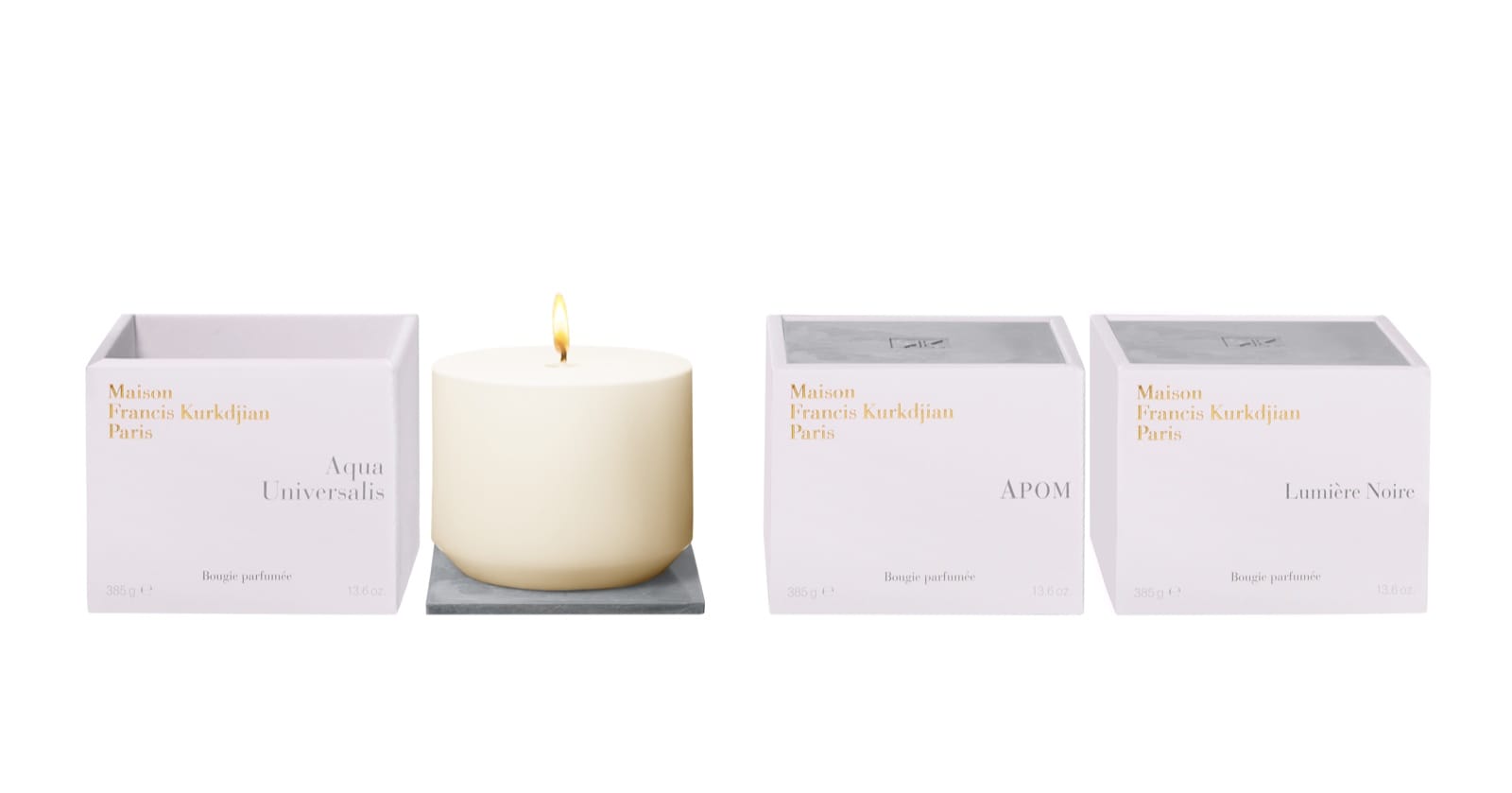
Aside from royal candle makers, there are scented candles created in honour of jet-setting destinations or lifestyles. Francis Kurkdjian (www.franciskurkdjian.com) is the newest perfumer to arrive in Paris, after having created scents for Guerlin, Gaultier, Lanvin, and Narciso Rodriguez as well as bespoke perfumes for private clients. His APOM, an acronym of ‘A Piece of Me’, is inspired by the beautiful people, harmonious colours and flavours of the Middle East that Kurkdjian rediscovered during travels to Lebanon.
The inspiration for the packaging of his perfumes and candles is the city of Paris, however, with the caps of the perfume and the base of the scented candles made of a slate grey, zinc alloy, that is the exact material used on the rooftops of Paris. The perfumed candles, called ‘Photophore’ coming in three scents including APOM, are not in glass like almost every other brand’s but are free-standing naked wax with an underside of felt that melts without a mess upon the zinc base that can be reused and recycled.
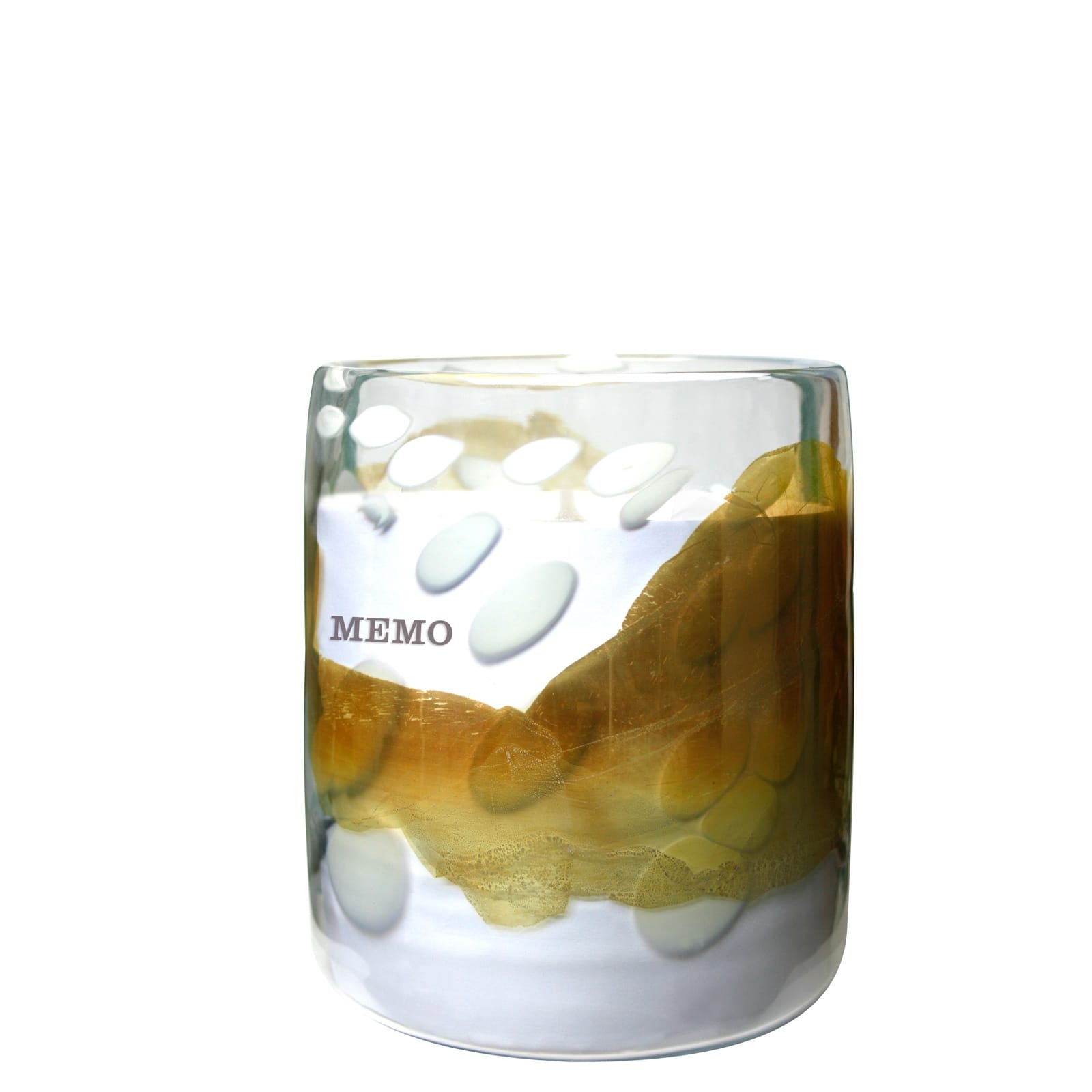
Another newcomer to modern Parisian candle making is Memo (mymemo.com), a brand whose name is, literally, inspired by the word and idea of ‘memory’ of places visited. In sweet, playful scents that are the perfect gifts for the carefree globetrotter, scents like ‘Moscow Glow’ with red berry and vodka shot and ‘Marrakesh Kiss’ with white tea and jasmine as well as the amber-based ‘Back to Dubai’ make for destination-centric scented candle buying.
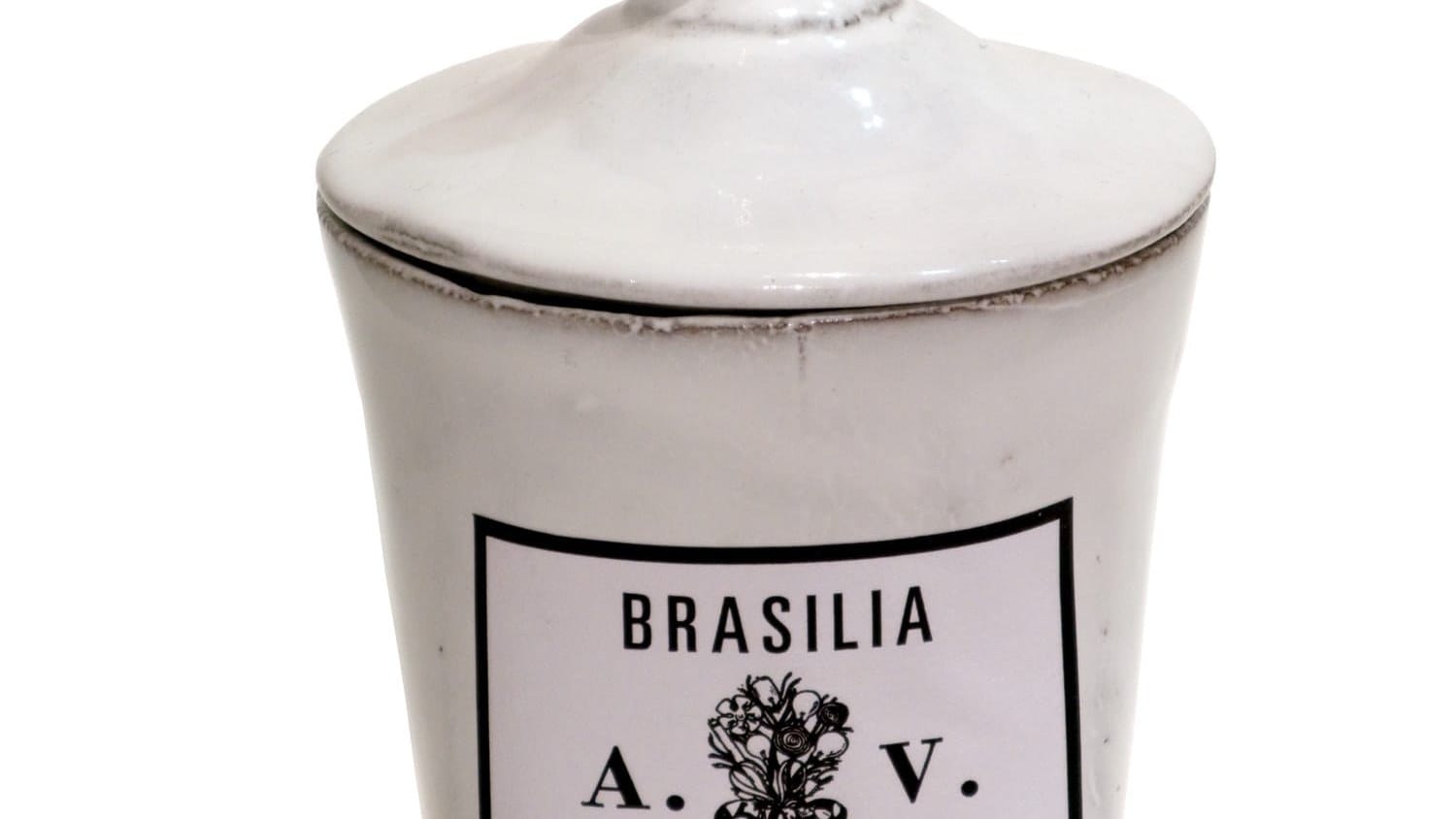
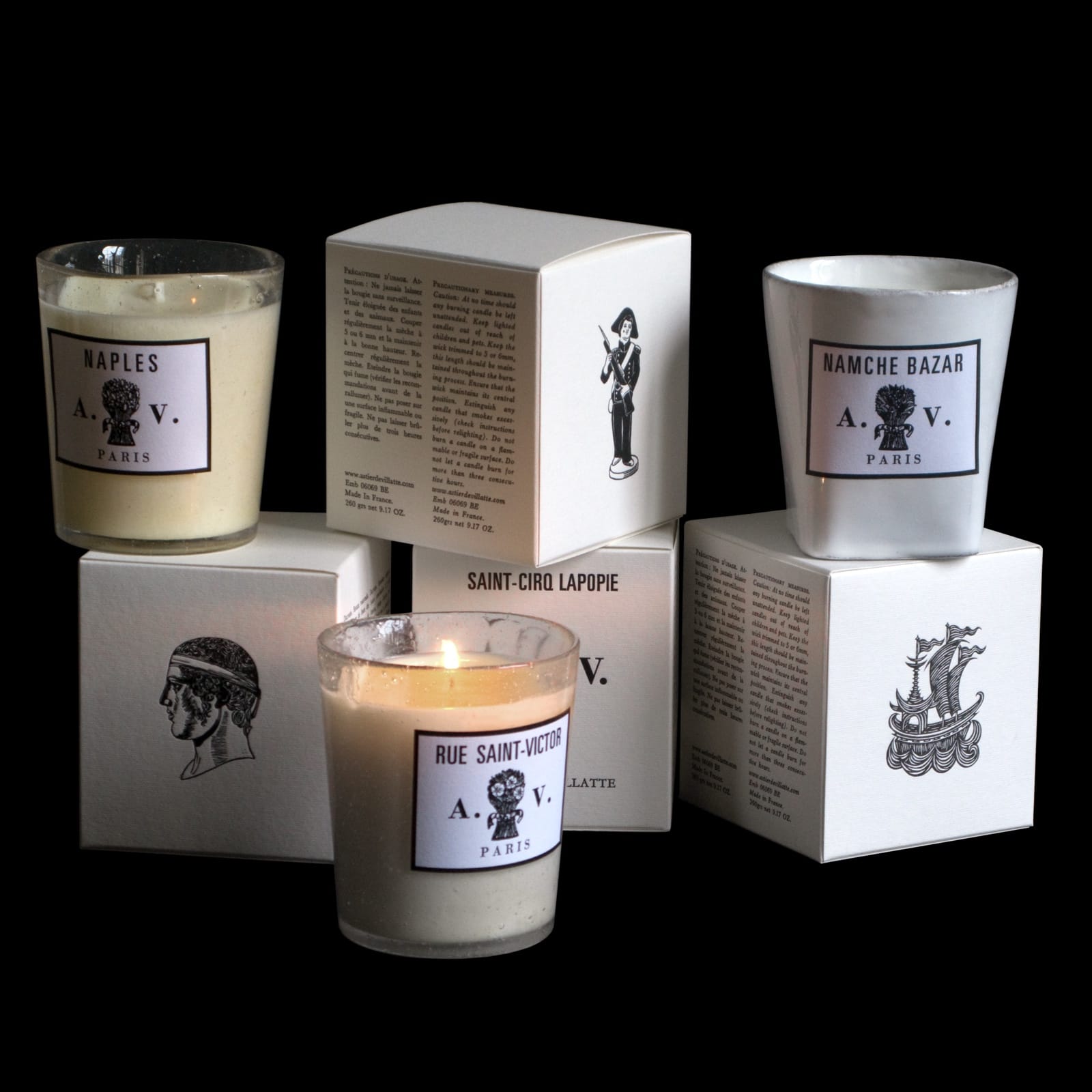
French brand Astier de Villate (www.astierdevillatte.com), a secret among luxury lovers, creates richly scented candles to accompany their quirky and sophisticated furniture and tableware (the luxury version of their candles is in their signature Astier de Villate white ceramic). The artistic-minded creative directors took an olfactory tour of the planet to highlight eight perfumed destinations in their candles, inspired by adventures such as camping in the wild or visiting haunted castles in Edinburg – for those who truly love adventure and to travel in order to discover the riches of their destination. Made of vegetable wax in a unique mix of soy, oil, two secret plants and a tiny bit of beeswax, scents include destination names and associated scents such as Cambridge, Monte Carlo, Brasilia, Delhi, Lhassa, Oulan Bator, Anchorage and Delphes. Bon voyage!
In an era when it seems every luxury boutique (Collette in Paris) fashion designer (John Galliano for Diptyque) and restaurant, hotel or fashion label (Ralph Lauren) has created a special scented candle to complete their brand, perfumer Frederic Malle (www.editionsdeparfums.com) simply expanded the notion of the special edition, by enlisting individual “noses” as authors of each of their perfumes, as a book publisher employs authors for each of their books. Of course, stellar scented candles also ensued in entirely urban styling in a simple, bold orange glass container. The Rosa Rugosa, created uniquely by nose Carlos Benaim is one of the most intoxicating, opportunity for sensual rose indulgence that money can buy.
While this is no exhaustive list of the best scented candles out there, it is an essential base, with a few newcomers to watch thrown into the mix. Scented candles are best collected according to the seasons for an added feeling of warmth, or freshness, depending on your whim. Scented candles uplift the mood, stimulate the mind and intermingle the senses in a way that once the flame is lit, it’s just another luxury addiction that is difficult to quit.