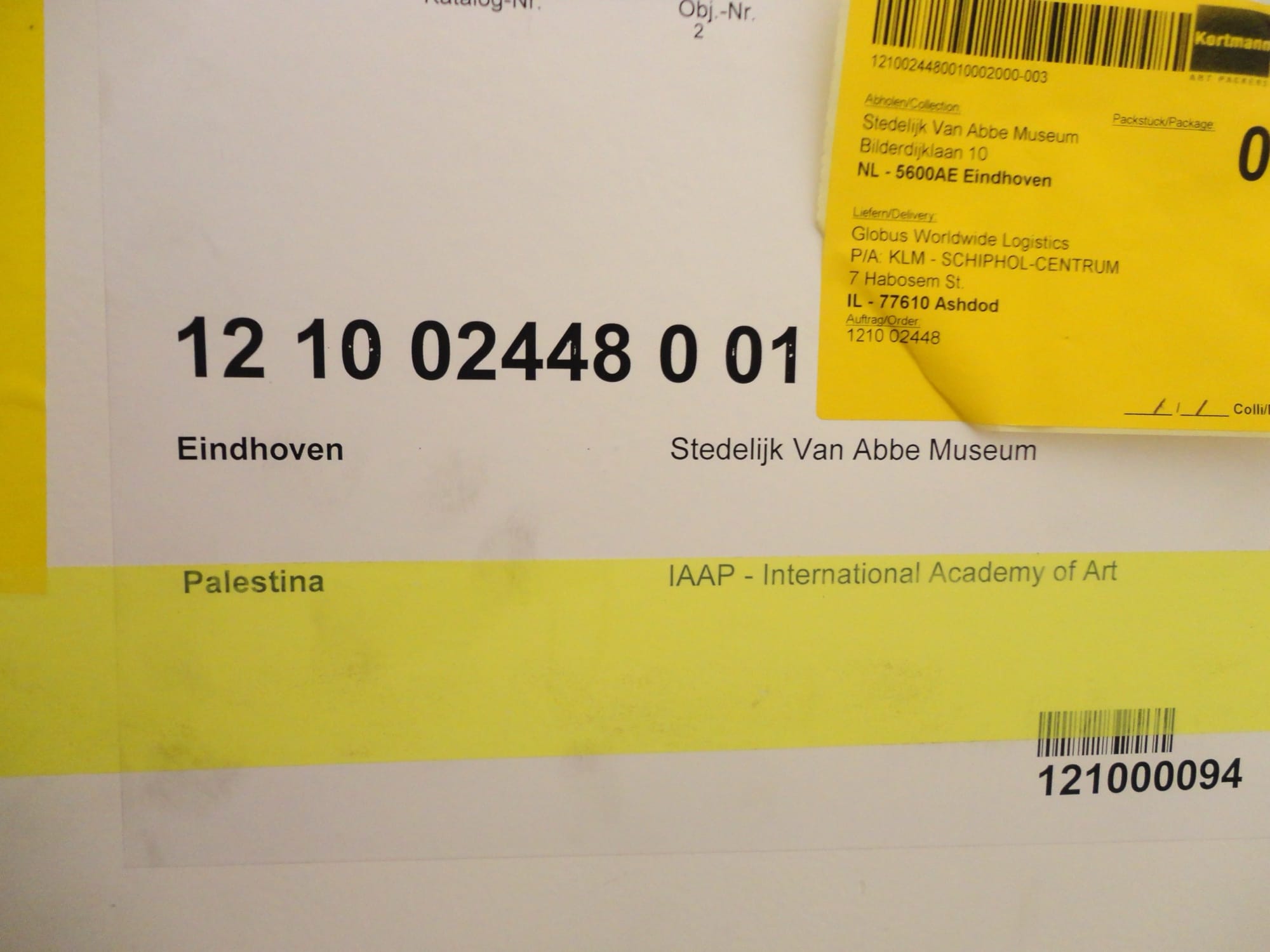
It was during a 2009 visit to the Vanabbe Museum in Eindhoven in the Netherlands that Ramallah-based artist, curator and artistic director of the International Art Academy Palestine, Khaled Hourani had a wild idea. Listening to the Museum’s director, Charles Esche describe the Museum’s global programme of loans to foreign institutions, it occurred to Hourani that Palestine had never benefited from such initiatives. That’s probably understandable given the labyrinthine complexities of moving across the occupied territories along the Israeli/Palestinian borders and the attendant security issues. At the very least, it is a question of logistics.
But the visit planted the seed of an idea in Hourani’s mind. And two years later, in July of this year, after months of planning by Hourani, the Vanabbe Museum and a myriad participating organisations, from Dutch insurers to the Palestinian tax offices, and international art foundations the 1943 Picasso painting ‘Buste de Femme’ arrived to rapturous scenes in Ramallah for a four-week exhibition in a purpose-built room. The piece of art attracted over 4,000 local residents who queued patiently to spend a few minutes with one of the finest works created by a great artist of the 20th century.
The story of how this work, long regarded as being amongst the finest of Picasso’s Expressionist period, came to Palestine is as fascinating as the history of the artwork itself. Despite the fertile and prolific local art scene, there is little in the way of international artistic exchange with Palestine. Yet these are epic times for the occupied territories, as Khaled Hourani pointed out to me during an illuminating discussion of the whole affair. “In general,” he reflects, “With any art masterpiece, it’s not just the artwork that is important, it’s also its particular history. Today, Mahmoud Abbas is at the UN making his speech for Palestinian statehood. This is now part of the painting’s history too, it will never be the same as before. For the first time, Ramallah becomes part of Picasso’s history.”
But it’s not just reconstructing the histories embodied in the painting itself that made this a remarkable event. Hourani’s tireless work behind the scenes, in cooperation with the Vanabbe Museum’s outreach team, somehow defied the sheer weight of financial, logistical, bureaucratic and political obstacles that impeded the painting’s journey, making the movement of an artwork for over 3,200 kilometres from Amsterdam to Ramallah, an epic odyssey. As Hourani notes, “Picasso in Palestine is an art project that aims to probe mechanisms, procedures, obstacles and requirements in getting a painting of this kind to Palestine. By doing so it sheds light on the contemporary reality of Palestine and gives the art project the power of the impossible.”
Of the museum’s staff, communications director Ilse Cornelis was delegated to accompany the team escorting the painting to Ramallah. Her memories of the trip, undertaken in June 2011, are vivid. “The project had quite a few hurdles on its way,” she says. Firstly, “To be clear about the peculiar circumstances of this loan, it’s worth recalling that lending a work to the Israel Museum some 25 km away from the IAAP [International Academy of Art Palestine] would have elicited very different responses from insurers, transporters, press and the politicians. The simple act of contemplating going to Ramallah immediately created political and juridical questions on all sides, along with international media attention that was very welcome but out of all proportion for the capacities of a provincial institution to handle. Dealing with these events one by one took patience, skill and hard work from all those involved.”
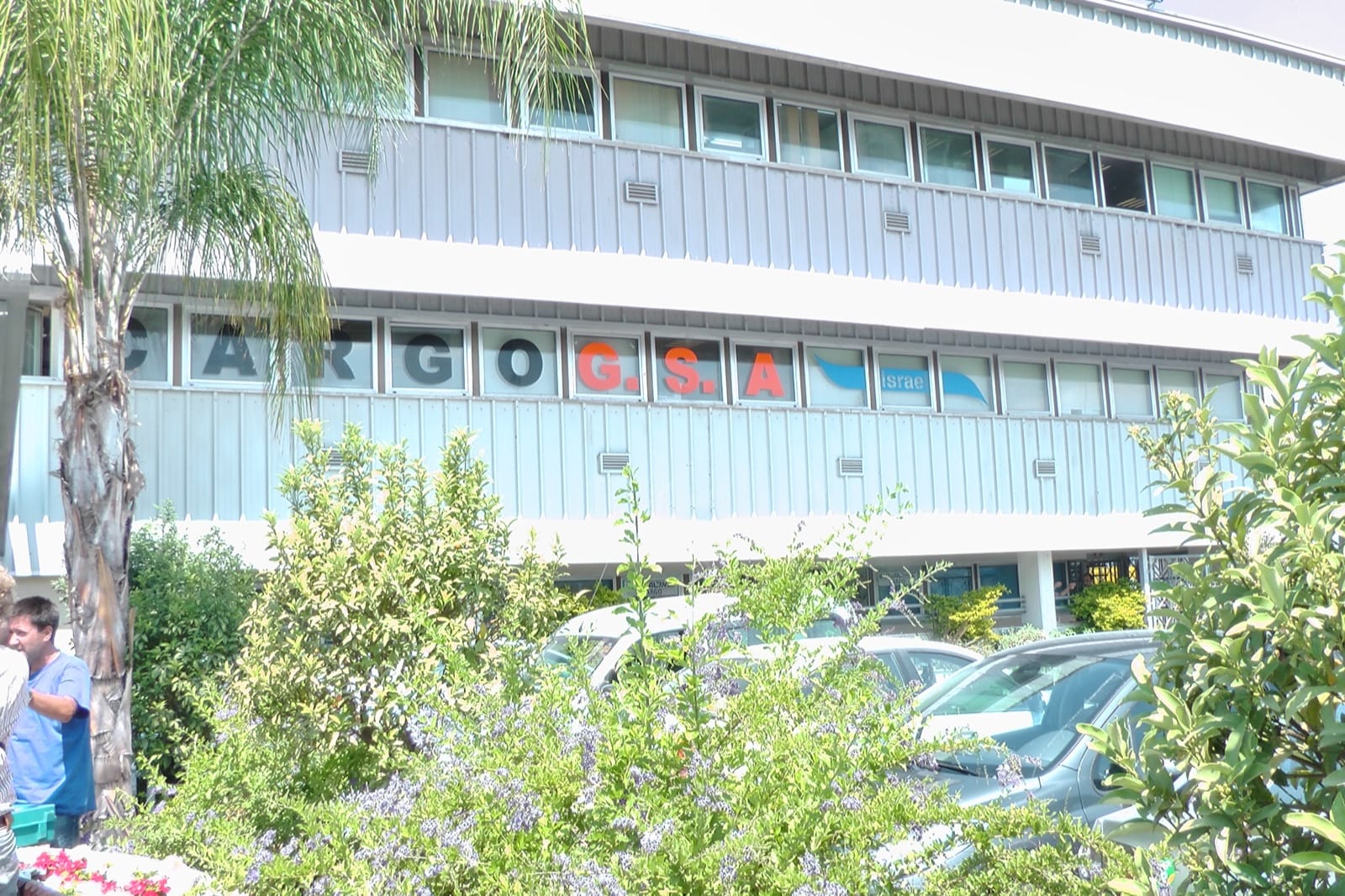
Practicalities immediately arose. Finding a sympathetic insurance company who were prepared to cover the 7 million USD work into a notoriously instable territory was, to put it mildly, a challenge. But luck was on Hourani’s side, when after a few immediate rejections, encountered a Dutchman at the IAK insurance company, who came to Ramallah and met with Hourani and his team. A bond was instantly forged. “This man Ruud – he had been insuring the tuna fish in the Mediterranean in Malta! It’s actually a very risky job to insure the fish in the sea. So after insuring tuna fish, this company IAK sent a delegation to Ramallah to check out the streets, checkpoints, building itself, the political situation and they agreed to do it… He was like an artist really! Usually insurance people are all about numbers and figures, but he understood what we wanted to do and saw that we could do it.”
With the entire project running to around 200,000 USD in cost, Hourani managed to get funding and support from a wide variety of sources. Dozens of institutions supported the project, including the Palestinian state, the Qatar Foundation, the Yasser Arafat Foundation and the DOEN Foundation in Amsterdam. “There was a lot of goodwill, thank God!” says Hourani. “Some people refused to get involved, they didn’t want to get involved with such a risky thing. We also question the policy of fundraising –we’ve documented the letters we sent and the replies. I mean, it’s very challenging to send a masterpiece to a warzone.”
Notable not only for being a colourful excursion into Picasso’s mid-career foray into Expressionism, the work also resonated with the IAAP’s students – who, along with Hourani, made the selection of ‘Buste de Femme’ from the Vanabbe’s vast inventory - on a deeper level. Picasso made the work in the afterburn of the Spanish Civil War, a seismic event that affected him deeply and had provoked other, similarly dramatic responses such as the infamous ‘Guernica’. Inherent in the painting are analogies to repression, war, turmoil and a dream of freedom, issues that remained vividly relevant over seventy years later. The fact that the subject was a woman also lent the piece deeper implication, Hourani explaining the female figure is deeply embedded in Palestinian culture as being representative of the land and national identity. And upon its arrival, in a Presidential motorcade in Ramallah, to an emotional reception from the team (“We all had tears,” says Hourani. “I needed to go and be alone for a little while”) the work attracted long queues of curious local residents who just about unanimously, according to Hourani were not only thrilled at the muted tones, angular semi-abstracted form and weighty history of the piece, but fiercely proud that such a work was on display in their territory.
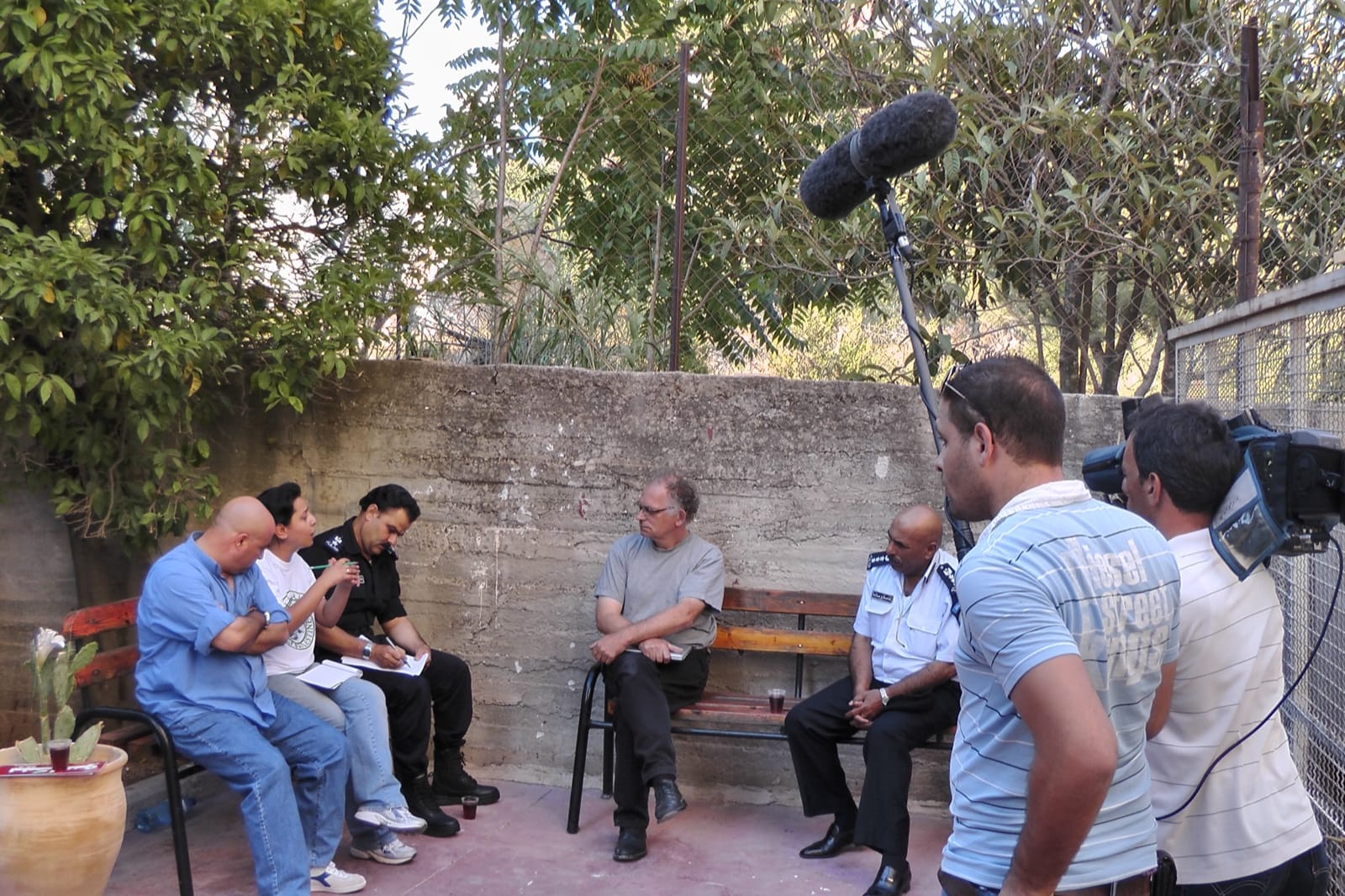
“It felt like we were extending the potential of the collection by giving at least one painting in it a new history,” says Cornelius. “Our Picasso was changed by its journey to Ramallah, it took on extra meaning and this story will remain a part of the painting’s history from this moment on. It feels like we are constructing new histories with such a project, as well as preserving old ones.”