Visitors to Paris can now find a brand new eye-catching landmark smack bang in the Bois de Boulogne. Completed in October and built to showcase the cultural credentials of France’s biggest maison, the Fondation Louis Vuitton comes at a cost of almost 170 million USD and that’s not even including the price of the land on which it was built, nor the priceless works of art it houses. Indeed, everything about this building is extraordinary, which is why we should start from the very beginning.
Back in the 1950s, a certain Marcel Boussac owned one of the apartments overlooking the Bois de Boulogne, Paris’ second largest public park. This man, the investor behind Christian Dior’s fashion house, had a wife who was bothered by the sounds of the roaring lions in the nearby Jardin d'Acclimatation, a children’s park and zoo. In order to appease her, he used his considerable wealth to buy the jardin, after which he had the animals shipped out to another zoo.
Along with his plot of parkland, Dior was acquired by LVMH a few years after Boussac’s death in the 1980s. But for almost two decades, his piece of prime 16th arrondissement real estate remained just another asset on this vast luxury conglomerate’s books.
That all changed in 2001 however, when, four years after it was built, Bernard Arnault was taken on a tour of the Frank Gehry-designed Guggenheim Museum of Bilbao. He was, according to his advisor, Jean-Paul Claverie (former advisor to the French Minister of Culture, Jack Lang), utterly blown away. “I can still hear his words to me: ‘How could someone imagine something so incredible? And, above all, build it?’ It was a revelation,” says Claverie, “The Fondation Louis Vuitton, as a building by Frank Gehry, no doubt came into being as a result of that aesthetic and emotional epiphany… Thanks to him, LVMH has a new star, and Paris a new emblematic building.”
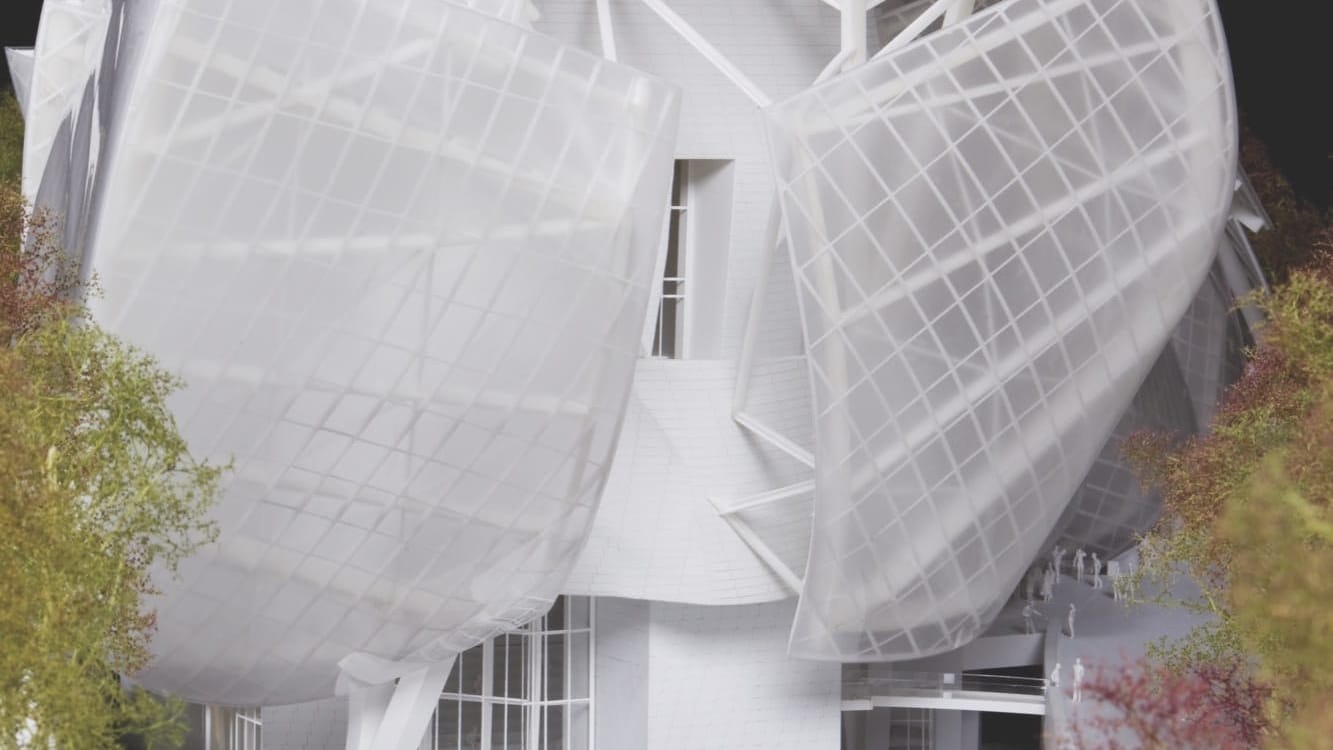
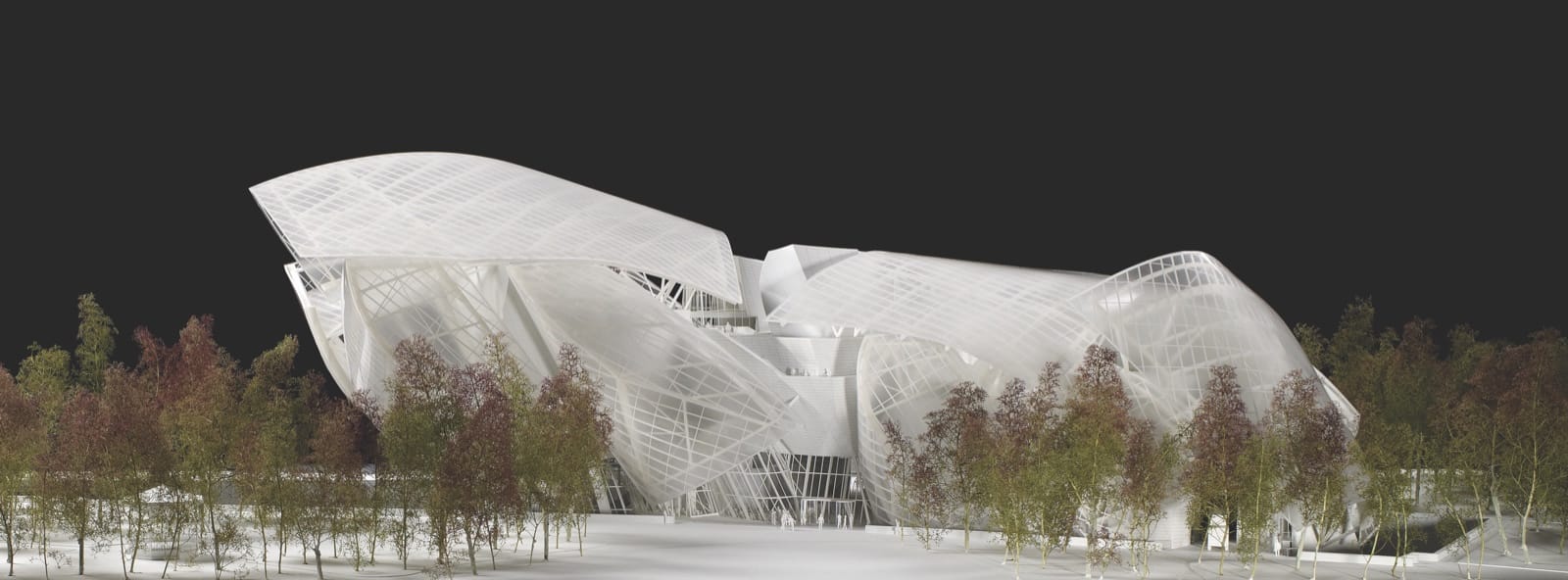
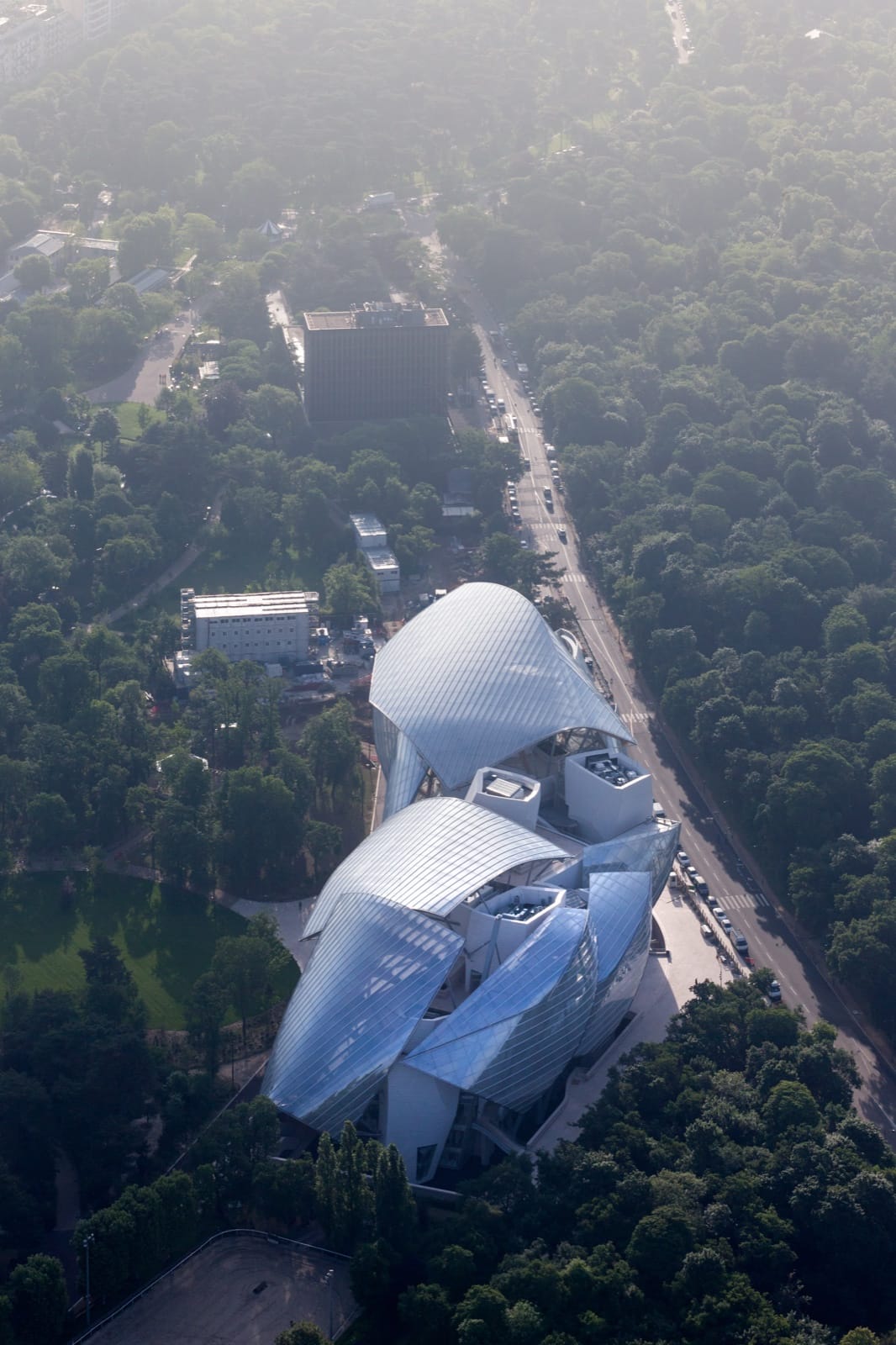
This job was far from easy for Gehry however. For starters, he was only permitted to build a one-storey building over the footprint of the Jardin d'Acclimatation’s former bowling alley. Then, the structure was also only allowed up to the nominal height of the tree canopy. In the end however, Gehry’s ingenuity and playfulness has culminated in one of the most striking – and perhaps tallest – single-storey structures in the world. Rising 43 metres above the ground, the multi-gallery museum, auditorium and cultural space soars with huge swirling planes of glass and seems to hang like an ethereal cloud.
According to Gehry, “Our wish was to conceive a building that would evolve with the passing of the hours and with the changing light so as to create an impression of the ephemeral, and of continual change.”
Indeed it is an arena of shapes, shadows and radiance. Flooded with natural light during the day, the hidden skylights lend the building a vastly different perspective at night, like white sails floating in a black ocean, as its breathtaking curves rise and fall.
Not everyone has been wowed by the design. But that’s just par for the course when it comes to Parisian landmarks. From the Eiffel Tower and the Centre Pompidou (Renzo Piano and Richard Rogers’ exoskeletal cultural centre) to I.M.Pei’s glass pyramid at the Louvre, controversy has only ever been a stepping-stone to greatness in the City of Lights.
To us, the Fondation Louis Vuitton is a wonderful new centrepiece of the Parisian cultural landscape that fulfils Gehry’s vision of being ‘a space for experimentation,’ both in terms of its architecture and the artworks being showcased within its walls.
WHAT Fondation Louis Vuitton
WHERE The 16th arrondissement of Paris
ARCHITECT Frank Gehry
WHY It’s a stunning and monumental art foundation that stretches over 11,000 square metres and includes 11 galleries of exhibition space. What’s not to love?