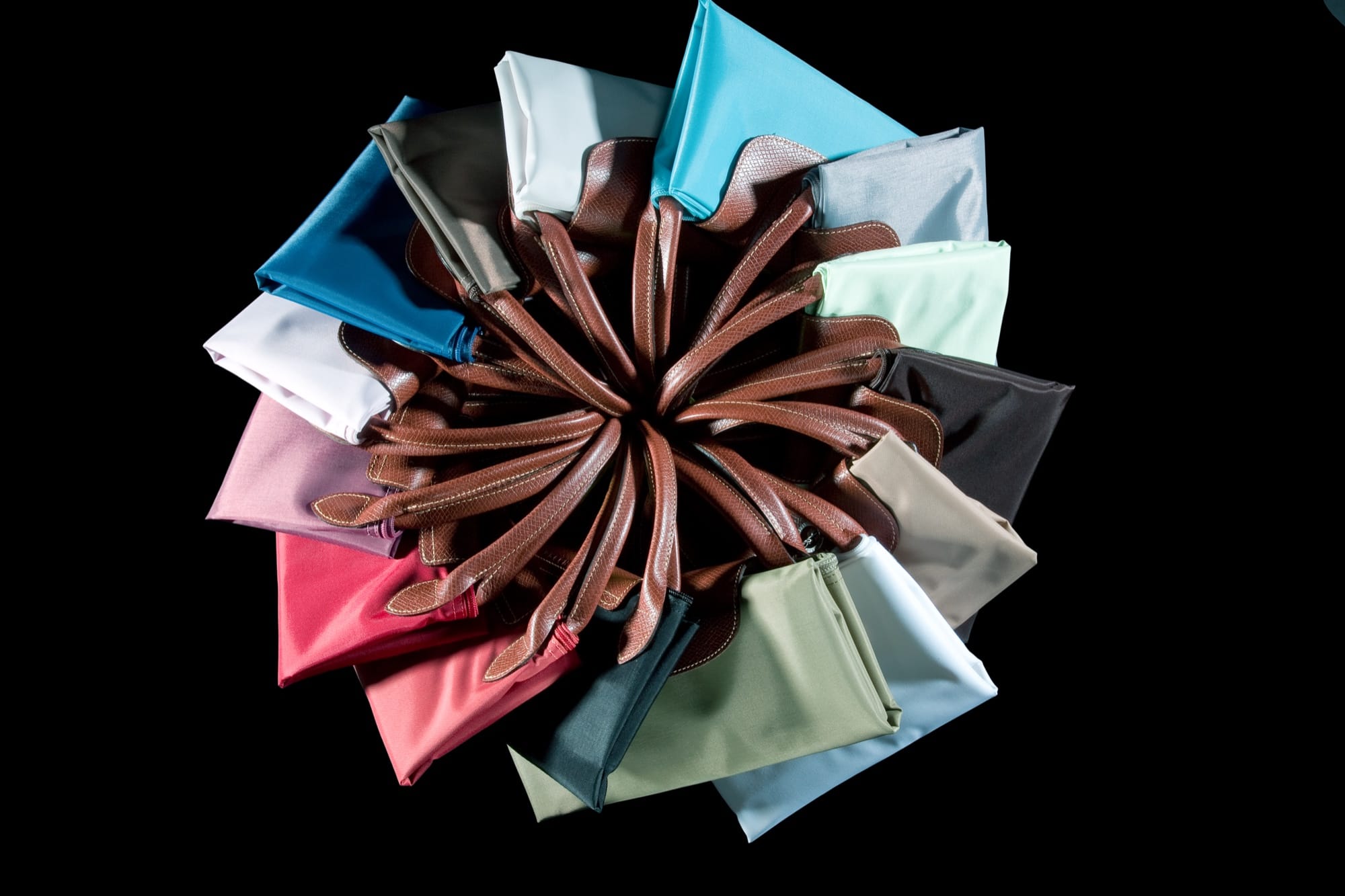
Foldable, adaptable, and – as attested by more than 30 million proud owners – totally buyable, the Longchamp Pliage has been a huge success ever since it was launched in 1993. Inspired by Japanese origami (hence the name, which comes from plier, the French word ‘to fold’), Le Pliage was designed with a body made of strong, light and water-resistant nylon topped with Russian leather trims, handles and a flap closure. Niftily, it could be folded into the size of a paperback book, making it a wonderfully practical piece.
In its latest guise, Le Pliage Cuir, replaces nylon with leather. Launched to celebrate the tote’s enduring appeal, the new model sacrifices none of its older sibling’s functionality, for it too can be folded away thanks to calfskin that’s strong and supple enough not to remain creased once it is unfolded.
One of the aspects we’ve loved most about Le Pliage (at least ever since Longchamp started offering the service in 2003) has been the extent to which you can personalise the bag. Where you once had to go down to your nearest Longchamp boutique, nowadays all you need to do is get online and spec your Pliage exactly as you like, in the comfort of your own home.
The process is a cinch. First you pick one of the various sizes, followed by the material and colour for the main body. Then there’s the lining. And finally, you have a choice of handles, flaps, tabs and even hardware to toy with. By the end of it, you can add your initials – whether perforated or embossed – if you so desire. Click to finish and you’ll have a cult bag that’s also undeniably yours.
In market terms, customisation – as opposed to mass-market production – is the logical culmination of the luxury industry. Interestingly, there has been a renaissance as of late, despite the fact we’re in a period where 1980s-style logo-dominated branding is also very much back in vogue, largely attributed to Kenzo’s wildly popular range of logo-centric sweaters, followed by the likes of DKNY and even Alexander Wang. But when it comes to accessories, keeping them unique seems to more of a primary concern, which might suggest we conceive of them rather differently – if nothing else, maybe they’re just easier to identify that way.
What it boils down to is the fact that, though it’s nothing revolutionary, it’s still easily eluded in the world of increasingly fast fashion: if everyone’s got what you’ve got, then by definition, it isn’t luxury. Yes, Le Pliage might be an everyday bag, practical and elegant and it might also be wildly popular but at least yours can be unlike anyone else’s.

WHAT Le Pliage Cuir
BY Longchamp
HISTORY The maison was founded in 1948 by Jean Cassegrain and is still owned and managed by his family.
WHY Twenty-one years and counting doesn’t make Le Pliage the oldest bag around, not by a long shot. But the fact that Longchamp has managed to sell an average of 1.5 million of these each year does make it an enduring success story of unique proportions.