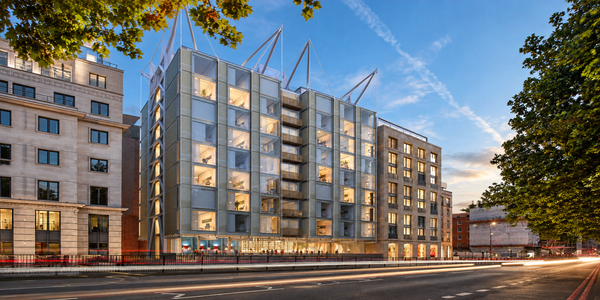
I’m in Sursock Tower, a relatively new 18-floor high-rise in the Ashrafieh neighbourhood of Beirut. Designed by one of the most prominent and prolific Lebanese architects, Pierre Khoury, who regrettably passed away before its completion. I’ve come here to meet with the people who built the building and who actually kept hold of a few floors to serve as their corporate headquarters. They go by the name of Jamil Saab & Co. and though they’re not necessarily a household name, they’re highly respected in the local market, with a portfolio of 60-plus projects over a 56-year existence.
Established by Jamil Saab, who is still chairman today, the company is now managed by a new chief executive, his son Chafic. “I actually studied interior design in Italy but I’ve always admired architecture. When I came back to Lebanon to work with my father, I convinced him to shift from working with in-house architects. For example, in our Le Patio project, we worked with Jacques Liger-Belair from the AAA and in the 20/30 residential project, we worked with Marcello Lo Mauro, a well-known architect in Italy.”
The two projects he’s referring to couldn’t be more disparate and that’s the whole point, since it’s indicative of the way the company works. Le Patio, a boutique hotel, has an unassuming low-rise façade that melds naturally with the reconstructed Beirut Central District and is quite typical of Liger-Belair’s knack for respecting regional architecture. 20/30, on the other hand, is a much more contemporary energy-efficient twin-tower of mostly glass and steel. “We innovated in creating a luxurious yet green building. For example, we used recycled zinc [for the building’s cladding] and we’ve integrated photovoltaic panels [on the rear-section façade]. We’ve also created 3,500 square metres of landscaping in the common areas,” Chafic expounds before adding that they always try to build what’s right for any given location. “We adapt the design to the location and not the other way around.”
Their latest project, nestled on a hill overlooking the bay of Batroun in northern Lebanon is a prime example of that. Hidden away between Jammal restaurant and the San Stefano resort (you cannot actually see it from the road), is a 16,000 square-metre strip of land on which they’re building a residential complex of villas, which will be known as Tortuga. “You know, my father, who began this business in 1959, spent 30 years looking for such a plot by the sea. He finally found this one in 2004 but the Syrian Army was occupying it so he couldn’t do anything with it. But after the Syrian withdrawal, we decided to move ahead.”
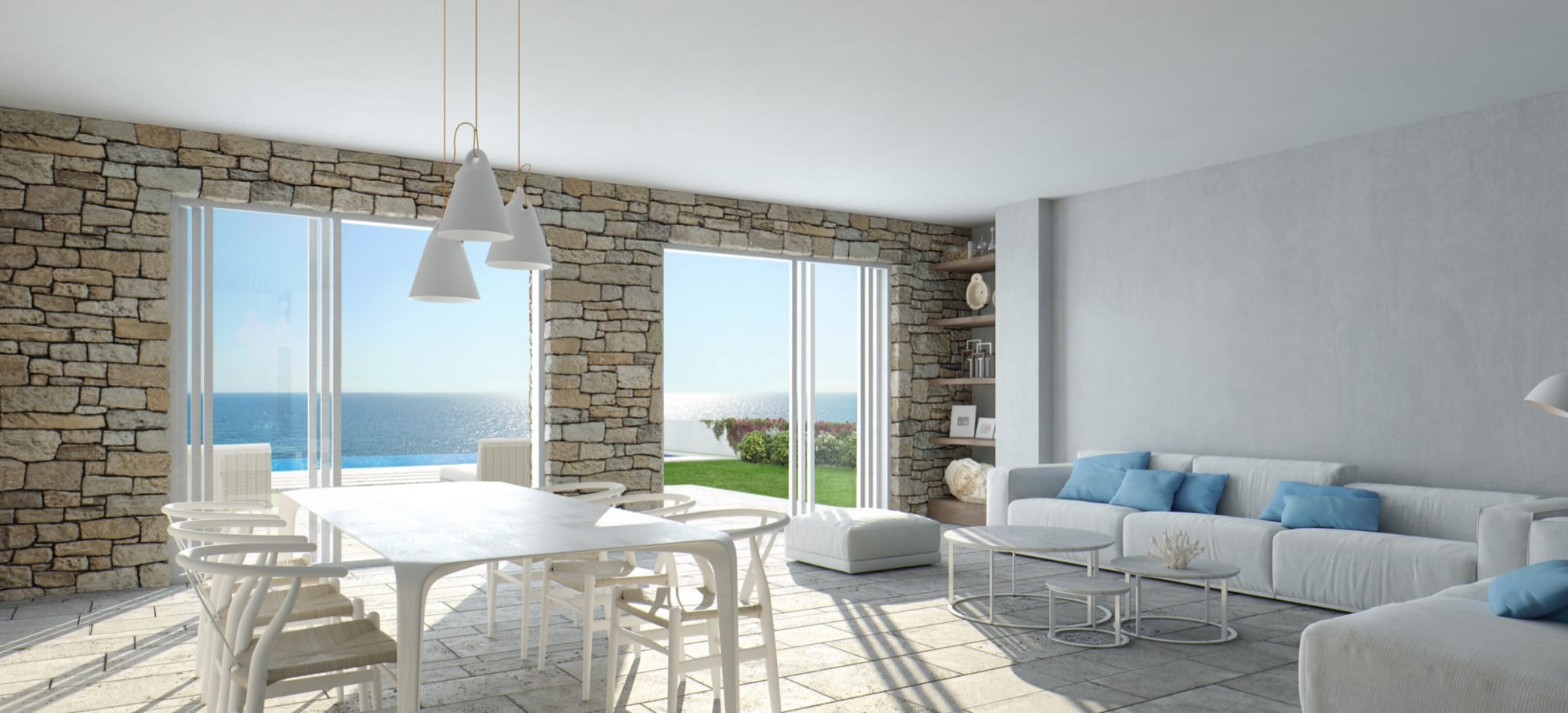
First, they enlisted the architect Galal Mahmoud to help realise their vision. “After looking at Mahmoud’s first proposal, I knew I didn’t want a Miami Beach-style place,” he says, explaining that he aimed for the project to fit in with its environment, rather than take either a Modernist or a syncretic approach. So Mahmoud went back to drawing board and took inspiration from the stone cladding and grassy roofs that are such a part of the local vernacular, as well as the external stairs and alleyways prevalent in the coastal towns of this region. “The idea is to embellish nature, that’s why we embedded the townhouses, beach houses, villas and mansions [which are the four different residential categories] into the hilly land, in a steppe fashion. And since the maximum number of floors for each residence is two, from above, you’ll only ever see the first, as the ground floor has become part of the land.”
The project’s usage of space has allowed for unobstructed views and hidden car parks located within subterranean recesses. “You’ll never see a car here – it’s entirely pedestrian – as they can only reach the periphery of the property. We also chose to have less tenants and more green space by developing only 25 per cent of the area that could have been built on,” he adds. “Normally, it’s the developer who’s looking to maximise density and the architect who’ll minimise it but we were all on the same page in aiming for the highest quality of life for the tenants. So what you have is 36 residences, ranging from roughly 100 to 350 square metres, all with their own private pools, in addition to a beach club with a gym and two pools.”
“We’re aware that ‘sea-view’ can often mean you see bits of sea between two buildings but here, you get an unobstructed view of the sea from every window opening on the property,” Chafic says and yet, when I ask him why they chose to use smaller windows instead of floor-to-ceiling glass panes for example, he says there’s a good reason for it. “We decided to have smaller windows because this is a place where people will want to live outside. The perfect window is in your garden. Plus, smaller windows afford greater privacy.”
Privacy was a key consideration here and another manifestation of this is that the space outside each house be double that on the inside, something Chafic calls a “buffer zone”. Even the grid like alleyways that have been carved around the property to allow residents to walk down to the sea have been designed to minimise having to see or be seen by others. And once you do reach the sea, I’m told that you’ll find white, salt crystal-like sand, a particular rarity in this pebble-heavy northern strip of the country. It all sounds like wonderfully glamorous.
So what’s with the name? Given that Tortuga means turtle in Spanish, it most probably references the local sea turtles that are becoming ever more endangered on the Lebanese coastline. “I initially thought of the Italian word Tartaruga,” Chafic explains, “but it was too long. The Spanish version is more succinct don’t you think?”