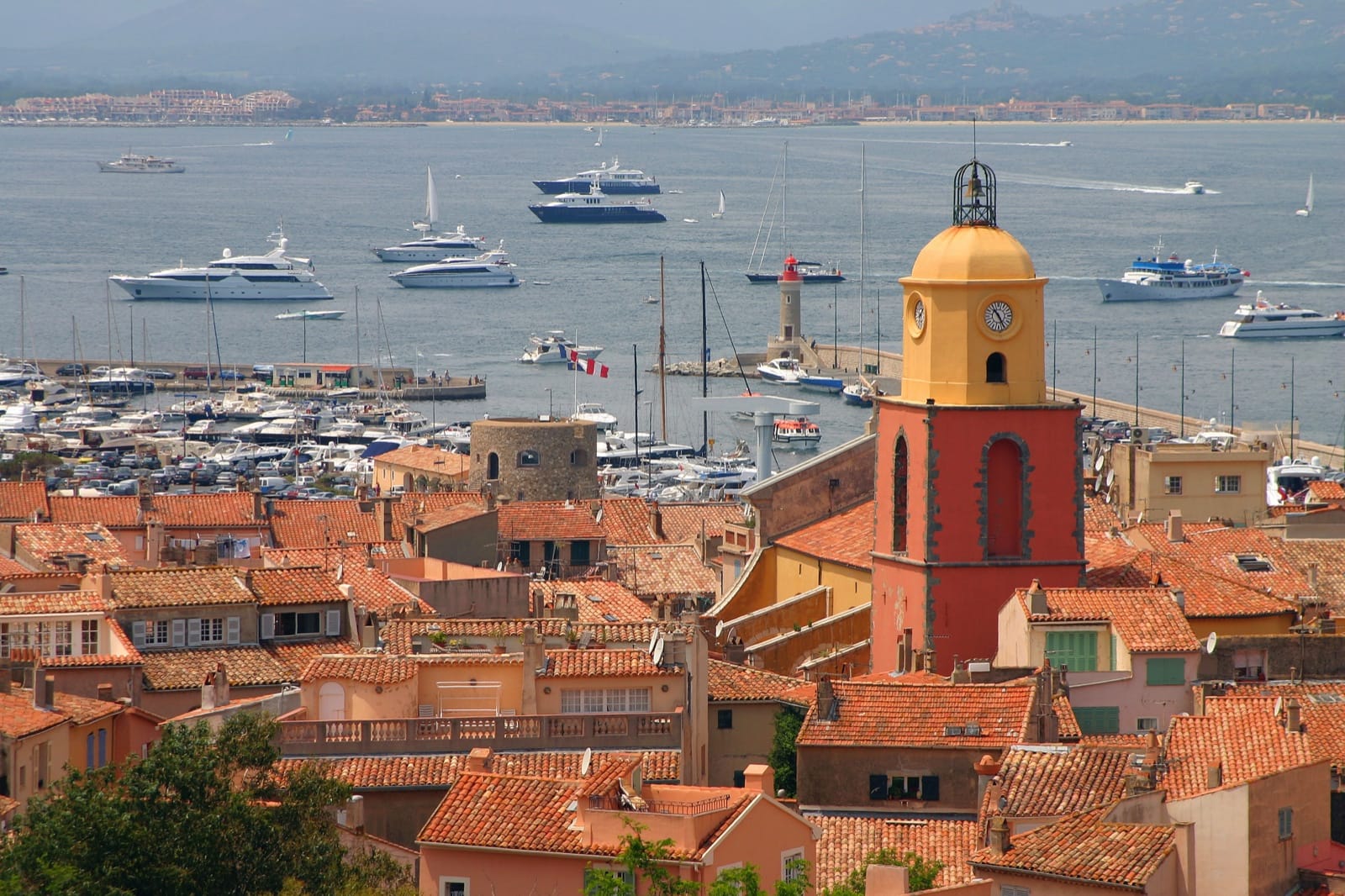
For most of the year, Saint-Tropez is home to just 5,540 fortunate villagers. But in summer around 100,000 visitors a day descend upon the little fishing village. Yet it somehow survives the crowds, the heat and the traffic jams. So how did this place, which once went about its business hidden away on a peninsula, come to rival the world’s most glamorous playgrounds and hit the headlines in the international press?
In fact, long before it became associated with pétanque, beaches and nightclubs, Saint-Tropez was already a familiar port-of-call and a coveted prize among historic invaders. Its chequered past is a long tale of conquests and piracy; a constant struggle for freedom, peace and quiet.
Then in 1887, Saint-Tropez was rediscovered, again from the sea, by the novelist Guy de Maupassant who was followed by another sailing enthusiast, the artist Paul Signac. Later, the first artists to settle here, Signac and Henri Manguin (and later writer Colette) became the forerunners of what was to become a steady stream of illustrious Parisian painters, all inspired by its landscapes, charm and radiant light.
In the 1950s and 1960s, Saint-Tropez became a Mediterranean outpost for Jean-Paul Sartre, Simone de Beauvoir, Boris Vian, singers Juliette Greco and Yves Montand, and movie people Roger Vadim and Brigitte Bardot. After that, as we all know, Bardot quickly became the quintessential symbol of the town’s sensual, carefree lifestyle. The freedom so dear to the heart of the Tropéziens was eagerly adopted by the newcomers from the north, who gave the town a new lease of life based on letting go and having a ball. Today, the legend lives on, with a few revisions to meet the demands of the 21st century.
Yet, in many ways, one feels that this little village would be perfectly content to remain just that. It has no desire to compete with Cannes or Monaco, for example. Rather it tries to protect its intimacy and natural charm. Its international hedonistic image is essentially based on the past, particularly the 1960s, when the showbiz crowd imported a notorious touch of craziness, when just about anything could - and did – happen. Yet to this day people from all over the world dream of coming to Saint-Tropez, with the largest influx occurring between mid-July and late August.
That’s a short season indeed, and the municipality sees its job as creating a certain richness all year round, so that the authentic charm of the village can be appreciated in the off-season. Year-round attractions include the Citadelle, dating back to 1589 and housing a Naval Museum, the Musée de l’Annonciade, the Butterfly Museum and, of course, the Provençal market. Yachting is another important activity, with a string of colourful regattas bringing loyal fans on an annual basis. There are also three golf courses close by, plus a polo club, the Haras de Gassin, which hosts an International Polo Cup. The result has been to lengthen the season so that it starts in April and ends in October. And why not? All the infrastructure is already in place.
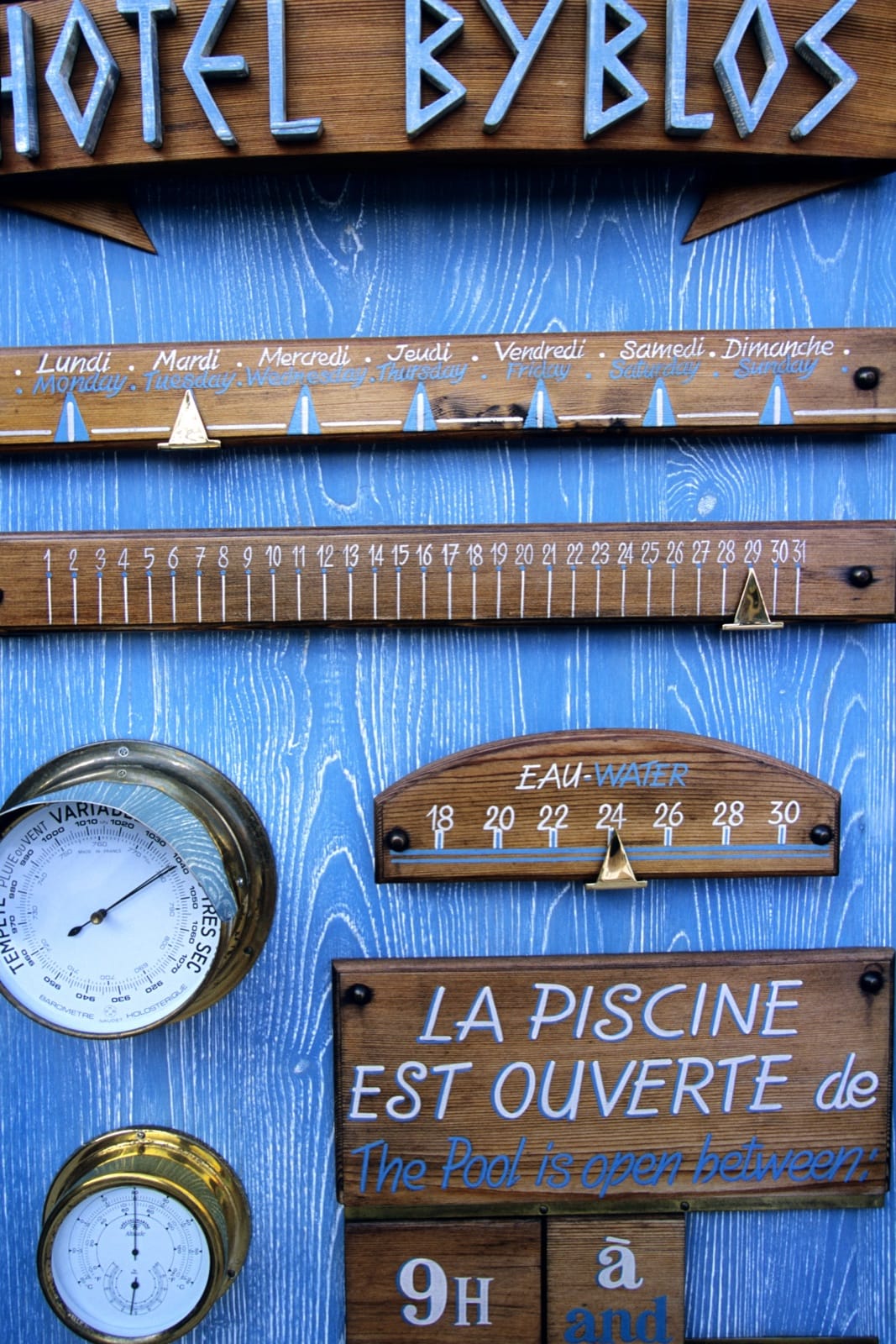
Saint-Tropez boasts an appealing choice of hotels, both in town and out in the countryside. The sumptuous Hotel Byblos, which was built by a Lebanese businessman Jean Prosper Gay-Para back in the 1967, offers exotic decor, a magnificent pool and a world-renowned nightclub, Les Caves du Roy. Legend has it that Gay-Para was forced to sell after the local mafia cut off his water and electricity. Whatever the case, it’s now a French hotel. Also flaunting a 4-star rating, La Bastide de Saint-Tropez is a tasteful retreat with a lovely pool not far from the centre; while La Ponche welcomes those nostalgic for old Saint-Tropez, just next to the little beach where Vadim shot ‘And God Created Woman’.
Visitors who can’t do without designer chic reserve at La Maison Blanche on the Place des Lices, or at Le Yaca, the oldest hotel in town, now spruced up and offering a pool, garden restaurant and a little sister: Le Y. Recent, top-notch additions to the boutique hotel category are Le Benkiraï and Pan Deï Palais.
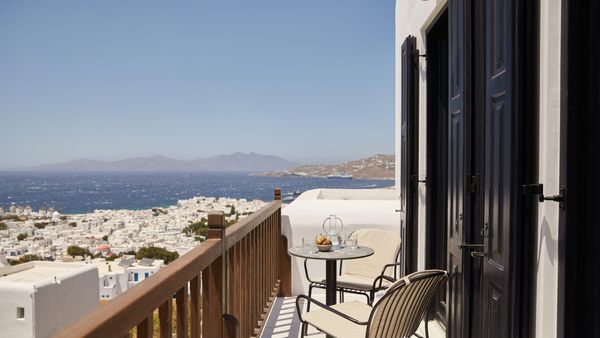
Surrounded by luxuriant gardens, parks or vineyards, hotels in the countryside offer a tranquil retreat from the bustle of the town. The Château de la Messardière and Villa Belrose both offer luxury in world-class style, within easy reach of the beaches. For more intimate but equally tasteful settings, book a room (well in advance!) at the Villa Marie at Ramatuelle.
And what about dining? There again, the choice is wide. Gastronomy with a contemporary spin means a table at Le Spoon Byblos: Alain Ducasse flair against a backcloth of red leather and teak. Or make a beeline for Leï Mouscardins at the far end of the port, where Laurent Tarridec has turned fish into a fine art.
Perennial favourites include Le Bistrot (formerly Le Bistrot des Lices), the exotic Villa Romana, La Bodega (with cool Feng Shui decor and an “oxybar”), Le Banh Hoï for Thai and Vietnamese food, and Chez Joseph (or Le Petit Joseph next door for Asian cuisine). “In” addresses are currently Les Couleurs, Salama and Régis. Fans of al fresco dining head for Christophe Leroy’s Les Moulins de Ramatuelle, while those in search of a hearty bouillabaisse head for Chez Camille in its little cove.
Now you can’t go to Saint-Tropez without showing off your hard-earned tan on the dancefloor, so head to Les Caves du Roy, the VIP Room (now also serving “design food”), L’Esquinade and Le Papagayo. Bars around the port such as the legendary Sénéquier (just redecorated to celebrate its 120th anniversary), Le Gorille, Le Café de Paris, Le Bar du Port, and the traditional boulistes’ haunt, Le Café des Arts on the Place des Lices, all have their fans for pre- and after-dinner drinks – not to mention early-morning espressos for bleary-eyed night-owls who have danced till dawn!
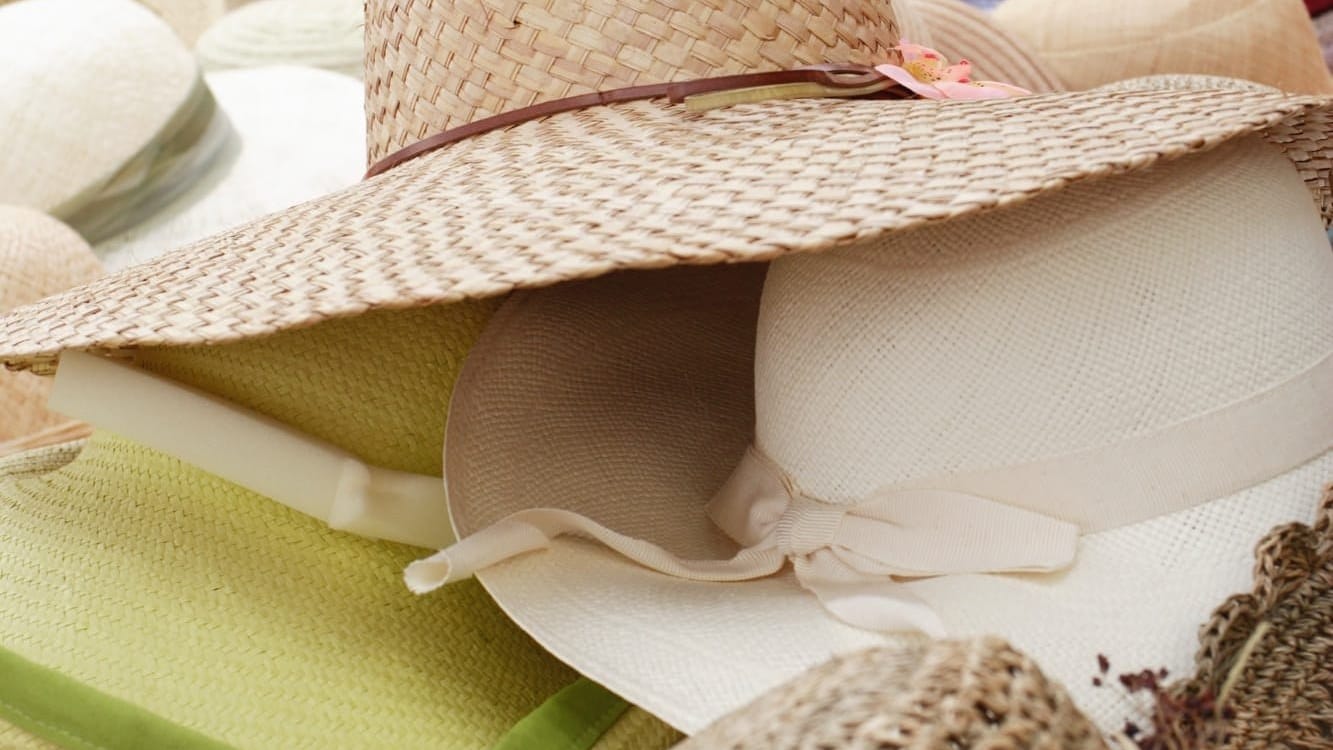
Saint-Tropez is also quite the place for inveterate shoppers. Each season, they find an ever-wider selection of designer names here (Dior, Hermès, Kenzo, Louis Vuitton, Sonia Rykiel, Roberto Cavalli, to name just a few, plus jewellers Frojo and Julian Joailliers). There are also a few discreet upmarket boutiques near the Place de l’Hôtel de Ville, plus of course the usual plethora of shops selling casual summer togs around the port. Two of the most enjoyable (but ultra-crowded) shopping experiences are the Provençal market on Tuesday and Saturday mornings on the Place des Lices, and the Antique-dealers’ Fair, held in late August and early September. Or pay a visit to the local vineyard. There’s a lot more to Saint-Tropez than sea, sex and sun.
[SIDE BARS – Sylvain & Gina: try to place these items in side columns of a different colour. You can split the different sections onot different pages if you like: theyre background and interest sections]
History
The history of Saint-Tropez goes back more than 2,000 years. The village was well known to sailors as a trading post, and came under the rule of many different conquerors, including the Greeks (who called it Athenopolis), the Romans (who renamed it Heraclea), the Celts, Teutons, Visigoths, Saracens, Catalans and Ligurians. According to legend, its current name comes from Saint Torpes, a martyr beheaded by Nero in AD 68 and placed in a boat with a dog and cockerel. The rotting boat drifted all the way from Pisa to the shores of our little fishing village, and local Christians buried the body and built a chapel in honour of Saint Torpes. The names of the nearby villages of Cogolin (“little cockerel”) and Grimaud (“dog” in old French) also recall this legend, which is still celebrated today during three days of festivities known as Les Bravades. Saint-Tropez, which finally learnt to defend itself in the mid-16th century thanks to the appointment of a Capitaine de Ville, was even for a while an autonomous republic - a status it lost in 1672, when Louis XIV abolished its privileges.
Art and Culture
A year-round source of art and culture, the Musée de l’Annonciade is housed in a former chapel on Place Grammont at the corner of the port. Its core collection consists of paintings amassed by Henri Person in 1922. It includes works by Bonnard, Camoin, Signac and Van Rysselberghe, plus others by Matisse, Braque, Dufy, Vlaminck, and Van Dongen.
The Beaches
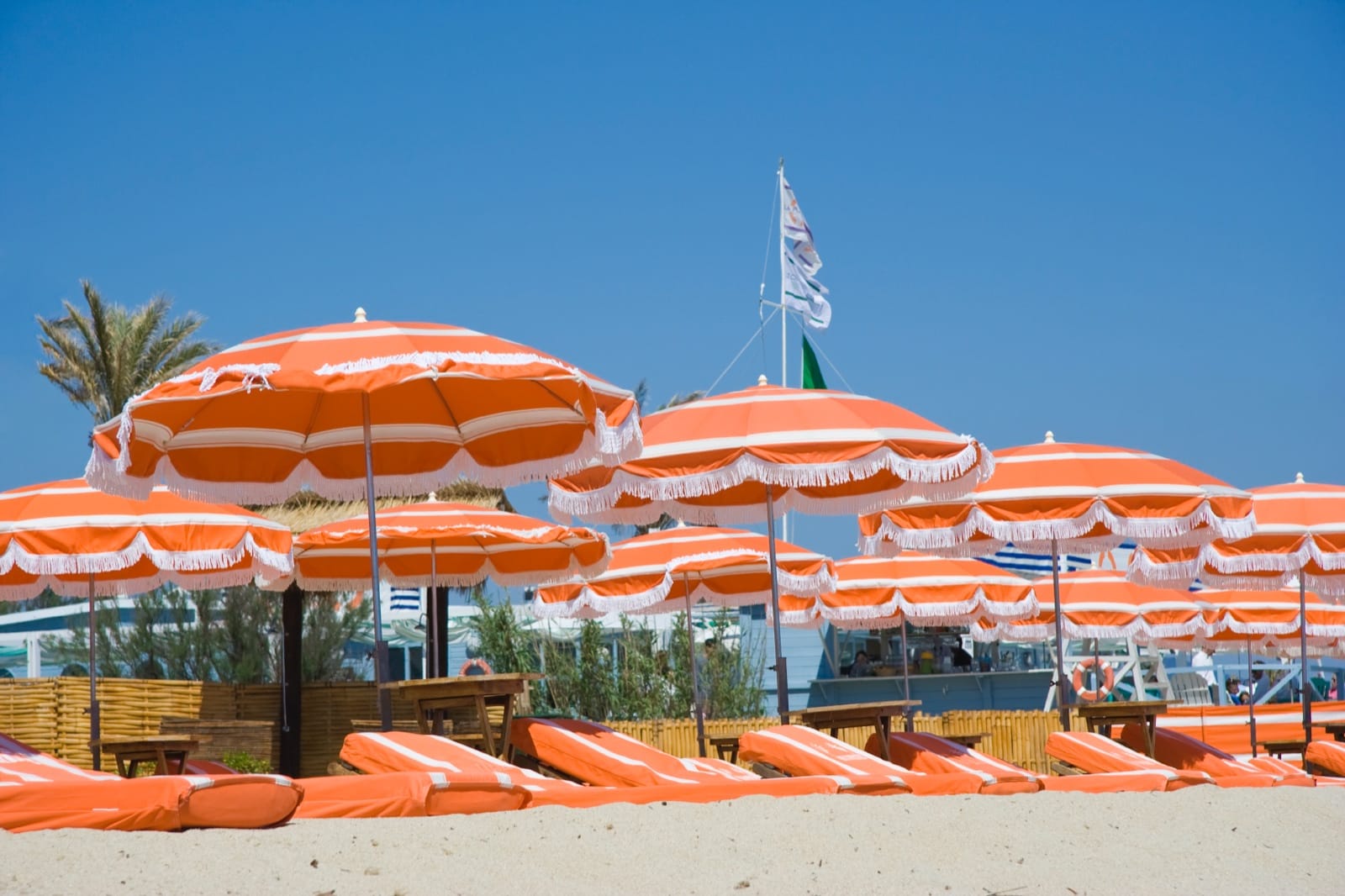
The area around Saint-Tropez is blessed with miles of glorious sandy beaches, which teach the rest of the world how to make the most of summer. Once you’ve chosen your location and negotiated the country lanes leading to Pampelonne, Gassin or Ramatuelle, you can join the Beautiful People and bask in a paradise of sea, sun and fun. As Eric Omorès, owner of Nikki Beach, explains: “It’s above all a lifestyle experience. It’s about sun, food, drinks, relaxation and fun. At night, there’s magic on the terrace beneath the palms and pines.” Despite its cool designer atmosphere, Nikki Beach is one of the hottest hot spots, with a well-known penchant for champagne. As at most of the trendy beaches, world cuisine is on the menu, together with lounge music (which picks up in tempo for dancing later), a pool with “VIP attitude”, and a tender for speeding guests to and from their yachts. Alternatively, check out the scene at Club 55, La Voile Rouge, Kai Largo, Stefano Forever, La Plage des Jumeaux, Mooréa Plage, Millesim, Epi Plage, Bora-Bora, Tahiti Plage, Manureva, or La Tropezina. And don’t forget the more sedate beaches of the Résidence de la Pinède (the town’s first 4-star hotel), the Hôtel Le Beauvallon facing Saint-Tropez from across the bay at Sainte-Maxime, or the lovely Château de Valmer and La Pinède Plage, both offering tranquillity and a laid-back ambiance at La Croix-Valmer.
Maritime Tradition
Today, the port of Saint-Tropez has 800 mooring places, 100 of which are reserved for visiting day boats with a maximum length of 65 m. Even though sleek, powerful and very enviable motor yachts take centre-stage along the quays in summer, sailing fans from around the world still associate the little port with events combining seamanship with a high level of joviality. The season gets off to a colourful start in May with Les Voiles Latines, continues into June with the Giraglia Rolex Cup and Bailli de Suffren Trophy, and comes to a close in October with Les Voiles de Saint-Tropez and Les Voiles d’Automne in November. During these events (and the Riva Runabout Cup and Rodriguez Rendezvous for motorboats in June and July), establishments by the port come into their own: the bar at the Hôtel Sube, L’Escale, Kelly’s Irish Pub. If you don’t have your own boat, you can still treat yourself to a trip around the bay on one of several boats that run regular excursions from the port. Or get up at the crack of dawn to watch the village’s eight remaining fishermen set off in their boats at 5 am for their daily catch of red mullet, rascasse, capons, sea bass and bream.