“We are a small family company and yet we are also an international one,” Giuseppe Aquila tells me over a delectable lunch of crisp white asparagus and unctuous straccetti di carne at the Ottone, a gently lit brewery-turned-restaurant housed in a 13th century palazzo in the northern Italian town of Montegrappa.
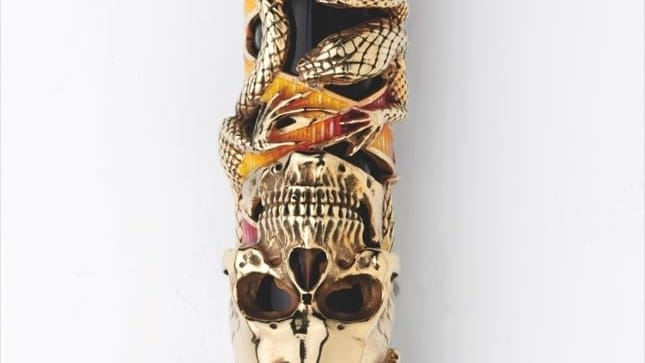
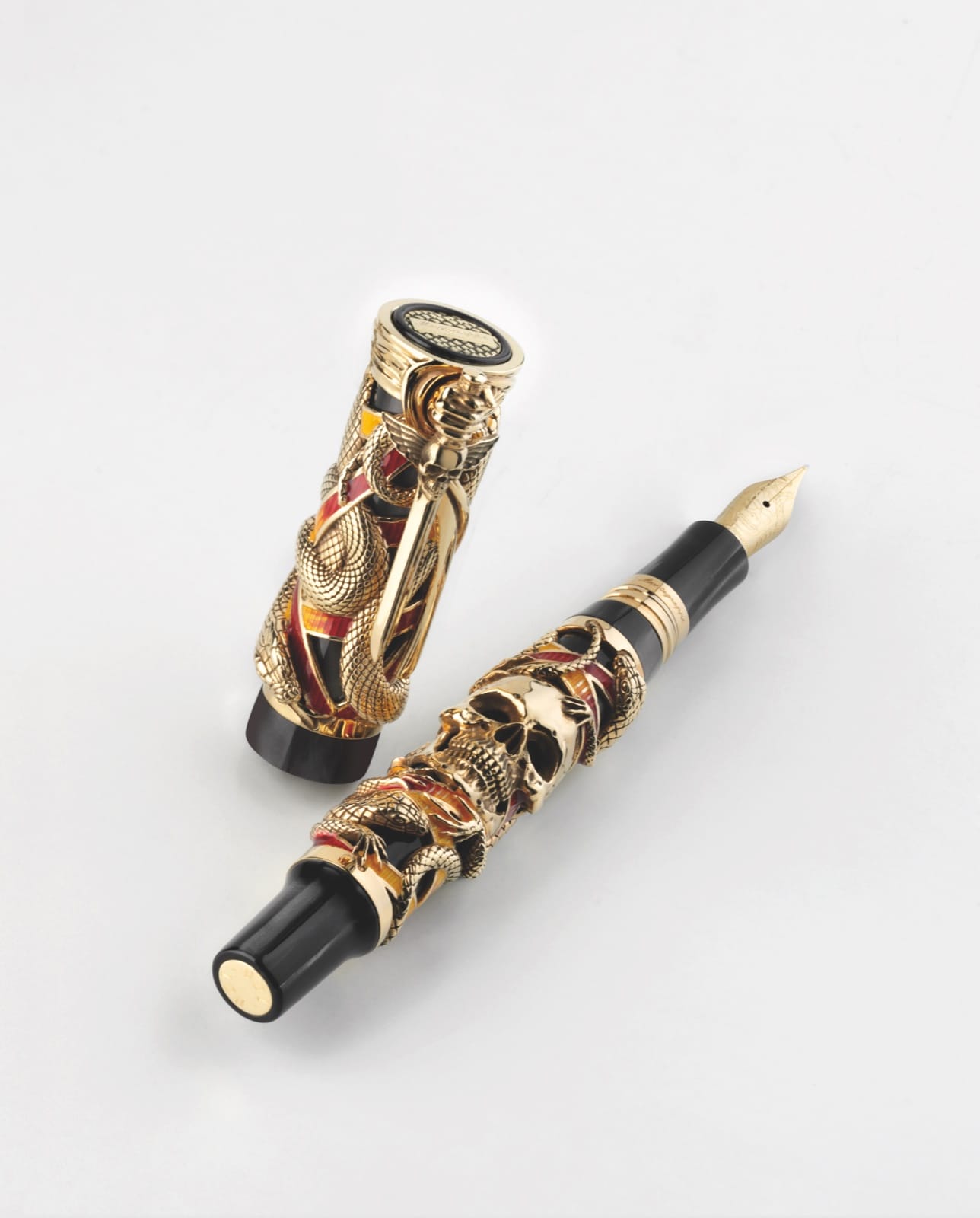
He might also have mentioned that this ‘family company’ is one of the foremost manufacturers of luxury pens in the world and what it may lack in size, it makes up for in star-power. Royalty, oligarchs, presidents (some for life), entire governments, Hollywood actors, popes, F1 drivers, Kung Fu masters and boxing legends have all been snapped signing something important with a Montegrappa. Yeltsin for example, symbolically signed Russia (and any post-perestroika pretensions towards democracy) over to Putin with one and Sylvester Stallone, who has long signed all his contracts with a Montegrappa was so distressed to lose his solid gold Dragon pen - a limited edition long-since sold out - that Giuseppe offered him the archive copy as replacement.
The move, like most made by the Aquilas, was canny. Not only did it win them Stallone’s gratitude – the photo of him kissing his new pen hangs in the hall next to Giuseppe’s office – it also made one of the world’s most successful actors a brand ambassador and later, an investor.
But then the Aquilas are used to thinking laterally. Their association with Montegrappa dates back to 1938, when Giuseppe’s grandfather contracted the company to manufacture pens for his own company. The collaboration continued until 1981, when after a long run of bad luck under a succession of unenthusiastic owners, Montegrappa found itself in terminal decline. The Aquilas stepped in and bought it, lock and stock.
At the time, the decision wasn’t obvious. Like other fountain pen manufacturers, Montegrappa was reeling under the assault of the ballpoint. Slowly, and again less obviously at the time, the family decided that for Montegrappa to survive, competing with the biro was the wrong tack to take. Going upmarket, Montegrappa began to present itself as the kind of pen you might not need but which would set you apart at board meetings. “The brand had originally been luxury-oriented,” explains Giuseppe. “So when I joined, we took it back in that direction and I introduced innovations like special themed designs and limited editions.”
The gamble paid off and as Montegrappa revived itself, it caught the competition’s eye. In 2000, the company was acquired by Swiss luxury behemoth, the Richemont Group, owners amongst others of Cartier, Chloé and Montblanc, which singlehandedly controls 78 per cent of the luxury pen market. Passing me the Grissini, Giuseppe admits that the decision to sell wasn’t popular with everyone, which rather begs the question of why they sold.“Let’s say Richemont made us an offer we couldn’t refuse,” he says with a smile, “but when we had the chance to buy it back, we did.”
Indeed. Approached at a charity event eight years later and asked if he was interested in reacquiring Montegrappa, Giuseppe’s father barely blinked. Cashing in when the company was at its peak and buying it back for a song, I reflect that this deal showed the kind of canny Levantine traders have been accused of since time began.
Today is almost 1981 all over again. Though Montegrappa is far from collapse – business was up 42 per cent last year and 30 per cent this first quarter – but it is under attack. This time it isn’t alone, nor is the threat limited to fountain pens. Tablets, computers, smartphones, email and twitter mean the first generation of children who may never need to write is already here. This may not spell the end of writing but it does represent a serious threat to a tradition extending back to the Sumerians.
Numbers may dwindle but there will always be those who want pens. Handwriting is intimate and conveys character in a way typing cannot. This is where Montegrappa’s ‘gilding of the lily’ approach pays off. By turning pens into objects of desire, it recognises that for almost all of its history, as an intimation of literacy that is still not universal today the pen was a symbol of status and power.
Now, as the world hurtles towards total literacy and turns to the touchpad, Montegrappa are making the pen a status symbol of another kind. Made from precious metals, as aesthetic as they are functional, these are pens for people who have means to invest in an object that essentially, is no longer necessary.
Simultaneously, Montegrappa are trying to give fresh value to writing by hand. Later this year, it releases the Brain pen. Designed in collaboration with American neuroscientist, Richard Restak, the pen comes with a booklet illustrating his contentions that writing by hand improves the memory and helps delay the onset of conditions like Alzheimer’s.
It’s also hedging its bets. Hence the move into accessories like cufflinks, watches and perfumes, with small leather goods and luxury writing paper in the future. When I ask Giuseppe if this is, well, wise, he replies with an example. “Hermes made saddles. Louis Vuitton made cases and even Montblanc sells more accessories than pens. Besides, there’s always a history, a meaning behind our accessories. It’s not just about brand extension for the sake of it.”
And so the watch’s bezel is based on the tip of their best-selling Nero Luna pen. The cufflinks are made out of the same colour metals and the perfume bottle is inspired by its shape. “We’re 90 per cent a men’s brand and let’s face it, how many men’s accessories are there? Pens, cufflinks, wallets, eyeglasses, these are all the equivalent of jewellery for men.”
They’re not light. They’re not discrete. They’re not affordable. But in Montegrappa’s case, three negatives add up to one large (and lucrative) positive.
“We have a small niche,” Giuseppe tells me, as I am about to leave the office. “But in that niche, we have no competitors. At all.”