“Artists should take risks,” Shirin Neshat tells me in her meticulously minimalist studio in Manhattan’s Soho district on a Sunday morning. “I’m a restless artist,” she continues, her signature kohl-drawn eyes adding intensity to her already steely frame, “who constantly needs change and deeply believes in taking risks, as scary as that can be.”
She leans forward with excitement to talk about her latest work, a feature-length film about Umm Kulthum, which will take her to Egypt in the autumn. Shifting her focus completely from Iran and taking on the challenge of working on a feature-length film in Arabic, Neshat describes how she hopes to tell the singer’s story against the backdrop of Egypt’s political and social developments in the latter half of the century.
“For me, Umm Kulthum is so important. The way she moved so many people, the way people from all walks of life loved her,” she exclaims emphatically, momentarily forgetting the headache that had plagued her from the early morning. “Umm Kulthum became a hero. Unlike other amazing women singers, she never became a victim of her own abusive behaviour… she never had a dip like that. She never depended on men, she was not self-destructive, she was not beautiful, she was not a traditional woman, but she was this powerful, powerful artist.”
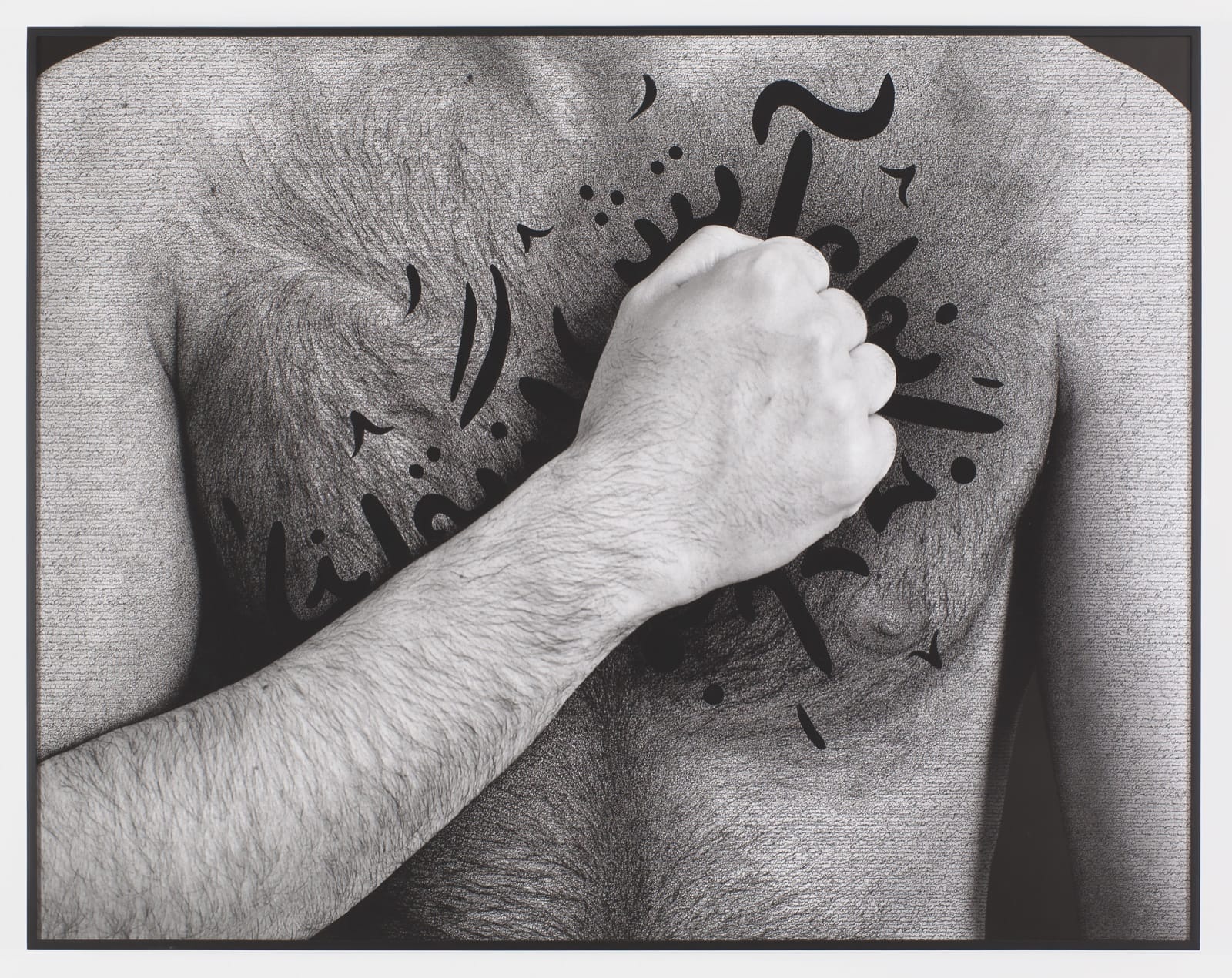
It is no surprise that Neshat is so interested in portraying women as fighters. On a more personal front, she has been battling widespread criticism of her portrayals of women and of Islam ever since ‘Women of Allah’, her series of large-scale, stark black and white photographs of Iranian women warriors. They’re striking and you’ve certainly seen them; hands inscribed with Persian poetry, faces defiant against the barrels of their guns.
In 1990, wanting to document the dramatic changes to Iranian society and its visual landscape after the 1979 Revolution and subsequent eight-year war with Iraq, Neshat returned to a country she hadn’t seen since she was a teenager. “I had a lot of questions about the changes and I wanted to make a body of work that reflected and framed certain questions,” she explains. “I was trying to understand how the revolution redefined our lives as women. And when I went to Iran, I realised that it wasn’t the image we got in the West of submissive women, but there is also the image of gun-carrying women.”
Attempting to communicate that powerful image in her photographs, she found herself under attack from all angles. Some described her work as Orientalist, others as simplistic and pandering to Western audiences. “The trick is to take in the criticism and work through it, but not to let it paralyse you from working.”
Neshat’s tireless energy is palpable. She works nearly seven days a week and is in her studio by seven in the mornings. “I not only open myself up to criticism by being restless in my work but I also have to face down my own fears. Most of the time, you’re your own harshest critic.”
Just as her signature style in photography was becoming popular in the art world, Neshat rebelled and began working on her first video art. “The thing is, I’ve always had a love affair with the moving picture. It’s perhaps one of the most poetic and lyrical possibilities that you can work with.” Unlike her photographs, which starkly juxtapose black and white, Neshat began to play with colour, music, choreography and performance in her videos.
Taking inspiration from the literary work of one of Iran’s foremost female writers, Shahrnush Parsipur, she adapted the author’s magical realism novel, ‘Women Without Men’, to the screen. Since she could not film in Iran, Neshat travelled the world over looking for places that could serve as a stand-in. Instantly praised for her cinematography, Neshat began to establish herself as a video artist. “For me, the photographs are more or less portraits, video is about telling stories. I also fell in love with the idea that the moving image is not object-oriented, it cannot be a commodity, an object that can be hung on the wall like a photograph.”
The film tells the story of the 1953 CIA coup against Iran’s democratically elected Prime Minister, Mohammad Mossadeq, through the eyes of four women. “It was important for me to show our democratic struggles in Iran and how the United States and the United Kingdom thwarted that effort,” she says with quiet determinism. The film was an official selection at the 2010 Sundance Film Festival and won the Silver Lion award at the Venice Film Festival.
In the summer of 2009, as the film made its rounds on the festival circuit, it coincided with the emergence of Iran’s Green Movement, the largest series of protests since the Revolution. The youthful energy of the Green Movement and the subsequent Arab Spring created a new optimism in the region as people called for an end to injustice. “This quest for justice that I portrayed in the film was playing out on the streets of Tehran. It was incredible to watch and I was so heartbroken I couldn’t be there to join those young people on the streets.” She turns her attention to pick at the band-aid on her index finger, lowering her eyes. When she lifts her head again, her eyes glisten with tears as she recalls her horror in watching the state crackdown on the peaceful protestors.
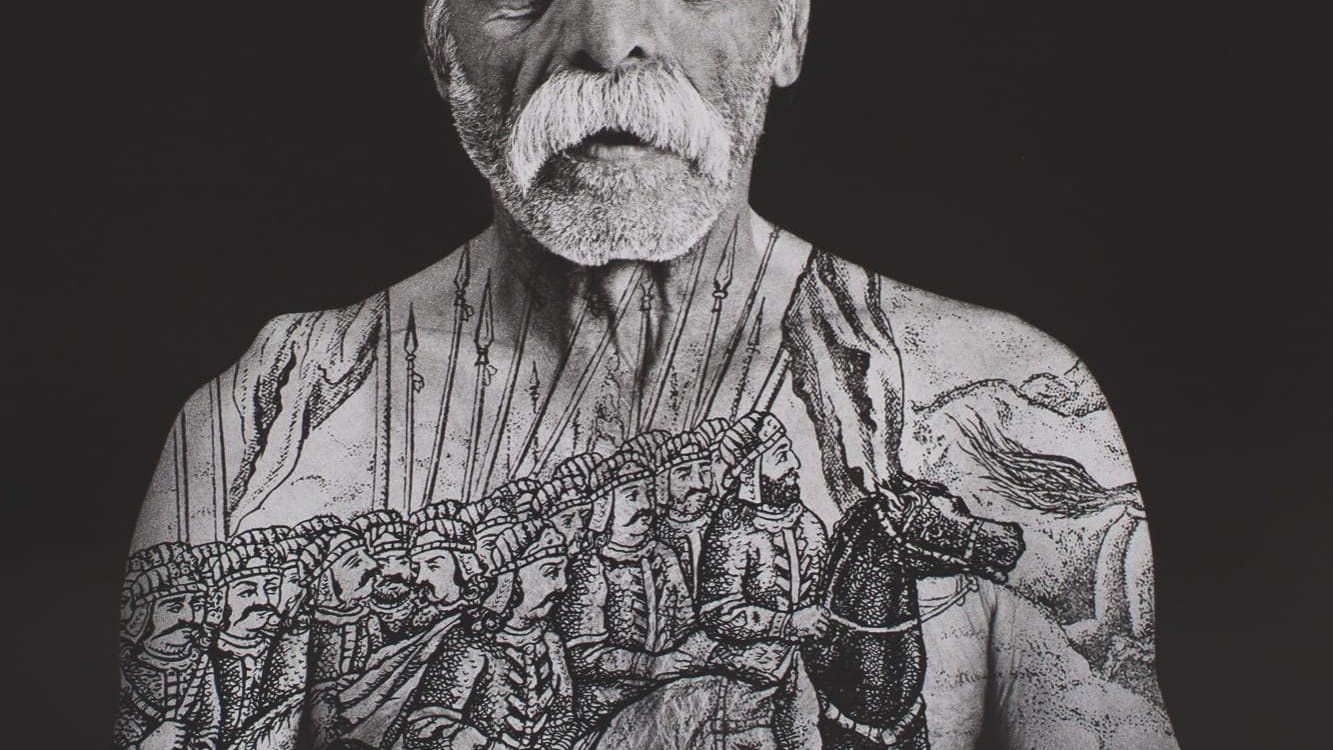
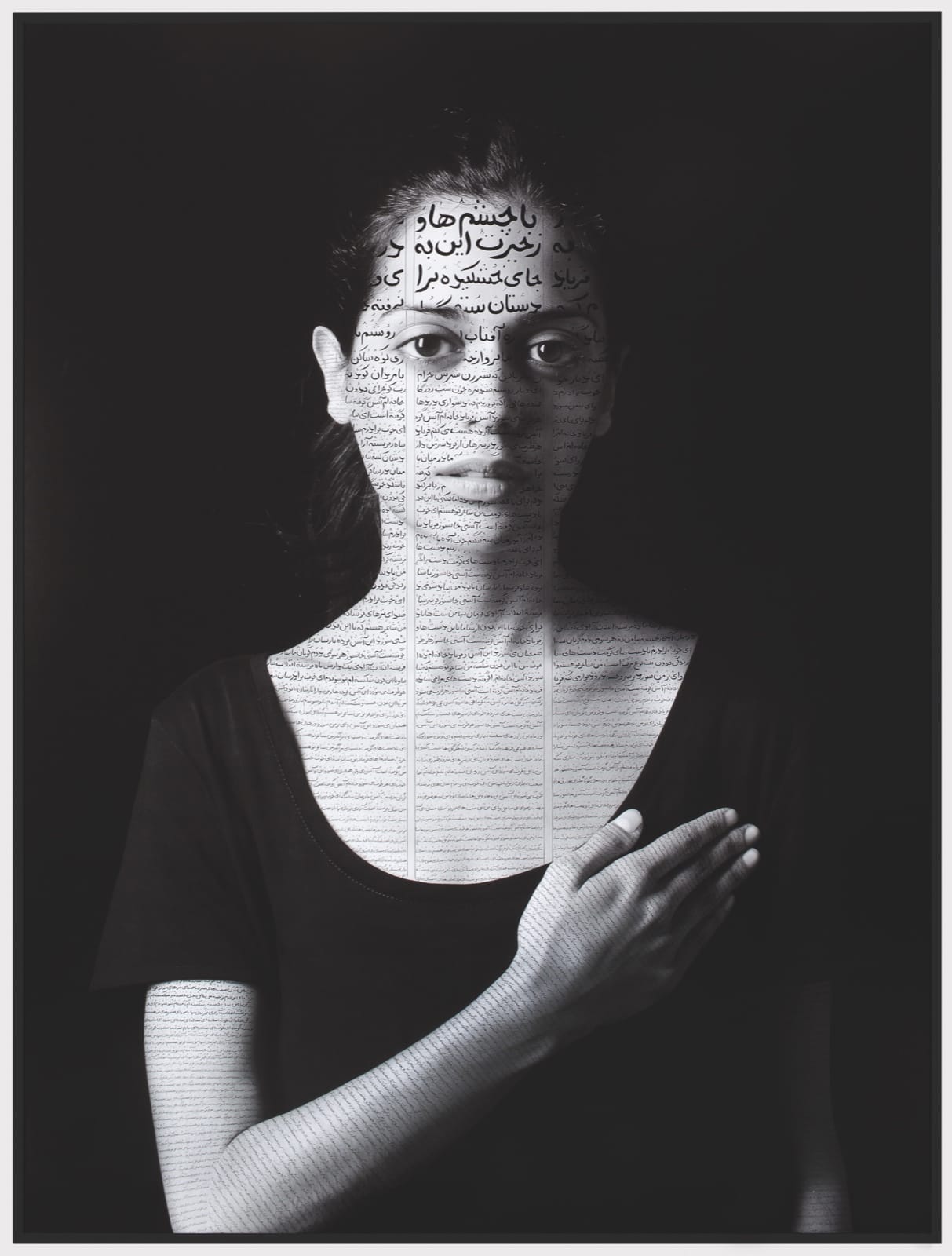
The movements inspired Neshat’s return to photography in her latest series ‘The Book of Kings’, as did the Iranian national epic ‘Shahnameh’. Huge in size and powerful in their simplicity, the photographs capture living Iranian artists, writers, and activists, which Neshat fills in with stories from the ‘Shahnameh’. “I realised that there is an uncanny similarity between the stories of the ‘Shahnameh’ and what we saw in 2009 in Iran and later in the Arab Spring,” she says. Much as in her first series of photos, the subjects, many of them well-known Iranian artists and activists, stare out in quiet defiance, as the age-old stories speak of the struggle for justice.
Neshat’s awe of the human spirit in the face of suppression is a theme that runs throughout her work. Her defiant characters, from women in different historical epochs in Iran, to activists in the Middle East today and the monumental Umm Kulthum, defy the odds in order to persist. “There is something about this timelessness of tyranny and the desire to fight and live for something bigger than yourself that you read about in the ‘Shahnameh’ and that we witness again and again in history and that’s what I am trying to capture in my new work.”