Santiago Calatrava, you’re from Valencia in Spain where you studied to become an architect. Why did you then move to Zürich, Switzerland?
My career has largely come about through different circumstances. I grew up in Valencia and, because my family was related to the director, was able to attend an art school when I was just eight years old. By 16, I wanted to enter the School of Beaux Arts in Paris. But the year was 1968, and Paris was overrun with student protests, which did not elude mine. So, I was forced back to Valencia and the local art school and the polytechnic. After six rigorous years of education, I earned a degree in architecture and urban planning. Yet, I was of a required age to do military service in Spain, which went against my most essential beliefs, for we were living in a dictatorial system. I knew that I had to leave my home country. Throughout my time studying architecture and urban planning, I had spent summer vacations visiting other European countries and Switzerland had always remained in my mind as a significant place. So much so that, eventually, I was convinced that the Polytechnikum in Zürich would be a great incubator to study engineering. I moved there to pursue those studies as far as I could.
Why did you choose architecture and engineering rather than becoming an artist?
It was a conversion. I was in Paris in the summer of 1968, working a couple of hours a day at a non-profit on Rue Chanoinesse, around the corner from Notre-Dame. I would often visit the cathedral, and it was on one such occasion that I was marvelling at the beauty of the space as you enter; the sun was shining through enormous stained-glass windows, and dust was rolling in the rays of light. It opened my eyes to the fact that architecture, like painting and sculpting, is an art form. And, as an artform, architecture was bonded by the exact knowledge of technology or material properties, and the beauty of this cathedral was, for me, the pure essence of the craft – the alpha and omega. Engineering, I discovered, was essential to gain more receptivity about structural and material behaviour. So, for me, it’s a symbiosis; together with painting and sculpting, the world of mathematics and mechanics is one that I love and am perpetually invigorated by.
Why have you designed so many stations and bridges?
Through circumstances. I met my wife as a student in Switzerland and decided to start a life there. But I didn’t have any connections or knowledge of people who would commission me to design a house or condominiums. So, I was forced to win bids from public competitions. Together with a colleague, I was fortunate to win the competition for a railway station in Zürich, resulting in my first station. What I learnt to love is that they are functional but can be beautiful too. They take years to be completed because so much goes into the work. Looking back at all of the stations I have done, each is different from the next because they have been adapted to the local circumstances. Even if you are working in a very constrained field of functional and technical limitations, such as when designing a station, there remains a freedom to express yourself.
What about bridges?
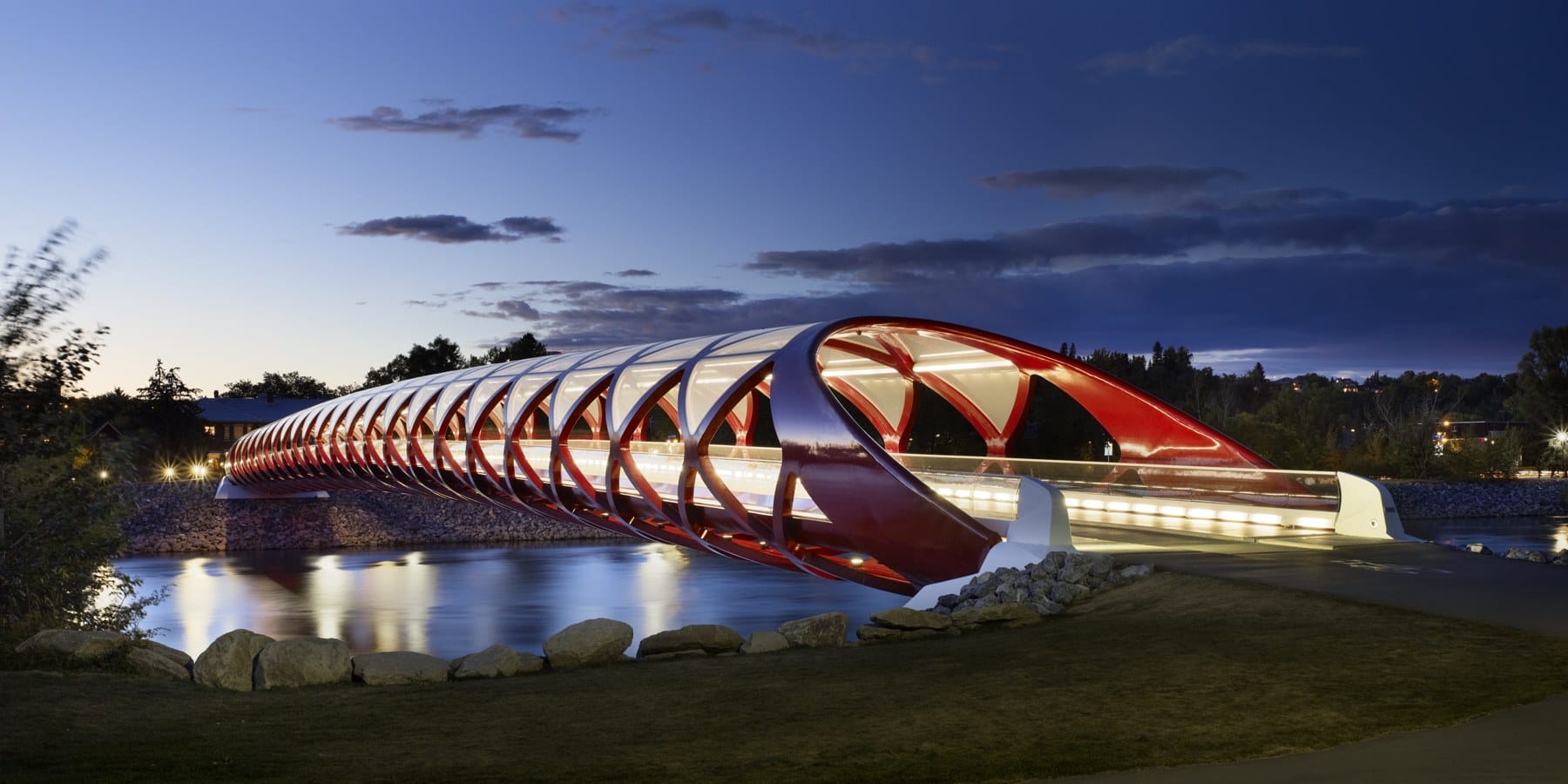
Bridges are very rarely private commissions. Once you design a bridge and it is well received, you will eventually get rewarded through more commissions for designing other bridges. The statical composition of a bridge is very limited. Either they are a beam, an arc, a cable-stayed, a suspension, or a tubular bridge. There are only a few models, but the variety of the circumstances, the length, the landscape, these provide the architect with a level of freedom. After so many years, I have learned that I take great joy from designing a bridge.
How do you conceive your stations and bridges?
Following the Second World War much of reconstruction was predicated on functionality and the need to build quickly. In terms of bridges and railway stations, the results that emerged in the 1950s and 60s had nothing to do with the designs of the past. Look, for example, at London’s Victoria Station or St. Pancras, or New York’s extraordinary Grand Central or original Penn Station. The same with bridges. Suddenly, the best bridge was the cheapest; one that simply could lead from one point to another. This attitude towards bridges ran counter to such designs as the Tower Bridge in London or almost every bridge in Paris, which, in my opinion, are truly the face of the city. This led me to begin designing bridges using steel, which was very uncommon at the time, as most bridges were concrete. In designing bridges, I pushed myself to find a new vocabulary, which manifested in combining concrete and steel, as seen in the Alamillo bridge in Seville, with the gravity of the pylons. Or the Lusitania Bridge in Merida, with the big arch in the centre. Or even with the bridge in Barcelona, in which there’s a double arch, with one of them inclined. In conceiving new bridges and railway stations, it was fundamental for me to work within a new vocabulary. Everything grew and evolved from this lexicon.
What is it you aim to achieve with stations and bridges?
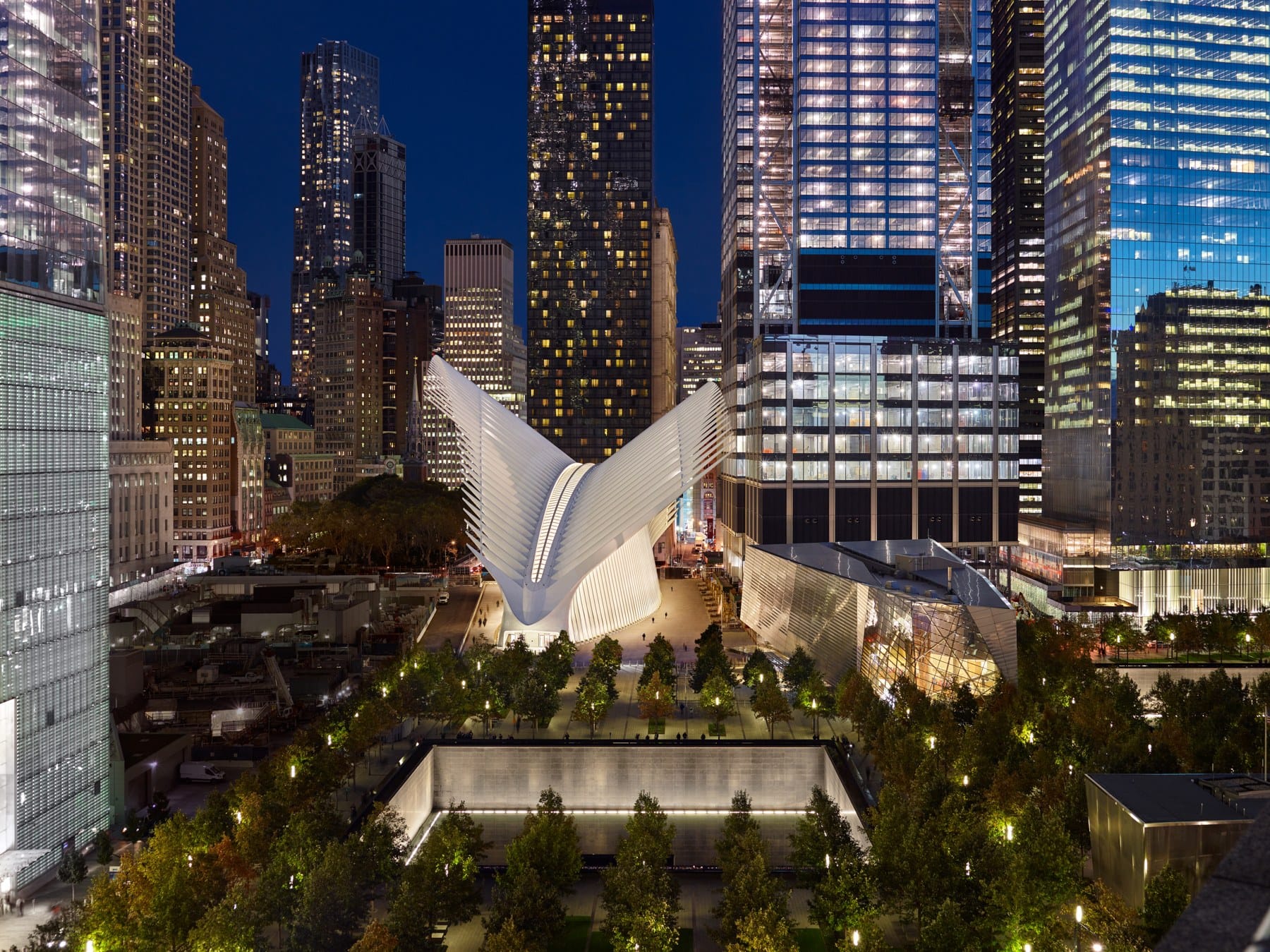
When designing a station, I take pride in creating large spaces for the public to enjoy. If you consider the most fantastic cultural buildings of our time, such as the Louvre, the Metropolitan Museum, or the British Museum, they receive 10 or 12 million visitors per year. But a station, such as the Oculus in New York, can easily receive up to 100 million people each year who commute to and from work, and pass through the same station each day. Whatever beautiful design you create in a railway station is in homage to them. Sadly, many of those people do not have the possibility of visiting the Louvre or the British Museum, so a station is a remarkable place to make a genuine effort to inspire. While working within the economic limits, a well-designed station provides the public a sense of beauty in their everyday life. It is my aim that they see and take pride in this beauty, because it is for them to enjoy.
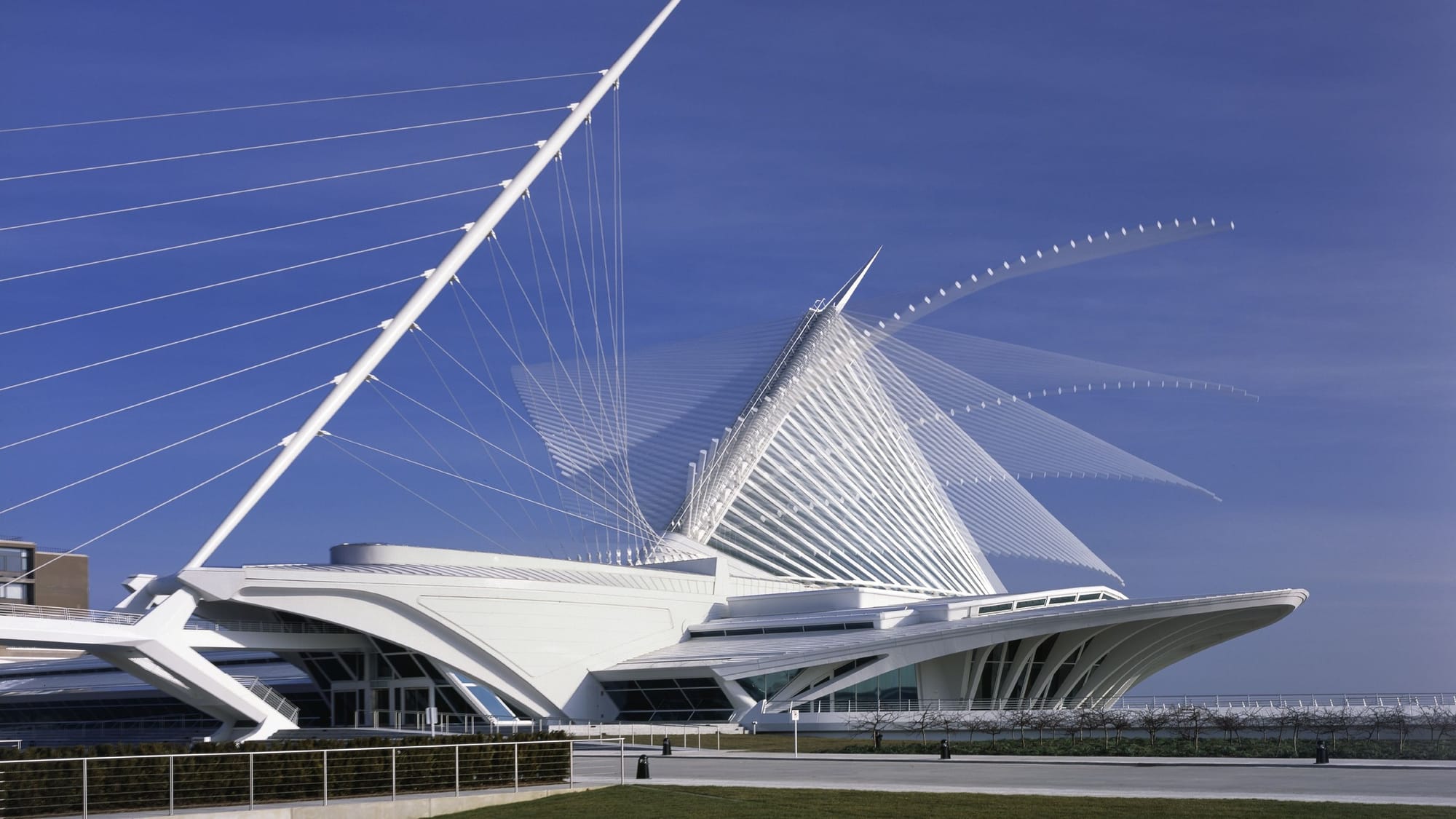
Around the 1990s you started adding movable aspects to your work, like the wings of a bird, such as with the Kuwaiti Pavilion in Seville in Expo92, the Quadracci Pavilion at the Milwaukee Art Museum, or the Oculus at the World Trade Centre in New York. What’s the point?
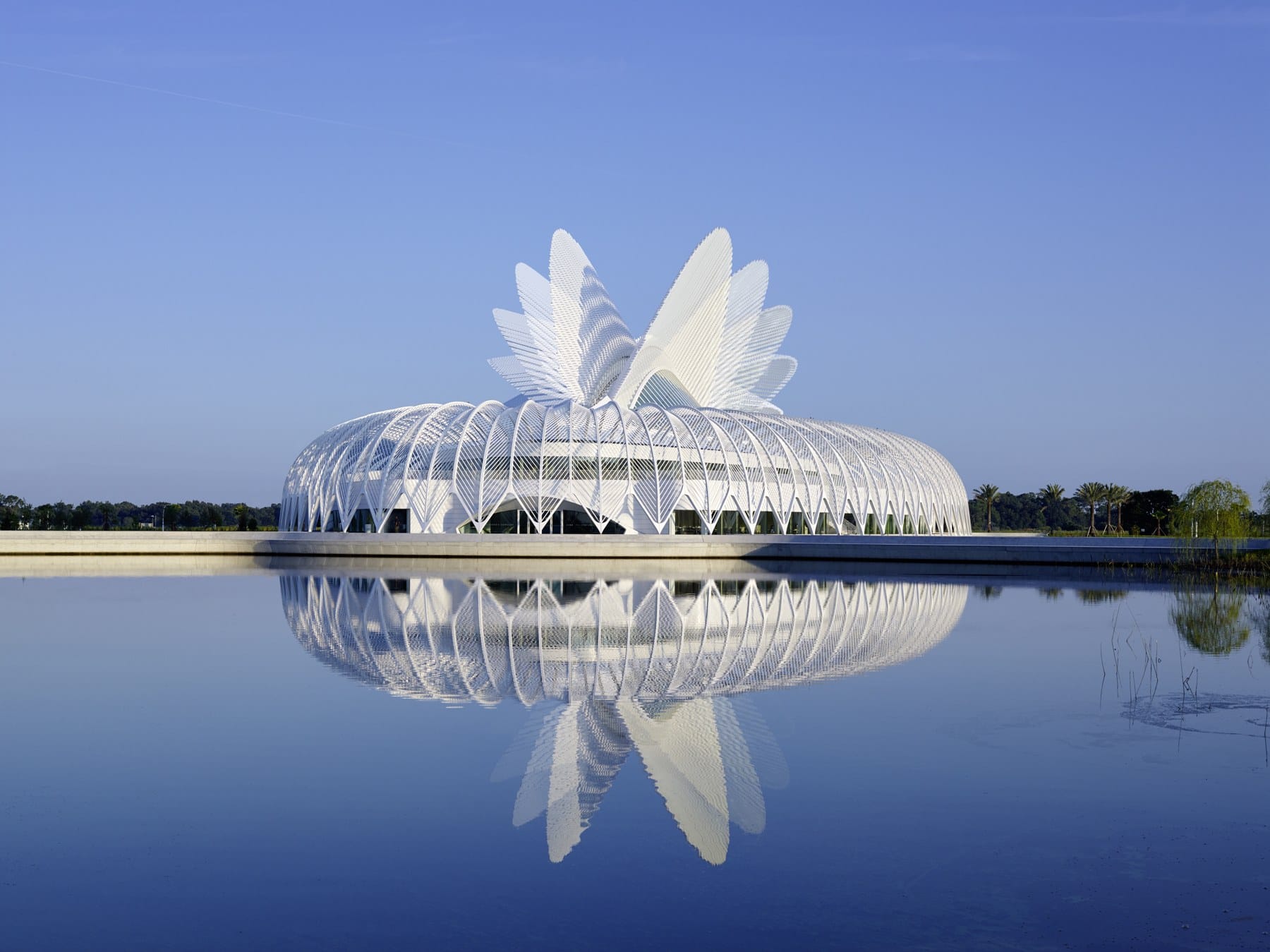
A quote that transcends time is that “art precedes science”. You can see this, for example, when studying the Impressionists from Monet to Sisley. They were painting in a way that was related to natural light and the effects of the light within nature and objects. Their artistic instinct towards light as the subject of their painting was happening before the revolutionary thesis of Albert Einstein, which later brought him the Nobel Prize on the physical nature of light. The idea of movement, speed, and dynamism art was already present in Italy’s Futurist movement of the early 20th century. Also, Alexander Calder, the great American sculptor, and his mobiles, created with the idea of introducing elements which through natural or mechanical forces could change shape. My PhD in Zürich involved folding complex spherical polyhedra into a line. The transformations from three dimensional shapes into a one-dimensional event fascinated me. It is possible, in my opinion, to make the shapes transformable. A building is not something static and rigid which changes only through the shadows when the sun is turning around it, but it can also change like flowers of Oxalis that open during the day, or sunflowers, which follow the arc of the sun. It is done even by leaves, by branches, by our own body, when we are opening our hands or opening our arms. There is a whole poetic version of that which opens in the moment you introduce a dynamic shape in architecture. The first time I did something movable in a warehouse in northern Germany – the client permitted us to use doors that open and change shape. It was very well received at the time, and they are still working to this day.
Is architecture functional sculpture?
Henry Moore, a sculptor I really admire explained that a sculptor works with material and is free to express himself. He's bound only by the natural laws of the material he’s working with. On the other hand, architects, he reasoned, are bound by the laws of utility and functionality related to the use of the building. It’s a severe limitation. Yet, architecture is also superior to sculpture on the human scale. Unlike a sculpture, you can penetrate a building, and it can enclose you. Rodin had enormous respect for architecture, visiting many cathedrals in France, and doing a series of notes about his experience. He spoke about architecture as the harmonious game of plans and volumes under the light. Even the last generation of great sculptors like Moore, Jean Dubuffet, and Chillida made sculptures so big you can almost penetrate them. Perhaps they were blurring the lines between sculpture and architecture. Or maybe they wanted to be architects!
What is the fascination of architecture?
On one side, architecture is bound by functionality. You must think and conform to all that is practical. This appears as a limitation but even in the humblest cases, such as railway stations or bridges, you can achieve something beautiful, something that is harmoniously integrated in its surroundings and that provides people satisfaction. Without the Brooklyn Bridge, for example, Brooklyn would not be the vibrant borough it is today. It is an enormous monument that not only represents New York, but all of the US. This is the power that these constructions have, and it is very important to try and catch this symbolic force that architecture can provide. I believe that at its best, architecture stays in our minds and hearts as the signs and symbols of cities, and of communities.
Are modern buildings designed to last?
Vitruvius, the Roman architect and engineer identified three qualities to architecture: functionality, stability, and beauty. But stability in Roman times was also measured by durability. You can see this in the Pantheon in Rome. Close to my Lusitania bridge in Merida there is a Roman bridge that is still in use today. This is incredible. Their concept was that buildings should survive and remain for generations to come. The concept today is very different. Some buildings of temporary use, like La Tour Eiffel, which was only intended for the World Expo in 1889 has been preserved and kept in use over a century later through constant maintenance. Certain people, however, will tell you the life of a building is bound to the mortgage, and after they get their invested money back the building can be demolished. It’s easy to see how this attitude contradicts that of the Romans, and the Parisians. Can you imagine Paris without the Eiffel Tower? It has come to represent not only the city, but even the entire country of France.
Agreed but on the other hand, some suburban architecture was never meant to last.
Yes, many buildings in European suburbs were built during the 1950s and 60s for mainly functional purposes. In other words, to give a minimal comfort to a family. This was necessary because people were coming from the country to the cities in the millions, but today those suburban areas are problematic, as people do not want to live there, and the attitude of the young generation is not at all positive because they are living in an environment that was conceived without any aesthetic principals. As a result, it severely limits their hopes and aspirations. This is proof that architecture survives us as a future heritage for generations to come, good or otherwise.
We know of your museums, opera houses, stations, churches, even public buildings with different uses, but not of your houses, why is that?
To build houses you need an individual to commission you. When I started, I knew very few people who were able to request for me to build a house. I have done some apartments, for example in Malmö, and also master plans for housing areas. In general, I believe that houses are among the noblest things that an architect can do because it is there that architecture takes body. In our houses we live, educate our children, experience joy, and suffer. Nowhere else do all these experiences happen under the same roof. A house should give us a sense of intimacy, pride, and comfort, but also an identity. I am sure the first person who thought of building a house to protect them from the cold and the wind was trying to create a cocoon. The first gesture related to architecture was to build something like a house. I have never built a house ex novo, not even for myself. I’m still dreaming of doing that.
Is your architectural legacy recognisable such that people can say, “This is Calatrava”?
I cannot speak about myself in these terms. The work of an architect or an engineer fills you with humbleness. I will give you an example: hundreds of people were necessary to build the PATH station in New York. This building was a result not only of the work, but also of the emotion of all those people who were working, providing the steel, mounting it, welding it, painting it, all that made it possible. Because you need so many people around you to fulfil these tasks, you feel like just one of many. It fills you with pride, but it also shows your limitation, and you are also grateful that you were handed the opportunity to be involved in such an endeavour. More than 40 years of exercising this profession have shown that my career has been an extension of the emotion that I experienced entering Notre-Dame the day I decided to become an architect. That satisfies me, even to this day.
Above: Born in Benimamet, near Valencia, the 73-year-old Spanish/Swiss architect, Santiago Calatrava, melds art, sculpture, engineering and architecture in a way that no other architect has ever conceived before. It is extraordinary to imagine he has been overlooked for a Pritzker this far into his illustrious career.
This page, top: Qatar's Expo 2020 Pavilion in Dubai. Bottom: The Puente de la Mujer bridge in Buenos Aires. Opposite, top: The Turning Torso skyscraper in Malmö. Middle: The Mediopadana high-speed railway station of Reggio Emilia. Bottom: The City of Arts and Sciences in Valencia.
Above: Calatrava created a pavilion informed by the shape of a falcon's wing for the UAE at the Dubai Expo 2020 (which was delayed a year due to Covid). Its 28 movable 'feathers' open so as to harvest energy through integrated photovoltaic panels.