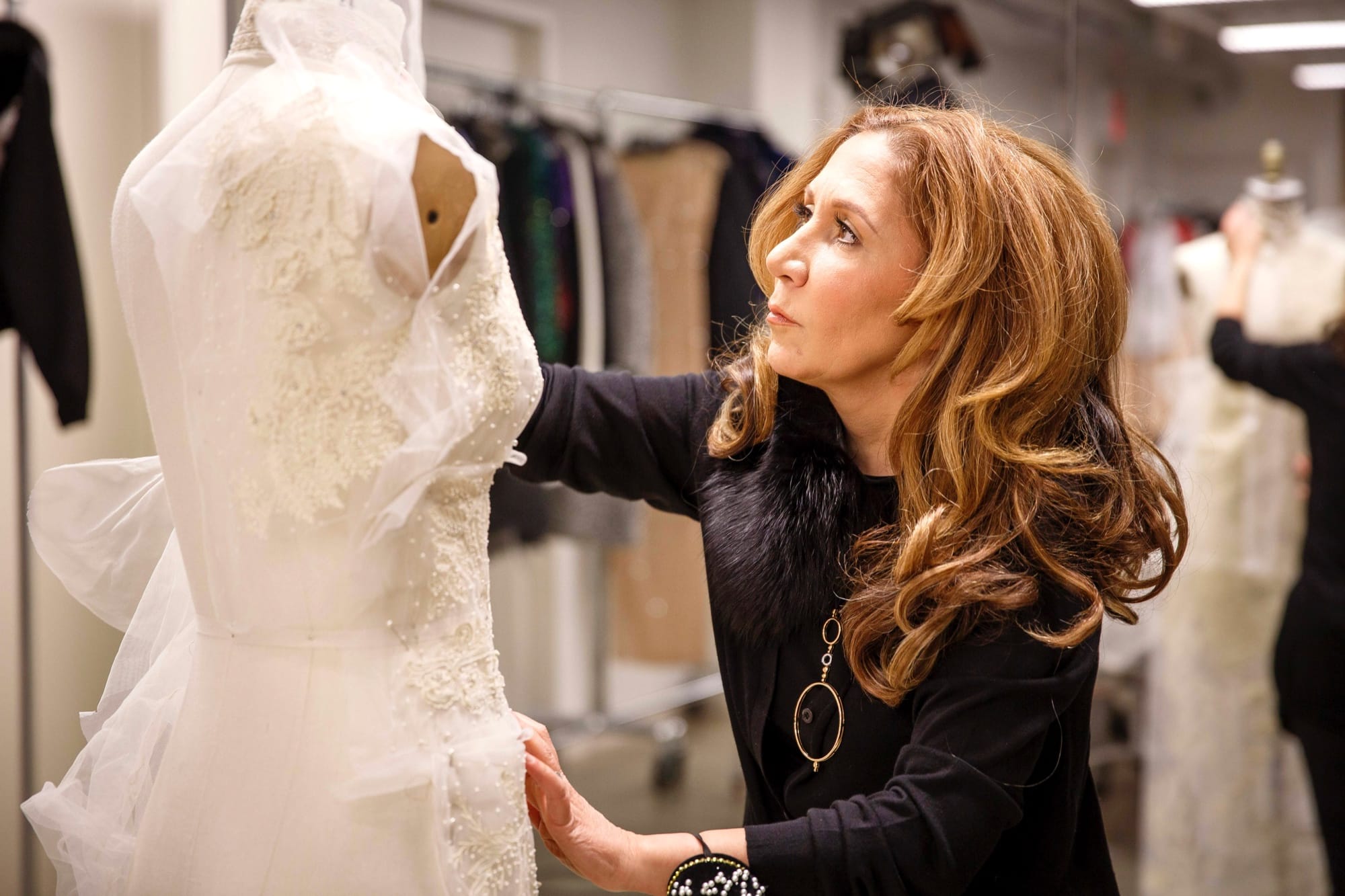
You could argue that Reem Acra is a household name. Having cracked the US before anywhere else, consistently dressed the most dazzling stars on the global circuit of red carpets, launched a ready-to-wear line in addition to her bridalwear, developed a global reach through over 150 of the world’s most prominent retailers (including Bergdorf Goodman, Saks Fifth Avenue and Neiman Marcus), and emerged as a judge and head mentor on the Arabic version of ‘Fashion Star’ (a reality television show that began in the US on NBC and more recently got picked up by Dubai One), she has, by all accounts, got it going on.
Yet, without being defamatory, the Reem Acra name doesn’t muster the same cachet as some of the other designers of her generation. As one anonymous front-row fashionista put it, “Reem Acra is just not as au courant as Rabih Kayrouz, not as desirable as Zuhair Murad and not as glamorous as Elie Saab”. As a result, she remains somewhat in their shadows.
But why? All four are Lebanese and all four were in fact born in the golden age of Lebanon (between 1964 and 1973), before the Civil War decimated the country. All four have managed to start their own brands, making names for themselves with fabulous bridalwear and gowns that feature delicate embroidery, ornate beading and gorgeously feminine designs. Even in the world of celebrity endorsements, there’s not much to separate them, with each remaining impressively popular with stars on the red carpet. But as much as Kayrouz, Murad and Saab have become staples of Paris’ fashion week, even gaining membership in the Chambre Syndicale de la Haute Couture (to varying degrees), Acra has gone it alone, showing in New York, the city in which she first made it back in the late 1990s. Perhaps this decision was based on wanting to branch away from the rest, or maybe, as the only woman in this group, it had something to defying the all-boys club? It’s impossible to tell, as she has never openly discussed the topic, but it’s interesting to note that last year, she decided to play the others at their own game and booked a salon at the Ritz for a daylong presentation during Paris’ Fall/Winter 2017-18 Fashion Week. Even more remarkably, for the first time the focus of her collection wasn’t eveningwear, instead it was separates. “I made the decision after talking to many people – the press office, retailers – they all wanted daywear,” said the designer. “There are clients out there who want to wear Reem Acra but not everybody is going to events. So we listened.”
Acra’s brand story began in 1997, which is when she founded her namesake line of bridalwear (adding eveningwear six years later) in the land of equal opportunity, (though there’s still work to be done when it comes to pay parity over there). “The world of fashion is changing at the fastest pace and I am super excited that I graduated from my 20th year, and in all honesty, I am grateful that the city of New York has celebrated me in many different ways,” the designer said when she recently feted her brand’s anniversary with a bridal collection inspired by the American jeweller Tiffany & Co. “The collaboration with Tiffany’s was amazing. It is a stamp of luxury for my brand.” Additionally, the New York Public Library offered Acra a space for her next fashion show – a room that had never been offered to anyone before.
And further solidifying her US standing, Acra tied the knot at the end of 2015, at the age of 51, wedding New York-based Lebanese plastic surgeon Nicolas Tabbal, before selling off her 5.5 million USD Chelsea home in order to move into a new uptown apartment. Heck, she’s so well rooted in America that First Lady, Melania Trump even chose one of her gowns on a state visit to Saudi Arabia in January 2017 (which was actually the first overseas trip by the new administration). Honestly, if we didn’t know that Acra had shuttered her Middle Eastern flagship store in downtown Beirut, or that the number of her Instagram followers (630k) trails all but Kayrouz’s 31.7k (Murad has 4.4m and Saab has 6.6m), we might have assumed Acra was living a fairytale.
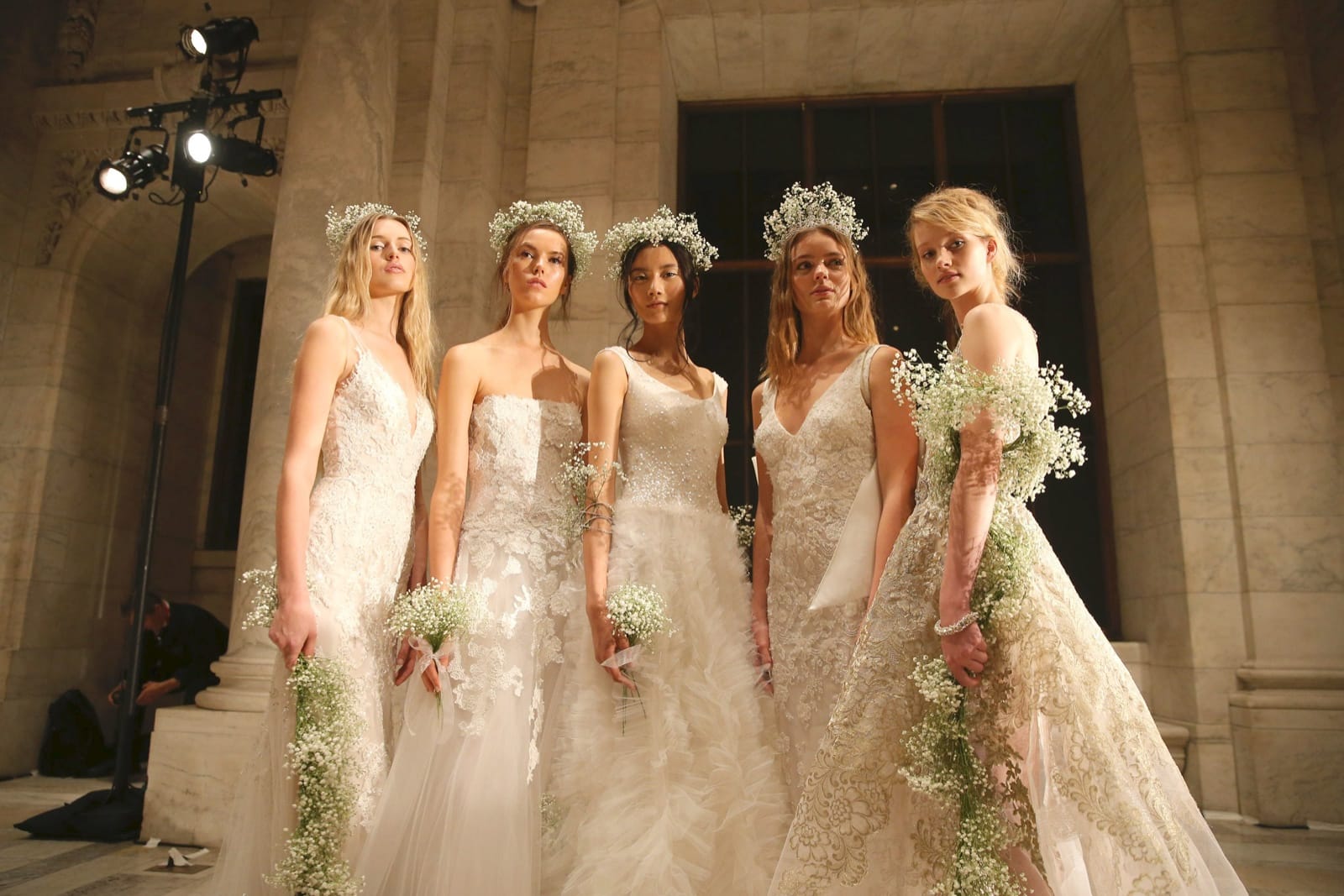
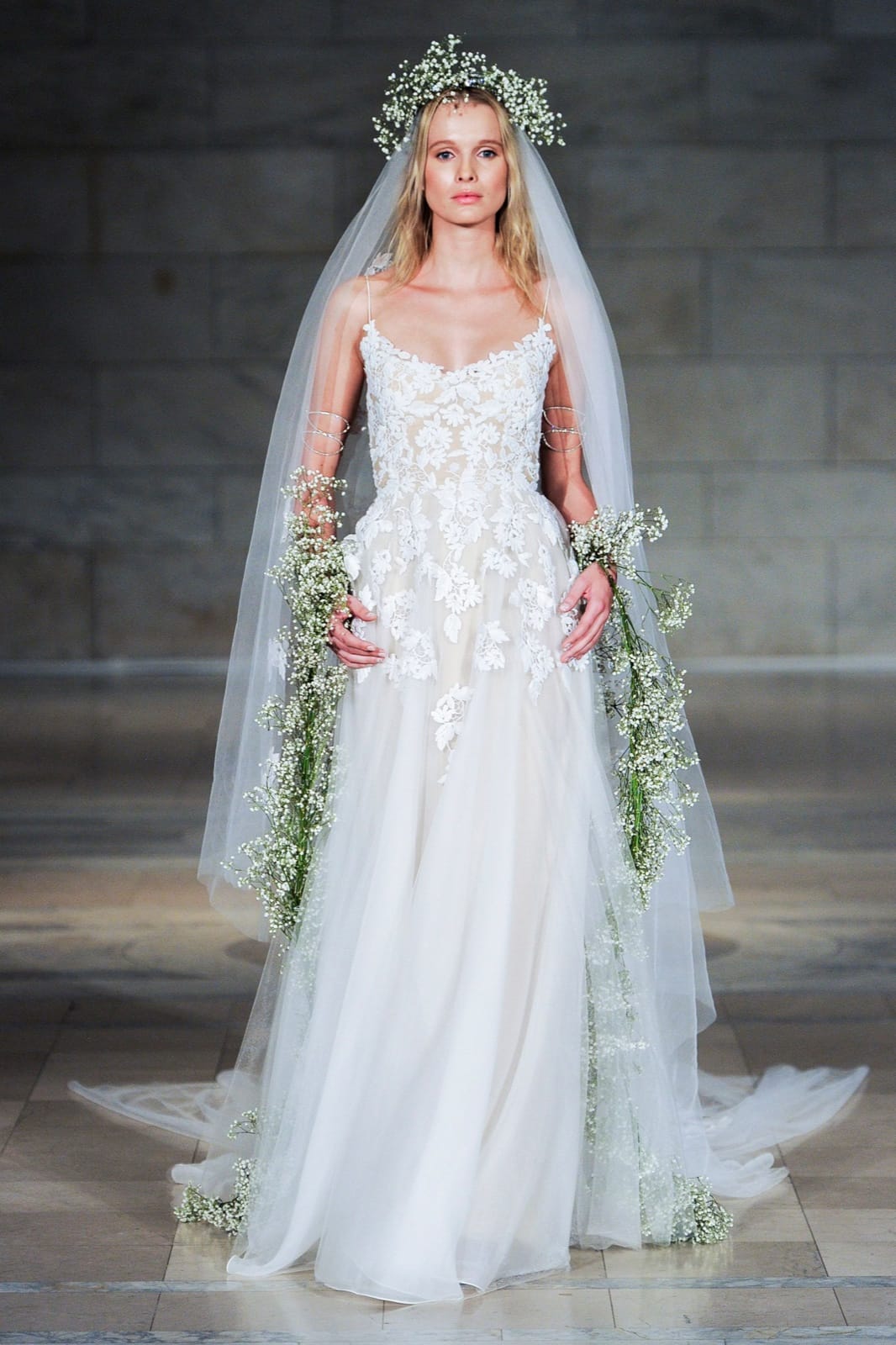
Speaking of fairytales, that might also have been an apt descriptor for the ill-fated Fall 2018 bridal collection shown at the New York Public Library, had things gone differently of course. Except they took a turn for the worse when Diet Prada, a runway referee on Instagram that calls out designers for, as its bio says, “knocking each other off”– pointed out that Acra’s choice of accessories, springs and garlands of baby's breath (some models wore the tiny white blooms as crowns, some had them wrapped around their arms like cuffs, a few carried bouquets, and some were draped in lengths around their arms that looked like boas) were a direct rip off of Rodarte’s Spring 2018 ready-to-wear collection. Their naming and shaming even prompted Rodarte’s designers Kate and Laura Mulleavy to respond on Instagram, with the shocked comments “WTF” and “It's only been 3 months!” It was an embarrassment to say the least for the designer. And though the incident is unlikely to be a cut-and-dry case of plagiarism, it’s a stick in the wheels of Acra’s machine, which we’d suspect needs all the help it can get in these times of reduced luxury spending.
Interestingly though, Acra has seen her stock in the Middle East rise considerably thanks to two seasons on the hit show ‘Fashion Star’. “It became more than a show – it became a school on its own,” she asserts. “We bring these young designers in not just to compete – we teach them and help them in their work before the season.”
What’s more, Acra’s story in Beirut is seemingly far from over. Her recent renovation of an apartment there may indicate she’s planning a new attempt at retaking her place at the top table of Lebanese couture. “It has meant a lot to go back to downtown Beirut where I used to buy my fabrics,” she says, recounting how her mother used to take her to Saifi village to go shopping when she was a girl. Now filled with galleries and fashion boutiques, the area would provide the perfect backdrop for a victory dance. “I knew this would be the right place for me to have a pied-à-terre.”
The boys better beware: Reem’s not going quietly into the night.