The sweetness of the air is the first sensation to stop you in your tracks. The second is the obvious and almost fanatical sense of secrecy that surrounds Italy’s foremost bean-to-bar chocolate maker. But then again that’s probably one of the reasons why Amedei chose to be headquartered in the tiny Tuscan village of La Rotta, about 40 minutes outside of Florence. The area is farm and wine country which suits owners (brother and sister) Alessio and Cecilia Tessieri just fine, “The air is much purer out here,” says Alessio Tessieri with seriousness, “we can’t afford getting any kind of impurities into the chocolate making process. Anything and everything can affect our end product.” Unlike your run-of-the-mill chocolatiers such as Leonidas or the more commercial Nestlé, companies like Amedei are masters of the craft, often following old artisanal methods in an attempt to create that perfect piece of cocoa.
Established in 1990 following a scuffle with French bean-to-bar giant Valrhona, Amedei fast became one of the industry’s leading award-winning makers of chocolate. “We have always been in the confectionary business,” says Terssieri who handles the agricultural end of the business while his sister, famous for her ‘nose’, is able to seek out and combine ingredients that go into exquisite tasting creations. “Our father worked in the raw materials. So Cecilia and I would help him out by touring pastry shops in Italy and Europe trying to figure out what went into them. We realised late in the 1980s that there were no home grown quality chocolates.”
As the story goes, they approached Valrhona to provide them with bars from which to make pralines. The French company couldn’t help but take a swipe at the Italian newcomers, “It seems that the company couldn’t fathom Italians making good chocolate. It was humiliating to say the least and we couldn’t let them get away with it,” he recalls. The Tessieris fought back with their own bean-to-bar company. After all, Italian national pride was at stake. Today, the company creates a collection of ten different bars including the limited edition and award-winning Porcelana collection with a distribution of 20,000 bars at 12.5 USD for every 50g. Arch-rivals Valrhona tried to up the ante last year by selling its own version of the porcelana chocolate at a heftier and riskier price of 120 USD per 300g.
Amedei creates sublime experiences in cocoa which is down, to some extent, to the bean. During the late 1980s and early 1990s, while Cecilia Tessieri took courses in chocolate in France and Switzerland, her brother travelled to Latin America in search of the perfect cocoa bean. It is worth mentioning that the most commonly used cocoa bean in most commercial chocolate blends is the significantly inferior forastero. However, there exists an extremely sought-after bean called the criollo that represents just five per cent of world production. And it was on a remote peninsula in Venezuela that he found the bean he was looking for at the sixteenth century fishing and cocoa plantation village of Chuao – after which Amedei’s best selling collection is known. This bean is a hybrid of the famous criollo and there Amadei set up a plantation replete with trees along an extensive 140 hectares or 1.4 million square metres of land. A raw chuao bean tastes so unpredictably sweet that you may be tempted to forsake the finished product which costs nine USD/50g.
Firm believers in the old adage, ‘you sow what you reap’, the Tessieris invested heavily in the village to gain exclusive rights to the bean. Today, they consider Chuao (population 1,600) to be extended family. “When we first looked at getting exclusivity for the beans in the early 1990s, the farmers were being paid a measly 1.3 USD for every kilo. It was ridiculous. So we upped the price, giving the 120 partners a much fairer four USD per kilo. It’s gone up since to nine USD per kilo. But that’s what you have to do if you believe in fair trade,” he says. Amedei is also responsible for improvements in the village’s infrastructure as well as the establishment of a baseball team and some subsidisation of the fishing community. As a result, productivity has increased from an annual output of seven tonnes in 1999 to 10 tonnes annually.
According to Tessieri, the best time to harvest the beans is between January and March. Once plucked off the trees, they are removed from their pods and wrapped – along with the white pulp that surrounds them – in banana leaves to allow for about six days where they are turned over daily to ensure equal fermentation. The beans are then dried in the sun before being shipped off to La Rotta.
If the plantation is the soul of the chocolate then the headquarters in Tuscany are its mind and heart. Within the sterile and lab-like factory lie the secrets of its ‘winning formula’. No amount of cajoling and pleading would convince Tessieri to reveal temperatures, timings and measurements. All ruses were met by a friendly and curt smile. But a tour of the premises did reveal the transformations an Amedei chocolate undergoes and the company’s almost manic obsession with cleanliness – garnering it the accolade as the only ISO-certified bean-to-bar company in Europe.
The bean goes through seven stages: tumble-dry roasting, shelling, milling into edible nibs, crushing into a coca-butter like paste known as cocoa-liquor, refinement, pampering and then cooling. Yes, pampering in a machine that massages the chocolate for three days straight. “This machine is no longer on the market. We found and then renovated it. Just as a massage gets rid of your knots the kneading rids the chocolate of all the excess acidity and unwanted flavours, giving it elegance” explains Tessieri. Chocolates are generally critiqued by experts for their crisp crunch, sweetness, aroma (fruits, tobacco and grass no less) and the taste or ‘melt’. The longer you can taste the chocolate after the first bite, the more luxuriant and well conceived it is.
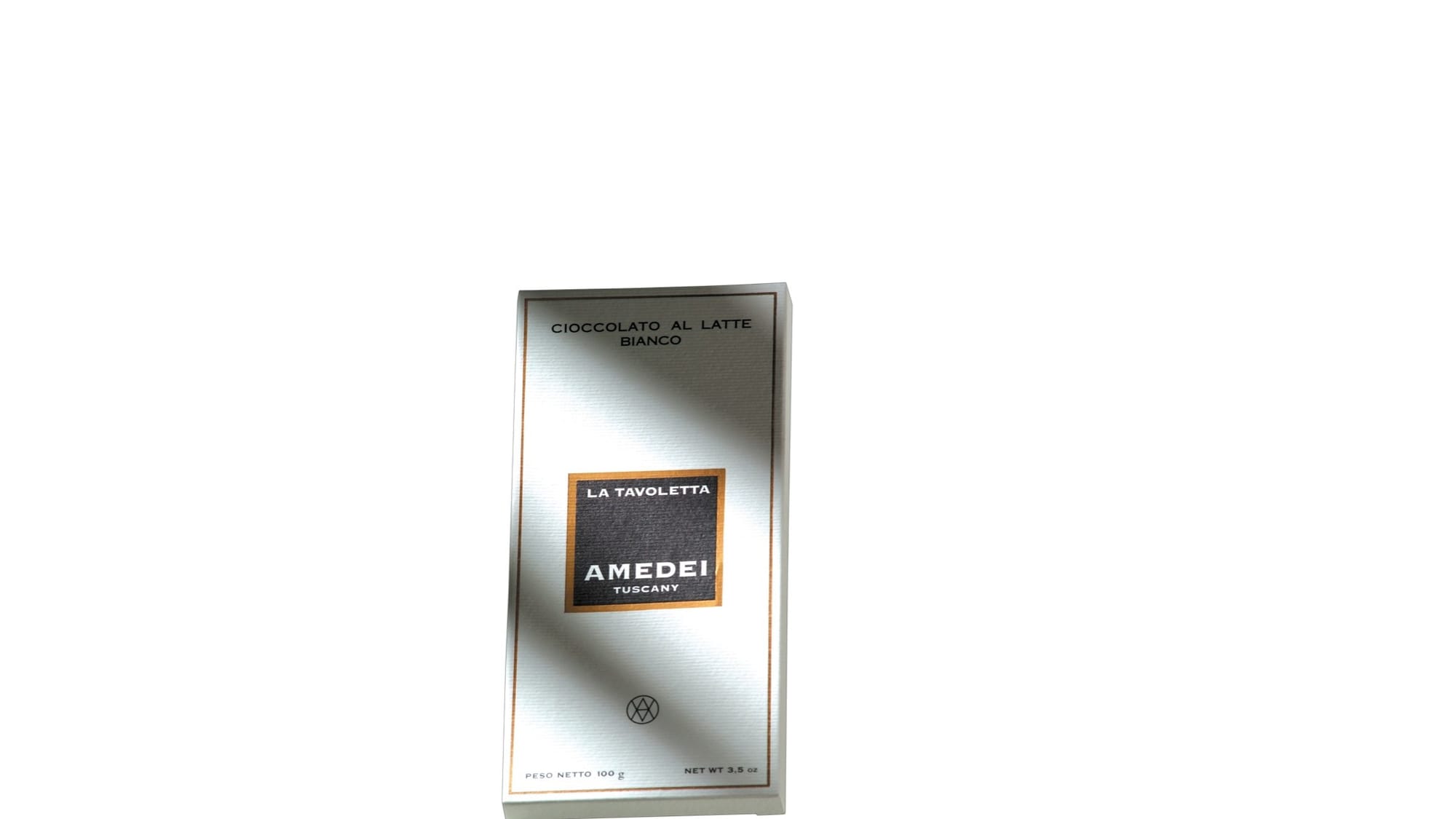
Amedei is one of those chocolates whereby a single 3cmx3cm tablet gives you the fix and the satisfaction you need. It’s a bit like having a shot of an expertly-pressed espresso instead of cupfuls of instant coffee. Or sipping on a glass of Château Lafite Rothschild wine instead of slurping down the cheaper mass produced Beaujolais. It is awesome to the senses and can either be smooth and elegant like the Porcelana collection or whack-you-in-the-face like the Chuao collection.
But that is not enough for the Tessieris who still feel they have something to prove in the market and who have been completely engulfed by their quest to make the perfect bar, “I’ve just been to the border between Columbia and Venezuela. We’ve discovered and purchased a plantation of 20,000 criollo trees. It’s actually a new strain of it, has evolved naturally and no one else has it. You’ll soon be able to taste something quite incredible. We’re also looking into other acquisitions, but I can’t tell you anything about that just yet,” he says in hushed tones barely disguising his almost childlike excitement.
Contact
Amedei
La Rotta, Italy
Tel +39 0587 484849
HYPERLINK "http://www.amedei.com" www.amedei.com