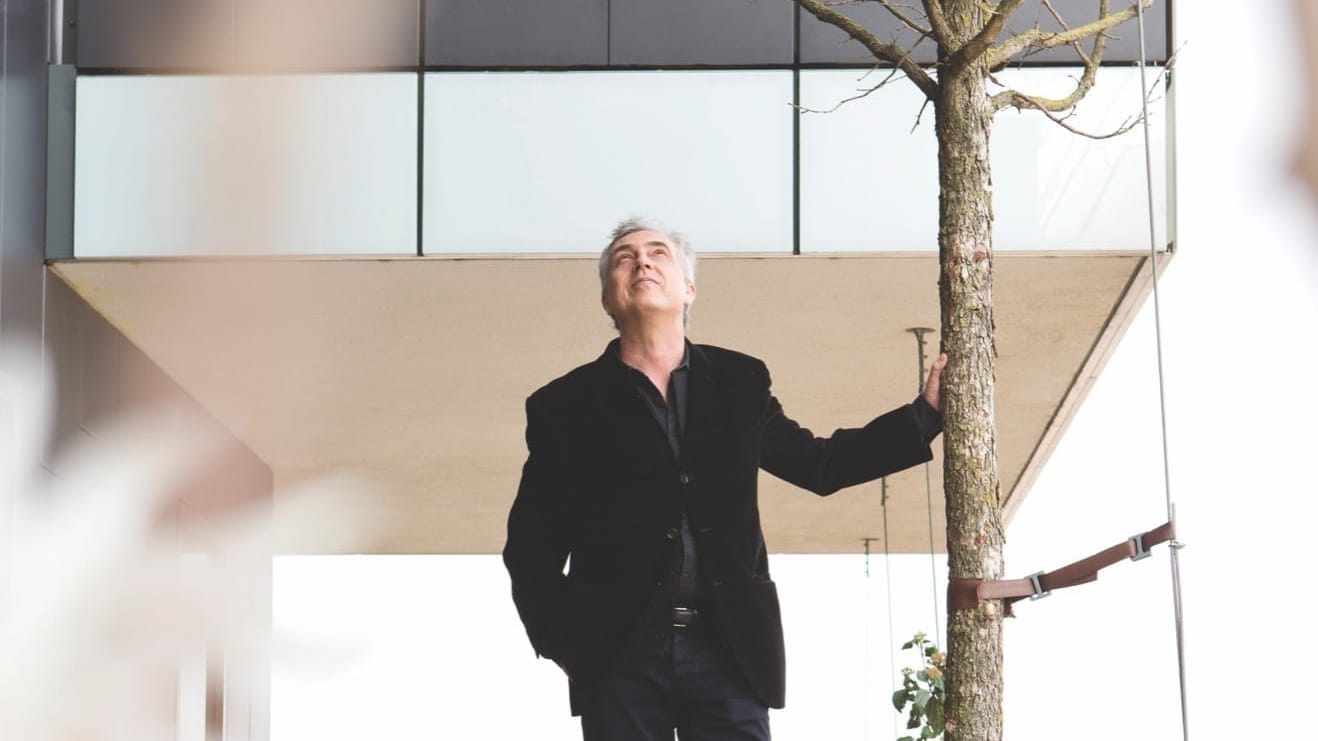
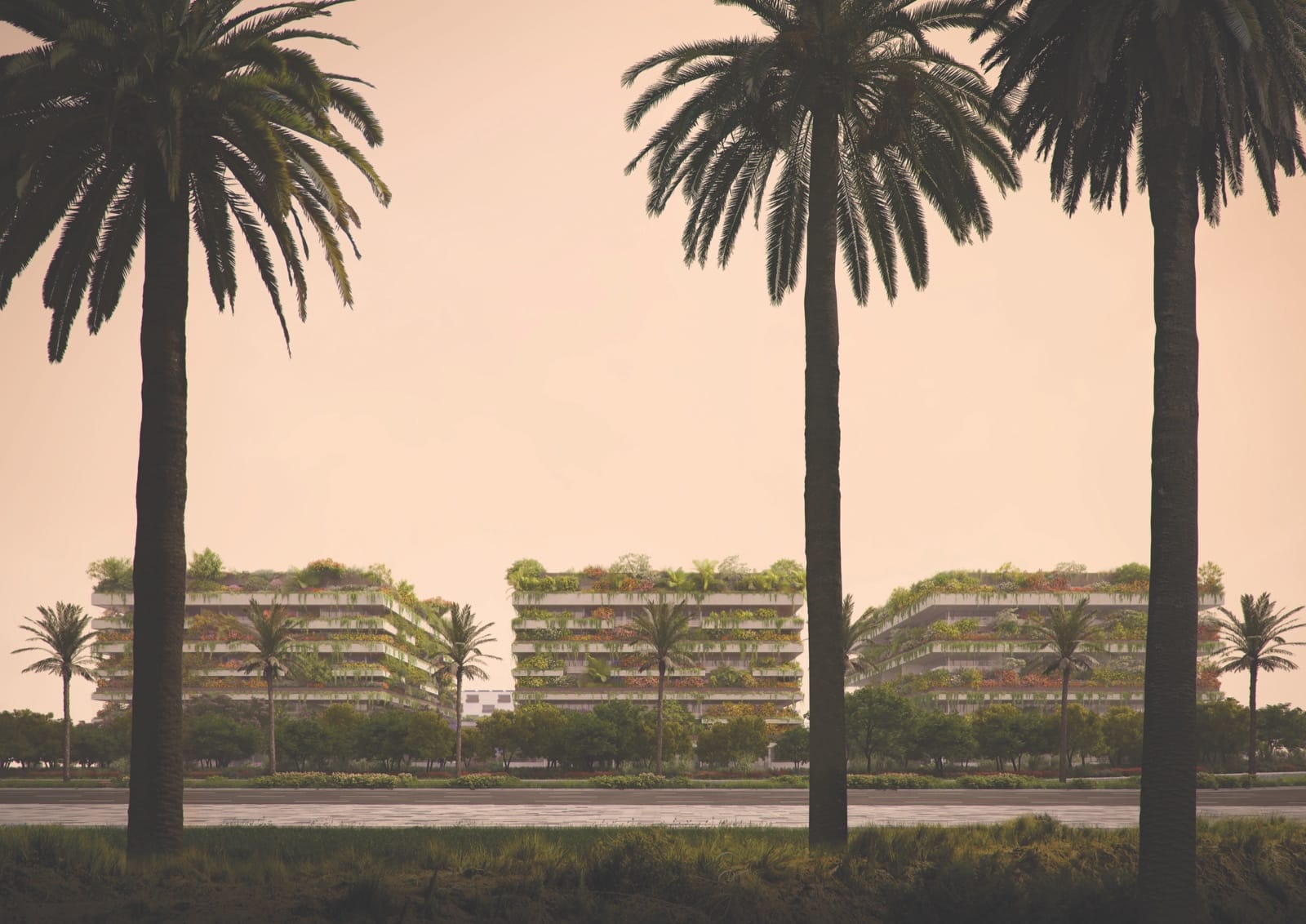
Stefano Boeri is in the process of revolutionising green architecture. The Italian architect garnered international acclaim in 2014 when he unveiled Bosco Verticale in Milan, two buildings with abundant greenery on their façades that became instant city landmarks upon their completion. And now he’s changing the architectural essence of North Africa with the three structures he’s building for Egypt’s New Administrative Capital southeast of Cairo. Scheduled to be completed in 2022, the cube-shaped buildings will have the same green credentials as his Bosco Verticale – a rarity in Cairo and across Egypt.
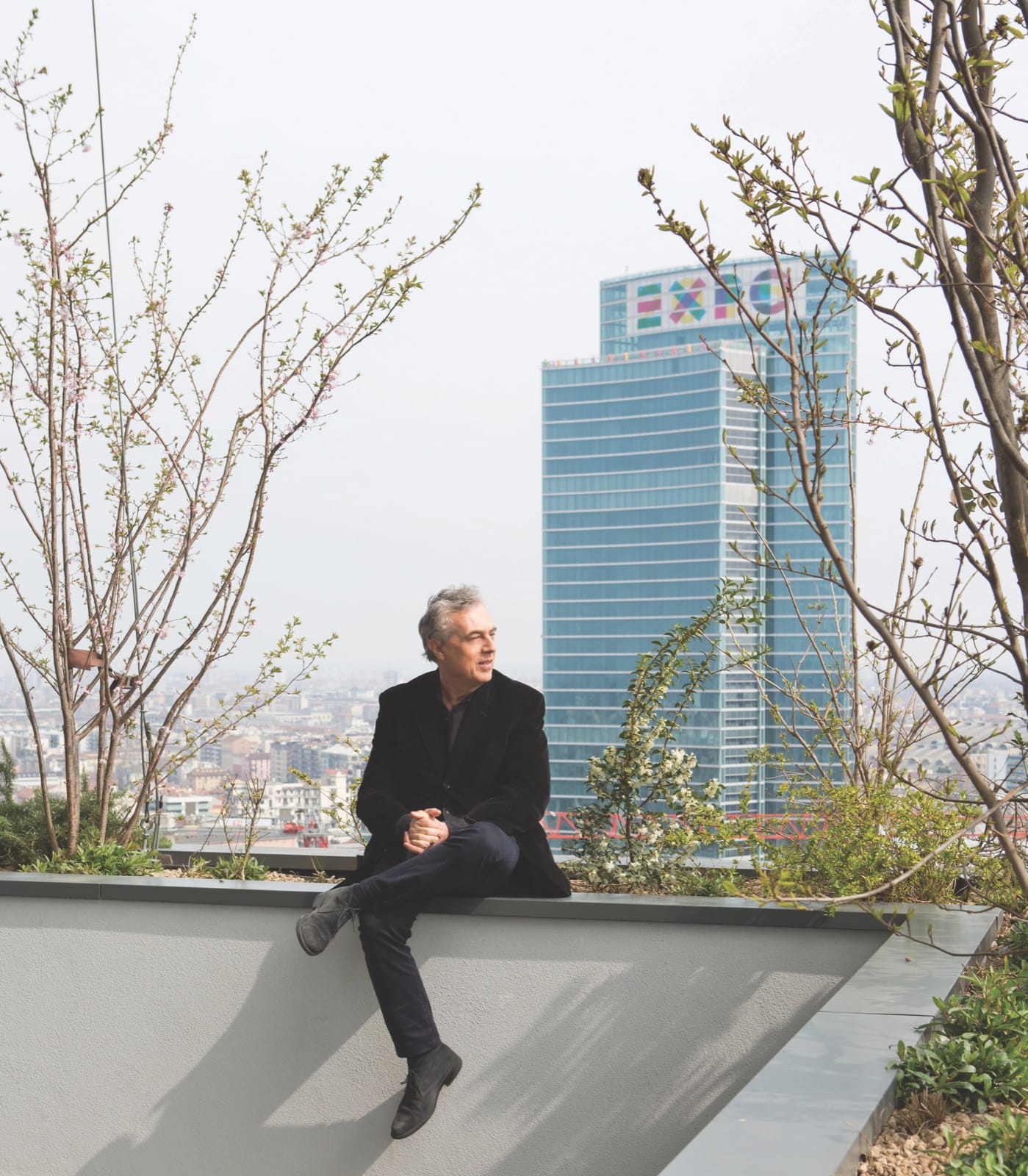
“I’ve always been obsessed with trees,” says Boeri, who’s a founding partner at Stefano Boeri Architetti. “Trees have their own intelligence, they’re sensitive and they’re a part of living nature that we should know better.” His passion for nature and greenery is apparent in his signature project, Bosco Verticale (vertical forest). The visually arresting residential project in Milan’s Porta Nuova neighbourhood can be spotted from across the area due to the high density of trees, plants and other types of flora covering virtually every inch of its exterior. He credits Porta Nuova’s real estate developer Manfredi Catella with having had enough vision to agree to experiment with his prototype for a vertical forest in an urban setting. “That building was a pioneer,” Boeri says.
While the simple sight of Bosco Verticale is breathtaking, Boeri is quick to point out that the original intent wasn’t merely for show. “Bosco Verticale isn’t ornamental or decorative,” he says. “Rather, it reveals what architecture of the future should be.” By that, Boeri means that Bosco Verticale is a structure that responds to environmental challenges by tackling climate change. “Trees absorb carbon dioxode and produce oxygen,” he says. “They also reduce consumption of energy because they shade the façades.” He explains that the two buildings have three hectares of forests, equivalent to a 20,000 square-metre surface, with 700 trees and over 20,000 plants and shrubs. “They absorb and clean the air,” he said, adding that Bosco Verticale even brought back birds to that part of Milan because they now have a place where they can build their nests.
As such, the success of the Milan project is currently being replicated in other cities across the globe, with Boeri creating his signature green buildings in Tirana, Antwerp and, as noted above, outside Cairo. For Egypt’s New Administrative Capital, Boeiri has designed three cube-shaped structures – a hotel plus two residential buildings – now being built by MISR Italia Properties. “The vertical forest will be developed in extreme climatic conditions,” says Boeri of the Egypt project. To ensure the success of the new venture and create a green environment that’ll survive in Egypt’s arid climate, Boeri worked with his studio’s own landscape agronomist Laura Gatti, as well as with local botanists, who helped select the type of flora that will be used. “We select the plant species first,” he says, “then we design the façade. We have double floors so that the plants have room to grow nine or even ten metres.” He adds that the plant selection process is the most important and delicate part of the work, and that all the greenery is selected by the firm. “We design houses for trees, not just for humans,” he explains.
When Boeri is taking on projects in other parts of the world, the local natural element remains foremost in his mind. “In northern Europe,” he says, “we install deciduous trees on the northern side, to help sun enter more in winter, and in Cancun, Mexico, we’re designing a forest city with tropical plants.” In Egypt, the architect had to take water scarcity into consideration. “We’re not using potable water for the plants,” Boeri says, “but rain water, and never excessively.” He hopes that his Cairo building will serve as an example on how to build structures that respond to their specific environment while combating climate change. In fact, inserting green buildings and vertical forests across Cairo is just one element in a major ecological campaign to green the city’s rooftops, “vegetalize” its façades and even create a green corridor across the metropolis. “It’s so important to reduce pollution and reduce global warming. Cairo could become one of the protagonists in this process,” says Boeri.
With his pioneering projects, Boeri is taking green architecture in a new direction, but even when he launched his first design, he never sought any kind of exclusivity. “There is no copyright,” he says. “From the beginning, we wanted our ideas to be shared.” He goes on further, suggesting that this new kind of architecture, one that respects its immediate setting, is the only way to move forward. “We have spent two centuries trying to see how cities could control forests, and putting forests into gardens and parks. We are now entering an era where cities and forest will have to work together.”