Since coming under Volkswagen ownership in 1998, Bentley’s renaissance has been truly remarkable and to a large extent, it’s been down to the Continental GT. Just look at the company’s latest financial figures and you’ll see that not only did they post record sales last year, showing an almost ten per cent increase over 2013 but also, a little over half of all the cars they made were two-door GTs.
What’s so special about the Conti GT? Principally, it’s a car that commands your respect because it defined a whole new market segment, one in which the pursuit of performance is balanced by the quest for refinement. At its core, it set a successful and enduring formula of combining a four-seat, four-wheel drive luxury with a two-door pace and appeal.
Nevertheless, Bentley is pragmatic enough to know there’s a finite limit to the two-door market and the big bucks these days are being made in the crossover segment. That’s why they’ve been busily readying their own SUV, the Bentayga, which is due to begin production at the end of November. The company’s management has confirmed that this new model will remain true to the Bentley grand touring spirit but even so, they plan to assuage hardliners by (following the Porsche business model of) investing the profits derived from a big-selling SUV towards developing their coupé range with something similar to the Speed 6 concept shown at the Geneva Motor Show. “In 2014, the firm sold 11,020 cars, which is a record,” said the CEO, Wolfgang Dürheimer. “By 2018 we expect to be selling 18,000 cars and if we introduce the Speed 6, we’ll be approaching the 20,000 mark.” Forecasting a doubling of their size within a five-year period? You certainly can’t criticise the man for lack of ambition.
If you’d allow me one more Porsche reference, I’d say the Continental GT is like the 911 of the Bentley range in that it represents the pure essence of the brand. Like the 911, it has proven to be enduringly popular (with 52,000 examples built so far), have a ton of derivatives and an endless array of subtle improvements introduced over its so-far 12-year existence.
Yes, twelve years. It’s strange because it seems only yesterday that we first laid our eyes on this car but the original Continental GT was actually launched in 2003 and the second-generation model came out in 2011. If we extrapolate those dates and assume that Bentley will stick to an 8-year production cycle for each model, then the current large set of upgrades introduced for 2016 represent a mid-cycle refresh.
The 2016 GT family comprises eight models: V8, V8S, W12, and Speed, each of which can be bought as either a coupé or a convertible. For those unfamiliar with the line-up, the entry point of the range is the V8 and it’s the most affordable one. The V8S is the most sporting, the W12 is a softer and more luxurious option and the range topper is the W12 Speed.
While I have driven a number of the GT’s, I have never actually had the chance to do a back-to-back comparison and so when I got an invitation from Bentley to test drive the entire line on some winding, uncongested roads in north-eastern Norway, I didn’t exactly need any persuasion.
Our first stop was in Crewe though, at the Bentley factory, where we were shown all the latest production techniques for the model, and I mean everything from how to sew the supple bull hides onto the new sports steering wheels to how to assemble and test the W12 engines before mounting them onto chassis. The demonstrations served as a useful reminder that Bentley has found the sweet spot between robotic precision and craftsmanship. But we were also given a small teaser when we caught sight of their cool new SUV, although sadly we weren’t allowed more than a glimpse of it from far before we were hurried off to the local airport in Manchester to continue on our merry way to Norway where the real fun was to begin.
Known as the ‘Land of the Midnight Sun’ with almost 24 hours of daylight in June, Norway was an interesting choice of location, especially when you learn that there isn’t even a Bentley dealer in the country and that every other car is electrically powered. A little puzzled by this, I did some research and found out that Norway in fact has more electric cars per capita than any other nation on earth due to some attractive government subsidies, including no purchase tax, road tax, parking fees or road tolls on electric cars. But this massively oil-rich yet sparsely populated country isn’t averse to burning rubber (we noticed remnants of smoky burnouts on almost every stretch of road up and down the country) and that’s apparently because after-market auto-tuning and amateur rally racing are a big deal around here. So, I guess Bentley is a halfway house between those two extremes.
The 2016 model has been updated with a few discrete modifications that help keep the car relevant and bring it more in line with the design cues that will feature on the Bentayga. Exterior alterations include a smaller front radiator shell, more dramatically contoured front fenders, new side vents with a ‘B’ accent, slightly lower side skirts, some new wheels including Bentley’s first unidirectional rim, an aero-optimised decklid with integrated spoiler and a recast back bumper replete with some full-width chrome detailing to help visually widen the car’s stance. There are also three new colour options (Marlin, Camel and Jetstream), which takes the total number of colour codes to a whopping 117 but as usual, Bentley is happy to match any colour you’d like, for an additional fee of course.
Changes on the interior include revised gauge graphics and driver controls, some larger shift paddles, LED ambient lighting, a new optional sport steering wheel, onboard Wi-Fi (which mind you is an extra 1,300 USD) and additional USB ports. But besides these minor revisions, it’s all very familiar territory: leather covering almost every surface, lots of chrome bits and bobs and either carbon fibre or wood panelling to complete the look.
Under the bonnet, the V8 remains unchanged but the 6.0-litre W12 gets more power (582bhp) and torque (720Nm) and thanks to some cylinder de-activation, they’ve also managed to reduce emissions and improve fuel economy.
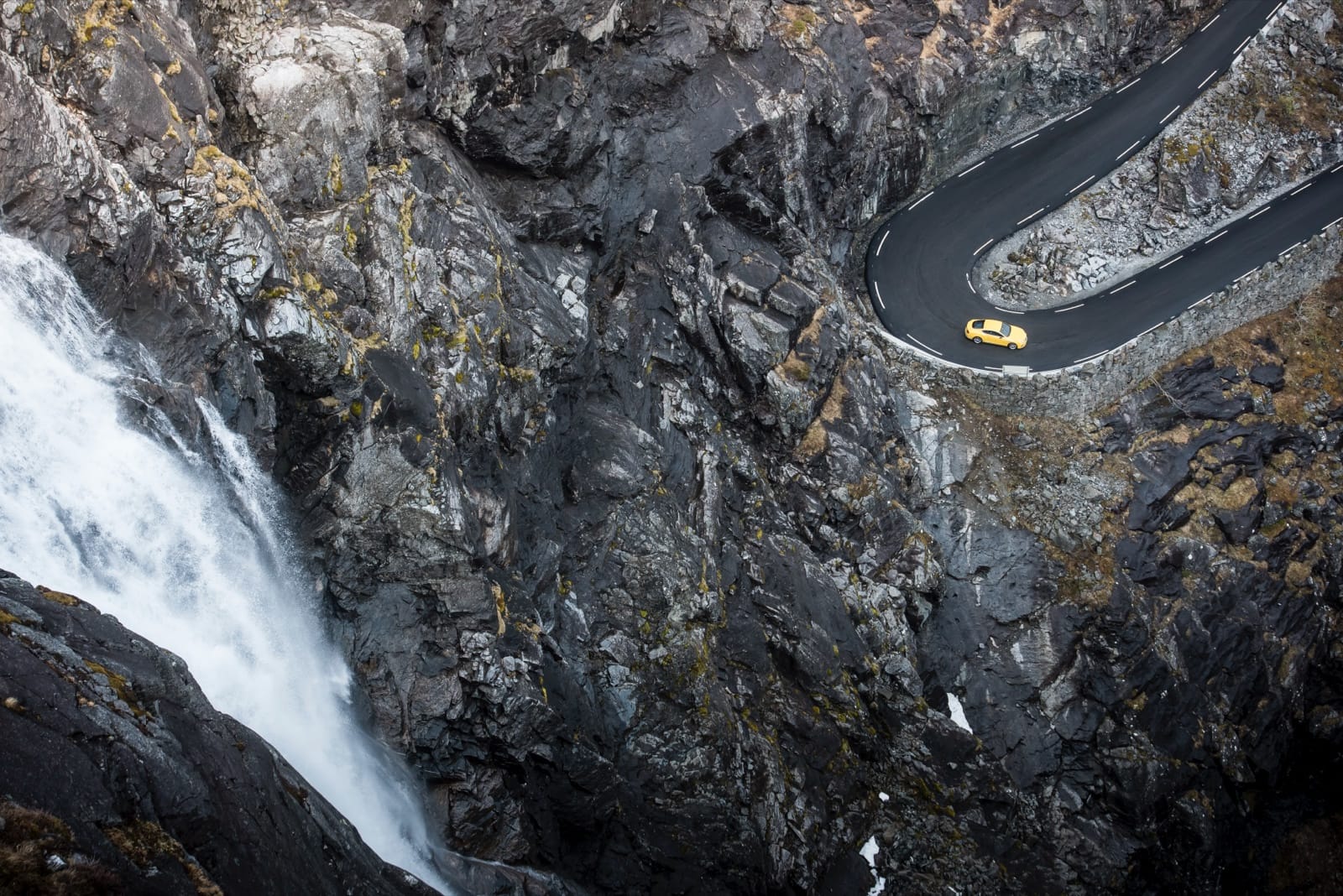
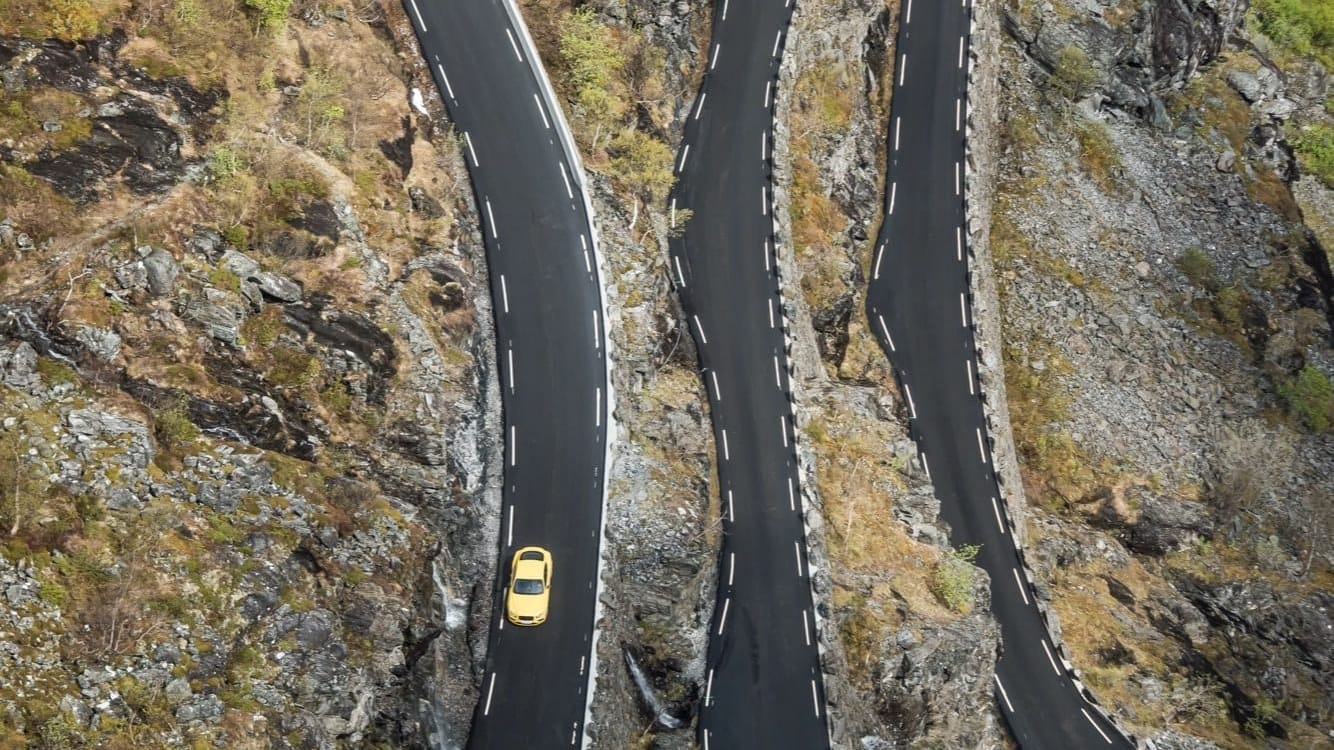
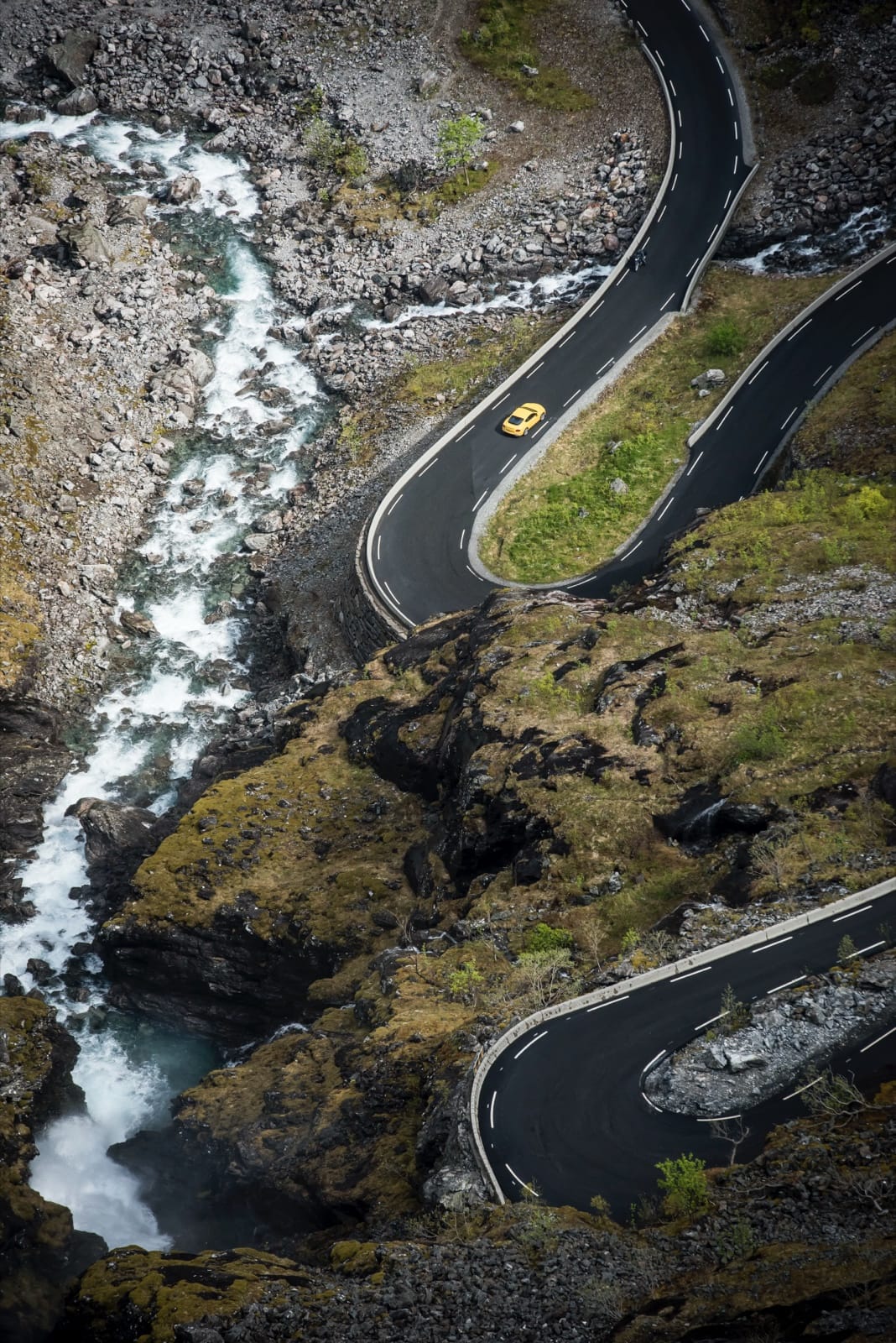
Our almost 400-kilometre route in Norway’s fjord country began on some twisting rural B-roads that kept ascending to the point that we reached snowy altitudes (even in summer) and from there it was a downhill run passed gushing waterfalls on to the dramatic Trolligsten Mountain Road with its eleven hair-raising hairpins, which reminded me of the Top Gear episode filmed in Switzerland on the Stelvio Pass. Once down at sea level again, we finished the day with a sprint along Norway's fabled Atlantic Road, considered to be one of the world's greatest motoring experiences thanks to incredible views from an undulating, serpentine ribbon of tarmac, interspersed with a series of low-level bridges that link the country’s northernmost archipelago of largely uninhabited islands.
In the end, having tried out a rainbow assortment of Bentleys, I gained a very clear sense of what makes the Conti GT so loveable and the car I would have chosen to take home with me – if only they’d asked – was the bright yellow coloured V8S. The reason I felt it was the best was because it was simply the most engaging. With a brusque 4.0-litre twin-turbocharged V8, amplified by an optional sports exhaust, contained by optional ceramic eight-piston front brakes, I felt enough confidence to attack and play with more vigour than I did in any of the others. Top Trump players might argue that it “only” produces 521bhp compared to the W12 Speed’s 626bhp but what raw statistics don’t tell you is how beautiful it sounds, and how it has best steering feel and response. Of course, there’s no denying the entire GT range are heavy cars but in V8S form, the Conti handles as well as any 2.75 tonne car ever will.
For the time being at least, the Continental V8S is as good as speeding in the lap of luxury gets. We can only hope that Speed 6 doesn’t fall too far from the tree.