Everybody knows Jonathan Ive, the Briton behind the clean lines of the iMac, iPod, iPhone and iPad. He’s fêted as design’s answer to Steve Jobs, the solitary genius who changed the world from his secret Silicon Valley studio. It’s a good story – except, of course, it isn’t true. No single stylist is that good. Ive is part of a team of… well, nobody knows. His co-conspirators are hardly ever seen in public. But times are changing.
It’s 10:30am in a converted women’s prison in London’s Victoria and Marc Newson walks into his 185 square-metre living room that is part loft and part 1970s ski chalet; one wall is made of large granite rocks arranged around a fireplace. It’s fun and playful, just like the most sought-after product in the world right now – the Apple Watch that Ive and Newson and a 1,000-strong team of techies developed.
Apple announced that Newson had joined its design team last September, when the watch and the iPhone 6 were unveiled at the firm’s headquarters in Cupertino, California. But he had already been working with Ive on watches. “It started long before the launch of the Apple Watch,” he says with an Australian twang.
Three years ago, he and Ive collaborated to create a customised Jaeger-LeCoultre Memovox watch for an auction of their favourite objects to raise funds for RED, the charity set up by U2's Bono to fight AIDS. It was Ive’s first watch but one of many for Newson. In the 1990s, he founded a company called Ikepod that made a few thousand watches. Ikepod and the Jaeger-LeCoultre collaboration “led Jony to the conclusion that it might be a good thing to get me involved on the Apple Watch,” says Newson.
Given that this is one of his very first print interviews since he formally started his new role, let’s start with the formalities. What’s your job title? “I don’t really have one but I work on special projects.” Is it full-time? “It’s about 60 per cent of my time.” How long will you do it? “Indefinitely, I hope.” Did you work with Steve Jobs before he died? “No, but I met him.” Who earns more, you or Jonathan? “I think you can guess that.” Apple avoids officially revealing Ive’s compensation but Forbes estimates him to have amassed a personal wealth in excess of 200 million USD.
Newson, 51, who was born in Sydney and brought up by a single mother before moving to London two decades ago, has designed for some of the biggest names on the planet. He holds the record for the most valuable work sold at auction by a living designer – one of his Lockheed Lounge chairs fetched 3.8 million USD during a sale by Phillips in London this past April. The chair, one of his earliest pieces, is so chic that Madonna has one. He could work for anyone, anywhere. So why did he choose Apple, based halfway around the world from his wife Charlotte Stockdale, the fashion editor and stylist, who works closely with Karl Lagerfeld at Fendi, and their two children?
The key is his friendship with Ive. The two men met 20 years ago in London and have been professionally and personally inseparable ever since. They share a design philosophy. They dislike the vast majority of consumer products, so they design radically new ones that we could not have imagined before.
Ive, 48, has banished complex, beige boxy PCs from our desks and black plasticky phones from our pockets and replaced them with intuitive, elegant simplicity. Newson’s trademark bold colours and sensuous curves, which can be seen on Qantas jets, Nike shoes and Cappellini furniture, have influenced a generation of designers.
But it’s a corporate bromance, too. “Apple is exceptional,” says Newson. “It does things exactly the way they need to be done, or not at all. The way a product is made is as important as its design. Everything has to be correct.” Since he’s so close to the design boss, there’s none of the politics you usually find in big firms. “I’ve had clients where there have been six senior management changes on a project,” Newson frowns. “Apple is the opposite.”
Working in the mass market is also new and exciting for a man whose projects are perfectly formed but often produced in small numbers. Only 15 Lockheed Lounge chairs were ever made. By contrast, more than ten million Apple watches are expected to be sold in its first year alone.
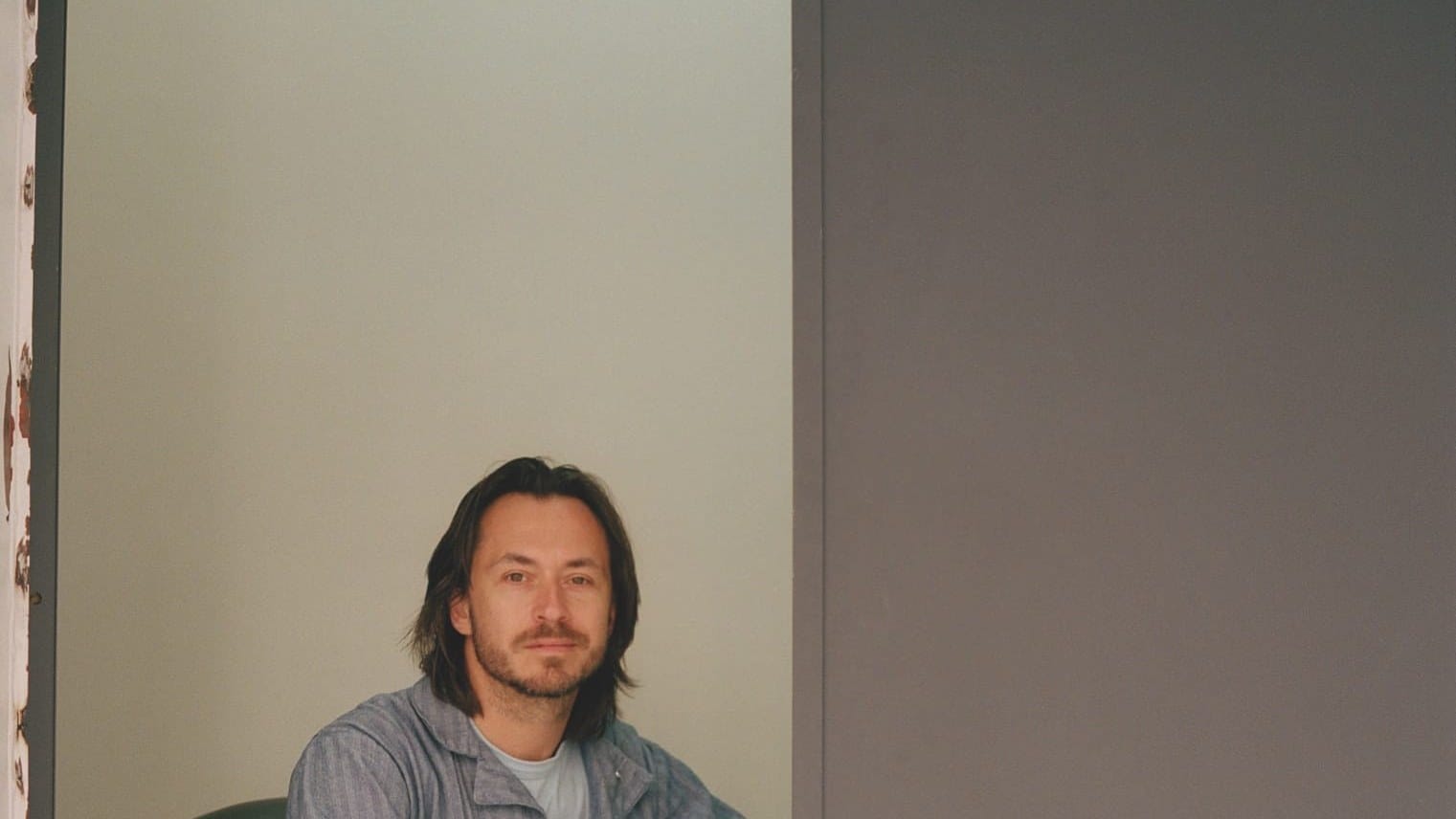
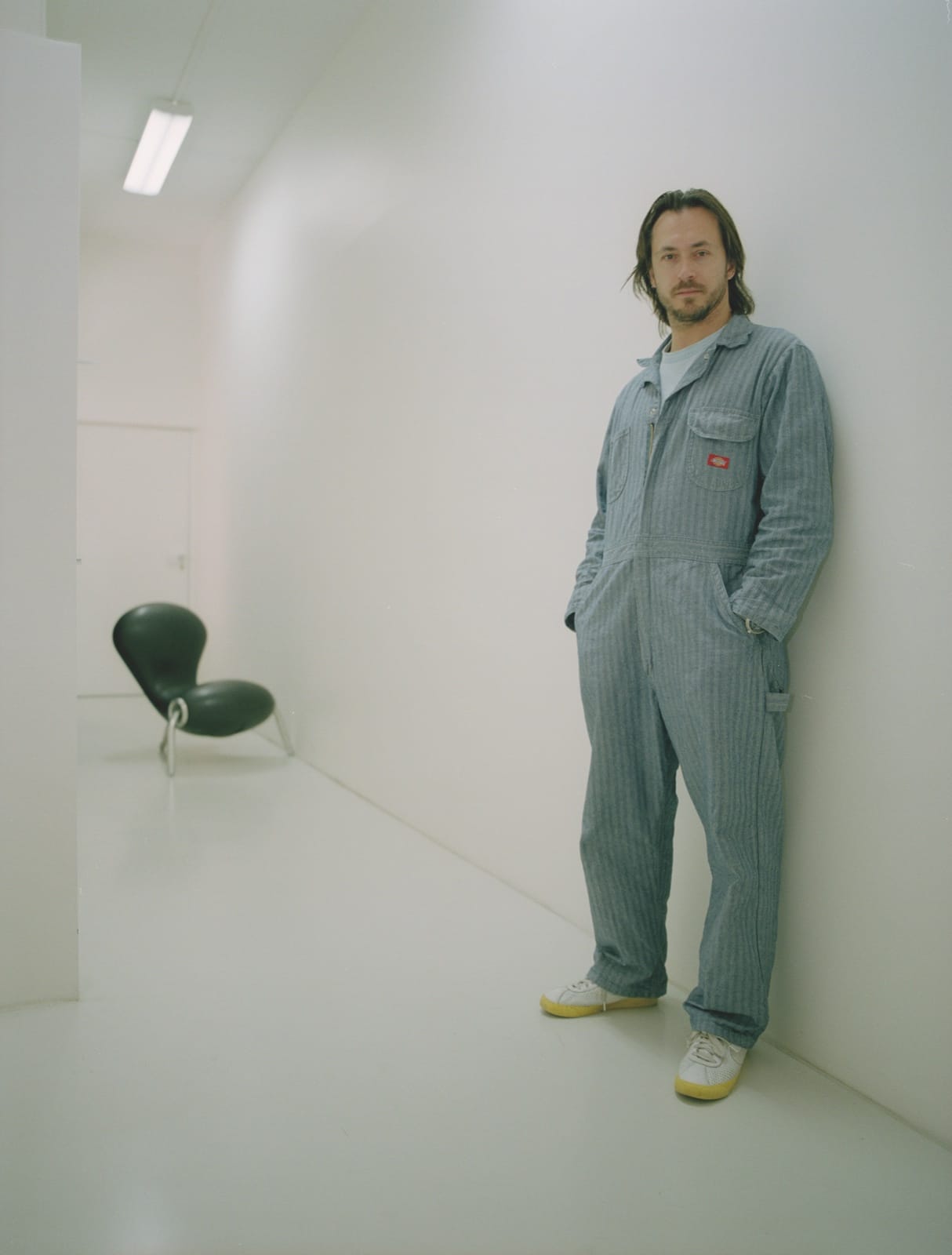
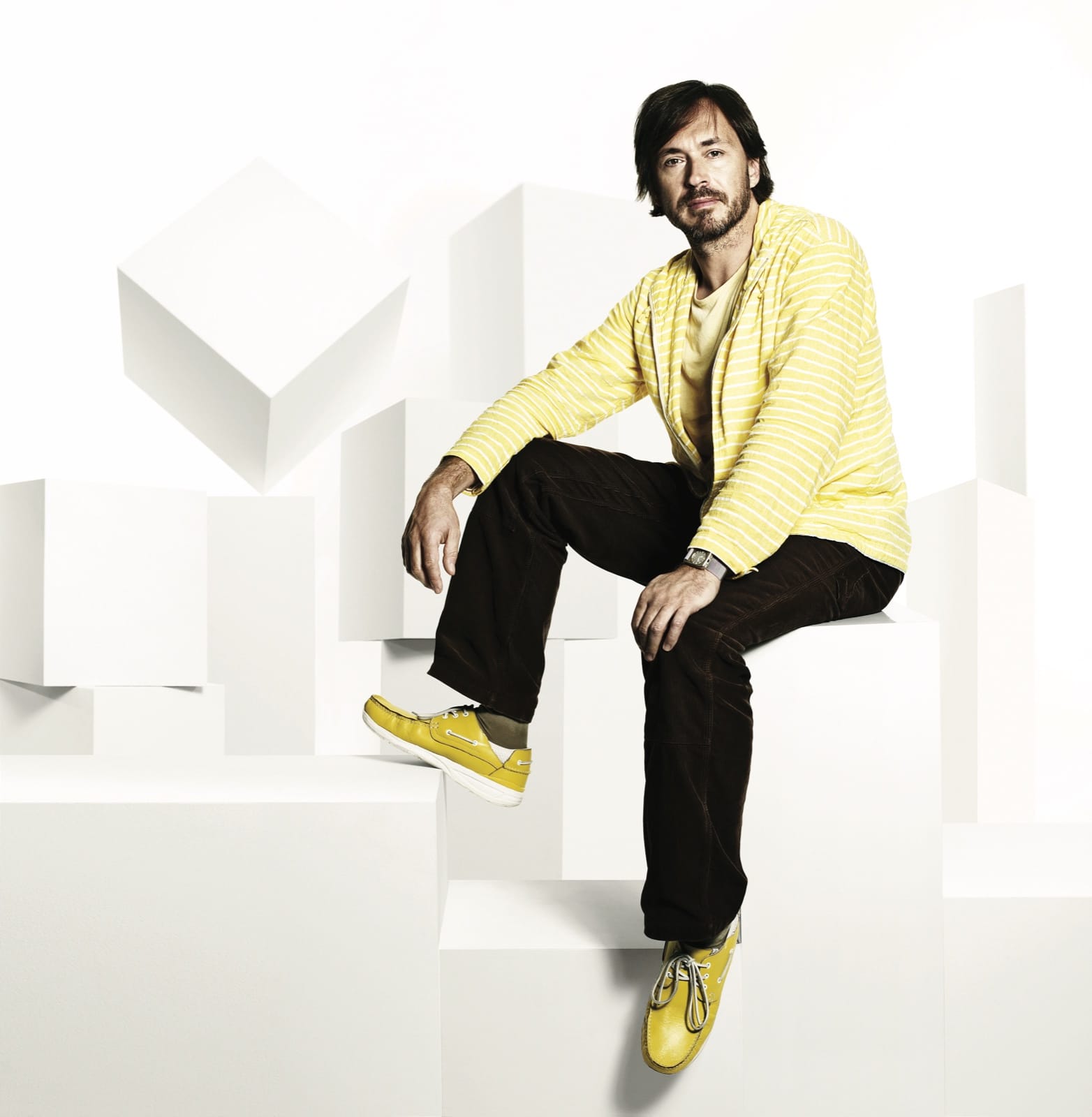
At first sight, Newson is ‘un-Applely’. Most of Cupertino’s finest personify the pared-down focus of Apple’s products. Ive himself looks like a human iPod — face all smooth lines, hair shaven, eyes like polished glass. Newson is shaggy, with a salt and mahogany mane. There’s no hint of a Steve Jobs-sized ego. He’s too Aussie for that. He describes himself as “techie in an analogue sense”.
Most Apple folk guard their secrets but Newson talks in a singularly colourful and profane Aussie way, so he won’t be making shareholder presentations any time soon. But shareholders will learn to love him because he has a crucial role to play in the next chapter of the Apple story.
The firm is transforming itself from a pure tech company into a luxury lifestyle firm. The Apple Watch, the 18-karat gold versions of which cost 17,000 USD, is the first step. It is marketed as a luxury product and the models are sold in a different way from the rest of Apple’s kit by specialist teams under the gimlet eye of another new hire, Paul Deneve, former CEO of Saint Laurent.
Newson has experience in tech – as well as Ikepod watches, he and Ive designed a Leica camera from scratch for the RED auction – but he trained as a silversmith, studied jewellery design, and has worked with Louis Vuitton, Hermès, Azzedine Alaïa and Dom Pérignon. If anyone can add lustre to Apple’s traditional cool, pared-down aesthetic, it’s Newson.
The Apple Watch has had mixed reviews so far. Most people like the design, but many say it’s a bit fiddly to use. Traditional Swiss luxury watch manufacturers have dismissed it as too common and cheap to be luxury. When it was launched, then TAG Heuer boss Stéphane Linder sniffed: “Luxury is about being unique and rare. At 350 USD, it looks more mass market.” Newson retorts: “There are a lot of Louis Vuitton bags out there. I think at one point every one and a half Japanese woman had a Louis Vuitton bag but it still qualifies as a luxury object. It’s about the quality and integrity of the product.”
What about the suggestion that an object you replace after a year or two because it’s outdated cannot be a premium product because true luxury stands the test of time? Long silence. “The way I see it, it’s evolution, progress,” Newson recovers. “And we are doing wonderful things. In one of the versions of the watch, the box it comes in acts as a charging device that you can use for other models. So it becomes a useful object and not something that will just sit in the top drawer of your cupboard for the rest of eternity.”
I notice he is not wearing his Apple Watch. Does he prefer one of his many analogue watches? “I’ve got some classic mechanical timepieces. I don’t see how they and the Apple Watch cannibalise one another or compete.”
What is Newson’s next move? He’s not allowed to say, of course, but the clue is in his job title. Don’t expect a Newson iPhone or iPad, stand by for something more. He’s particularly interested in what technology can bring to fashion. “We will start to see more technology embedded in garments – magic woven in. There are some incredible things that are going to happen.”
Another big leap would be a car. Both he and Ive are petrolheads. Each owns several hundred thousand dollars’ worth of mainly classic Aston Martins, Lamborghinis and Bentleys. Newson has designed a concept car for Ford. Car firms are racing to make their new models so hi-tech they create the automotive answer to the iPhone. BMW has even set up its own hi-tech division that makes electric cars with the prefix ‘i’. Why not accelerate ahead of the pack with an iCar? Newson does little to damp down the speculation: “There is certainly vast opportunity in that area to be more intelligent.”
But for now, he has other things to focus on. His first store for German publishing giant Taschen has recently opened in Milan and he hopes to open more like it. “I’ve designed a modular storage system, which is exactly what you need for books. It could be rolled out anywhere in the world. You could set up a bunch of these things in a department store or even an airport. The business model of books seems so anachronistic. But it goes from strength to strength. There are still a lot of people who buy books – and thank God.”
Newson and Benedikt Taschen, the firm’s founder, have collaborated for many years on projects including Newson’s own monograph ‘Marc Newson: Works’ and a book stand for Annie Leibovitz’s Art Edition.
Work is also about to start on the new home that Newson and Stockdale are building on the Greek island of Ithaca, where they spend summers – making olive oil from their own crop. And he spies an opportunity in the country’s Euro crisis. “I might hold off building a little while longer, so I’ll be able to pay in drachmas!” he jokes. They are also preparing for a few of their legendary fashion and art parties at their home in Victoria, where you are as likely to bump into Tom Ford as you are art dealer Larry Gagosian.
Smart watches, a new bookshop, a bespoke villa on a Greek island, summer parties, 3.8 million USD chairs – not to mention the coolest new job in the world. You could hate Marc Newson, if he wasn’t so bloody nice, mate.