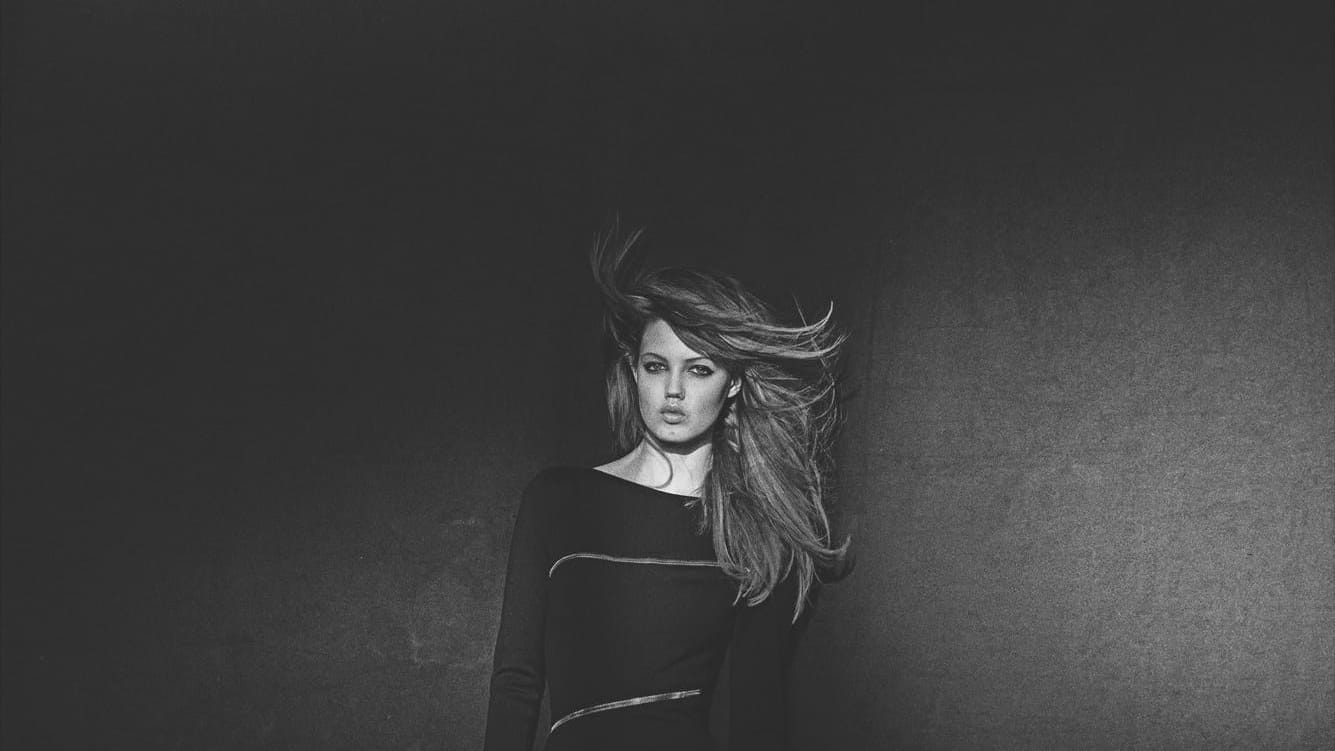
I am told that to own an Azzedine Alaïa, or better yet, to have the designer himself drape and shape you, is considered to be one of the most important initiation rites for the fashionable elite, which of course explains why opening night at the Franco-Tunisian couturier’s first Parisian retrospective was tinged with more than a little reverence. Bringing together what one editor called “the Alaïa family” - powerful editors, designers, retailers, artists, friends and models (all clad in the designer’s clothes, of course) – it was an outpouring of respect, underscored by the deep admiration the 73-year old continues to engender.
The show features an assortment of 67 exhibits that illustrate the gamut of his career, which to those unfamiliar with his work may appear remarkably understated. Curator Olivier Saillard, also Director of the Galliera, recognises this when he describes Alaïa’s work as having the capacity to “conceal its mystery beneath a veneer of often breath-taking simplicity”.
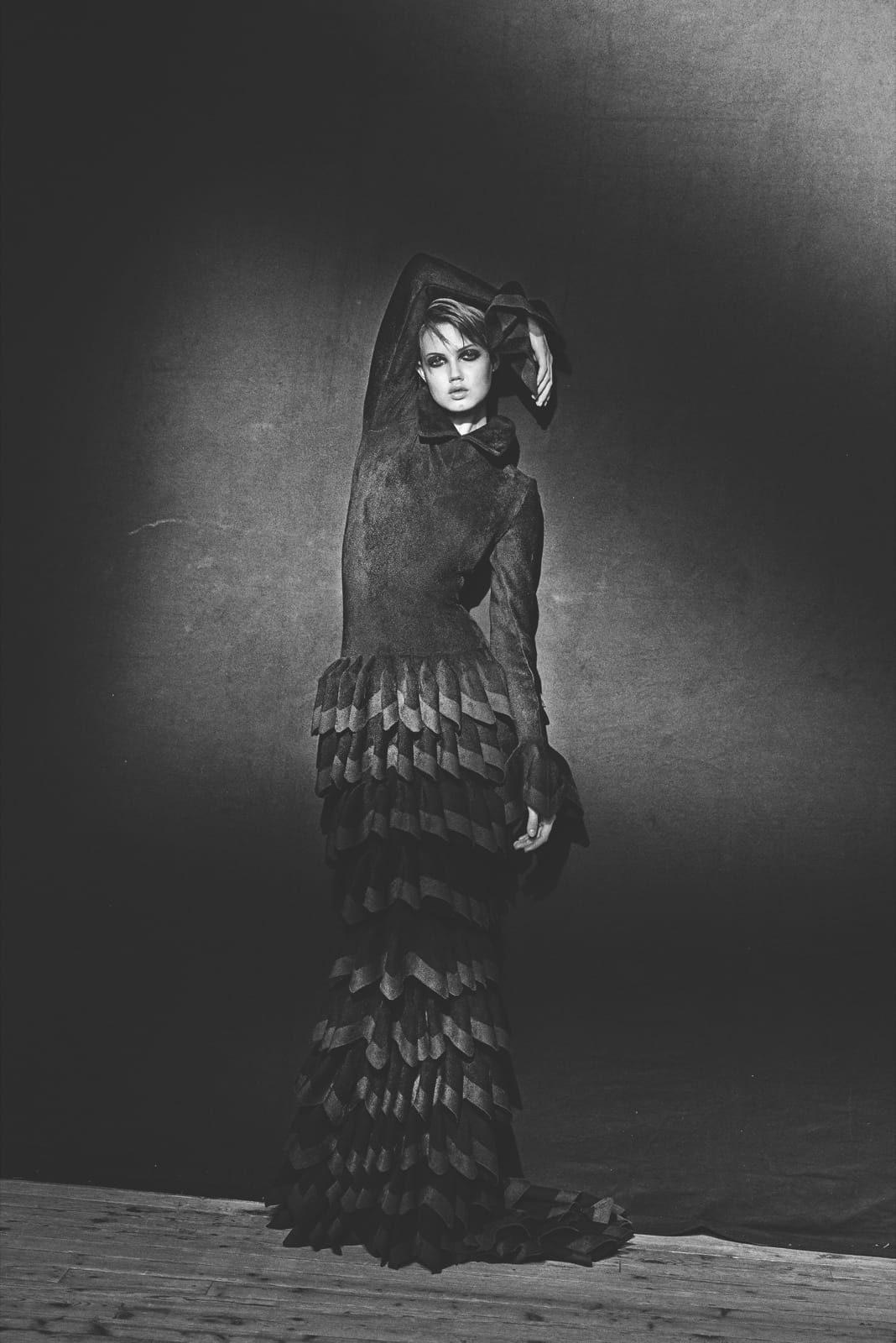
You enter into a room that celebrates the designer’s signature silhouette artfully fusing lush cashmere wools, jersey sheath, airy chiffons and specially developed micro-knits that leave little doubt as to why the man gained the moniker “King of Cling”. Figure-huggingly seductive without even a hint of vulgarity, further exploration reveals variations upon this theme including a modern take on a 19th century French courtière in which a controlling bustier opens in dramatic volumes below the hips. As you continue through the show you see how the designer has expanded this audacious vision to include stretch chenille, capes, head draping and spiralling flesh-exposing zippers, all with a quintessential elegance that is signature Alaïa style.
Odd as it may sound, the most captivating section of the retrospective can be found within the annex across the street. Here, at the Salle Henri Matisse in the Musée d’Art Moderne de la Ville de Paris, you can find the results of a sublime aesthetic interchange of volume and movement where one-off Alaïa evening dresses are placed in direct dialogue with such classic compositions as Matisse’s ‘La Danse ou Lutte des Nymphes’ and ‘La Danse Inachevée’ as well as contemporary conceptual artist Daniel Buren’s ‘Murs de Peintures’. This unusual arrangement was inspired by Alaïa’s close ties to the art world and his early training as a sculptor at Tunis’ School of Fine Arts. It also underscores the two institutions’ desire to encourage cross-disciplinary exchange in a shared aspiration towards exploring artistic forms.
Interestingly, it was by working at a dressmaker’s that a 15-year-old Alaïa was able to pay for his studies at the local école des beaux arts. And it was through clients he met at this atelier that landed a job at Christian Dior three years later. He lasted only five days; the Algerian war had just begun, and Alaïa, being an Arab, was probably not welcome.
He then worked on two collections at Guy Laroche, learning the essentials of dress construction. Introduced to the cream of Parisian society by a Paris-based compatriot (Simone Zehrfuss, wife of the architect Bernard Zehrfuss), Alaïa began to attract private commissions from, among others, the legendary cinema star Greta Garbo and the socialite Cécile de Rothschild. Alaïa also worked on commissions for other designers; for example, he created the prototype for Yves Saint Laurent’s Mondrian-inspired shift dress. Finally in 1979, at the behest of fellow designer and friend, Thierry Mugler he presented his first solo collection.
Becoming a fixture with the supermodel crowd in the 1980s and 1990s, he rode to international fame beside the models he dressed, Naomi (Campbell), Farida (Khelfa) and Linda (Evangelista), most of who would request to keep a dress instead of getting paid. “These girls were giving me the most important years of their lives, so I accepted with joy.”
Essentially, his approach to fashion has always been to highlight the art of dressing a woman to best effect. Just as a woman’s body is a network of surface tensions, hard here, soft there, so Alaïa’s clothes are a force field of give and resistance. Sympathetic rather than challenging, his belief is that a good dress should make you look and feel fantastic. “I have never followed fashion,” he once said. “Women have always dictated my behaviour. I have never thought of anything but them, for I am convinced that they have more talent than any designer. I have followed the teachings of their silhouettes.”
Given such technical prowess, it comes with little surprise to learn that he’s one of the rare couturiers to master every step in the making of a garment: drawing a pattern, transferring directly onto the cloth the forms and volumes he saw in his mind's eye, then cutting and sewing the fabric as he bends it to his will. Such is his exacting perfectionism that he has even been known to sew women into his outfits in order to achieve the most perfect fit.
Fiercely protective of his independence as an artist and artisan, Alaïa has had a lifelong tendency to work outside of convention. He does not follow the business model of driving sales with an It-bag, for example, nor does he ascribe to the seasonal rhythms of Fashion Week, which he has eschewed since 1987 in favour of private presentations, at his own pace, in his glass-roofed Rue de Moussy home and headquarters in the Marais.
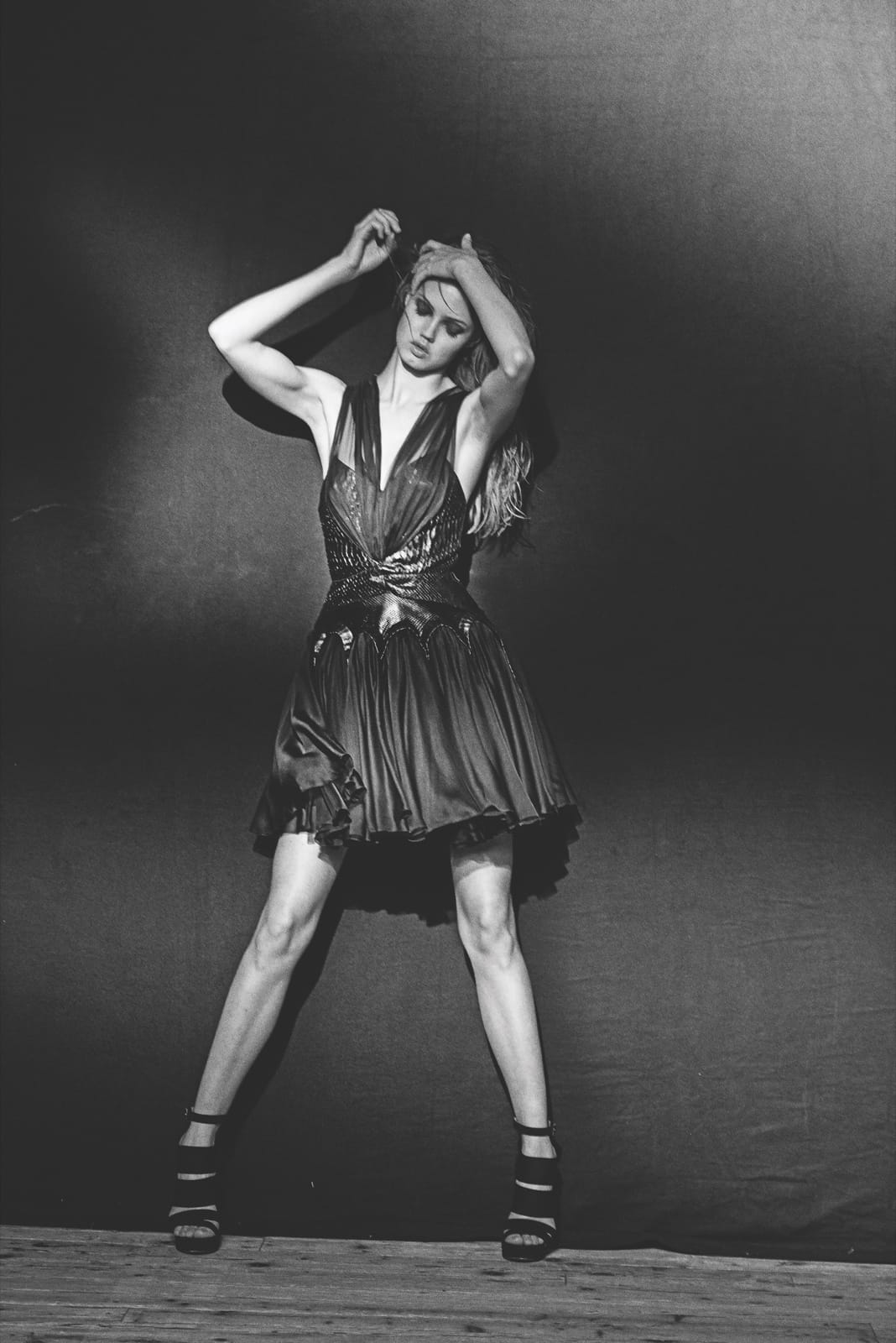
It’s a distinctly Old World approach but one that has paid off. By focussing on private clients and flying the flag of Parisian elegance during his nearly 60-year career, the designer has earned deference when it comes to the definition of all that is modern French and chic. According to Alaïa, it was meeting the writer Louise de Vilmorin, who asked the designer for help in getting dressed one evening, that first made him realise that Parisian chic was “all about the little details”.
“Louise was supposed to go to a dinner and she asked me to help her put the finishing touches to her outfit. She remembered that she had seen a concierge wearing a cardigan from some department store like Prisunic, so we bought it,” he said of that evening. “We replaced the buttons with something more elaborate in metal and put a long ordinary chain around her neck that she rolled up and plunged into a pocket. It was a demonstration in just a few seconds of her inimitable sense of style. She got a lot of envious looks that evening.”
“A woman is like an actress, always on stage,” he once said. “She has to be beautiful and feel good. Her clothes should be a part of her; she should feel them on her body. I prefer people to notice the woman – her face, her body, her hands – not her clothes. What she wears should dress her, underscore her qualities and make her beautiful.”
Often spoken of with great fondness – former model Farida Khelfa has said that “he’s always there, he doesn’t ask questions and you can call him at five in the morning and he opens the door and welcomes you in” – Alaïa is one of those rare designers who is admired as much for who he is as for what he does.
WHO Azzedine Alaïa
FROM Tunisia / France
WHAT The 73-year-old’s first retrospective
WHY A wheat farmer’s son, Alaïa arrived in Paris in the 1950s, where he moved from working with Dior, Guy Laroche and Thierry Mugler to becoming one of the most recognisable fashion designers today.