Recognised for her technological genius and standout collections, Iris Van Hrepen is hailed as the queen of 3D printing as a garment construction technique and celebrated for her experimental use of digitally enhanced aesthetics.
To break it down, Van Herpen’s multidisciplinary approach, which calls upon the knowledge of engineers, scientists and physicists, combines the most traditional with the most radical, fusing artisanal craftsmanship, state-of-the-art materials and a boundary-pushing vision. “Through biomimicry I look at the forces behind the forms in nature, these endless mysteries within nature create a huge influence on my work,” she explains.
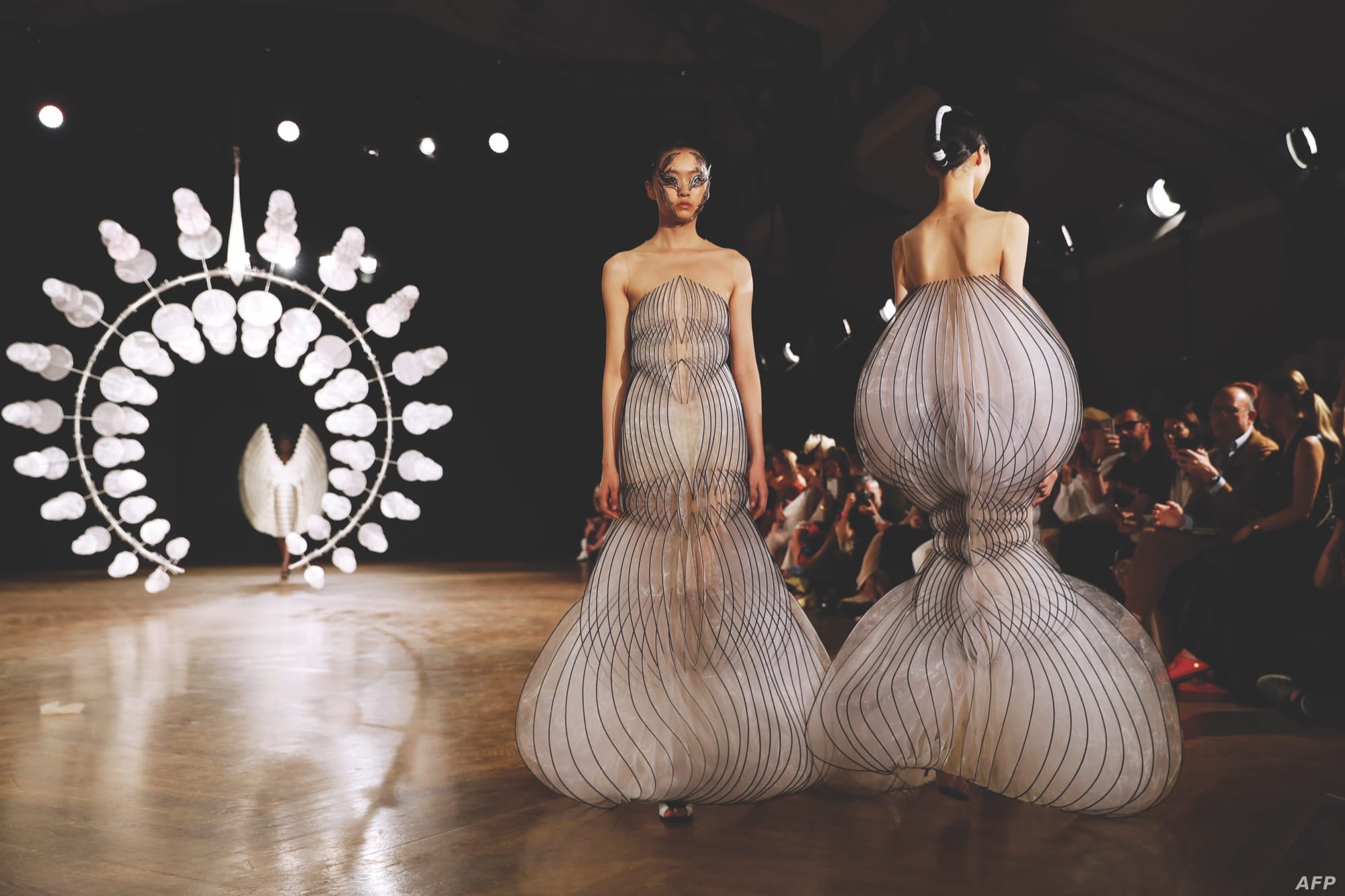
Her show stopping Autumn/Winter 2019 ‘Hypnosis’ collection presented at Paris Haute Couture fashion week, constructed of luminous silk organza and duchesse-satin, with structural elements of aluminium and stainless steel, took inspiration from artist Anthony Howe's wind-powered kinetic sculptures, while her Spring/ Summer 2019 ‘Shift Souls’ referenced celestial maps and outer space galaxies to create algorithm-defined garments with dissected and voluminous layering, in an uncharacteristically bright and colourful palette.
Her mesmerizing collections have been a permanent fixture of Paris Fashion Week since her first show in 2011 and are now highly coveted by celebrities and museums alike, including London’s Victoria & Albert Museum, the Cooper Hewitt museum in New York, and the Palais de Tokyo in Paris.
Van Herpen’s 2015 Paris runway show 'Quaquaversal’ brilliantly illustrated the fusion between craft and technology with the assistance of Gwendoline Christie who lay down on the catwalk while three robots put the finishing touches to the hand-crafted dress that she wore by printing live onto the British actress. The following year, seven of her dresses were exhibited in New York’s Metropolitan Museum of Art’s highly successful “Manus x Machina: Fashion in an Age of Technology” show.
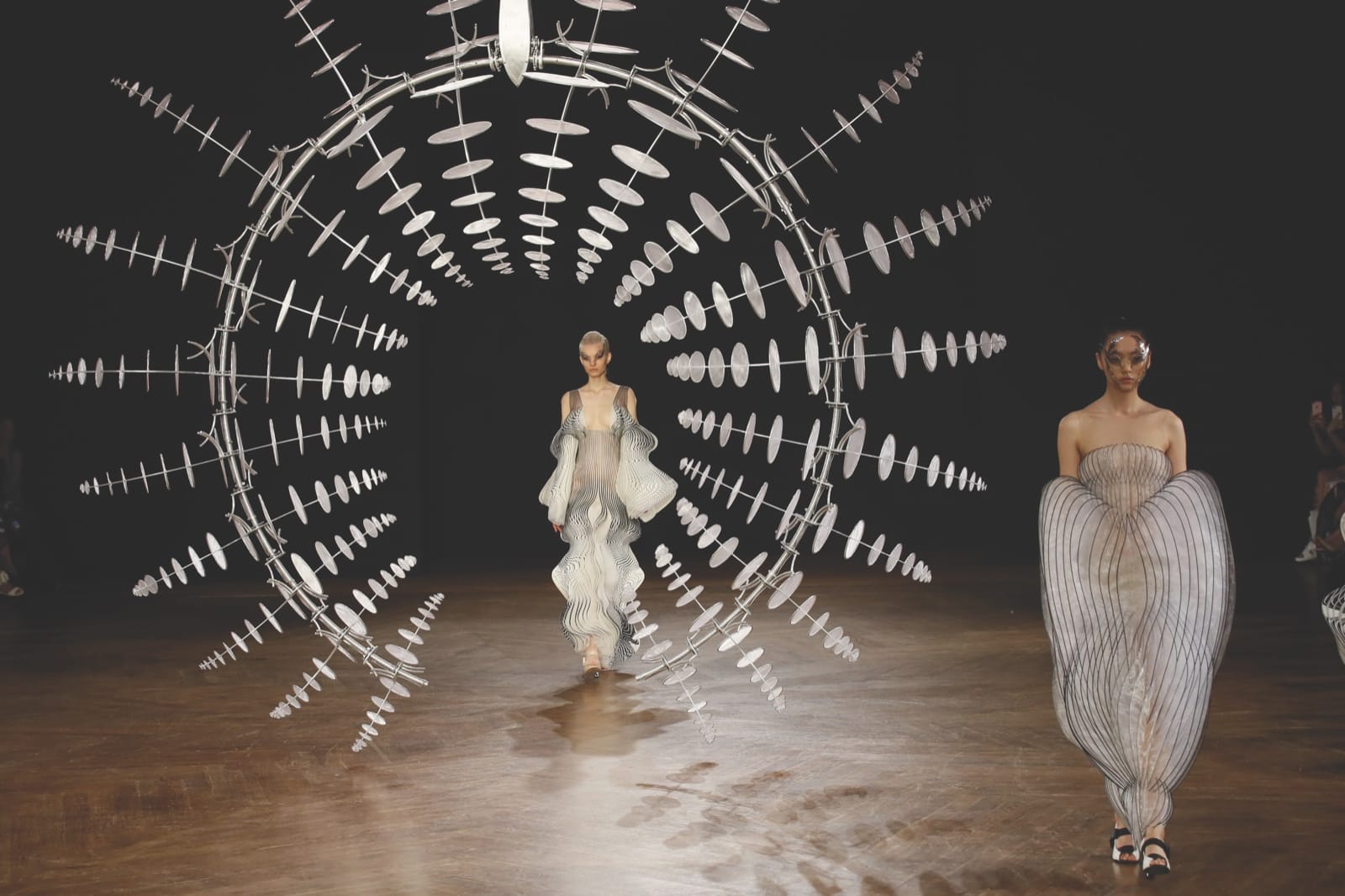
From black transparent acrylic sheets to metal satin, Van Herpen expertly wealds the power of rapid 3D prototyping to create structures and forms that dazzle the mind. Finished off with the likes of highly specialised hand plissé techniques
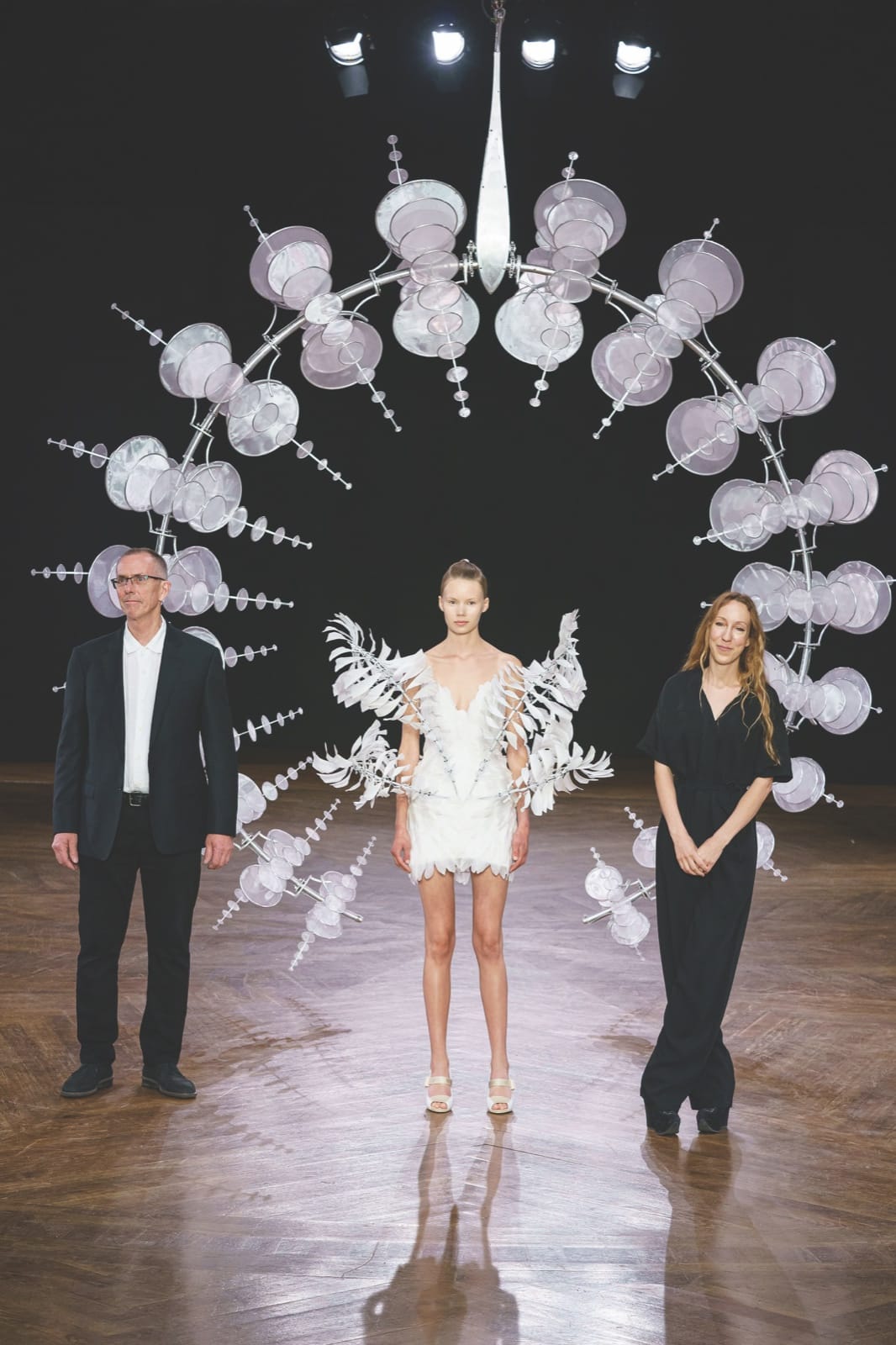
“I looked at the evolution of the human shape, its idealisation through time and the hybridisation of the female forms within mythology,” Herpen explains.