It’s ironic that the Dutch controlled the spice trade for hundreds of years yet their food remained bland for all that time. Traditionally, the people of the Lowlands had a relationship with cooking that was, well, like so many things in The Netherlands, functional. For instance, we may romanticise their distinctive windmills but for the Dutch, they were merely a method of survival. That’s because, since medieval times, these people have lived below sea level using a clever and comprehensive system of dikes and levees to keep themselves (relatively) dry, and the windmills were the pumps that kept out the water. (They have since gone and built giant walls to keep the North Sea at bay.)
In much the same way, food essentially means fuel to the Dutch and back in the day it was the potato that provided all the sustenance they needed. Then, with their newfound productive land, they started making cheese and, barring a little innovation with Bitterballen and Balletjes (breaded deep-fried balls of undeterminable origin, usually cheese, potato or offal), that was pretty much it.
Historically speaking, perhaps only the English can rival the Dutch for such a poor reputation in national cuisine but culinary traditions often evolve, and that has been the case in both countries. The Netherlands now has 107 Michelin-starred restaurants and is currently rated as the most progressive in Europe. Scratch the surface of Amsterdam, the city of red lights and coffee shop rights, and you’ll discover things taste rather different now. Indeed, in 1957 they might have had just two starred restaurants but they now have 17 and of those, we believe four are particularly worthy of mention.
Opened in 2001, De Kas (Dutch for Greenhouse) is arguably where the seed for the emerging local food scene was first planted. This municipal plant nursery in Frankendael Park in East Amsterdam had been set for demolition but Chef Gert-Jan Hageman (the man responsible for earning Vermeer restaurant its first Michelin star back in 1993 but who had since fallen off the radar by taking a five-year sabbatical) emerged as its saviour, creating a unique venue with a down-to-earth food ethic.
During our visit there, we were seated in the middle of the restaurant, below eight-metre high glass ceilings, beside a brick chimney and tall trees and amongst the furrows, trestles and hydroponics of the greenhouse. We were informed that what cannot be grown on-site is grown on their farm outside Amsterdam and what cannot be grown on the farm is bought from local organic producers.
Very much a place of simple flavours and uncomplicated dishes, the pace in De Kas is laid back, like its food. After a starter of halibut, parsnip purée and spinach, an entrée of potato and leek soup served with a garnish of flower petals from the greenhouse, and the main local Dutch lamb, what really stood out was the dessert, imagined by one of the youngest female members of the kitchen. It was a parfait – with beetroot compote, salted caramel ice cream, berries and edible flowers from the gardens – that went to show how wonderfully delicate dishes can be (and how flowers can complement the sweetness of a parfait and still hold their own against beetroot). The food at De Kas is pure and elegant and though it may be a little simple for some tastes, the uplifting, green glasshouse venue more than compensates.
Vermeer, on the other hand, located in the NH Barbizon Palace hotel, is something else altogether. When Christopher Naylor took over the kitchen in 2003, he was told that as a first-time head chef it would be almost impossible to hold on to the then two stars the restaurant already had, and although they did lose them in 2007, he has succeeded in regaining one in 2011.
Naylor says that losing the stars made him reconsider everything. He began to do what he wanted and forget about the mysterious rating system. He tells us this while he gives my partner and me a tour of the rooftop garden and beehives. It seems his kitchen also almost exclusively uses local Dutch ingredients and although Naylor cites Chef Gert-Jan Hageman as a major influence, Vermeer is more complex than De Kas.
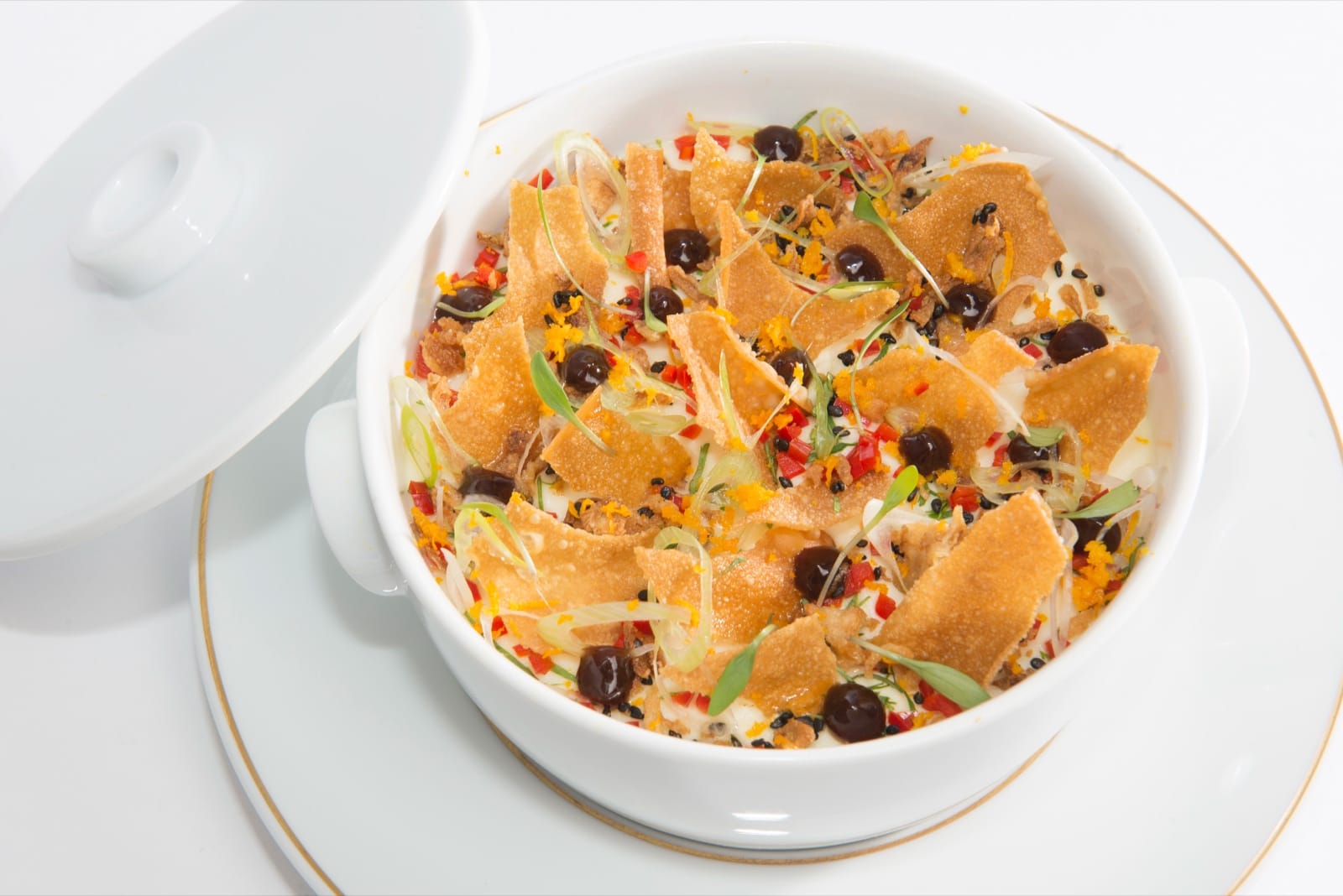
We took the chef’s table and a highlight was the use of broths, purées and sauces poured in front of us from teapots, whisked with liquid nitrogen and garnished with dehydrated curly kale and truffle powder. Naylor’s surprise is serving vegetables as the main and fish and meat as side dishes. The course of sole fillet with carrot purée and carrot broth served with a cuvée was a journey into Dutch produce that perfectly exemplified how Naylor has turned the tables on how a dish should be presented.
Complementing Naylor’s vision at Vermeer is the sommelier Simon Veldman, who has a child-like exuberance for his trade. Since our lunch there, Gault&Millau (the second most famous global international restaurant guide) crowned Veldman the best in the Netherlands for 2016, which he surely deserves. He blew us away by serving a Spanish muscatel from Jerez with The Chocolate Makers chocolate tart and rum ice cream, which I can confidently say is the best pairing I have ever experienced. You cannot adequately understand the role of a top-level sommelier until a pairing confuses and delights your palette in culinary disbelief. The richness of the chocolate changed and developed the muscatel’s flavour with each taste, keeping us wide-eyed and holding on to our glasses. (And despite the fact the NH Barbizon Palace hotel is undergoing renovations from January until May, Naylor is opening a pop-up with his team in Amsterdam’s oldest chapel, christened Roomservice at Olof’s.)
There’s something wonderfully unconventional about Dutch sommeliers and Elise Moeskops at Lastage is another one that fits that bill. For a culture that’s reputedly a bit stuffy, these sommeliers exemplify the admirable changes underway in Holland’s restaurant scene.
Lastage fuses French haute cuisine with Dutch food culture and Rogier Van Dam, who elaborately presents meals in numerous small courses, manages its kitchen. Here, we decided to trust the chef and ordered a nine-course exploration with wine pairings by Moeskops. Seated above the kitchen, we watched the precision of the chef trio work until it was time to scrub and clean the kitchen (and crack open a beer or two).
Among my favourites at Lastage were sophisticated ensembles of pickled pork loin (with celeriac, oysters and a marbled terrine of lardo di colonnata), a soup of Dutch shrimps and red mullet (with a bouillabaisse garnish) and the pike and octopus (with pumpkin, Brandade and Antiboise sauce). The atmosphere here may be a little more homely or gezelig, as the Dutch would say, than the aforementioned establishments but this place is all about the food, and it has worked for them because they’ve managed to win two Michelin stars. Moeskops and Van Dam explain that their idea is to offer guests an affordable and inviting experience, which is something that Ron Blau has taken even further at Ron Gastrobar.
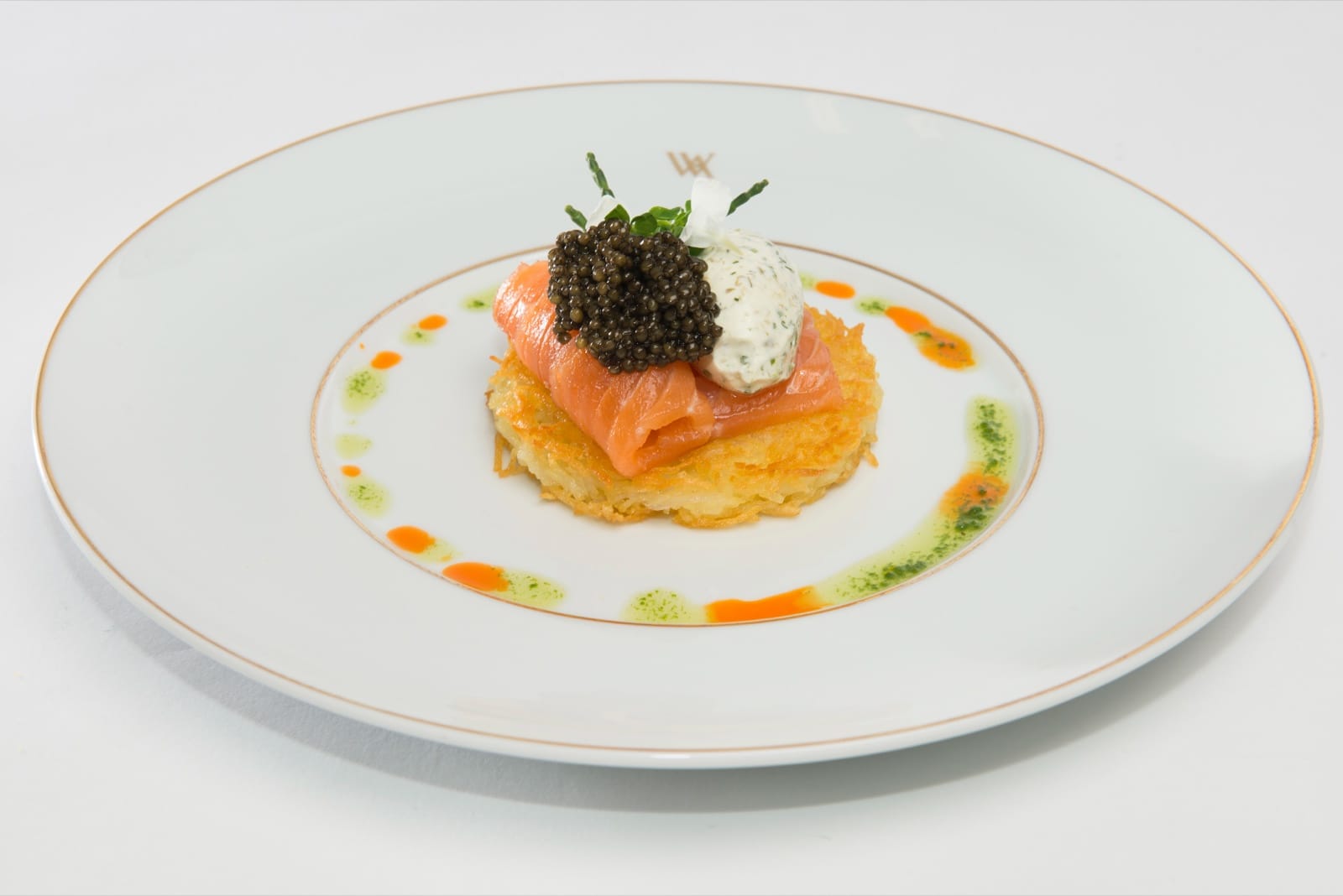
Ron Gastrobar is built on a simple premise: bring Michelin star quality food to the masses via an eat-house bar format. It’s a rambunctious and loud place that offers surprisingly great food. I’m a big fan of the Gastro Pub concept and Ron Gastrobar has managed to both raise the bar and lower the price with a tapas-inspired menu that costs a meagre 15 euros a dish. The menu is a melange of East and West with soft shell crab, steak tartare, cream of goose liver with blackberry coulis and poached pears, BBQ sambal ribs, wagyu steak, lobster and beans, and best of all – the red gurnard on basil with chorizo and gorgonzola foam. Clearly, this isn’t a place for self-control.
The success that Ron Blau has found with his Asian dishes led him to open a second edition, named Ron Gastrobar Oriental, in the more touristic area of Leidseplein. It’s an interesting idea and certainly something you’d be more likely to find in stylish food cities like Melbourne or London but it’s also right at home in Amsterdam, and a hit.
Holland isn’t a place where one has bragging rights – it’s not in their culture. Riding a bicycle is still the main form of transport and no one even opts for swish and expensive ones. It’s just not done. But the egalitarian essence of this culture seems to have enabled the breaking of rules when it comes to food and for that, we are thankful.