A year after revolution broke out across the Arab world, it is worth taking stock of the different factors that led to the uprisings: the economic conditions of the countries concerned, the discontent of their people and the long histories of the regimes that were overthrown.
The popular uprising in Tunisia against President Zine El-Abidine Ben Ali shook the Arab world to its roots. In power since 1987, Ben Ali had been head of the police and an aide to Tunisia's first post-independence president, Habib El-Bourgiba, before deposing him in a coup. At first he seemed a dashing figure who would continue to modernise the country and, soon enough, introduce democratic procedures. But he allowed only a show of democracy. Despite regular parliamentary elections, he ruled with an iron fist, increasingly using his intelligence apparatus to curb dissent and muzzle the press.
From the early 1990s until around 2005, Tunisia's economy performed well, attracting foreign investment on the strength of competitive industrial conditions, cheap labour and gas for energy. Relative prosperity distracted Tunisians from the fundamental questions of freedom, democracy and corruption. Two things changed that. The first was Ben Ali's new wife, Leila, known for her voracious appetite for worldly goods. The second was the slowing of economic growth, compounded by corruption that broadened and deepened. As the international financial crisis became evident in 2007, Tunisia, heavily dependent on exports to Europe, foreign investment, tourism and Arab money, began to suffer. The economy shrank and unemployment soared above 15 per cent. For a relatively educated, Western-oriented population, the combination of hardship, entrenched corruption, police repression and thwarted free expression triggered a volcanic eruption of resentment. Twenty-eight days later, Ben Ali and his entourage decamped for Saudi Arabia.
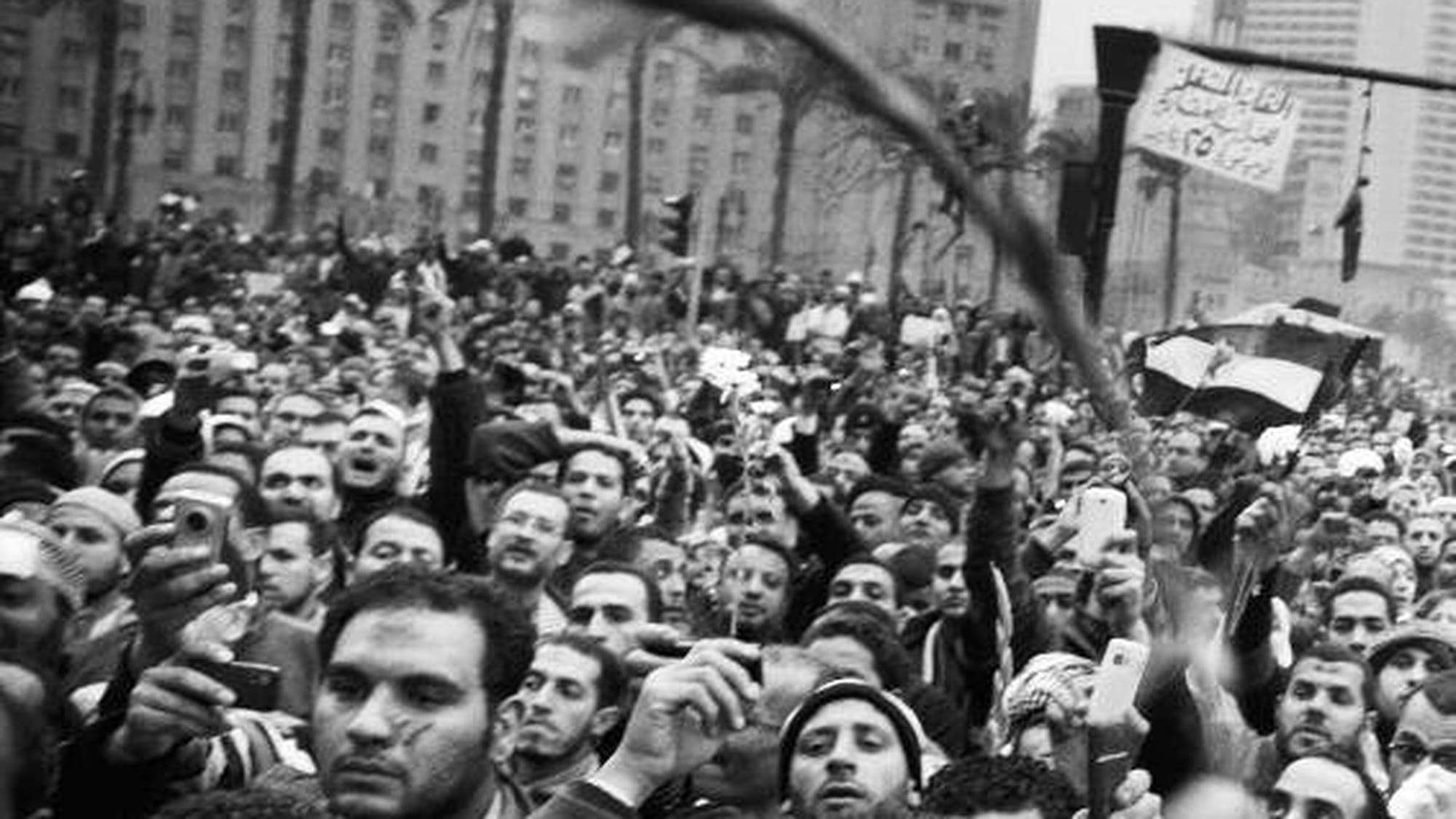
Next to fall was Egypt, a country of 82 million, overwhelmingly young and poor. It had been controlled by military men since the monarchy was deposed in 1952. Hosni Mubarak, the fourth such leader, took over in 1981 after the assassination of Anwar Sadat. He maintained the peace treaty with Israel, cultivated American relations and aid, and endorsed economic liberalisation. By the mid-1990s the budget deficit had narrowed, tourism was thriving and privatisation had proceeded relatively well. But growth spurred the rise of a powerful clique around Mubarak's son, Gamal, which fostered monopolies and made many senior politicians billionaires. Mubarak's refusal to nominate a vice president or lift the Emergency Law in place since 1967 infuriated the young, and his apparent intent to seek another term despite ill health brought mass resentment to a boiling point. In January 2011, hundreds of thousands flooded Cairo's Tahrir Square. When the army refused to quell the revolt and instead sought to protect the demonstrators, Mubarak's fate was sealed. A month later he resigned.
The bloodiest of the uprisings so far was the fight to remove Colonel Muammar Qaddafi, ruler of Libya since his 1969 coup against King Idriss El-Sanoussi. In theory the country was wealthy, its revenues swollen by rising oil prices, yet Qaddafi paid little attention to developing it. Grandiose schemes such as the Great River Project often came to naught while his attention turned to cultivating an image abroad and, finally, to terrorism. After the bombings of Pan Am flight 103 over Scotland and UTA flight 772 over Chad, sanctions made Libya a pariah state until compensation was agreed in 2002. His antics during state visits made him an object of ridicule, yet he ruled on, certain that a frightened and factionalised population would never resist. The demonstrations that began in February 2011 took him by surprise. After a summer of bloody conflict, Qaddafi and one of his sons were captured and executed; his son Seif now faces charges of mass murder. The political picture remains unclear and the full extent of the family's plundering is still unknown.
The uprising in Syria is second only to Libya in its bloodiness. After waiting too long to address his people, President Assad's rare declarations did little to appease the demonstrations, and although the government lifted the emergency law in place since the Baath Party seized power in 1963, repression by the security services grew more brutal amid fears of open civil war. Casualty figures, though inexact, indicate more than 7,000 dead, mostly civilians. Former allies turned against him: Turkey's prime minister, Recep Tayyip Erdogan, shifted from mild criticism to urging Assad to step down, and Qatar, once a strong ally, became a serious critic, with its Doha-based channel Al-Jazeera ordered out of the country. On 27 November the Arab League took the unprecedented step of imposing economic sanctions, voting to halt most trade, ban Arab investment and freeze regime assets abroad.
American and European sanctions are also beginning to bite. A ban on oil imports is costing Syria 400 million dollars a month, the pound has fallen to its lowest level on the black market, and tourism, which accounted for over 10 per cent of GDP in 2010, has virtually disappeared. Assad now appears to recognise two fundamental conclusions: that one-party rule has died forever in the Arab world, and that succession to power by inheritance is no longer viable. The old Cold War slogan made famous by his father, Our Leader Forever, has been erased. What remains to be seen is whether the president keeps fighting or steps down, and, if so, under what conditions. Will it be like Mubarak, or like Qaddafi?
The region's other ongoing revolt, that of the Shi'ite majority in Sunni-ruled Bahrain, has been relatively quiet of late, though its anniversary may bring fresh protests. At first the demonstrators sought only the resignation of the prime minister, in power for 42 years; had King Hamad bin Isa Al Khalifa released him from his role, the unrest might have died down. Despite its small size, Bahrain sits at the nexus of a web of global interests. It lies off Saudi Arabia's eastern oil-producing region, to which it is connected by a bridge, and its capital, Manama, hosts an American naval base. Saudi nervousness compelled the Kingdom to send elite troops, with other Gulf states supplying supplementary forces under their mutual defence pacts. The situation could not be allowed to escalate, given the danger of confrontation with Iran and the threat to oil supplies and prices.
This January, President Saleh became the latest Arab head of state to fall, leaving the country he had ruled for 33 years to seek medical treatment in the United States. Convulsed by massive protests throughout 2011, Yemen's revolution pitted the people, tribal leaders, ministers, diplomats and several senior army officers against the president and his coterie of family members. As elsewhere, the demands were for greater democracy, constitutional change, liberty and the curbing of corruption. Though nowhere near as bloody as Libya, the crackdown was brutal, the unrest prolonged by Saleh's unwillingness to relinquish power even after an assassination attempt. As for his wealth, the amnesty under which he finally stepped down may yet interfere with efforts to recover it.