Though the fashion industry would sometimes rather you forget, there’s a whole lot of stuff out there, besides fashion, that’s equally worthy of our attention. You can’t really blame them for this de-facto self-obsession, though. “Designers who have been formally educated in universities or design schools, like myself, tend to overthink things in developing concepts and thinking theoretically about how things work together,” says Faissal El-Malak, while speaking on a park bench outside London’s Tate Britain.
The out-of-the-box Palestinian-Canadian designer honed his skills in design schools and internships in Paris and New York, but subsequently turned squarely towards traditional crafts of the Arab world for inspiration, incorporating arts from overlooked communities in Tunisia, Yemen and upper Egypt and rendering them into surprisingly modern collections. The result is a design language unique enough to have earned him Vogue Arabia’s top fashion prize.
“What I love about people working in traditional crafts is their innate sense of creativity and style. They put things together in a meditative, intuitive way. It’s something they do on a regular basis, just like breathing, and the result is always beautiful.”
In El-Malak’s six collections to date, this ethnic aesthetic is masterfully woven in, resulting in something far more complex than what you might expect. Instead of putting it at the forefront, it is buried under layers of Western pop culture references ranging from 1920s Berlin flappers, America’s original class of supermodels of the mid-1990s and even some 1970s Stevie Nicks boho-chic. El-Malak thoughtfully incorporates artisanal elements in ways that pay homage to the care and effort that the craftspeople put into their work, but without leveraging the obvious connotations those traditional crafts might have.
“My goal is not to produce one collection per country,” he says, “but instead build layer upon layer in a way that leads to a luxury brand that tells the story of the region, that showcases the crafts of the region.”
The designer jubilantly embraces colour, as evidenced in his AW18 collection. His irreverent combinations, like a midnight blue pencil skirt in plush velvet paired with a frilly cropped top, gathered around the neck, in tiny, lime green moiré, elicit a sense of playfulness and surprise that is becoming harder to find in an increasingly homogeneous fashion landscape. “I was so happy to move to Dubai from somewhere like Paris,” he says, “where everyone wears black all the time. The South Asian communities in Dubai embrace colour in a way I find so refreshing.”
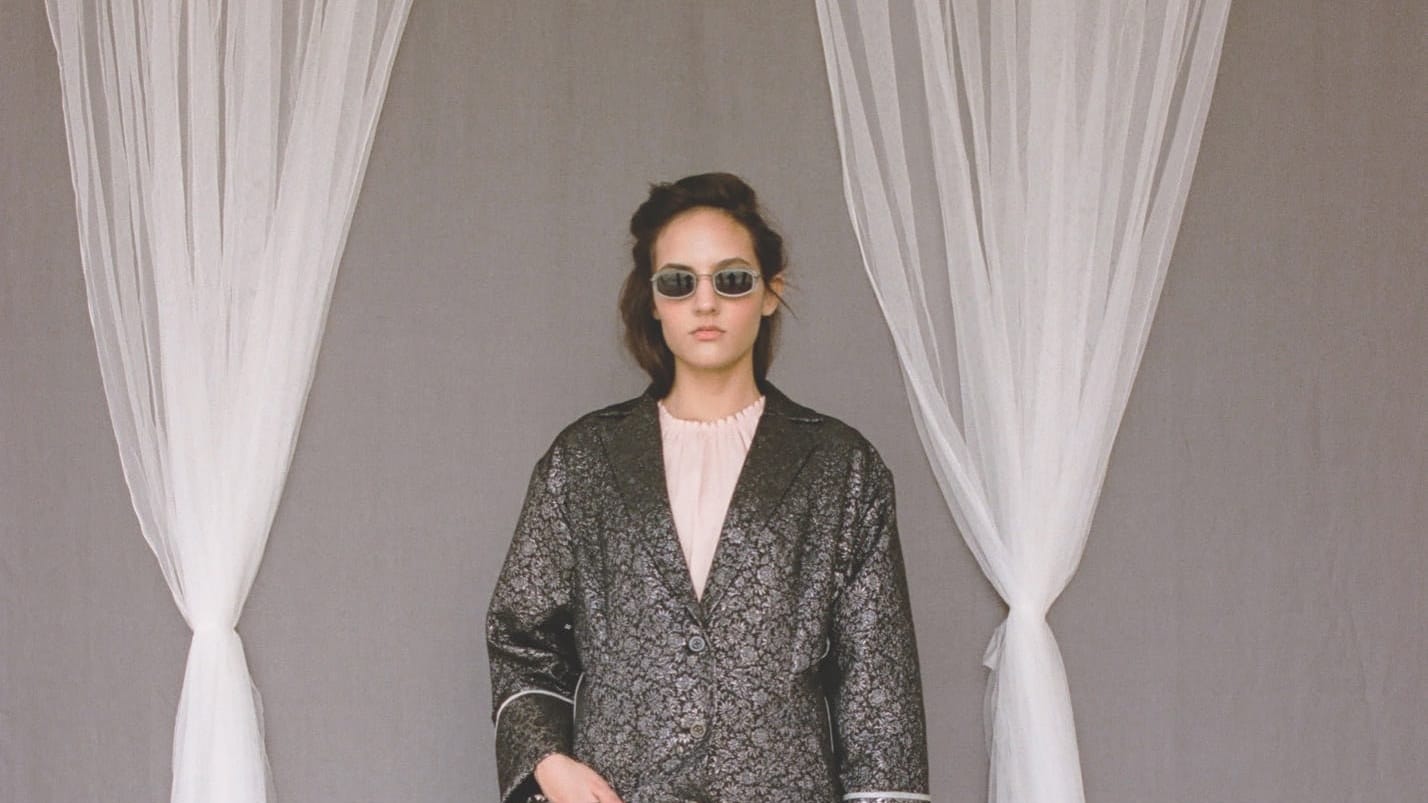
Already, El-Malak’s unconventional silhouettes are recognisable at first glance – slip dresses layered over Oxford shirts and wide-leg trousers – yet rendered in a way that is accessible, especially for those of us who came of age in the 1990s and have a fluid understanding of what style looks like. El-Malak’s definition goes from menswear-inspired tailored silhouettes in heavy gabardines, extra-roomy shirt dresses with big, masculine buttons yet delicate, feminine collars, to vampy, lace and silk bias cut dresses in cream, black, and brilliant Red Sea blue.
His menswear lines are even bolder. El-Malak’s last collection features suits in which any man would stop traffic: crimson silk with front-facing slits in the trousers, a kuffiyeh-esque pattern in royal purple with tassels up the legs and torso, and a truly extraordinary suit in burnt orange corduroy, with patches of orange-and-cobalt blue silk and black jacquard stitched into the sleeves to conceal the wearer’s hands. “The menswear line from a few season ago was an exercise where I explored shapes that are considered unexpected for men, delicate volumes and textures,” he says. “I’ve retained this approach in more recent collections for women, in a way that is less conceptual and more accessible.”
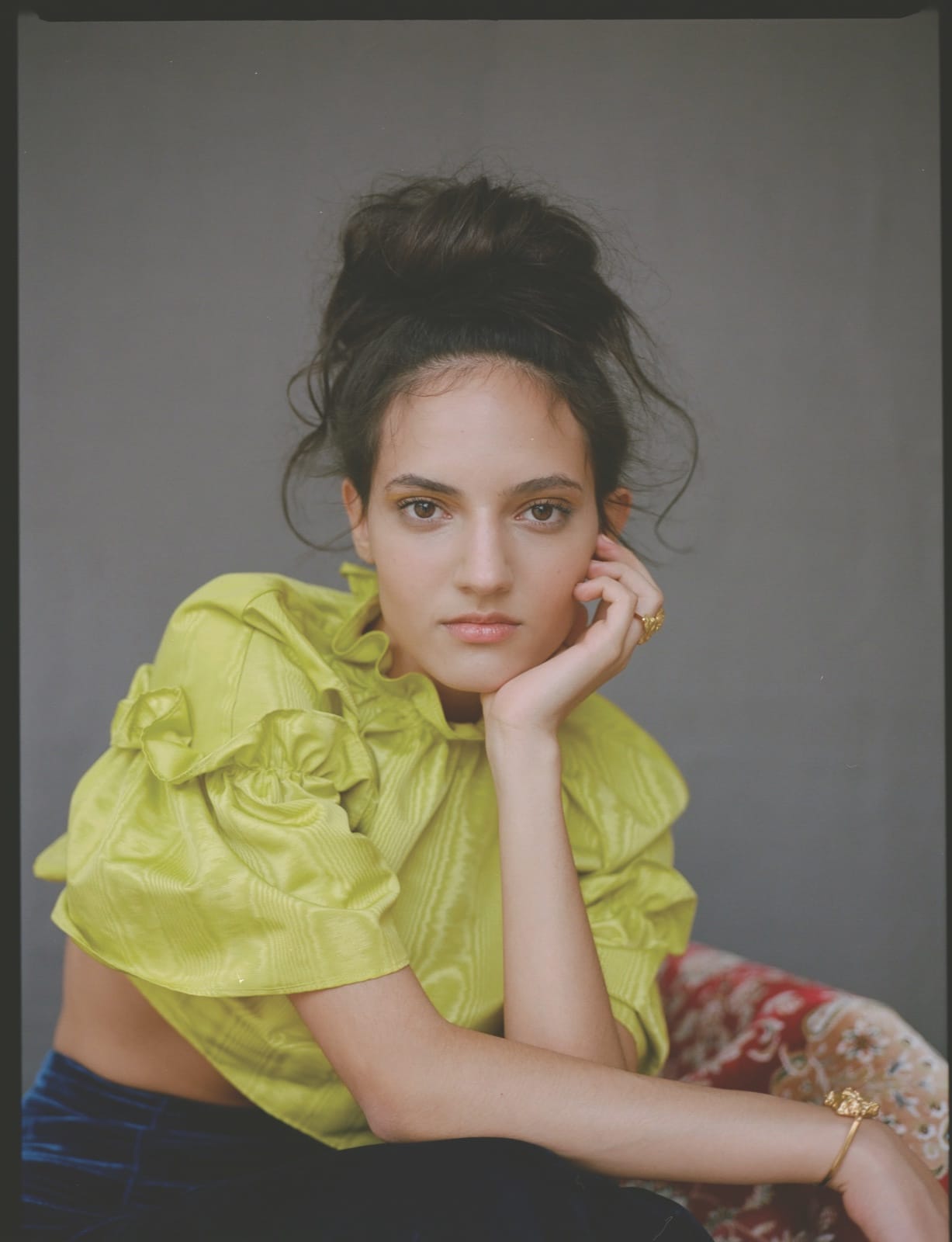
El-Malak ‘s accessibility was made easier recently with a film he co-created with Kenyan filmmaker Amirah Tajdin, as part of the Vogue Arabia competition. Starring Instagram darling Dana Hourani, it ingeniously adds to his brand’s story by combining the art of filmmaking with social media’s power. “It tells the story of my SS18 collection,” he says, simply. Another film for W Hotels and Mixcloud artfully incorporates traditional Emirati women’s wedding music. “Slowing down to appreciate these artisans’ work,” he says, “is a beautiful and humbling experience, and something that we as designers have a responsibility to convey to consumers.”