Samba Until Dawn!
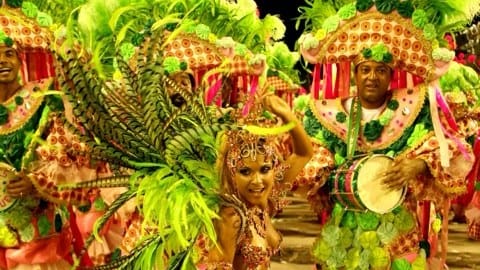
Think Rio de Janeiro, and you’d probably think of costumed dervishes, dragons, transvestites, stilt-walking clowns… And of course lots and lots of women taking centre stage. It has such a reputation that the news that I was going to the carnival in Rio provoked much envy among my friends. “Rio!” they said. “You’re kidding. Wow, I’ll bet the party is fantastic. And the women!” I did, admittedly, feel a little smug.
Words: 1140
Contact: HYPERLINK "http://www.thecoverstory.com" www.thecoverstory.com
Copyright: © Felipe Goifman/TCS, all rights reserved
Although it’s hard to believe that all 12 million people in this sprawling city would dedicate their energy to the carnival, a large percentage of the population certainly does. The joy, happiness and sensuality that are all squeezed into this four-day party tend to create a collective spirit – well, collective sexuality – in people.
A tangible buzz of excitement permeates Rio’s homes and streets at this time, via television, radio, advertisements and billboards as everyone gets ready for the big knees-up. It really is impossible to say ‘bah humbug’ and not join in the celebrations, for there’s no escaping the party spirit of the Rio carnival. Besides, few would want to, because Rio is the best place to be during carnival.
Carnival’s origins are very obscure. Its roots are pagan and the festivities are thought to have stemmed from ancient agrarian rites that began in the fourth millennium BC. Celebrations of this type, with masks, costumes, plus great excesses of food, drink and merry mayhem, have developed in a wide range of cultures over the ages. In ancient Egypt, masks and costumes were a part of dances and rituals that took place around the fire to celebrate the arrival of spring and the end of the Nile floods; while the Dionysian parties and bacchanals of the Greeks and Romans also created a platform for full-scale feasting.
When Christianity became the official religion of the Roman Empire, Christian traditions took over and carnival became a pre-Lenten feast of plenty – a last binge before it was time to fast. Venice, Rome and Nice became important cities on the carnival map of Europe and the traditions that originated here, with masks, costumes and organized themed parades spread to the colonies, where plantation slaves added their own African influences - which in turn can now be seen in some European carnivals like, like that held in London’s Notting Hill during August.
But the modern Rio carnival, with its dazzling display of costumes and lively street dancing, is now the most famous celebration of all, and takes place over the four days preceding Lent (usually in February). The excitement of the pre-carnival build-up occupies everyone’s thoughts and reaches fever pitch during the final samba-school rehearsals. These are open to the general public, and people from all different classes and colours cram into the small ballrooms.
During carnival, Rio is completely transformed. Visitors from all over the world arrive to see the parade and to enjoy the atmosphere of the many smaller events and parades that are staged every day.
The main procession was free to the general public until the late seventies, and took place in one of the main avenues downtown. Today it takes place in the Sambódromo, an enormous stadium catering to 90,000 spectators that was specially designed for the event. With the arrival of the new arena the celebrations have grown to become a full-scale professional showbiz occasion, with all of the glitz and glamour that goes with it.
Big companies buy the best private function rooms in the stadium: only celebrities, politicians and the richest Brazilian families are invited or can afford a place here. International celebrities are of course also always welcome. Businessmen invite their commercial partners to spend the entire night enjoying caviar and champagne while the incredible visual orgy of colour and samba passes by in front of their eyes.
People who can’t afford a ticket for the Sambódromo show throng behind the bars hoping to catch a glimpse of the main show. But outside the arena, much of the carnival is still celebrated in the streets of Rio, with non-stop dancing and smaller processions.
There is a lot more to carnival than meets the eye, and scores of people of all professions are involved behind the scenes throughout the year. There are the directors and staff of the samba schools, plus the stylists, designers, dressmakers; float designers, choreographers; dancers, musicians, composers and singers. The list is endless. Actually taking part in the parade is a lot more difficult however. You need to pay for a place in a samba school and for your own costume.
And looking fabulous also helps.
The main parade is on the Sunday and Monday of carnival week, and it is on these days that the best and most famous samba schools - Mangueira, Beija-Flor, Imperatriz Leopoldinense, Portela, Salgueiro, Mocidade Independente de Padre Miguel, Viradouro and Estácio e Vila Isabel – all compete for prizes. The Cariocas (as the people of Rio are called) are as serious about supporting their favourite samba schools as they are about their favourite football clubs. Smaller schools such as São Clemente or Porto da Pedra are always working hard to remain in the “premier league”. It’s not an easy task. Creating a parade that can face up to the stiff competition of the big schools costs a lot of money.
Another tradition linked with the Rio carnival is the Jogo do bicho, a sort of illegal lottery that occurs four times a day and involves choosing the winning animal from a choice of around 30. The people who choose the right one win a cash prize. A lot of illegal money comes from the local Mafia, and a large sum is kept aside to sponsor the carnival – not surprisingly, the samba school presidents are also invariably Jogo do bicho bankers.
The parades themselves are like an annual samba championship. Every school has an allotted time (around 1 hour 20 minutes) to perform its show. They are judged by a panel of experts in nine fields including percussion, samba, harmony, theme, performance, floats and props, and of course costumes.
The parades last the whole night, starting around 7.30 pm and going on until dawn. With the senses fully awakened by the drumbeats and hip-swaying dances, it’s easy to dance the samba (or at least pretend to), and to carry on right through the evening to the end of the marathon party. Fatigue is kept at bay by the incredible vibe of the dancing crowds.
A few days after the end of one celebration, the first preparations are already underway for the next event. It’s as though the relaxed and seductive spirit infects the city throughout the year. The Cariocas are a passionate bunch, and nothing reflects this more than their carnival.
ENDS: 1140 words
WARNING COPYRIGHT NOTICE: © The Cover Story and its contributors.
You have received this text for review purposes only. Please do not forward this document or use it for any other purpose. If you wish to purchase text rights for reproduction or reference please contact TCS or your local TCS agent. Using this text in any way without permission will be considered a breach of copyright and may result in legal action.