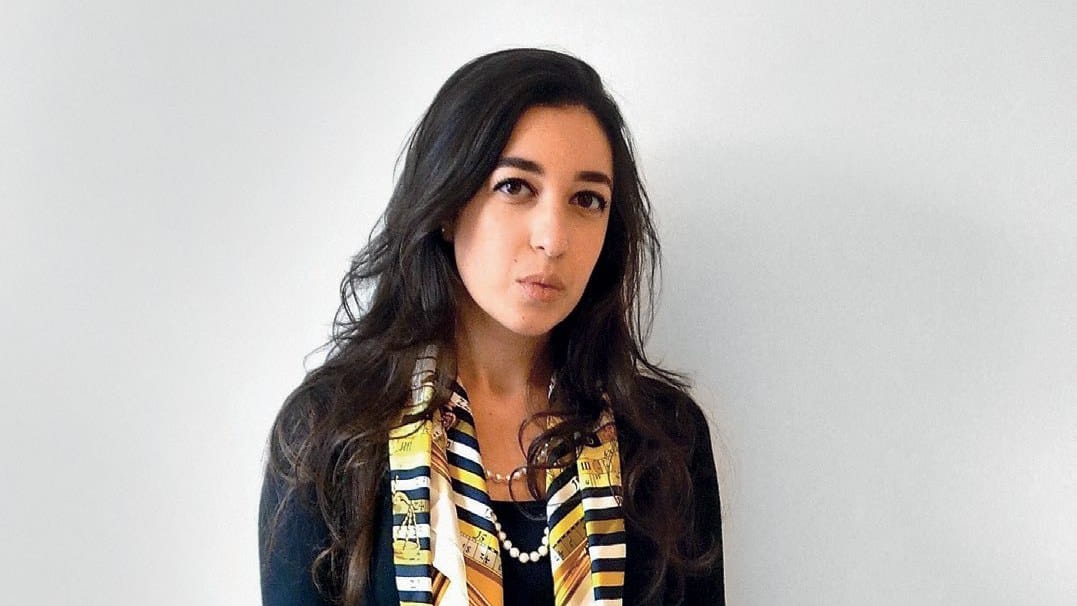
Since its inception three years ago, Zovighian Partnership (ZP) has been the Beirut-based Zovighian family’s answer to social responsibility – and it’s youth oriented. “We are a business with a very strong community orientation,” said Zovighian, ZP’s Managing Director. The idea is that in order to thrive, millennials need to find a strong sense of purpose in their jobs, so the Partnership works with youth to cultivate desirable employee profiles.
To achieve this, and Zovighian’s even grander goal of making the Arab world a better place, the Partnership recently acquired the Nexus trademark in the MENA region. A kind of think-tank, the Nexus Global Youth Summit is a global movement that was initiated with the support of the United Nations in 2011 to “catalyse new leadership and global solutions.” Based in Washington D.C., the group works to increase philanthropy and encourage the business of impact investing by bridging communities of wealth and social entrepreneurs. With thousands of members from 70 countries around the world, Nexus hosts local summits that bring together its members, providing them the tools they need to efficiently accomplish political and social change.
As director of the regional branch, Zovighian works with an elite group of talents, business owners and social entrepreneurs who share a common goal of inducing positive change, and matches experts to important causes. The organisation’s carefully selected members are young – with ages ranging from 13 to 45 – and global-minded. Though just a few months old, Nexus MENA has already held several ice-breaking events to create a free and comfortable environment for experts to meet and generate powerful ideas for the future. In 2017, they aim to expand their membership, bringing “the right people to the right place, at the right time,” says Zovighian, a Lebanese of Armenian descent.
With this and their own activities, ZP is facing challenges head-on, finding practical solutions for things like sex-trafficking and early marriages among refugees, and the need for more and better emergency medical services in conflict zones in the Middle East. “We help deliver projects, disrupt problems and create more intelligent decisions,” explains Zovighian.
To exemplify their strategy, and simultaneously bolster their troops, ZP has developed a young innovators program in-house. Each summer, it offers internships to four to six school and university-aged students that develop leadership and other soft skills. Zovighian describes it as a boot camp. “They learn how to work with clients, solve problems and how to argue and negotiate,” she explains, adding that role-playing is part of the development process. Interns also feel like their work has value because Zovighian makes it a point to involve them in important processes and decision-making. Plus, she makes sure they have the opportunity to sit in on important client meetings and contribute to the conversation.
When liaising with schools and university career placement services to recruit interns, Zovighian insists on including students based in the humanities alongside those who come from scientific fields. “Give me access to talent that doesn’t have access,” she declares.
Zovighian also believes that youth must break through the stereotype that has painted them as the entitled generation, because it is not a realistic portrayal of the challenges they face today. “Working with young people is extremely rewarding,” she adds.
Leading by example, Zovighian inspires her occasionally timid interns to take charge by demonstrating her own go-getter disposition in the office. “Just pick up the phone and call someone,” says the London Business School MBA grad. “It’s as easy as that.” A lot of people believe influential individuals are not accessible, but she insists that simply talking to people often yields surprising results.
As part of their portfolio, ZP advises clients from across the Middle East. Notably, two young female members of the Saudi royal family worked with the Zovighian Partnership to establish projects addressing different needs in their communities. One tackles human trafficking within the kingdom, while the other involves building a sports economy based on inclusiveness and leadership, especially pertaining to women’s participation.
Ultimately, Zovighian believes today’s youth face a more complicated world than their parents did. People skills are more important than ever and smarter negotiation depends on it. She profiles today’s young leader as someone who wants to bring social value to their community. “ Leadership doesn’t have only one look. A real leader is somebody who uses their business experience and turns it into something wonderful.”