Lebanese architect and musician Carl Gerges, 38, just landed in Beirut from back‑to‑back project meetings in Paris and London. And, two hours later, he's seated opposite me on a Zoom call from a city that's battening down the hatches once again. Outside, the conflict creeps closer; inside, he is composed, even matter‑of‑fact. “We've learned how to cope,” he says evenly. “Otherwise life would just stop. I have ongoing projects, salaries to pay every month, so we need to keep the machine going.”
In most cities, “keeping the machine going” means navigating planning officers and late-paying clients. In Beirut, it also means designing under the soundscape of war. “We did it a year and a half ago. We were working on commercial projects on site, hearing fighter jets overhead and bombs exploding a few hundred metres away. Our work allows us to take our minds off the news and focus on design.”
He calls it “trying to navigate this phase in the smartest way possible”. “We feel safe when we’re together as a team. Brainstorming helps us stay sane. It’s like an act of resistance, in a way.”
If today’s turbulence is geopolitical, the chaos of his former life was louder, glossier and plugged into an amp. Long before his eponymous studio began quietly collecting international attention, Gerges was the drummer and a composer in Mashrou’ Leila, the incendiary indie-rock band that became the unofficial soundtrack for a generation determined to talk about what everyone else tiptoed around.
Founded in 2008 with fellow students at the American University of Beirut, the band went from rehearsal rooms and cheap beer to world tours and think pieces. Their following was cult, then continental, then global. They were playing to thousands at festivals as well as to serious crowds at London’s Barbican and Somerset House – spaces more used to carefully curated culture than to a young Arab band dissecting sexuality, politics and power structures.
He smiles when I list the collaborations that would usually be name-dropped in capital letters: Brian Eno, Róisín Murphy, Hot Chip’s Joe Goddard. “We had quite an amazing career,” he concedes. “We started at a very young age – around 19 and 20 – and honestly, it wasn’t really our plan to become professional. We were all studying architecture, but our career picked up really quickly. We started touring quite intensely, getting a lot of recognition in the region, then Europe, the United States and worldwide.”
For a while, Mashrou’ Leila felt less like a band and more like a movement. Then came the backlash. The same lyrics that made them iconic also made them targets. “It was actually a very nasty transition, because it wasn’t really planned,” Gerges recalls. As social media rage accelerated, they began to be banned from performing in different countries.
“Our subjects were still unaccepted, unfortunately, in our region of the world,” he says. “We fought for freedom of expression, but at the same time the false accusations and fake news started circulating that we were devil worshippers and drug addicts. We were one of the healthiest bands in the world. Then we started receiving death threats. I didn’t join a band to be involved in politics and fight with other countries, so we decided to take a step back.”
Where some might have doubled down on the role of exiled provocateur, Gerges changed medium instead of message. Music and architecture, he says, were never separate lives. “When you’re in a band travelling, doing interviews, always in a crowd, it can get to you quite easily. So I’d take on one or two architecture projects every year in parallel to my music. This allowed me to stay grounded.”
Touring as a supposed rock star, he behaved, frankly, unlike one. “When we were touring, we used to spend a lot of time in museums and art galleries looking at architecture instead of going clubbing and drinking like real rock stars,” he laughs. “We met so many architects, designers, landscapers, and had amazing conversations.”
Still, the end of the band was brutal. “It was done. We had lost everything,” he says. “It was one of the lowest points of my life. A sign from the universe. Deep inside, I wanted to be an architect at some point, but not this way. I wanted to start at 40.”
Instead, he launched his studio at the start of 2020, just in time for Covid-19 to shutter the world. Elegant career pivots rarely happen in elegant circumstances. Then came the sort of twist you might reject in a script for being too neat. “Architectural Digest contacted me asking to shoot and publish my apartment in Beirut,” he says. “They didn’t know that I had designed it – they knew me as a musician. When they realised I was an architect, my story changed. It was great to be discovered.”
The feature went global; suddenly, the drummer was also the architect behind the ascetic Beirut flat circulating on mood boards from Brooklyn to Berlin. It was the soft launch of Carl Gerges Architects as a serious player.
Today his drum kit is stored in his grandmother’s house while his stage is the studio. “Home has always been Beirut. It's my source of inspiration. The more time goes on, the stronger my ties with the city become and the harder it is to let go.”
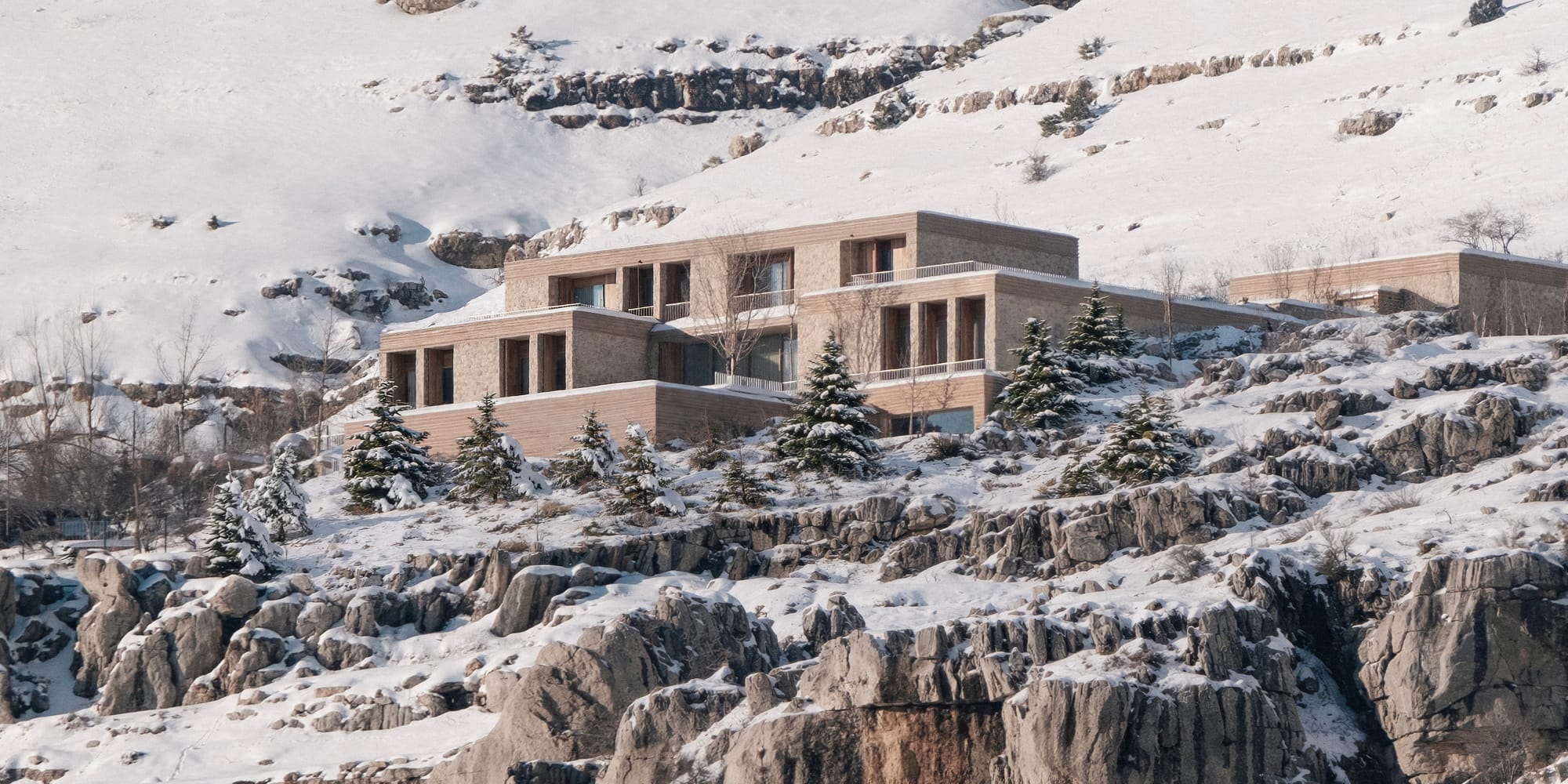
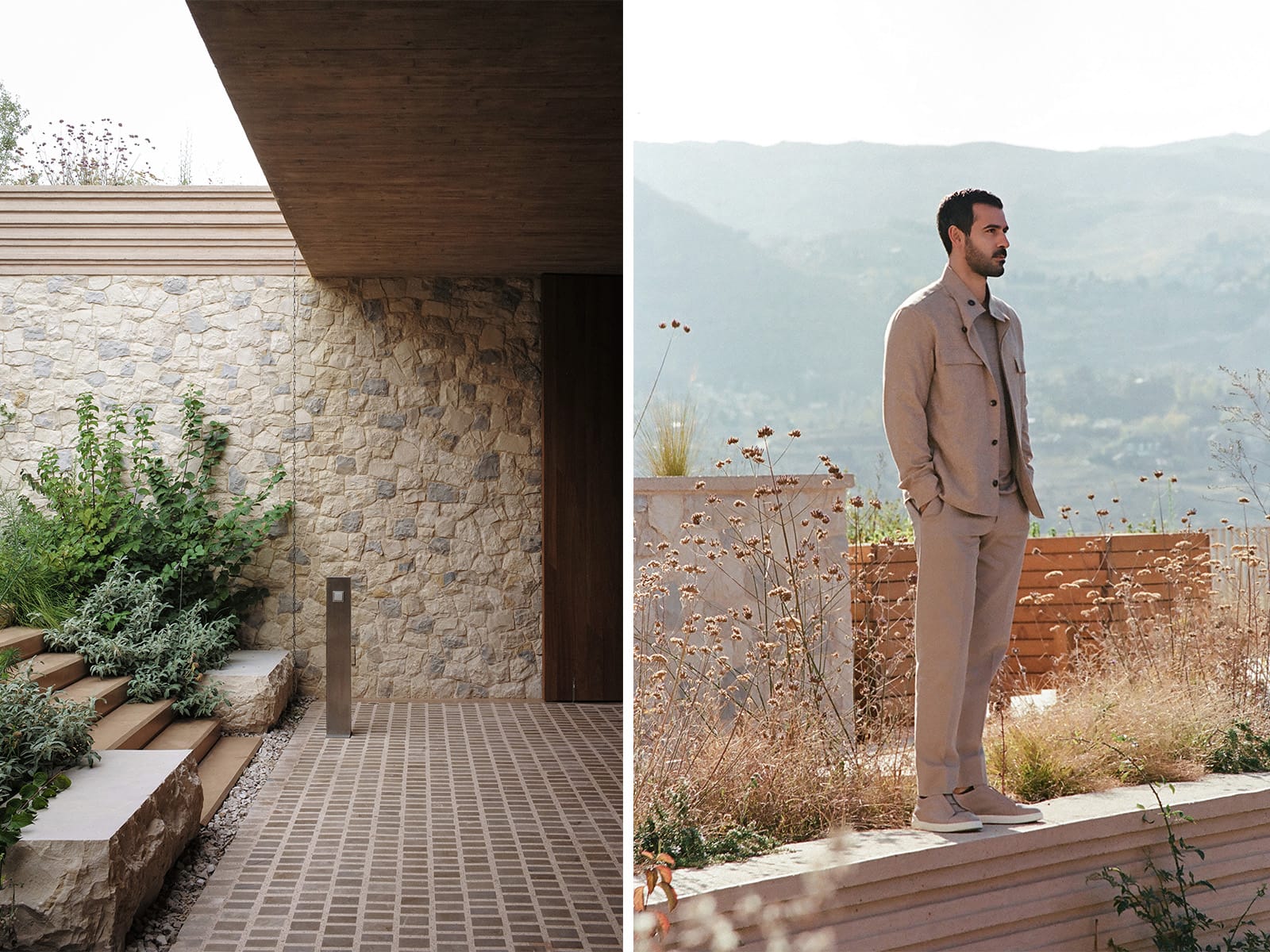
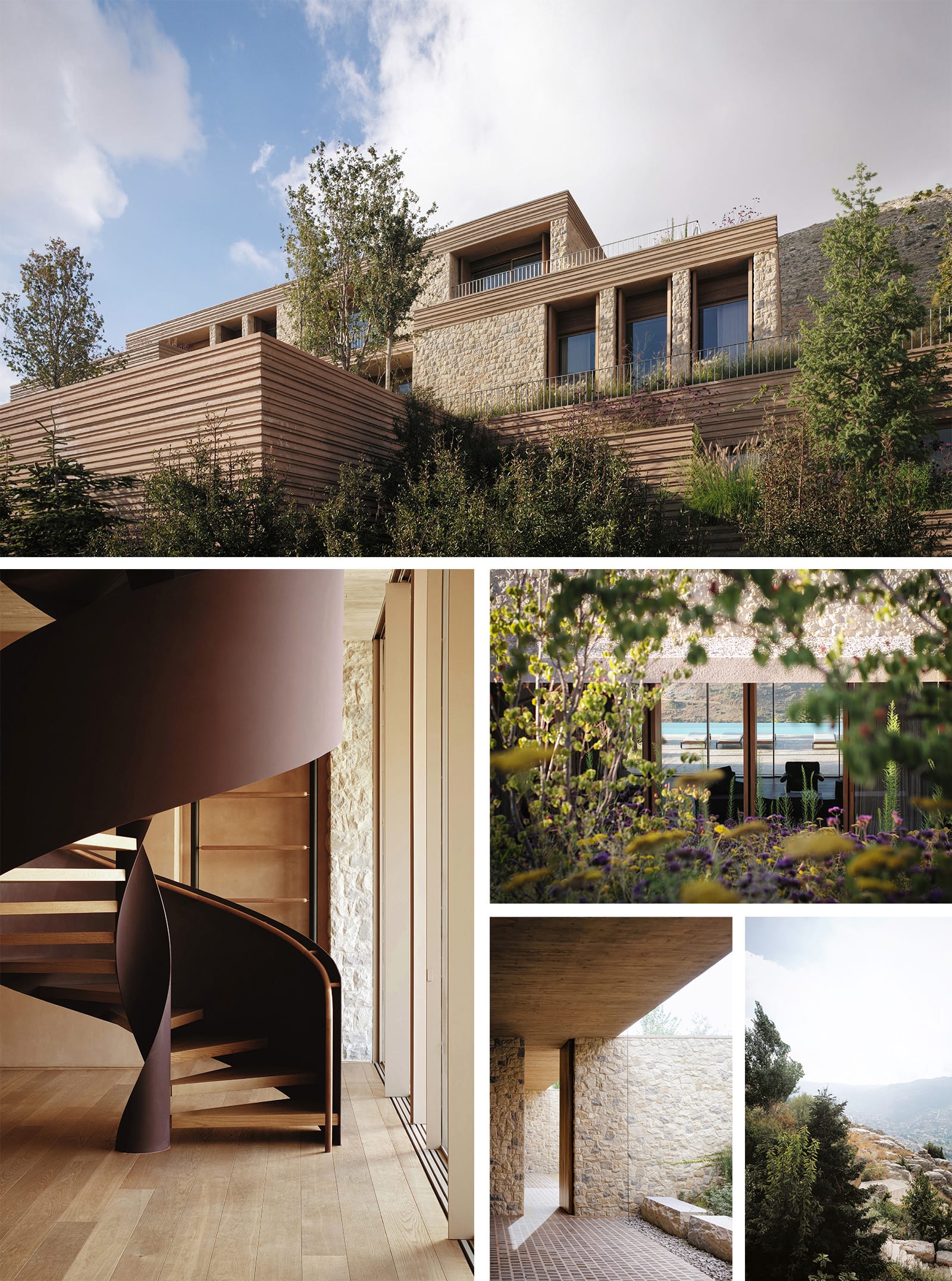
The work has followed. In 2021, Gerges was handed a carte‑blanche brief for the modestly named Villa A in Faraya. The untouched mountain setting let him conduct the kind of dialogue with landscape that underpins his practice. “It was everything I had dreamt about as an architect,” he says. “My first reflex is to build in a more integrated and respectful way towards nature. Lebanon is a very small country where people love building; I don't know why they have this drive to build the biggest mansions. We should be doing the opposite, because we have one of the most beautiful countries. Our nature is so diverse and we don't respect it enough.”
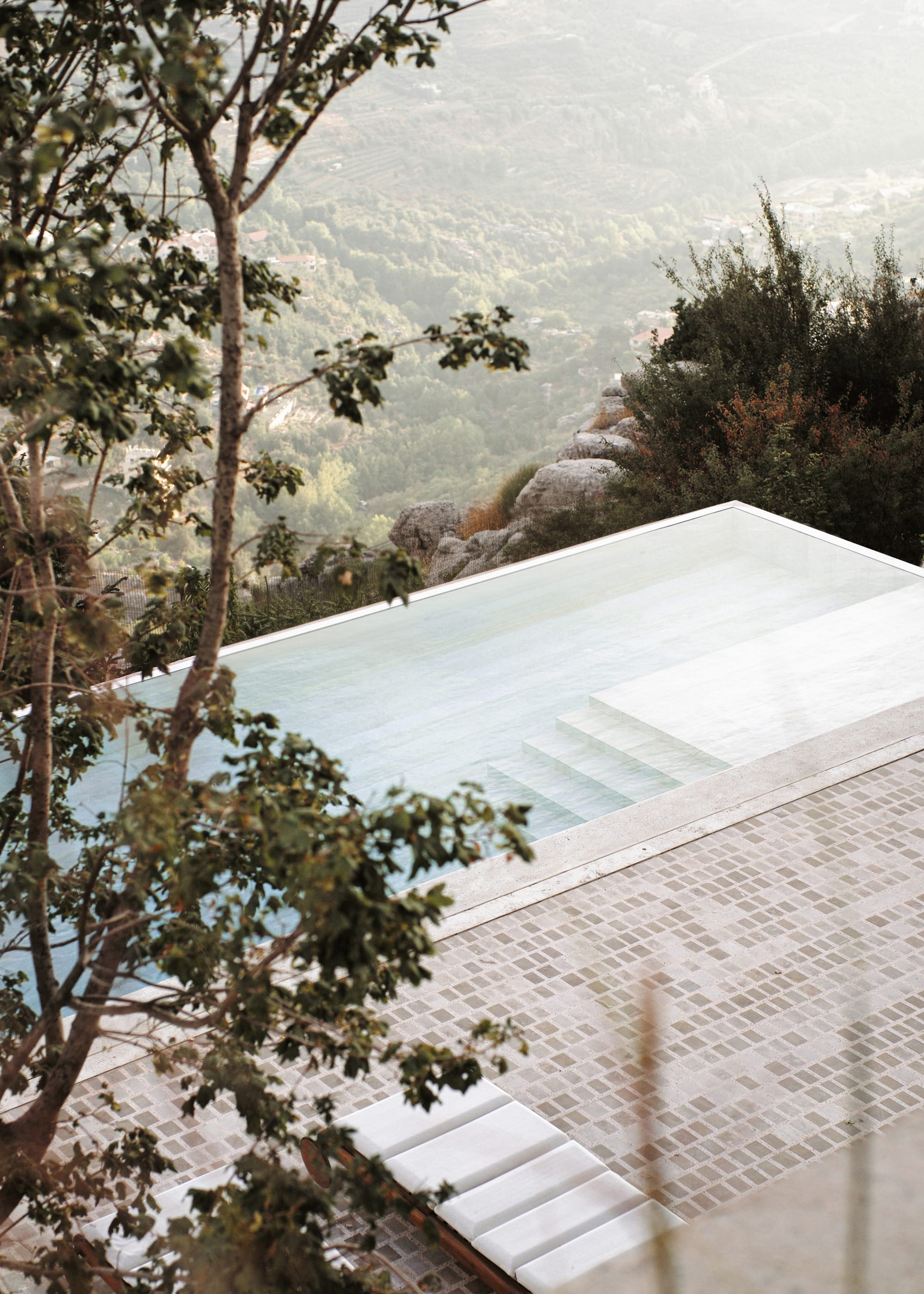
The finished house – all low stone horizontals, floor-to-ceiling glazing and a pool that appears to bleed into the cliff edge – looks, on Instagram at least, like it simply emerged from the rock fully formed, dressed in neutral linen. That’s the seduction of a single image. Gerges is quick to point out what it conceals.
“People don't realise, when they see a beautiful photo on Insta, or in the pages of a magazine, what happens to get to this point. When the client approached me, I started analysing the site with my team, taking notes, photos, sketching. I always spend a lot of time on site to understand the light and existing elements – trees, rocks, or an ugly building we want to hide. There are regulations to consider, the client’s requirements, the number of bedrooms, the programme. Only after that does the project start taking shape.”
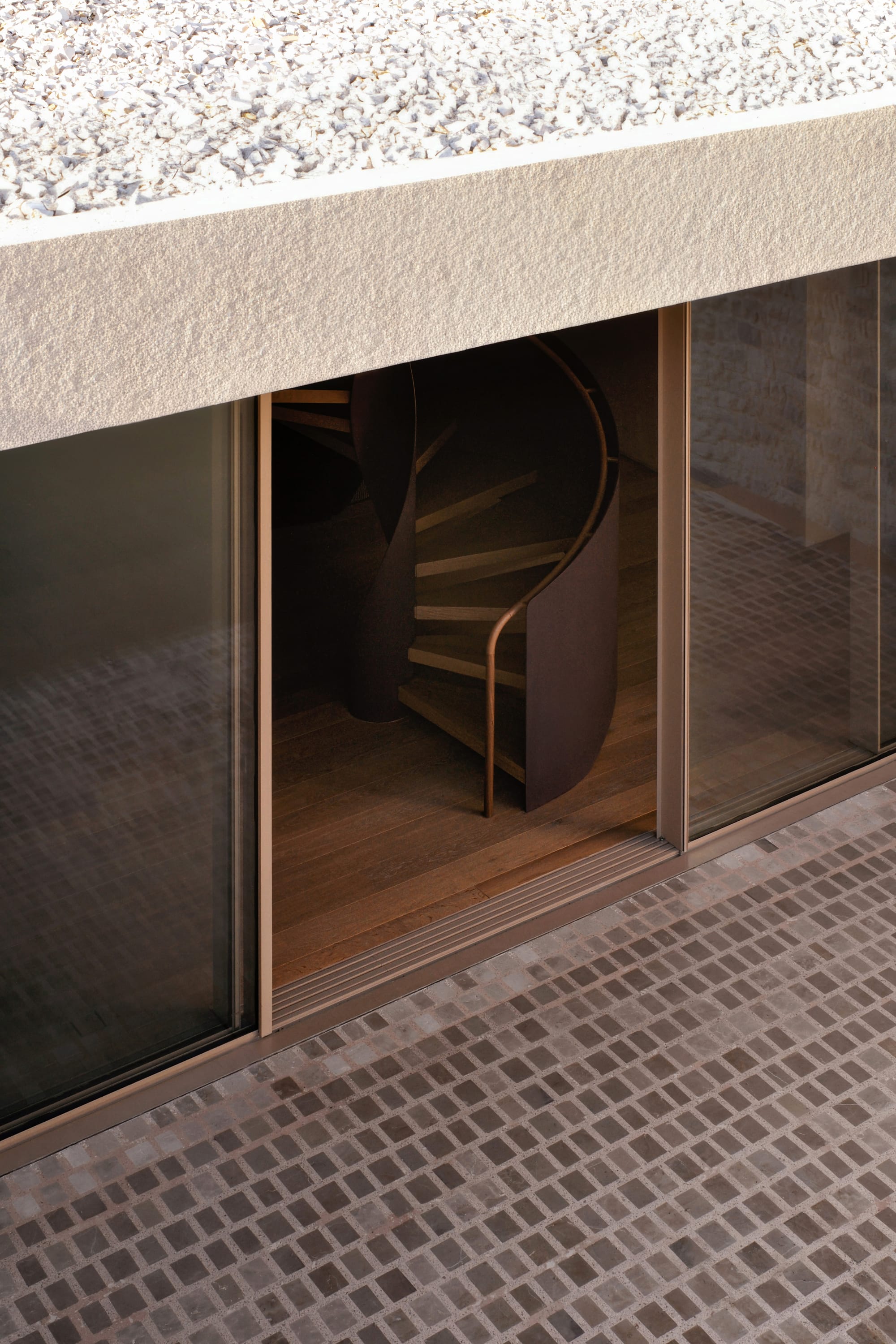
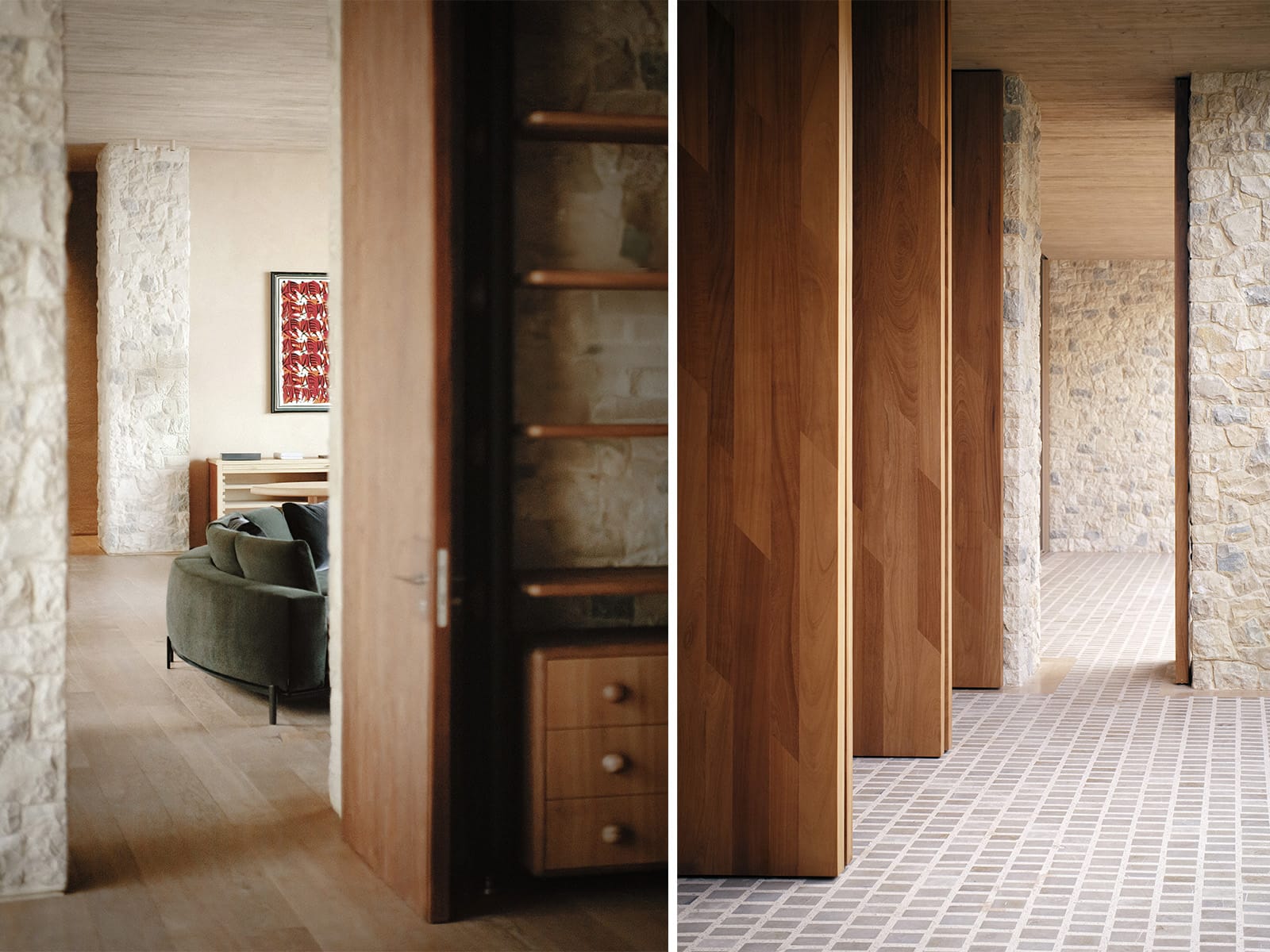
What he’s proudest of is the way they pushed ostensibly simple materials. “On paper it was basic – stone, concrete and wood – but we were very experimental. The stone and the cladding is quite artisanal, whether on the walls or the floors, where we've created a very special mosaic.”
Not all briefs arrive with that kind of clarity. A different commission came from his friend, influencer and entrepreneur Nour Arida, for the headquarters of her Sorbé skincare brand. The resulting interior is an essay in brand-as-space: circular seating, a monochrome nude palette, soft geometry and few hard edges. “The approach was to bring people together,” he says. “So instead of having desks and computers, we have this central space where employees sit around with their laptops to discuss and brainstorm.”
Then there is AHM, the club that re‑staged his relationship with music on Beirut’s reclaimed waterfront – new land waiting for meaning. Its glass and brutalist forms, and a façade that peels open to the east to frame sunrise over the city, create the sense of an open‑air cathedral to hedonism. Was it cathartic to return to nightlife on his own terms? “A very small part of me was nostalgic being there, not as a musician but on the other side,” he says. “I wanted to be on that stage, so I designed a place with spirit, where people are having a good time. I felt satisfaction, in a way.”