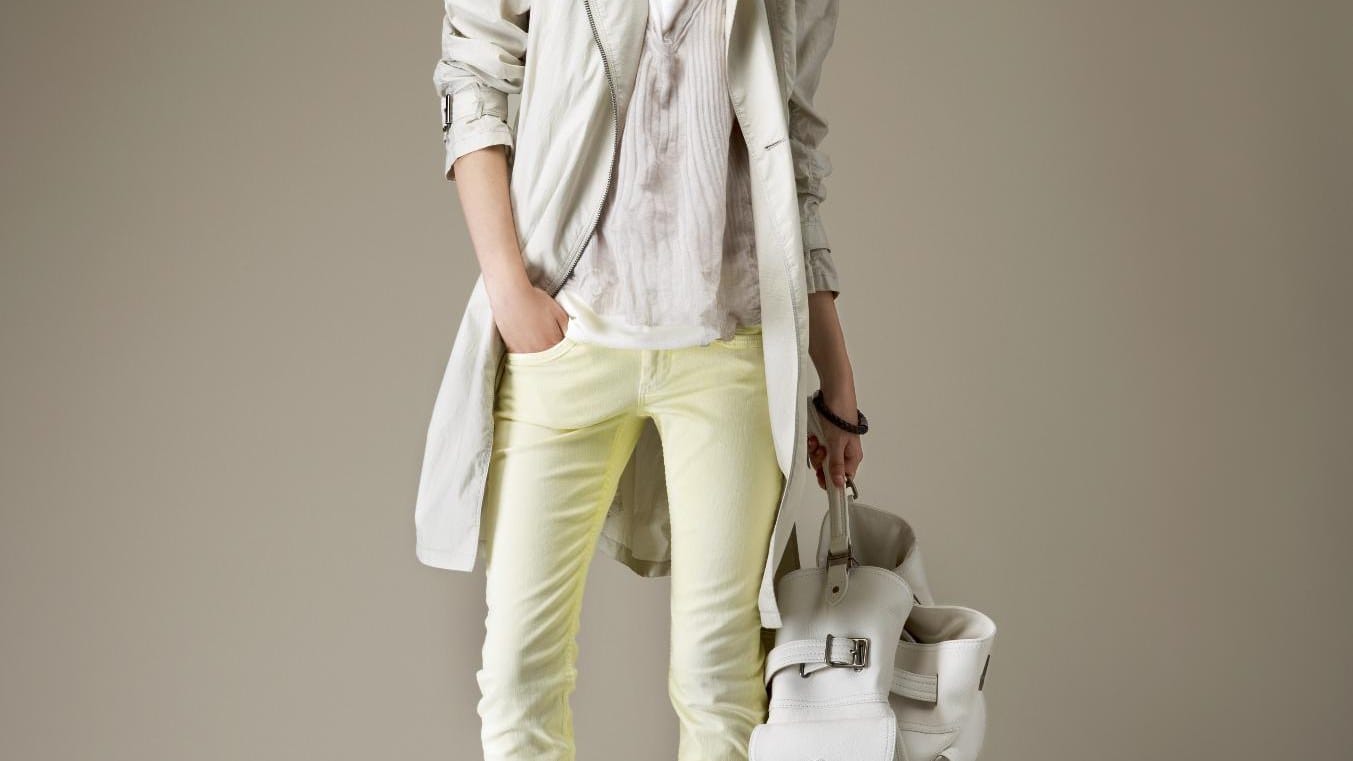
The iconic Burberry Trench will turn 97-years-old this year. It remains the world’s most famous - and popular - outer coat. It’s not hard to see why: beige or black, worn belted or loose, collar popped out or relaxed, the Burberry Trench is adaptable in its variations, yet ceaseless in its dynamic appeal. It is a sartorial symbol that projects prestige, sophistication, and an understated yet elegant authority.
You could quite possibly say that the acquisition of a Burberry Trench isn’t a purchase at all; it’s a wardrobe milestone. Generations of young and hip urbanites - actors, musicians, and their admirers - revere the Trench, anticipating receipt of their own with an enthusiasm normally reserved for leather jackets or even wedding gowns. After a decade of unexpected creative and commercial resurgence, Burberry recently celebrated the enduring cultural fascination with the traditional Trench in a most modern way: they created a social network around it.
Launched in the autumn of 2009, Art of theTrench.com is an innovative site designed specifically to showcase an entire spectrum of visual contexts in which to wear Burberry’s signature item. The site exalts the Trench’s immense wearability, but even more importantly, it ennobles the individuality of its wearers. A virtual street style showcase, marketing platform, luxury’s first true toe-dip into social media, Art of the Trench superficially resembles a more aesthetically pleasing Facebook. But it’s more than a multi-dimensional lookbook; it is a transformative online panorama that celebrates a charming world inhabited by comely men, women, and children who run, jump, and play in perfectly customised Burberry trenches. As you browse “candids” of suspiciously attractive “non-models” (cleverly captured by The Sartorialist’s venerable Scott Schumann), you are perusing more than trench styling options, you are informing yourself on a specific visual legacies - clues about distinct lifestyle philosophies and the aesthetic values of a conceptual brand colony. Whether you sort the images by style, weather, action, or popularity, it’s difficult to log off of the idyllic realm of Art of the Trench without a sense of longing. Burberry, you realise, is beyond a brand - it’s an experience. You want to be a part of it. You log back on, note the discreet “purchase” link, and click it.
Ten years ago, Art of the Trench couldn’t have existed. Of course, the required technological paradigm and cybersocial context didn’t exist for such a site, but more significantly, Burberry was too irrelevant and staid a brand to warrant an online shrine.
It is no surprise that Burberry has experienced its share of creative and commercial summits and valleys. With a company history approaching 152 years, the brand has comfortably outlived two average human lifepans combined. What a difference a decade makes: in 2000, a patron sporting the Burberry Supernova check at a London nightclub could be arrested. In the 1990s, the famous Supernova pattern was rendered infamous as it became heavily appropriated by so-called “chavs” - a disparaging name for lower-income British “hooligans” with a proclivity toward bar fights and street scenes. With Burberry’s value as a luxury brand crucially cheapened by careless wholesale over-distribution, shady retail outposts, and a gross proliferation of knockoffs, the public no longer respected the brand. With Burberry offering no vital creative designs to captivate the critics of Milan, the fashion industry’s perception of the brand’s relevance also hung by a thread. By the turn of the millennium, the severity of the situation was obvious: Burberry was long overdue for an image overhaul.
Masterminded by then-CEO Rose Marie Bravo, the strategy that would launch Burberry’s triumphant revival was a slow, deliberate, but ingenious process. Her brand rebuilding strategy called for a multi-lateral recalibration of Burberry operations. Under Bravo, Burberry closed down wholesale outlets, opened a new flagship store in London, and - most significantly - created “edgy appeal”. Kate Moss became a muse, and went on to star in many memorable advertising campaigns. Of course, better marketing protocol wasn’t sufficient: the product, too, had to be upgraded. In addition to strengthening the design teams responsible for the Burberry London and Thomas Burberry lines, Bravo also established the higher-end Prorsum line, to which she appointed a fresh talent creative director: Tom Ford protégé Christopher Bailey. Since 2001, Bailey has designed remarkably modern, yet timeless garments, pairing bucolic plaids against python and leather and rock’n roll decadence. Within a few seasons, critical--and soon, commercial - the reaction from the fashion industry was ecstatic.
As a new decade begins, the new Burberry customer is now something of a rock star - or she at least hangs out with them. He wears Burberry to sold out shows at Brixton Academy. She alternates Bailey’s trenches with Rick Owens leather jackets and Givenchy’s thigh high boots. Christopher Bailey has become a vanguard of rock and roll style culture. With literally every British celebrity of note present for Burberry’s triumphant homecoming show for the 25th Anniversary of London Fashion Week in September, it’s clear that Bailey-era Burberry not only knows the zeitgeist - it predicates it. For Fall 2010, he presented the latest Prorsum collection - one of his most acclaimed for the brand yet - with the aid of 3D visuals, including a virtual thunderstorm. Thousands streamed it all live from Burberry.com.
While most luxury brands started off 2010 a bit sheepishly, Burberry dominates streets, runways, and online galleries. By taking the idea of “luxury” a little less seriously, Bravo in fact revitalised Burberry’s very essence. By demonstrating that a rich history and innovative design ideals can harmonise, Bailey has recaptured the imagination - and wallets - of the notoriously finicky fashion crowd. And by emphasising that the wearer individualises the garment, Burberry’s Art of the Trench project reminds us that we are our own style architects - a powerful concept other brands have perhaps fatally overlooked.
Here’s to a decade of new lessons.
Burberry is available in Bahrain, Kuwait, Lebanon, Qatar, Saudi Arabia and the United Arab Emirates, www.burberry.com.