OFFICIAL BESPOKE MAGAZINE
Nicolas Shammas, Managing Director
Interview January 2021
Sébastian Vivas, Heritage and Museum Director Audemars Piguet
• When the idea of creating the museum did come about?
• How did you choose the architect and what was the brief?
• Was the museum designed to look like a hairspring or did it evolve that way?
The idea of showcasing Audemars Piguet historical timepieces in our village in Le Brassus has been present for a few decades, not only to share our rich history with visitors, but with the idea to better know our past in order to build our future. Thus, in 1992, we opened our first museum within our Founder’s House - where Audemars Piguet debuted in 1875. Step by step, we expanded it, and the museum did occupy the entire house in 2004. The idea of expanding the museum beyond the Founder’s House came in line with the growth of the company and its fast evolution and transformation during the 21st century. We decided that, not only the watches, but also the museography itself should express the free and forward thinking spirit of Audemars Piguet.
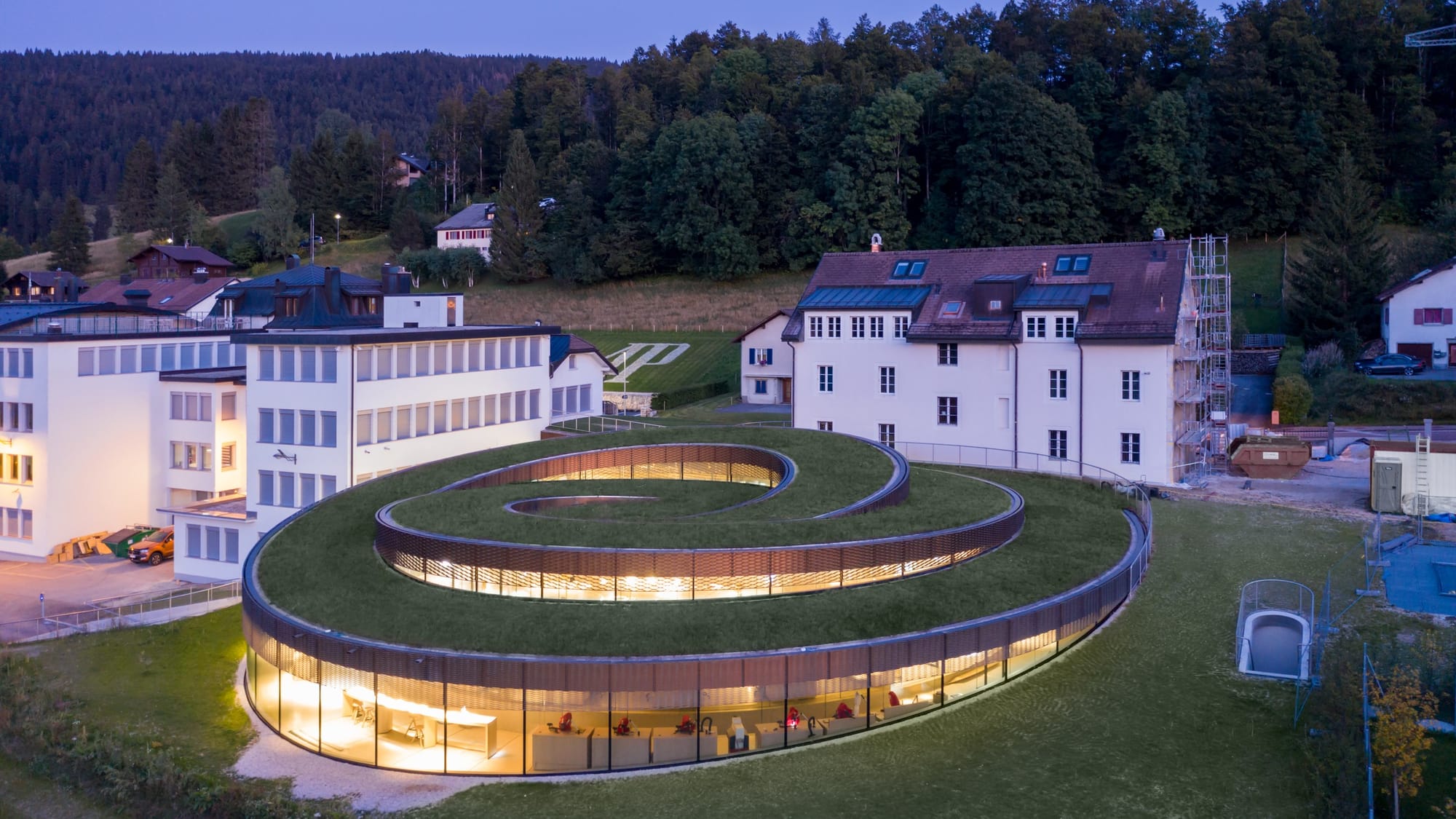
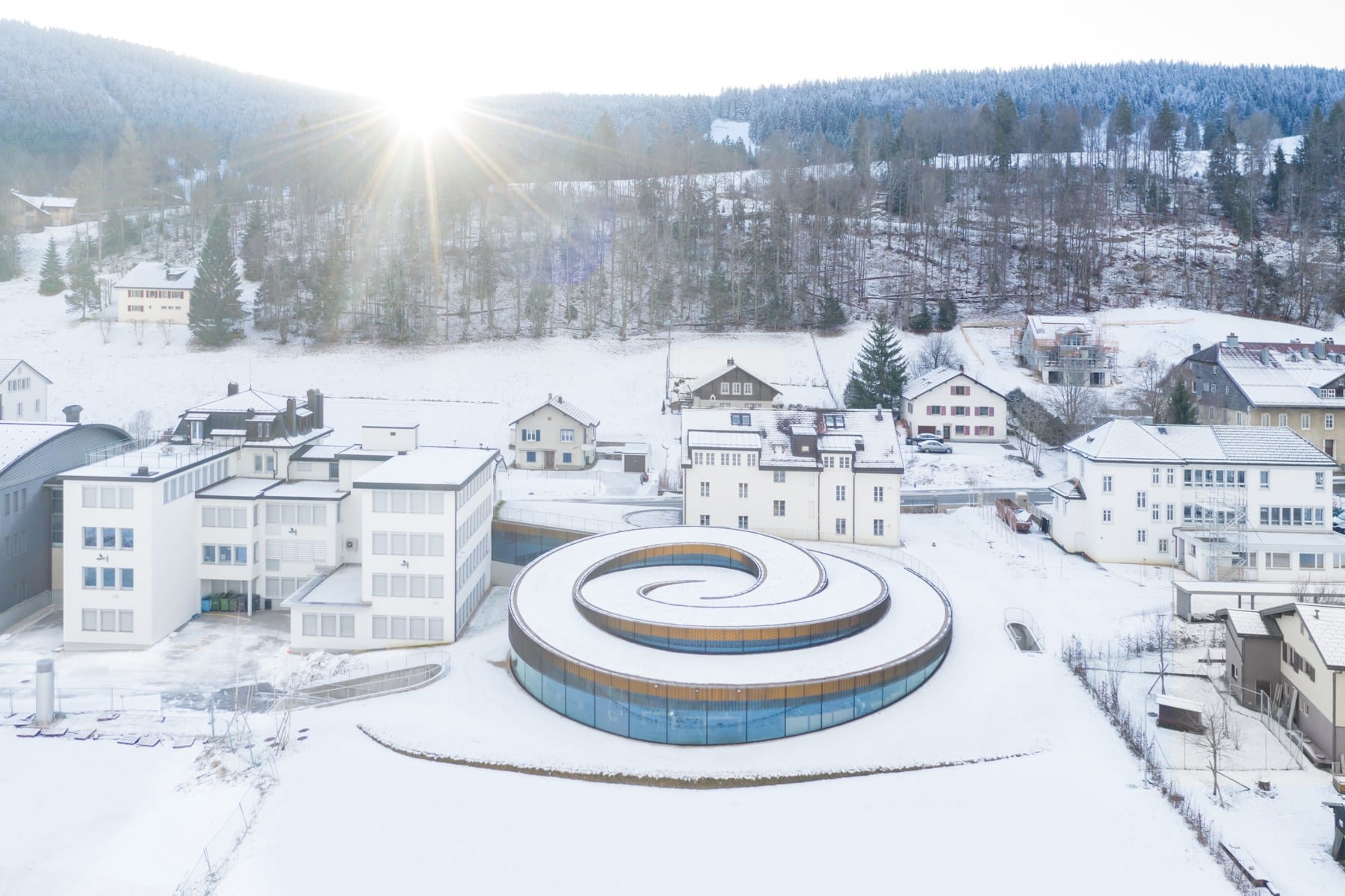
In 2013, the company hosted an architecture competition for the design of a new building to complement the original house. I had the privilege of writing the brief, which seemed rather impossible to realize: create a building that was extraordinary, futuristic, and particularly respectful of both surrounding landscape and Audemars Piguet’s Founders’ House, with which it would have to interact smoothly and perfectly. How to be visible and invisible at the same time?
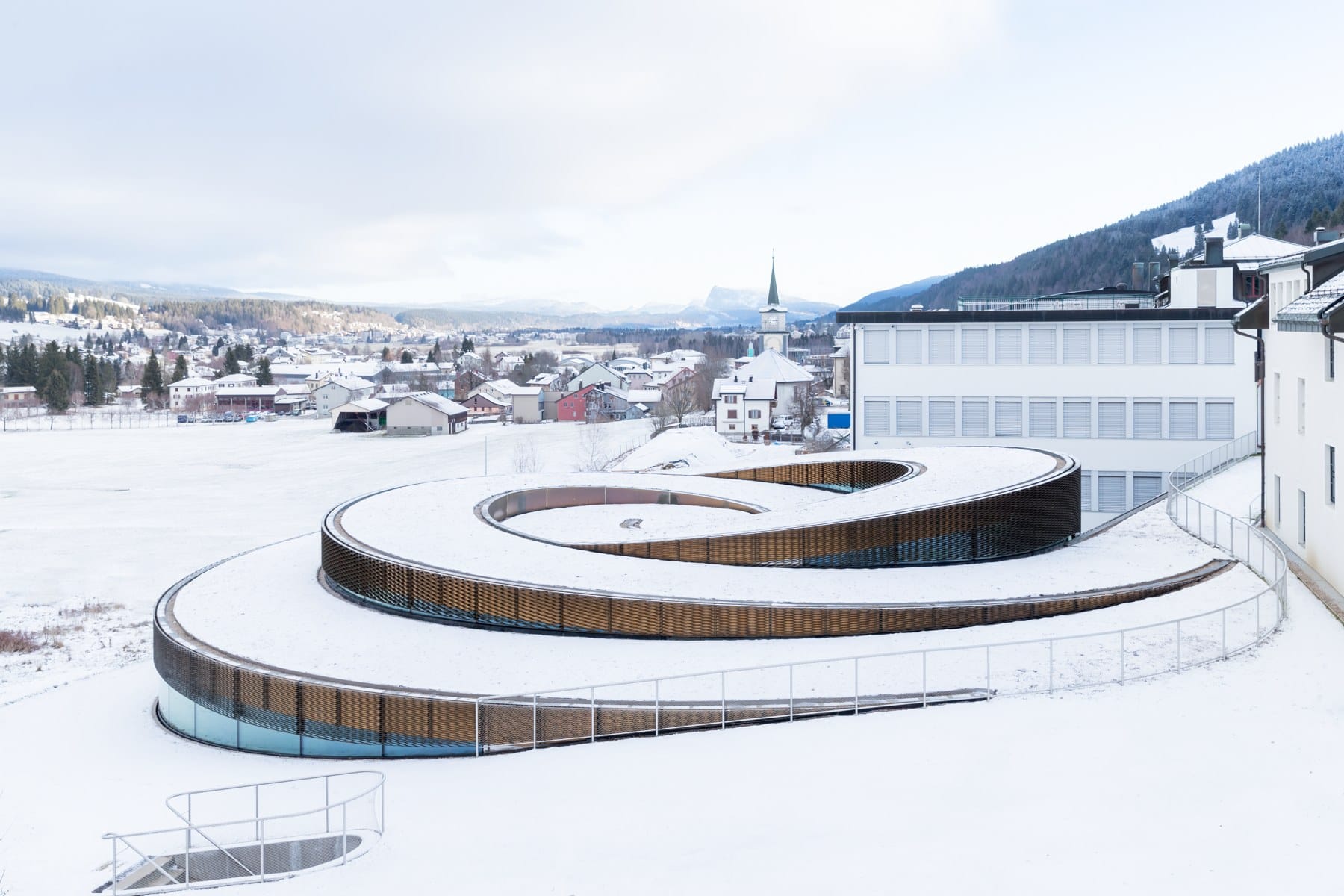
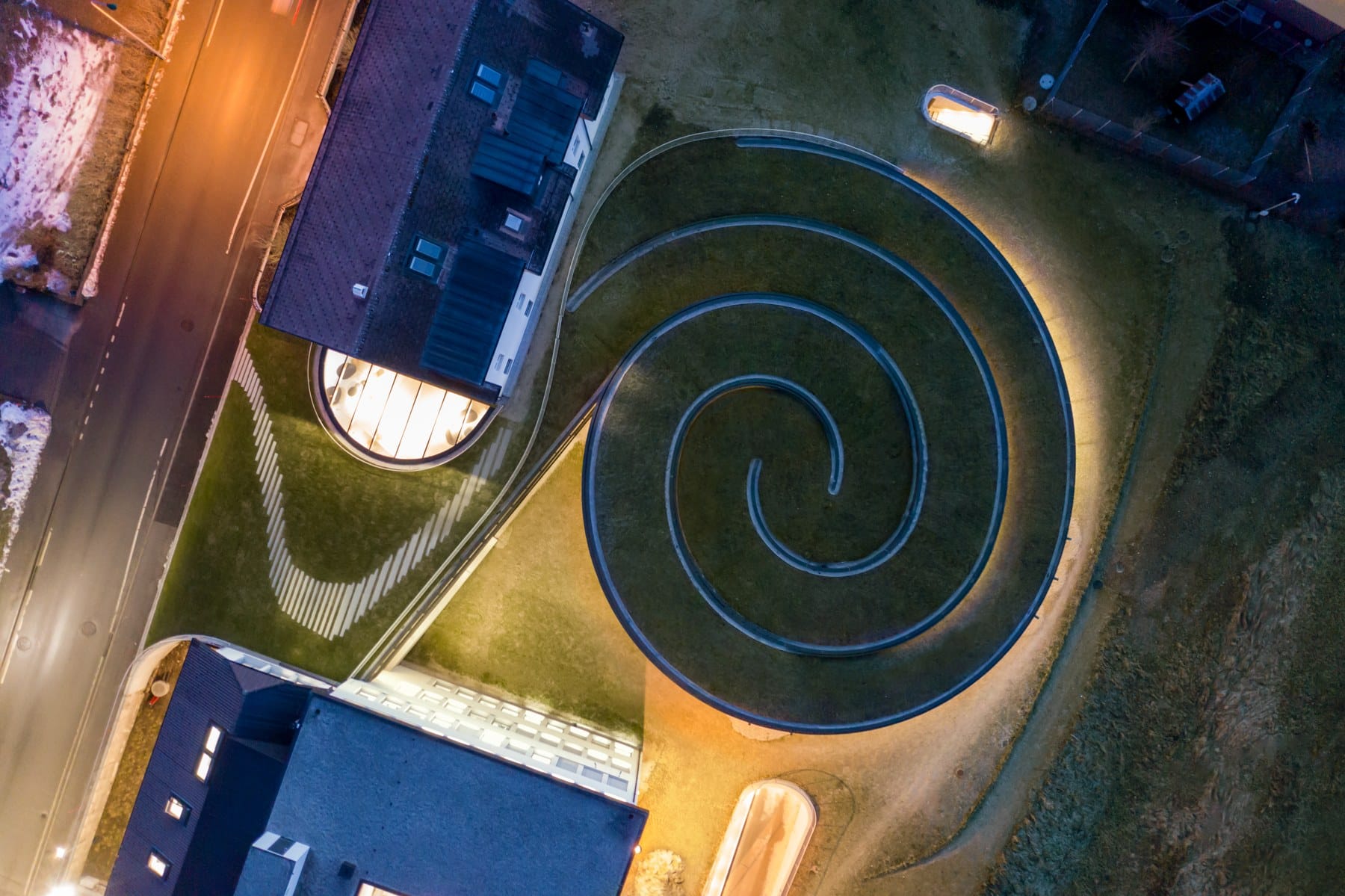
Then... love at first sight. This is what the jury felt when they discovered BIG’s (Bjarke Ingels Group) project: a spiral emerging from the ground, a sculpture as much as a building, resting entirely on curved glass, perfectly making the link between the inside and the outside, past and future, technicality and aesthetics. BIG won the architecture competition in 2014. No one had ever built such a building at an altitude of 1000 metres in a valley famous for its endless winters...
• Why was it so important that Audemars Piguet have a museum?
Since the beginning of the project, our dream has been to offer each visitor willing to come to Le Brassus, crossing oceans and mountains an unforgettable experience. Indeed, we have decided to offer the best of who we are to each visitor, regardless interest. We have aimed to express the most important facets of our brand— its history, craftsmanship, passion for mechanics and design, its free spirit and of course: its people—in the most exciting and interesting way. The watch collection is magnificent and needed a location that would match both of its quality and aesthetic. Based on that, we hope that everyone, from the most experienced watch collectors to amateurs of architecture and tourists discovering our beautiful region, wherever they come from and whatever their age is, finds something that will move them. We hope that they say “wow” a few times and experience something surprising and memorable.
Looking at the past, present and future, the Musée Atelier Audemars Piguet links the company’s Founders’ House to a contemporary glass spiral designed by BIG. This architectural combination embodies Audemars Piguet’s deep-rooted origins in the Vallée de Joux and connection to the larger cultural world. More than ever, our strength is based on our craftspeople’s passion and ability to share. This is the heart of the Musée Atelier, the reason why we started the project and our main difference.
• Programmatically speaking how has the museum’s experience been designed? Why was the flow set up this way?
• Can you tell us a little about the interactive sections?
We started the project with a simple question: what do we want to tell to our visitors? Therefore, we have gathered: stories based on historical studies, our collections, experiences of the previous museum, discussions with watchmakers and clients, we collected testimonies from “living memories”, etc. We have organised these stories, like chapters in a book. Based on that, we searched for a museographer able to translate these narrations into a tri-dimensional experience.
The German company ATELIER BRÜCKNER has managed all the scenography, staging and showcasing of the timepieces, lighting and creation of the site visit. They imagined the museum’s scenography as a musical score. As a result, the visit alternates between crescendos, highpoints and contemplative moments to offer visitors a rich experience.
The narrative path is structured into different chapters from the origins of watchmaking in the Vallée de Joux to our Royal Oak, Royal Oak Offshore, Royal Oak Concept, Code 11.59 by Audemars Piguet collections, among others. The exhibition culminates at the centre of the spiral, with a large exhibition of AP’s calendar, chiming and chronograph watches orbiting around the Universelle (1899), the most complicated watch ever produced by Audemars Piguet.
These interludes take the shape of sculptures, automata, kinetic installations, mock-ups of intricate mechanical movements and didactic tables to give rhythm and life to some key aspects of the exhibition. Although the Grandes Complications and Métiers d’Art Ateliers are not visited by the grand public, they play an important role in the scenography as visitors can see our craftspeople at work.
• How did you manage to get planning permission for such an untraditional design?
Audemars Piguet is the oldest fine watchmaking manufacturer still in the hands of its founding families (Audemars and Piguet). Based in Le Brassus since 1875, we are particularly attached to this remote valley of the Swiss Jura Mountains. Therefore, it was essential that the project appeal to everyone including the persons living in Le Brassus.
Before Audemars Piguet began the project, we discussed with many parties such as tourist offices, neighbours, local inhabitants, etc… everybody knew that something was coming. We also invited the Mayor of Le Brassus to be part of the jury. But when we finally introduced the project, the building was not compliant to the local rules of construction… but incredibly attractive!
Thanks to all the person who were convinced by this project – including the political decision-makers – they made the impossible happen!
• What does “respecting the past and building the future mean”? What will the future of AP represent?
In our Musée Atelier, some watches are over 250 years old. They still tell the time. Today, the mechanical watches are among the last (if not the only) highly complex objects produced to work for several centuries. These objects not only tell the time, they build a bridge between the past and the future; they transmit the passion of the craftspeople who created them. As emotional objects, they reflect the identity of their owners who will pass them on to the next generations.
This original philosophy still guides us today. We are the oldest Manufacture still owned by the founding families. Thanks to this independence, we are free to trace our own path, and we have chosen to be guided by a long-term vision. We perpetuate and pass on traditional craftsmanship to the next generations, while constantly reinventing ourselves and making uncompromising choices. Our aim is not only to create timepieces, but to foster the numerous talents in the company. Our strength is the people.
• Contents-wise, why did you choose to include watches that are not made by Audemars Piguet?
Audemars Piguet has a rich history and wanted to pay tribute to all the people who made it possible and who supported its development. There is a notion that is important for Audemars Piguet – it is introduced in the first part of the tour – called “établissage”. Historically, Switzerland has developed a unique network and structure in which suppliers and companies delivered movements and external parts to assemblers, called “établisseurs”, who then put together and sold the final product. Notions of union, collaboration, co-creation resonates to Audemars Piguet. It is important to recognize others people work, because without them Audemars Piguet would not exist.
• How long has it taken to accumulate the 300 timepieces in the museum?
Audemars Piguet started to gather a collection at the end of the 1980s, just after the Quartz crisis which almost made the Swiss watchmaking industry disappear. Audemars Piguet understood how important it was to remind the origin and evolution when it comes to the art of timepieces in order to build the future. During over 40 years, we have continuously enriched the collection including recent and antique watches. We do collect the timepieces we consider the most iconic in terms of design, history, technicity. The 300 watches exhibited in the Musée Atelier are the most meaningful ones, chosen within a much larger collection, which is also presented throughout itinerant exhibition around the world.
(Echoes also the answer to the question “Why was it so important that Audemars Piguet have a museum?”)
• Who chose which watches made the cut in the museum? It must have been difficult given that all the old AP watches were one-off and wore the branding of distributors!
The selection of the watches exhibited was a long process for the heritage team. The objective was to build the multiple narratives of a guided tour addressed to many types of visitors, from the “béotien” to the most skilled collector. Yes, the watches were selected for their intrinsic qualities: material, technics, aesthetics, rarity, condition, history. We chose “la crème de la crème”. But first of all they had to illustrate the messages and the stories we convey during the visit. After years of adjustments and readjustments of the selection, the heritage team spent a few days in an isolated small hotel, sticking to large walls small pictures of each watch, reworking the narrative and giving the final touch to the selection.
• Tell us a little about the complexity of the restoration of those important rare watches?
First a bit of context maybe for the one who did not have the opportunity to visit the Musée Atelier Audemars Piguet yet. The Restoration Atelier is located on the top floor of the historical house where, as explained earlier, Jules Louis Audemars and Edward Auguste Piguet set business in 1875.
It is there that a handful of highly specialised watchmakers perpetuate the rare ancestral expertise required to restore antique timepieces in pristine condition. It is crucial for Audemars Piguet to preserve this unique heritage and we are very proud of it. The biggest challenge for them is to master the know-how developed for more than 150 years. They have to be able to master but also perpetuate them to the next generations.
Among the most important work done, I would mention the Universelle pocket watch (1899). The Universelle contains more than 20 complications and 1168 components for its movement. A real masterpiece of complication! It took four years to our best watchmakers to restore the timepiece, before it could be exhibited at the very center of the Musée Atelier Audemars Piguet.
Pictures available here: https://audemarspiguet.picturepark.com/Go/PmeX1QRm
• Does AP still possess all the original schematics of all the watches it ever made in those days?
This is an excellent question. Today, every new model is created thanks to the work of watchmakers and engineers. Every component is drawn, quantified, updated, etc. During the company’s first 75 years, the reality was quite different. There were no drawings, no plans and few pictures of the watches. In fact, every timepiece was unique and the know-how was entirely based on the craftsmen experience and knowledge.
Each worked according to what they had learned in school or during their career.
The first plans appeared during the 1950s and 1960s. As the quantity produced remained extremely low, some plans were not complete. The long transition accelerated in the 1980s and 1990s, with the modernization of the watch conception and fabrication. The role of the Heritage Department is to preserve the memory of the company. Thus, our restoration watchmakers transmit the pre-modernisation know-how, tools and old furniture, while our archivists are preserving historical plans and other important company documents.
• What aspects/ innovations of the museum are you most proud of?
What I love in the museum is its richness, its elegance, its variety, its emotional dimension. What I am the most proud of, is the fact that, since its opening on June 25 last year, not only AP employee has adopted the museum, but all the hundreds of people who participated to its creation are proud of it and want to show it to their families and friends.
• The museum includes the Grandes Complications workshop and Métiers d’Art workshop, were these departments moved into the museum or was it just a few of the artisans?
Yes, both Atelier were moved into the Musée Atelier and represent the workplace of our watchmakers. It includes also the Restoration Atelier, as explained before, located at the top of the Founders’ House. The Grandes Complications and Métiers d’Art Ateliers are located at the heart of the spiral. Surrounded by glass walls, these workshops enable visitors to see our watchmakers at work. Why? I would say living culture which also echoes the museum’s name: Musée Atelier. It does focus and showcase the craftspeople and talents working at Audemars Piguet.
• Why does the brand also own the Hôtel des Horlogers and what are its plans for it? Again how did you decide on BIG as its architect?
The hotel actually existed before. In fact, it was the oldest hotel in Le Brassus (with a different name) since at least 1853.
The Hôtel des Horlogers will offer to visitors, tourists and VIPs a unique and immersive experience of the Vallée de Joux and will especially highlight Le Brassus’s beauty environment.
The design of the Hôtel des Horlogers is also signed by BIG and was imagined as an integral part of the Vallée de Joux environment. This is the reason why we chose BIG. For a certain continuity to the Musée Atelier project but also for its creativity and ingenuity in creating a perfect balance between the building and the environment. The first stone was laid in Le Brassus on June 4, 2018. The construction is ongoing. As for the opening, it is planned for the beginning of 2022. I can also share with you that the hotel will offer 50 rooms with four-star comfort and views over the Risoud forest, one restaurant and a lounge bar, a wellness area, a fitness facility as well as seminar rooms.