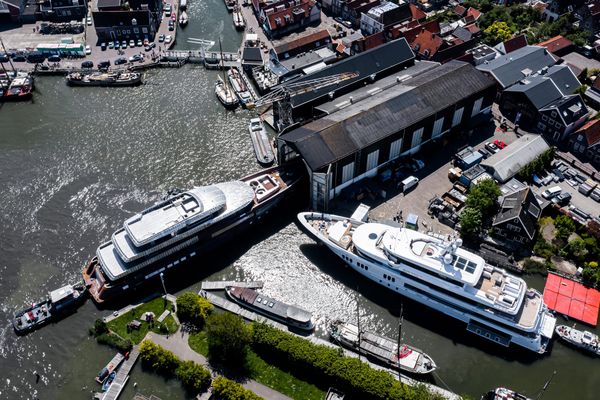
As names for neighbourhoods go, DUMBO might not be the most edifying, even if it is an acronym. But when you’re the fourth richest neighbourhood in metropolitan New York, itself the eighth richest city in America, who cares what anyone else thinks? These days, DUMBO is the centre of Brooklyn’s tech industry and thanks to its beginnings as a 19th century industrial district, to a dazzling array of outrageously expensive lofts. But decades before Down Under the Manhattan Brooklyn Overpass served up its first Pumpkin-spiced Decaf No Foam Soy Chai Latte Venti with Caramel Drizzle, it was drawing zealots of a different kind.
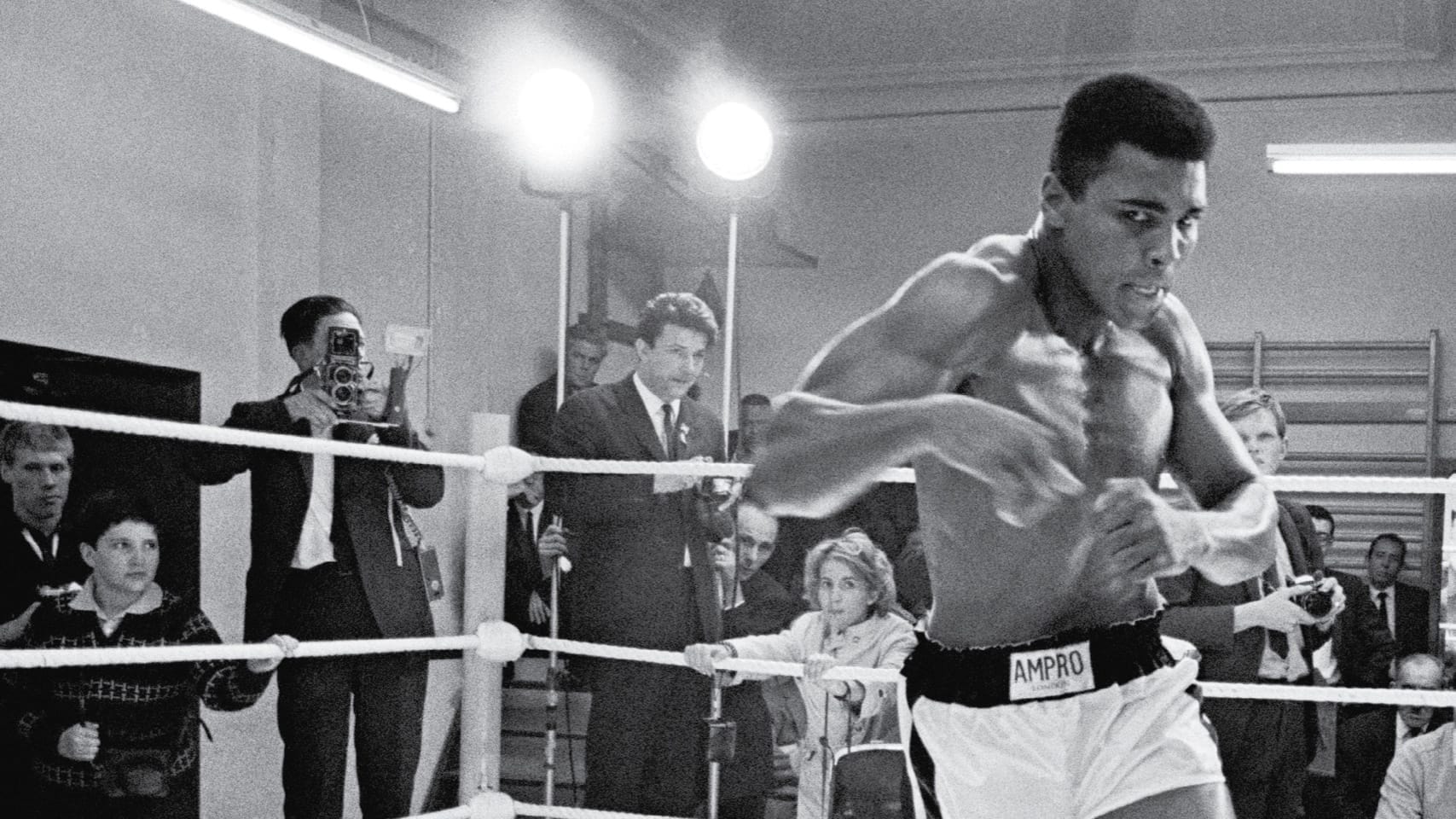
Sneaker-clad and behoodied at a time when neither item was constituted as street wear, their destination was 77 Front Street, an old warehouse almost directly under the Bridge, where at the two unremarkable and narrow flights of stairs, a set of ordinary doors, opened onto their Nirvana, a vast, low-lit space with mirrored walls where, in a fug of stale sweat, spilled blood and leather, heavily-muscled men (and the occasional woman) punched bags, skipped rope, lifted weights and did pull-ups, while other men and women practiced the old one-two in five full-sized boxing rings.
Gleason’s is not just another gym where aspiring champion boxers can train. It was (and to many in the boxing world, still is), the most important gym where aspiring champion boxers can train, the Sorbonne or the Oxford of blood sports. Why? Simple. Their trainers are legendary and more prize-winning prizefighters have trained here than anywhere else, amongst them legends like Roberto Durán, Michael Spinks, Julio César Chávez and, of course, everyone’s favourite heavyweight, Muhammad Ali.
I didn’t know that the Front Street Gleason’s was not the exact gym at which Ali and Durán trained when I made my way up those narrow stairs one crisp New York night in early November. That gym, on Westchester Avenue no longer exists and the DUMBO incarnation is the gym’s third (there was a brief stint on W30th Street in the 1970s). When Gleason’s current owner, Bruce Silverglade, moved it here in 1984, the price of land per square foot was somewhere below 50 USD and the neighbourhood was the epitome of urban decay. Today, it’s somewhere over 1,000 USD and is one of the city’s most recherché addresses.
But I was not here to train. I’d been invited to attend an auction organised by Swiss watchmaker, TAG Heuer, in benefit of the Muhammad Ali Centre, the late, great boxer’s museum and outreach centre in Kentucky, which also runs programmes on education, gender equality and global citizenship. Surveying the scene at number 77 that evening, the Red Carpet, TV crews, local celebrities, some of the world’s greatest living prizefighters and Ali’s elegant widow, I was struck by how much the event epitomised DUMBO’s transformation. I found myself wondering how many of the great and good before me would have gone anywhere near Front Street in the early 1980s.
We were quite the crowd. In addition to Ali’s widow, Lonnie Ali and boxing legends Evander Holyfield, Roberto Durán and Julio César Chávez, there were several TAG Heuer ambassadors and friends in attendance. I’d hoped to be able to chat with Lonnie Ali and Donald Lassere, head of the Ali Centre but such was the crush (I assume), that in the end, I only got to spend a few minutes with one of the interviewees I had requested.
Now ‘iconic’ is not a word I bandy around lightly but with her shock of snow-white hair, bright red lips and oversized framed glasses, Iris Apfel, the 95-year-old self-made fashion legend, is so uniquely herself that if anyone deserves the description, she does.
“What is iconic?” I hear her say in reply to a question posed by a bright young Russian fashion writer, as I am ushered into her presence. “I can’t tell you, I’m still trying to figure that out for myself but these days, everyone and everything is iconic, so what does it even mean anymore?”
A woman after my own heart. I squeeze into the throng in her room and wait for my moment to tell Mrs. Apfel that, iconic or not, I’d really enjoyed watching the documentary made about her a few years ago.
“And where have you come in from?” she asks, looking at me before I can admit my celebrity crush. “Beirut? Oh, I loved Lebanon. My husband and I visited in the 1960s and I have very fond memories of that part of the world. The casino, the souks, the bargaining. I’m a real bazaar freak, so I love that kind of thing.”
As she pauses, another journalist asks her where her style comes from and why more women don’t dress as boldly anymore. I know from the film that Apfel possesses the confidence sometimes bestowed with age, to speak frankly. She doesn’t disappoint.
“Oh, I’ve dressed like this my whole life but now I’m suddenly ‘hot’,” she says, gesturing at her outfit for the evening, a bold black and white patterned number, enlivened with ropes of brightly–coloured faux bijoux. “Hot? Cool? Who knows? I have my own style. But to have style, you have to know yourself and most people don’t know themselves because most people want things instantly and they don’t like to think.”
Suddenly remembering something, she holds her hand out towards me. It’s cool to the touch. “You know, I still have a table somewhere at home that [my late husband] Carl bought from a coffee-seller in Baalbek. It took him forever. He had to keep going back and drinking that thick, black coffee,” she wrinkles her nose slightly, “but in the end, the guy agreed to let us have it.”
And with that, Iris’ presence is required elsewhere. “I’d love to talk more,” she says over her shoulder, as she’s escorted away. “I really hope to see you all later.”
The event is MC’ed by a young welterweight, Paulie “Magic Man” Malignaggi, whose job it is to coax a series of tributes to Ali out of some of the men he fought against or inspired, as well as a few personal anecdotes from Lonnie, who first met Ali when she was a young girl.
The four items on offer – an oversized glove signed by the boxing legends present, a similarly autographed turquoise boxing belt, ringside seats for two to the world championships and a special commemorative timepiece created in honour of Ali – do raise 119,000 USD for the Centre, but 88,000 USD of that comes out the pocket of TAG-Heuer CEO, Jean-Claude Biver, who steps in when the bidding for the commemorative watch set falters. But then, I think, as Mr. Biver began the auction by comparing himself to The Champ, ensuring that his Centre went home with a decent cheque seemed like the right thing to do.
The thought reminds me of something Lonnie Ali had said earlier that evening, when talking about her late, great husband. It’s a reminder of why anyone would want to make a Mohammad Ali watch in the first place.
“Ali used his celebrity to help others. He loved people. He opened his heart to them and he leaves behind a rich legacy of loving your neighbour as you love yourself. How did he do that?” she asked, as Durán, César Chávez and Holyfield listened thoughtfully. “One person at a time. Ali was a great human being. He was an example to us all.”