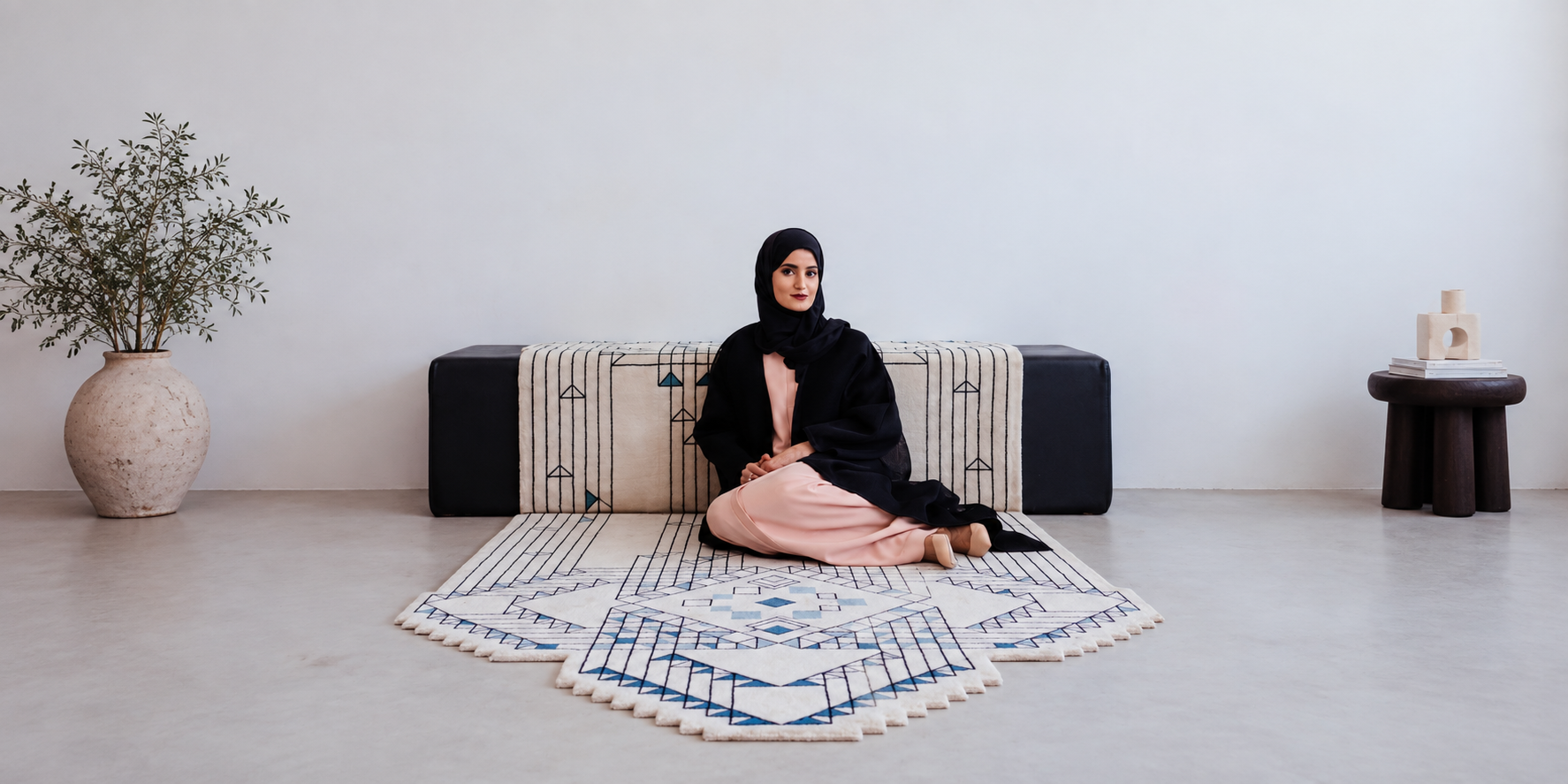
“We focus on crafts, folk stories, tangible and intangible heritage to help us in our design-focused storytelling journey,” explains the acclaimed Emirati designer, Aljoud Lootah. The 39-year-old has fast emerged as a leading voice of the UAE's burgeoning design scene with a body of work that is as original and vibrant as it is authentic to her Gulf roots.
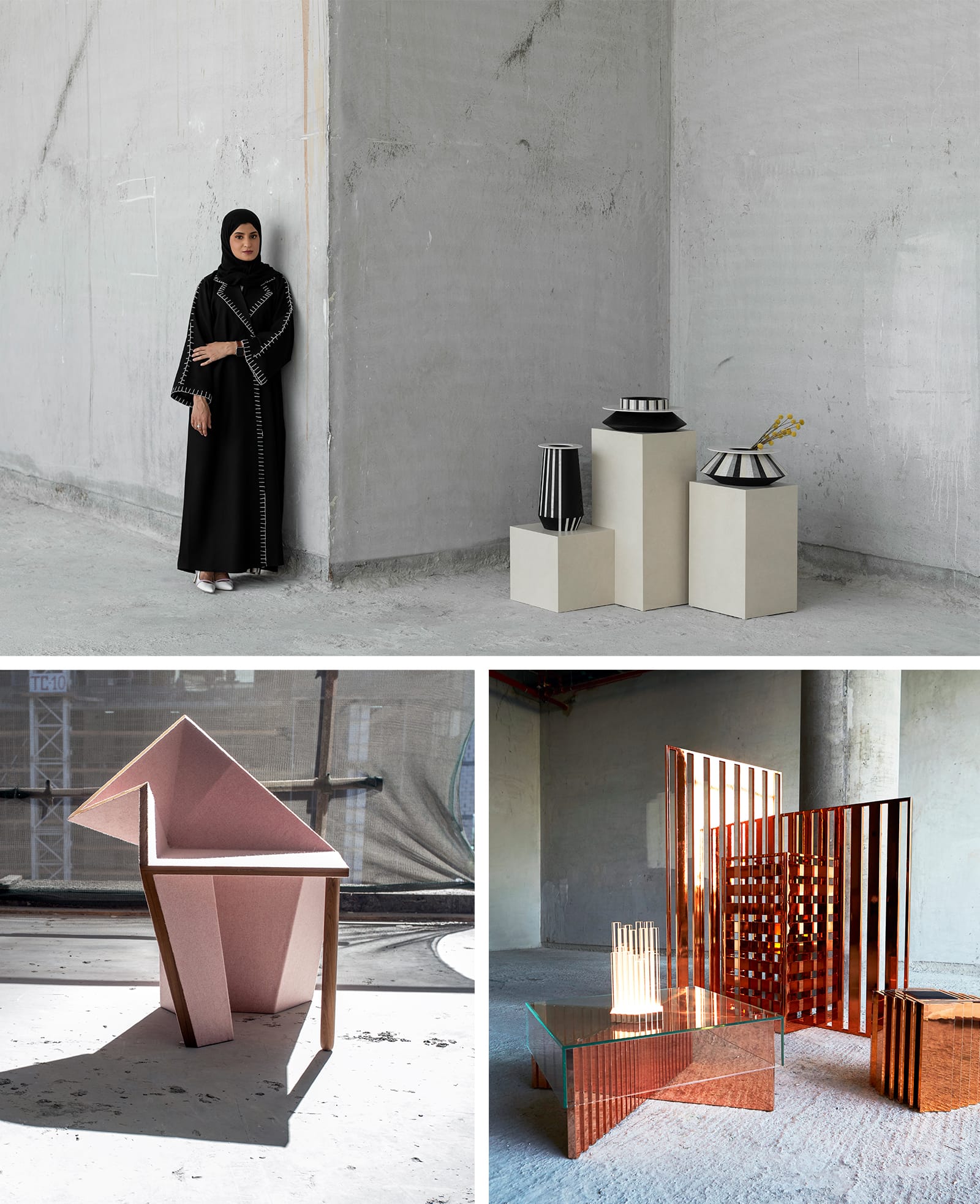
Whether she is working on product design, furniture pieces or large-scale installations, Aljoud’s love of patterns, folds and geometric shapes are nearly always notable. For her successful 'Oru' series of chairs, cabinets and lamps for example, origami forms were the main inspiration (two products from this series were acquired, by the way, by the National Gallery of Victoria in Melbourne). For the 'Mudeem' collection of handcrafted boxes that pay homage to the wooden chests traditionally used by Emiratis to store valuables, Lootah combines an "intrecciato" weave of camel leather over which she adds an accent of patterned studs that recall those vintage ‘mandoos’.
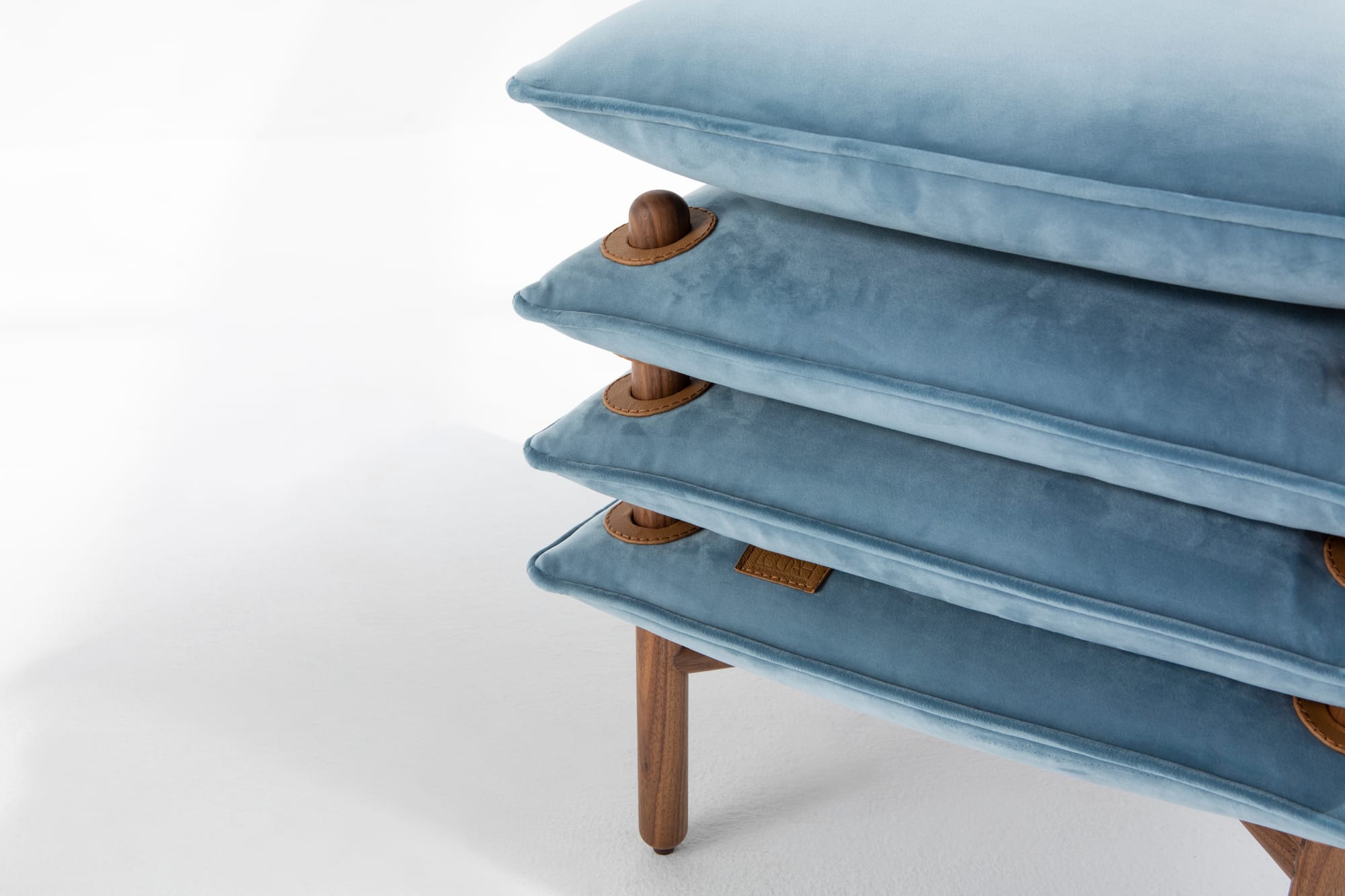
Of all her creations, her favourite is apparently the 'Takya' Stool. “It started out as a quick sketch that I did while I was working on another completely unrelated project, but its design really touched my heart,” she reveals. “It was inspired by a childhood memory of playing with takyas [large cushions that were commonly used in the past as part of the traditional low-seating majlis]. We would love to stack them one over the other and create forts and houses, which we would play inside. My stool is a modern interpretation of that memory.”
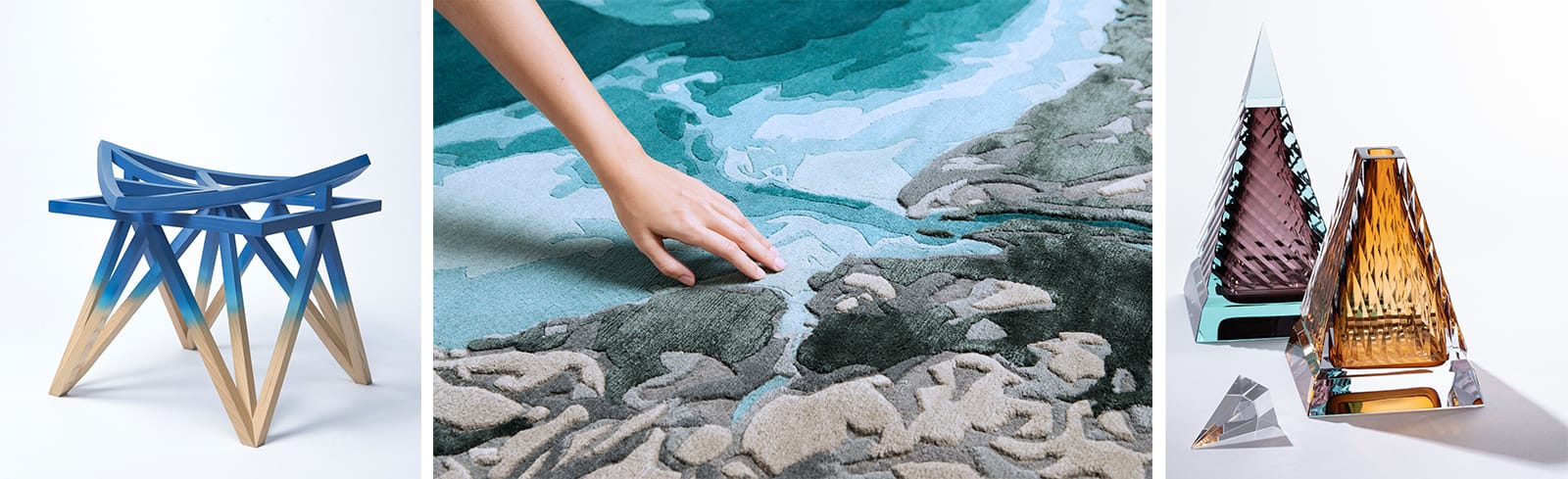
With every project she embarks upon, the first question is typically, what would be the most suitable material? Aljoud explains that this is usually based in the complexity of the design, the story behind it and its detailing. “Some materials are capable of elevating the design when they are well considered. We worked with porcelain, crystal, glass, wood, marble, metals and paper among others,” says Aljoud, adding that she always sources her materials with sustainability in mind and prioritises materials that are either recycled or can be given a ‘second chance.’ Furthermore, in her studio, waste is systematically reduced by re-using anything that remains. For example, cuts-offs from camel leather that was used on a large-scale project is later used for a small-scale product or gets combined with another material for a new project.
Since she launched her own brand, Aljoud has also delved into various interior projects for high profile clients including the Mandarin Oriental Jumeirah, the UAE’s Ministry of Presidential Affairs (MOPA) and Etihad Airways, to name but a few. “We have been very fortunate and we're extremely blessed to be able to work with clients that trust us and provide us with opportunities and the freedom to create,” she says before quickly giving credit to her small tightknit team, who work alongside her in the Dubai Design District where she has her studio. “My team of women plus one man is amazing!” she gushes.
Interestingly, her route to this point hasn't been straight. She had planned to study art at university but ended up with an honour's degree in graphic design. After that she freelanced for a few years, working on various branding and graphic-related projects. Her lucky break came in 2012, when she enrolled in a product design programme that was offered through Dubai Culture in collaboration with Tashkeel (a contemporary art and design organisation that supports Dubai-based artisans). The six-month programme allowed her to delve deeply by attending workshops, visiting studios in Barcelona and attending the London Design Festival. “This experience was an eye-opener, as it gave me a change of heart and made me realise that I would like to focus on product design as a career. I established my brand in 2014 and showcased my first collection in 2015. I haven’t stopped since!”
Today with the wave of new design talent emerging from the Gulf, Aljoud is enthusiastic and credits her own country’s leadership and various organisations that are paving the way for emerging talents like her. She namechecks among others the Dubai Design District, Dubai Design Week, and the initiatives lead by the Ministry of Culture and Youth, Sheikha Salama bint Hamdan Foundation, Dubai Culture and of course, Tashkeel.
Having wrapped up some projects this past Ramadan, Aljoud is currently planning her participation at the next Dubai Design Week, which will be in November. However busy she gets, the designer still counts her blessings and cherishes the excitement that arises from each milestone reached. She hopes to see more youngsters take the design route and shares some words of encouragement. “My advice is be passionate about what you do. We often face challenges in our line of work that may make us feel like giving up, but don’t. When you’re passionate about what you do, whatever obstacle you face, you will be able to overcome it with a great mindset.”
Photography: Natalee Cocks