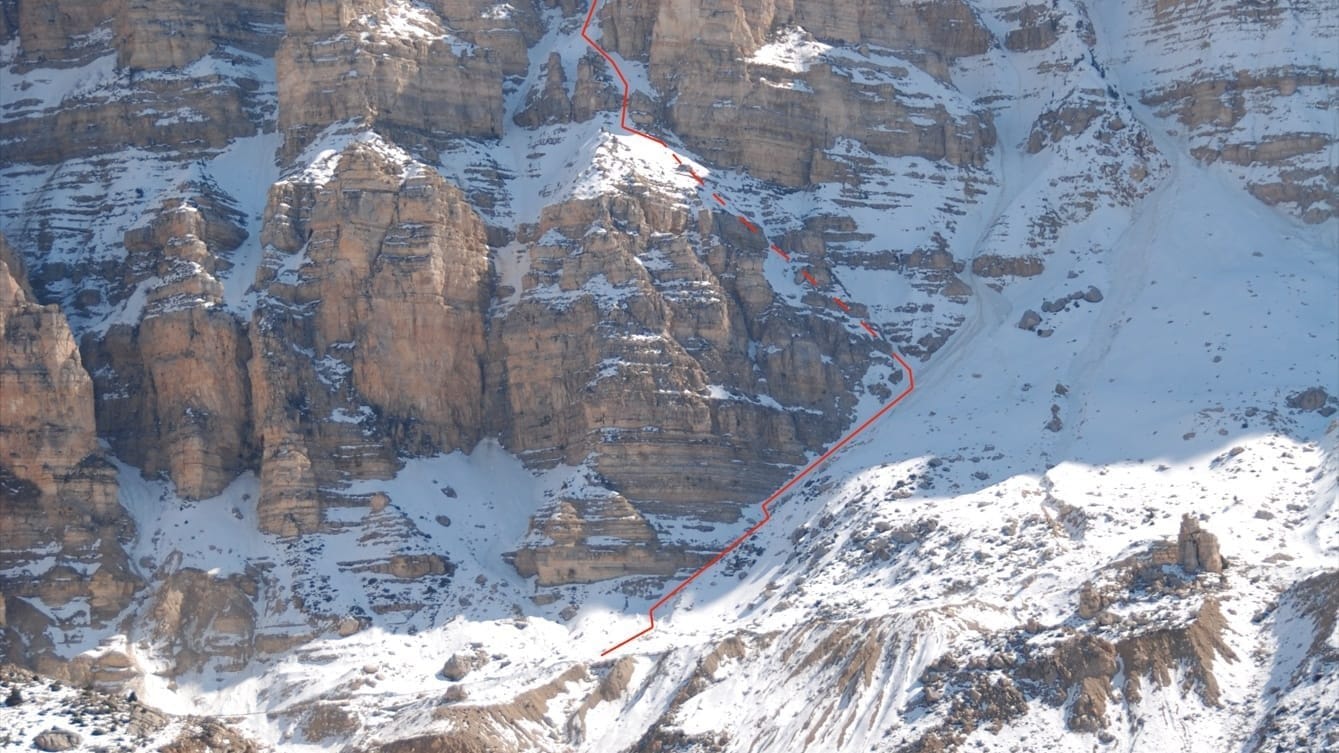
“Watch the ice,” warns Charlie as he strides confidently towards the base of our climbing route. A split second later he crashes to the ground. Ironically, Charlie has fallen on one of the many slippery black patches permeating the narrow, asphalt road. The only injury is a sprained pinkie finger and so we walk on.
Conditions are perfect. The snow is a Styrofoam hard névé thanks to a unique freeze-thaw cycle over the past twenty-four hours. The sky is a cloudless, cobalt blue and the persistent, driving wind that has been buffeting us throughout the night creates an ominous atmosphere. After a quick ten-minute hike from our campsite, we reach the base of the route and don our crampons. Slowly and steadily we begin to kick steps up a low-angled snow gully as golden sunlight creeps down distant mountain faces.
Lebanon hosts many excellent rock-climbing opportunities; long, low cliffs of limestone can be found throughout the Lebanon mountain range. These outcrops offer short, relatively safe and athletic climbs. It is rare, however, to find a true alpine climbing venue, where a climber makes their way up a heady mix of steep snow, rock and ice. In the alpine realm, a climber must wear heavy-duty boots to which spiky, metal crampons are attached for traction on ice. It’s also standard practice for a climber to carry two hammer-like ice tools, featuring sharp, recurved ice picks at the head, warm, water-resistant clothing and a helmet round out the personal essentials list. Additionally, a team of two climbers is usually tied together with a rope for safety.
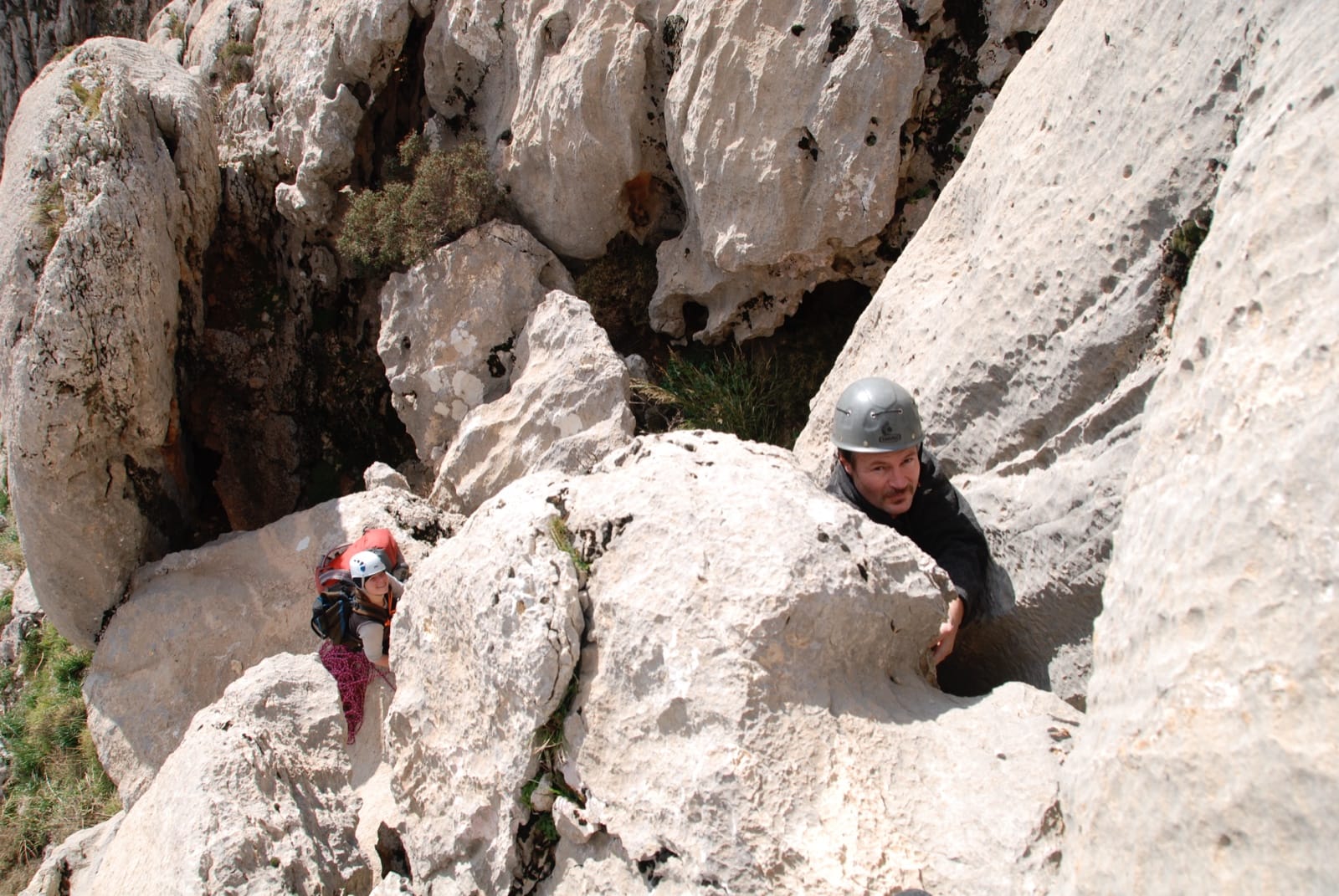
For our climb, Charlie and I have decided to leave the rope in the backpack until we absolutely need it. Free solo climbing at this level is serious work and a simple slip can be fatal. That thought races through my mind as Charlie dives to catch a runaway glove. Fortunately he doesn’t fall and the glove stops just before plummeting off a vertical cliff. Charlie down climbs and rescues the glove from its precarious perch.
Off once more, we traverse over and up into steeper snowfields. Although the climbing is relatively easy, the snow is hard and icy meaning it would be difficult to stop oneself in a fall. The exposure is starting to build as we climb into the first rock step and my mental focus tightens to include just the few square meters of rock around me. I delicately negotiate my way up through the difficulties and reach a perfect snow arête upon which I position myself to admire the view. Two hundred meters below us is the tiny, ribbon of a road that brought us to the base of the climb. Beyond the road lie the snow line, verdant green foothills and finally the Mediterranean Sea.
It’s a rare treat to find an alpine climb with a view of the Mediterranean; this style of climbing is unique to Lebanon. Our route is also unique in that it ascends the only 500-meter cliff in the country high enough to accumulate snow and ice on its flanks. Other climbs with an alpine feel can be found in the mountains above Tannourine and on the west side of the Bekaa Valley. Our cliff face looms above the town of Sir Al Dinniyeh in north Lebanon and it is the northern most aspect of Qournet As-Sawda, the country’s highest peak at 3,083 meters. As the cliff is north facing, it receives almost no sunlight and we have been in the mountain’s shadow throughout the climb. The lack of sunlight and the steep walls of rock surrounding us are intimidating.
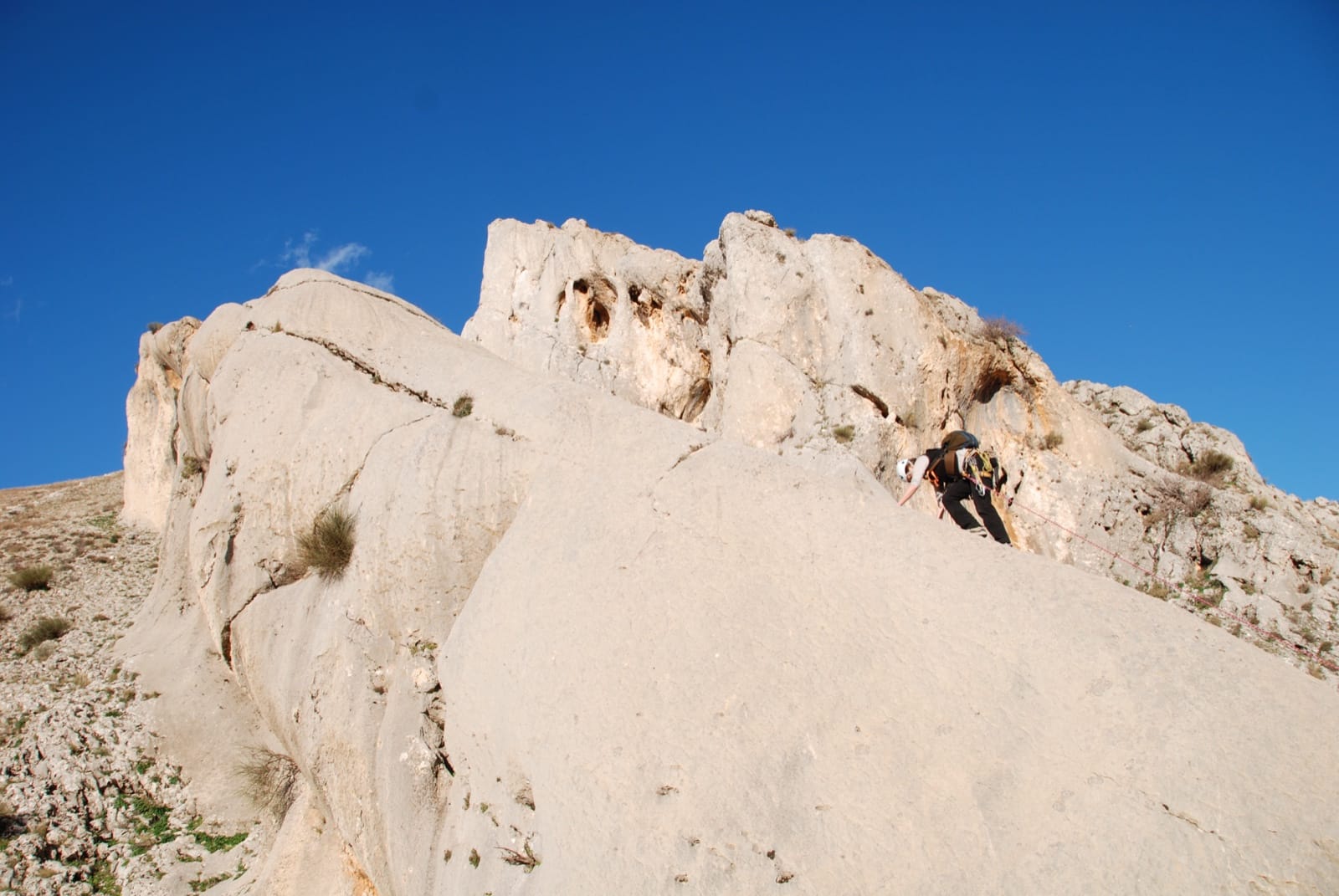
By now we have traversed into, and begun climbing up, the great vertical cleft that splits the face. Below us 100 meters of snow-choked gully sweep steeply away before dropping into the void. Mechanically, we begin climbing upward. Soon we arrive at a fork and chose the path to the left without hesitation. Although the difficulties above appear to go on for slightly longer, they also look less challenging than those to the right. The couloir has become steep enough that we are climbing on the two front points of our crampons. I kick steps up to the base of the ice-plastered vertical cliff that will prove to be the most difficult part of the climb.
Charlie taps gently at the thin, brittle ice in a vain attempt to gain purchase with his ice tool. Instead, most of the ice in the vicinity shatters and scuttles hurriedly down the gully. While Charlie carefully picks his way up the remains of the ice, I crouch off to the right of his fall zone. Should the unthinkable happen, it’s best not to have the whole team plummet into the great beyond.
Finally it’s my turn. Charlie is looking down from his stance above and coaching me with encouraging words. I hook my right ice tool around a giant icicle and gingerly reach out with my left. Gentle tapping at a thin patch of ice causes it to shatter and I drop my ice tool onto my wrist cord. The tool dangles from my left arm as I nervously grasp a tiny knob of rock with my gloved hand. The front points of my crampon grate loudly against the rock as my weight shifts onto them. Stretching, I reach as far as possible past the rock and swiftly bury my ice tool into the firm snow above. A few tenuous moves see me to the top of this difficult patch and we are through the crux of the climb.
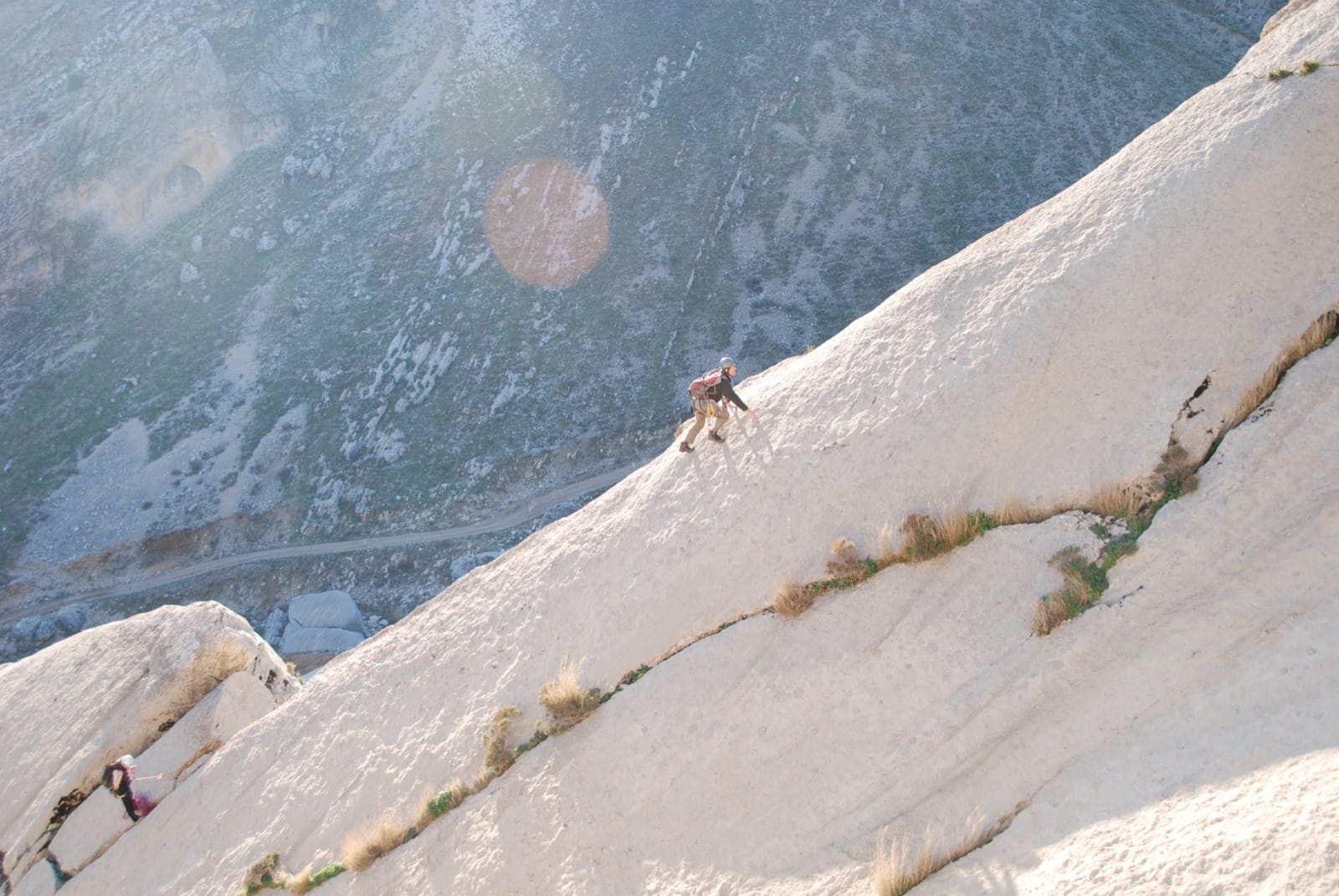
The rest of the climb is a mere formality and we casually wade through a wide bowl of deepening snow toward the summit. Upon arrival, we congratulate ourselves on a job well done and reflect on our accomplishment. We had climbed 500 meters of rock, snow and ice in the most pure style possible. But there’s no time to lounge about. Storm clouds are beginning to move in and it’s a three-mile descent back to base-camp. With a last glance at the stunning view we get moving.