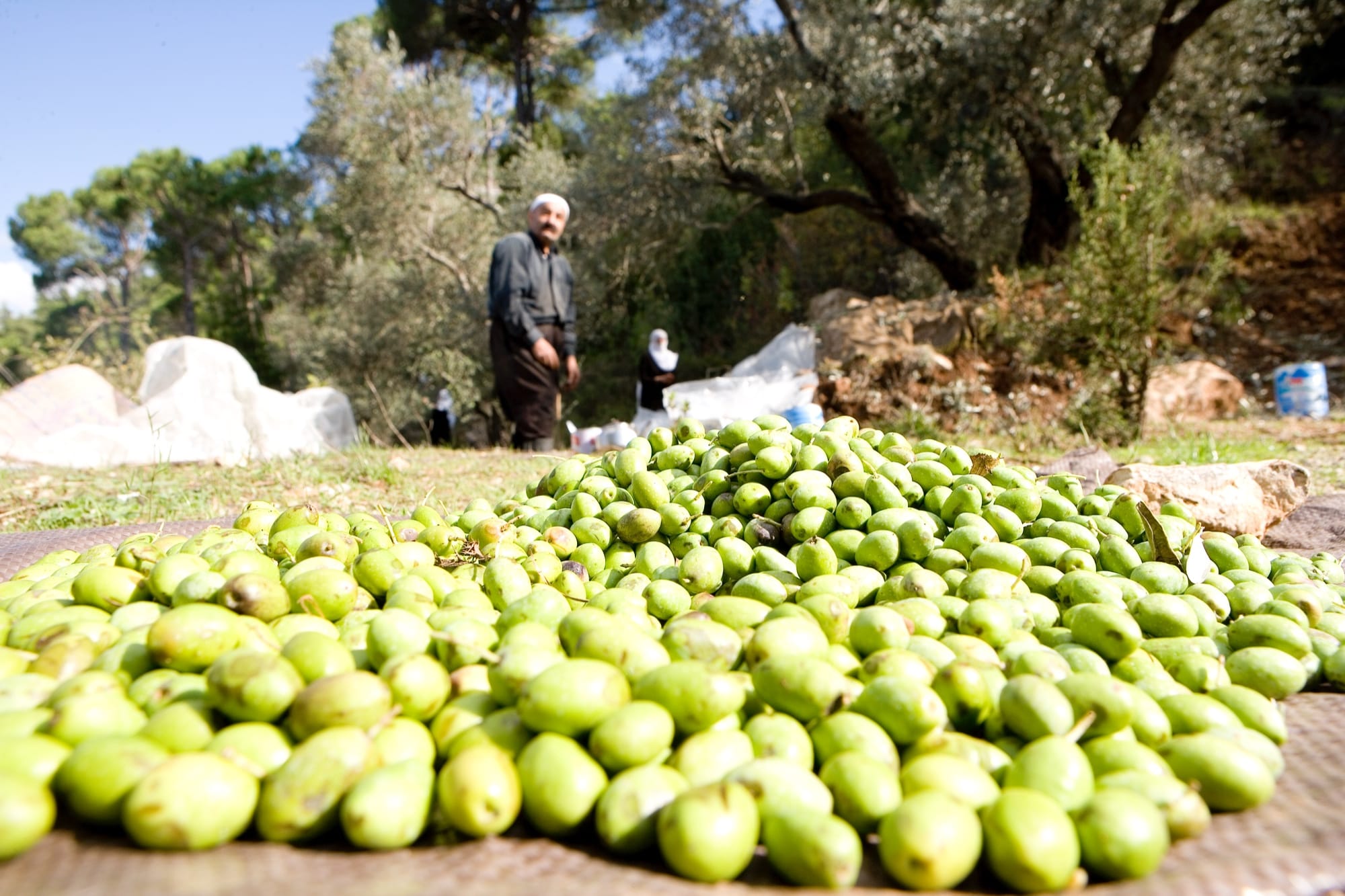
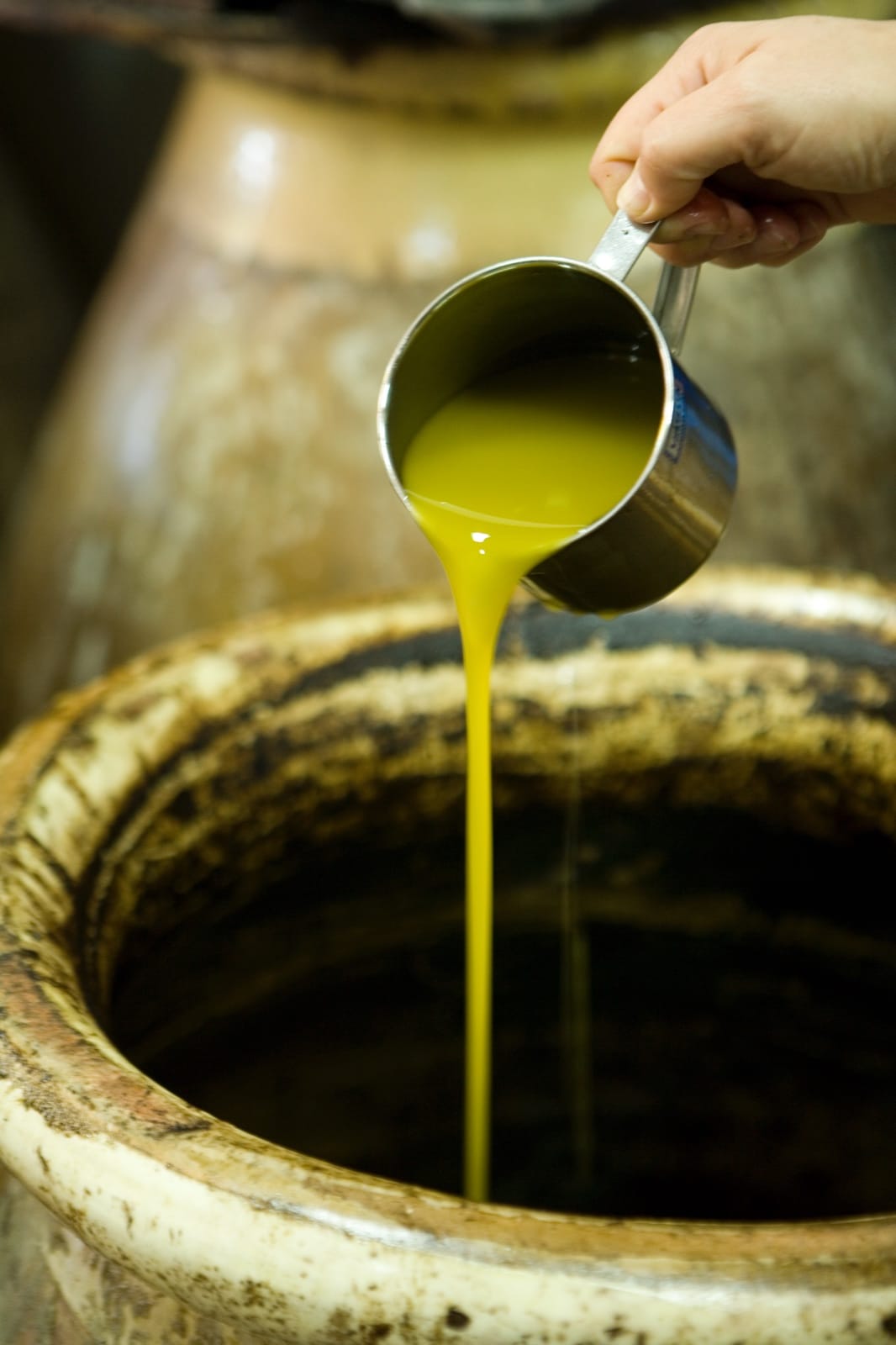
Olive oil has been regarded as precious and sacred in the Mediterranean region for thousands of years. In ancient Greece, it was known as liquid gold and in Lebanon it is still fondly referred to as green gold. Modern excavations of Egyptian tombs have unearthed among items in sarcophagi – proof of just how precious this substance was to them.
The exact origins of olive trees remain in dispute, though the general consensus is that the first trees were cultivated in the Levant thousands of years ago. Remains from several intact olive presses have been discovered in Lebanon and Syria, suggesting that the Levant was a significant centre of olive oil production during the Roman period. Back then, the oil was used to light lamps in temples, and later churches and mosques, but not yet appreciated for its culinary value.
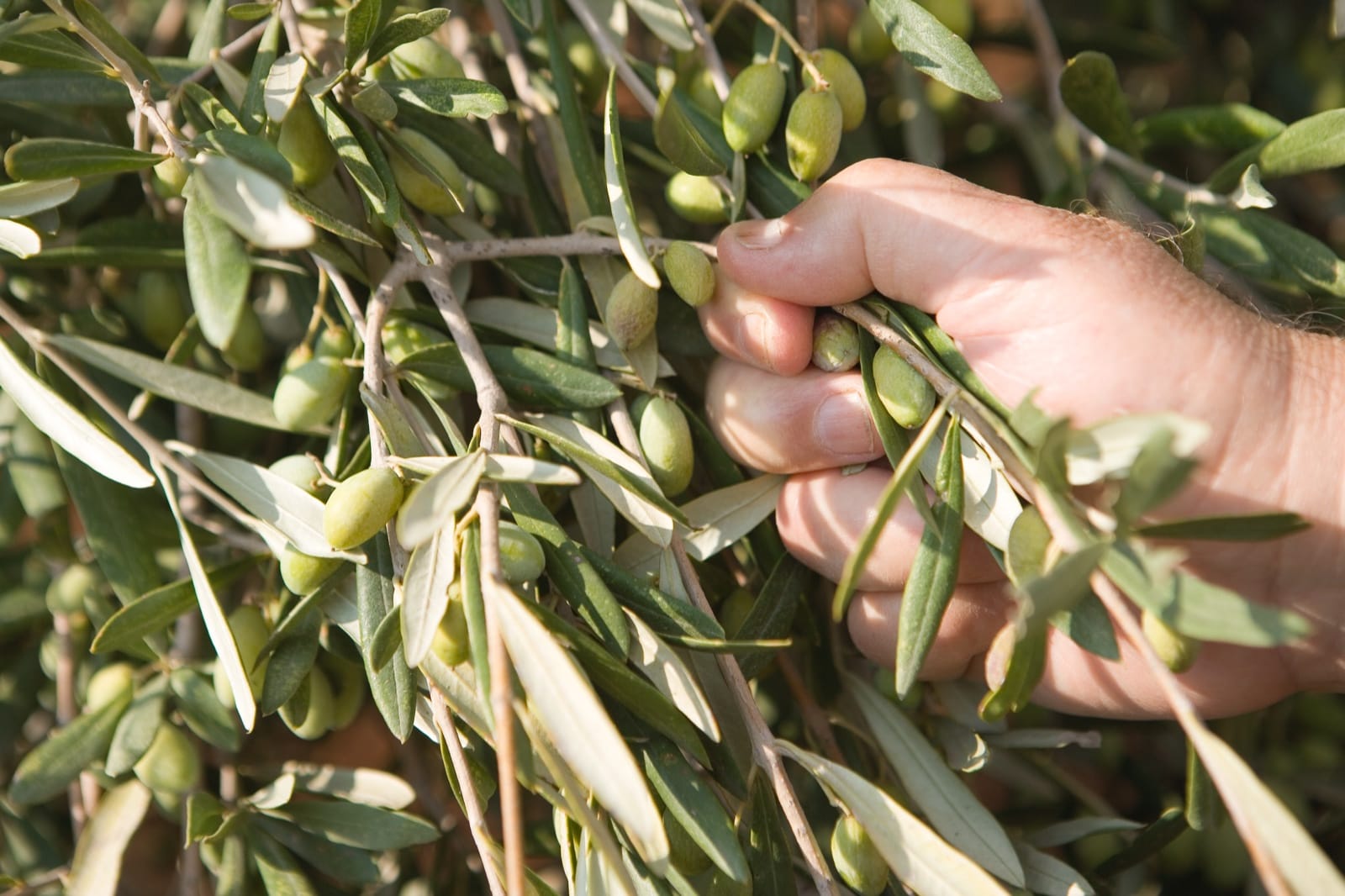
As an essential in the Middle Eastern and Mediterranean kitchen, olive oil has transmigrated to be drizzled over most regional salads and dishes. Women have gone so far as to use it to condition their skin and hair. But with a multitude of brands adorning supermarket and delicatessen shelves, it’s best to be very selective of the extra virgin olive oil you decide to bring home. Don’t be fooled by a producer’s generic mantra and apparent olive oil producing proverb, “Everyone will tell you that their oil is the best.” At the end of the day, it is the variety, environment, harvest time and pressing methods which influence the outcome of the taste.
There are so many varieties to choose from, so before making a decision oil examine the label. A properly labeled bottle will list the olive variety, place of origin, extraction method, the vintage and a ‘use-by’ date, plus its acidity level. A low level of acidity in olive oil is considered beneficial to your health, and its consumption can reduce bad cholesterol levels and the risk of heart disease.
Olive oil aficionados and gourmets won’t touch anything that contains more than one per cent acidity and will always go for the extra virgin kind since it’s considered to be the champagne of the produce; comprising an oleic acidity content of less than 0.8 per cent, it is cold pressed and contains no additives. “Low acidity is necessary to call an olive oil extra virgin,” says Daria Carli, owner of high-end extra virgin olive oil company Frantoio Colli del Poeta, whose estate lies in the heart of the Euganean Hills Natural Parc in northern Italy. A bottle of its extra virgin olive oil costs 20 USD, but as Carli insists, “Connoisseurs know that you shouldn’t buy a 750ml bottle of the oil for less than 20 USD. Anything lower is just not the best kind.”
For olive oil to be extra virgin it needs to be cold pressed at a temperature not exceeding 27° Celsius for the nutritional and organoleptic (the taste and aroma properties of a food) qualities to remain intact, thus also avoiding any unpleasant defects such as a burnt, rancid or metallic taste. And in a similar manner to the wine industry, each year will produce a vintage unlike any other. However, unlike wine, olive oil does not improve with age and should only be shelved for about two years. It also should be protected from the effects of light and oxygen – dark glass bottles or metal canisters make for the best storage.
Ultimately, it is the palate that decides which olive oil is best – a decision reached by trying different brands. According to Youssef Fares, agricultural engineer and general manager of olive oil company Olive Trade, a tasting session should begin by pouring a spoonful of oil into a small glass, “Make sure that you warm the glass in the palm of your hand before tasting. Breathe in the fragrance as you swivel the oil in your mouth while keeping it closed so as to capture the flavour,” says Fares whose delectable Zejd brand won first prize at this year’s HORECA hospitality fair in Beirut. If the oil is of exceptional quality then you might pick up a hint of honey on the tip of your tongue, or even a subtle tomato flavour as the oil glides down your throat, leaving your mouth full of aroma, he describes.
Most people are not aware of the difference between the various oils on the market. A good way to find out is to take a trip a village famous for its oil. Or if this seems too far fetched, head for a specialty store, such as Olive & Vinegar, a global franchise where numerous varieties of olive oil, as well as an abundance of vinegar, are available. Finding that perfect oil may take time and effort, just as it sometimes takes years to discover a desired chocolate praline, but it is certainly worth it.
Sabina Llewellyn-Davies is the author of Green Gold –The Story of Lebanese Olive Oil, a book that pays tribute to enthusiasts, visionaries, agricultural experts and farmers who bring taste to our tables. It is published by Turning Point.
Contacts
Olive Trade
Akkar, Lebanon
Tel +961 3 283724
HYPERLINK "http://www.olivetrade.com" www.olivetrade.com
Oil & Vinegar
Mall of the Emirates
Dubai, UAE
Tel+ 971 4 201 1333
HYPERLINK "http://www.olivetrade.com" www.olivetrade.com
Frantoio Colli del Poeta
Arquà Petraca, Italy
Tel +39 0429 777 357
www.collidelpoeta.com