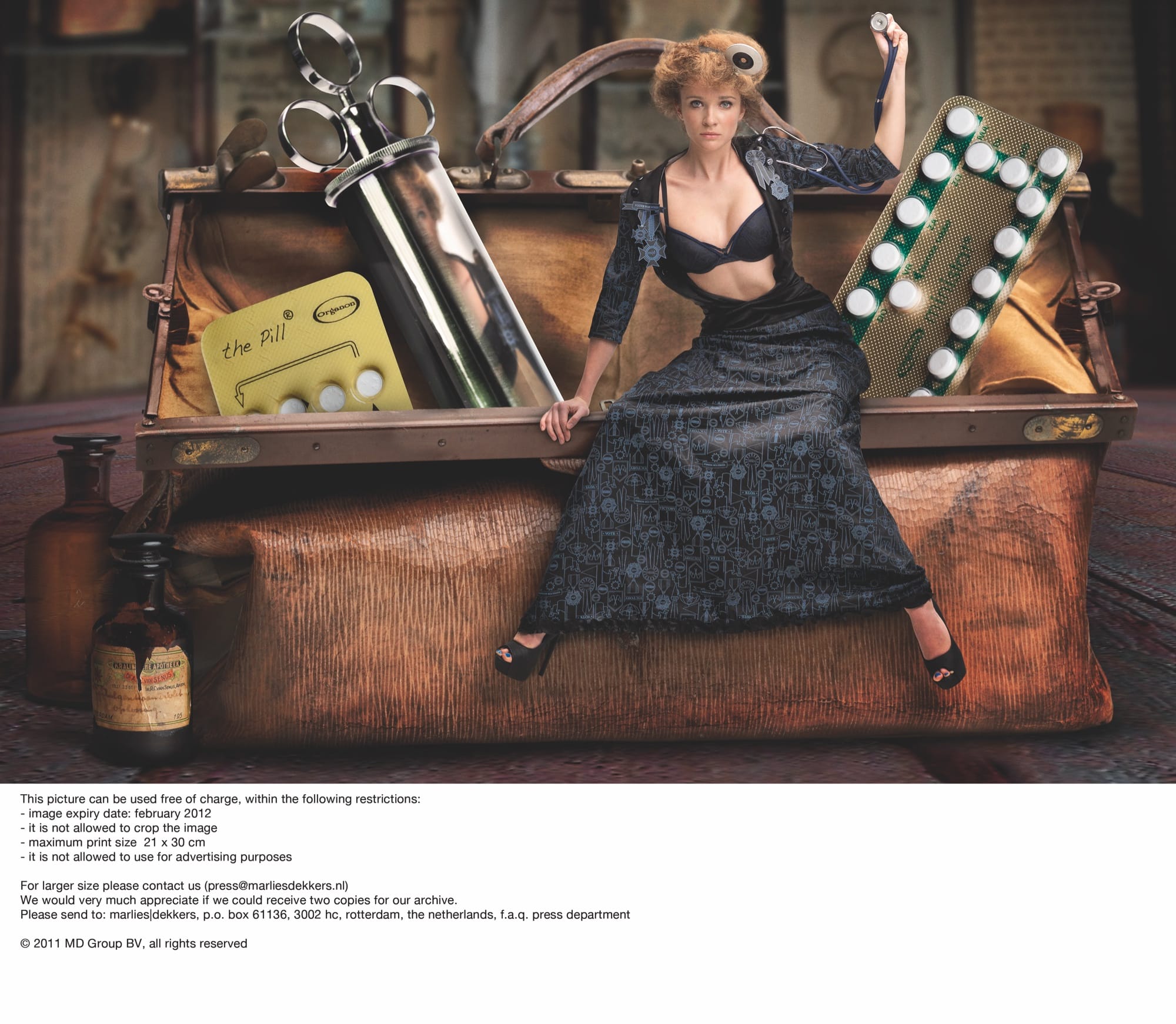
Marlies Dekkers is real. This is not news to the women of her native Holland, where in the course of her 18-year career as a lingerie designer, she has built a profile worthy of a rock star. But for the customers, retailers, and buyers in the rest of the world, it can be quite a surprise.
“It’s funny,” she says, “when I say ‘Hi, I’m Marlies Dekkers’, they’re like: ‘You exist?’ [gasp]”. Leaning back in the fireside chaise lounge of her Rotterdam store, cool, sexy and very un-Dutch in a black Alexander McQueen silk top, JPG peddle-pushers, shoes by Celine, and of course her own underwear, she doubles up in a raucous cackle.
The source of this misconception, and the strength of her marlies|dekkers label, is that in lingerie, you rarely have ‘a designer’ and if there’s a name brand it’s a fake name. ‘Mary Jo’ does not exist, and you will wait in vain to bump into ‘Coco de Mer’ in any of her outlets. Instead, there are 20 men behind that persona having lots of meetings about what women want.
But with marlies|dekkers “there’s a whole story and a real woman behind the brand,” says Zabian Southwood, editor of the U.K. trade magazine Lingerie Buyer. “Actually, she’s very much at the forefront, very hands on. There’s a whole world of Marlies Dekkers, and it’s not just about the look, but about provoking all the various senses.” By the sheer number of experiences and influences she has managed to channel, says Southwood, Dekkers has created “a brand that caters for the modern woman like no other.” Only Elle Macpherson stands comparison, she says, “in terms of buying into a whole lifestyle.” Through some carefully planned global expansion there are currently eight marlies|dekkers flagship stores. Enter any of them – let’s take Paris – and you definitely come away with the impression that there is a whole lot more to the brand than just bras. The Saint Germain boutique (described by French Vogue as “between baroque and design, elegance and debauchery”) features an elegant fireplace in black glass, elements of furniture in red and black, with plasma screens, mirrors and chandeliers, not to mention the most intimate dressing rooms. As for the products, from the scented candles and her own line of Belgian chocolates, to every aspect of the look – right down to the wallpaper, and of course the lingerie, swimwear, sunglasses (don’t even try to get this summer’s; they were sold out worldwide by April), it all flows from the sensibilities of a singular creative talent.
Marlies Dekkers is not only the real, living embodiment of her creation, she is also real as in the sense of ‘authentic’. Award-winning businesswoman, mother, philosopher, mentor, sex kitten and best-selling author, she exudes a boundless creativity, infused with a generosity and openness that is almost religious in its scope. Whether dancing freely at the Amsterdam launch of her latest line, giving quotes to the press, or cuddling her daughter, she always gearshifts effortlessly and with patience. She lives her brand and her brand reflects her passions and her vision, summarised by Dekkers as: dare to be.
The story of how and what she ‘dared to be’ is as inspirational as the products she is creating. Born in 1965 in the small town of Oosterhout in the southern, Catholic half of the Netherlands, she grew up in a traditional, working-class household. Her education started modestly: going to the local school for domestic studies to learn how to cook, clean, sew, and raise kids. After a year, she transferred to a marginally more academic school only to jump ship again three months later to study mathematics at a pre-university high school. The Dutch media always makes much of her Catholic background, but what is unusual is that she built upon it, rather than rejecting it. “You will always see that in my collections. If you look at what I have in the windows (shibari Japanese rope bondage-inspired designs), you will also see the opposite, the very romantic.” Apparently, there were always indications that Marlies was not going to accept her station in life. For instance, aged seven, she refused to wear white court shoes for her confirmation, but demanded (and got) coloured ones - with heels. “Yes, looking back there were signs, but it was difficult because there was nobody in our neighbourhood or school for role models. I had a feeling there was another world out there but I did not know where to find it,” she says.
The answer came from watching Peter Greenaway’s ‘A Zed and Two Noughts’ when she was 14 “upstairs on black and white because we would not be allowed to watch a movie like that downstairs.” Cue another cackle. “Seeing that showed me this whole world of fantasy, and the mythology behind it. Greenaway really caught me, and after that the world was not the same. It was the starting point to fight against what I was being told. I was determined to study – but nobody I knew studied, so it was a lonely path. It was not easy being in between (cultures) because your background is no longer a safe place. But the new people were also not safe, so it was bit scary.”
She became intensely bookish and was soon alienated from old friends. With the freedom afforded by a lone wolf, she began to experiment with self-expression: a punk one week, a seductress or débutante the week after. She ended up studying design at the Academy of Fine Arts in Breda. “My fourth year exam at art school was contrasting Dante’s Beatrice - higher love - with Bataille’s pure lust, and in my fifth year I did Adam and Eve - good and evil. This controversial aspect is always in my work and actually comes from my devout background.”
Upon graduating with distinction in 1991, she moved to Amsterdam and applied for a small grant from the Dutch government to start her first collection. In 1993, armed with only a 16,000 Euro bursary to cover all her start-up costs, she launched her own lingerie label: Undressed by Marlies Dekkers, re-branded in 2000 as marlies|dekkers.
With boyfriend (later husband, and more recently ex-husband) Peter, and sister Anja, who had followed her to the same art school and became the company’s first employee (she is now chief designer), they handled all the design, manufacturing, promotion, sales and distribution of Undressed from her two-room flat.
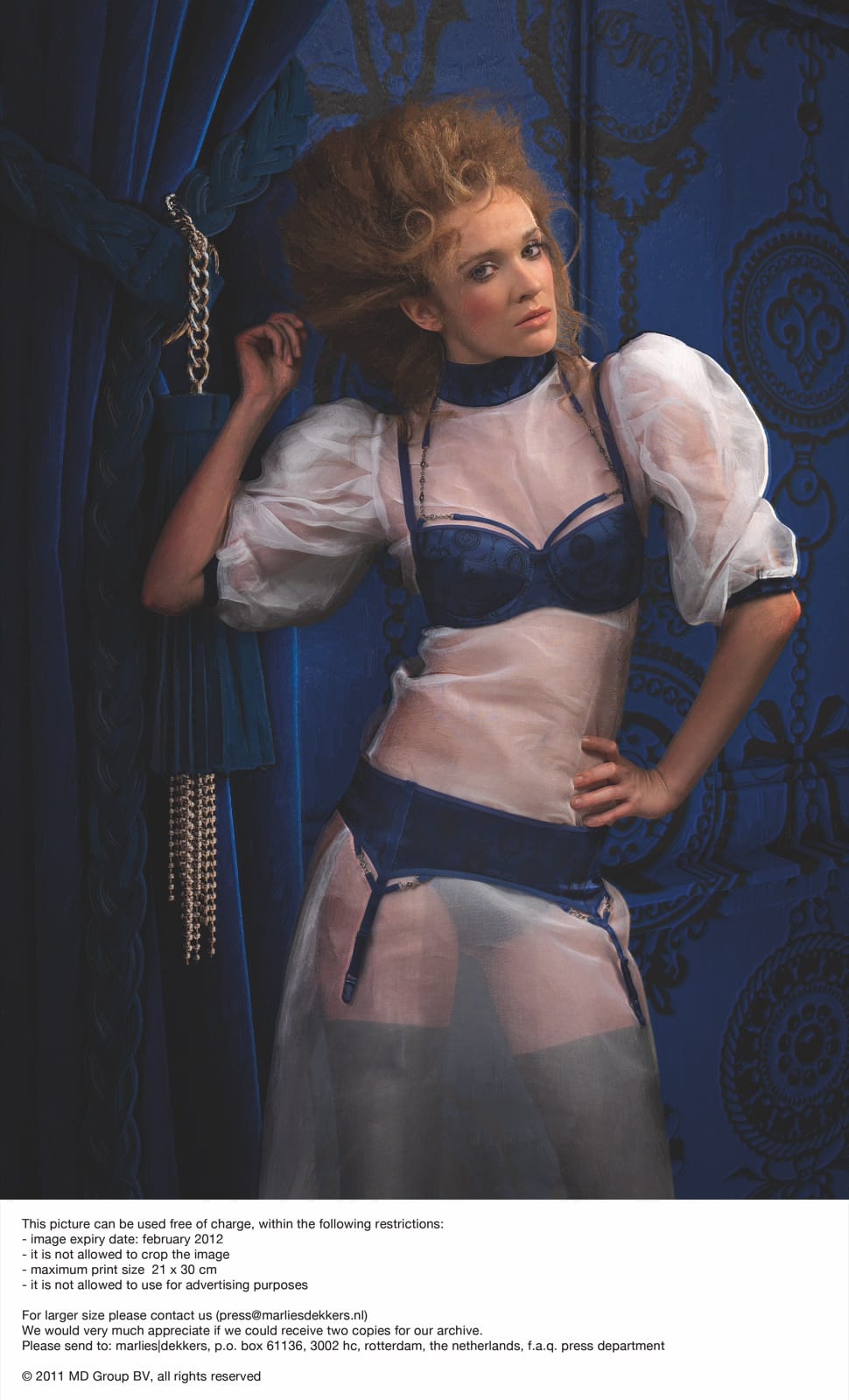
The impact was immediate, with designs like her ‘bare-butt dress’ and ‘spider bra’ (consisting entirely of black straps) becoming iconic moments of lingerie design, to the extent that Rotterdam’s Kunsthal (Art hall) granted her a solo exhibition in 1997. What has led her designs to become so pervasive nationally and internationally, (there are almost 1,000 sales outlets worldwide), and labelled as trendsetting and innovative is that she designs from her own life, inspired by artists and philosophers. Permeated with power and self-confidence, her creations are loved by women of all ages and sizes for their body-sculpting and intricate finish. “What I love about her lingerie is that the body is celebrated and camouflaged at the same time - it’s a different kind of sexy and there’s no way back once you’ve worn it,” explains journalist and TV-personality Beertje van Beers. It is no wonder that she was awarded the Marie Claire Prix de la Mode in 2008.
Dekkers also has exceptional business acumen and a perfect nose for marketing, recognised in 2004 with an Elle Innovator of the Year award and in 2007, as Veuve Cliquot Businesswoman of the Year, having built a company that now employs 100 people (80 of them women of course). As she put it in her first book: “I design lingerie – I sell philosophy.” The Dekkers philosophy was published in 2003 as 33 propositions, a book of her thoughts and inspirations (including Baudelaire, Bataille, Borges, Gide, Plato and Newton – Helmut, though possibly Isaac too), and in 2007 with Stout, a collaboration with Dutch chick-lit queen Heleen van Royen which sold 100,000 in its first week.
Published a year after her divorce, Stout (which means naughty) had the ambitious aim of re-wiring Dutch culture on two broad fronts: to motivate women to become more entrepreneurial, professional, so as to look after themselves and remain independent financially, while encouraging them to be more flirtatious and sexy generally – without feeling they would need to choose between the two. “Women who did well in the past, the higher they went the less feminine they became,” says Dekkers. “We just wanted to show that this is not necessary and a bit old fashioned. It’s so depriving to cut being sexy out of your life, and to have to choose. If you’re not allowed to wear high heels because perhaps a man will assume you want to go to bed with him, that’s his problem, not yours.”
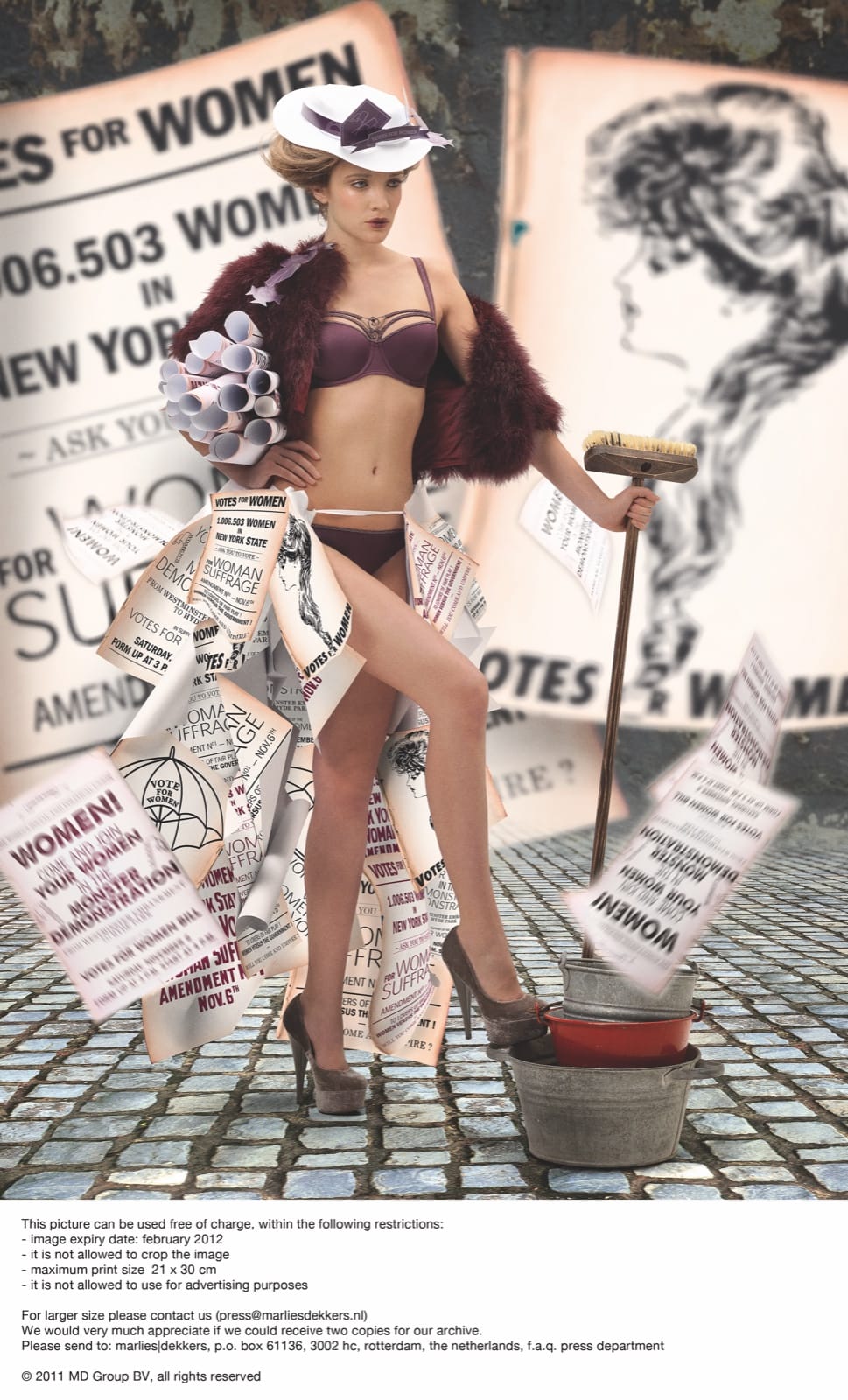
In Holland, the debate about raunch culture is not new and one of Stout’s contributors expressed concern that the book might be playing into that. After all, Dekkers’ public fans include the Pussycat Dolls, Nelly Furtado, Christina Aguilera and Pink. “My daughter finds it so difficult to see me sexy – that’s why we put that in the book. It’s great to have a child – but you don’t have to listen to your children! It is strange that children rule the lives of mothers and that’s the opposite of how it should be.” “We live in a country where we do not have to fight anymore and where we can explore and be as we like, but paradoxically now we can do that, women do not want to. That’s the kind of discussion we wanted to promote. The message is not new, but we present it in a positive way. We started with ourselves and not with men, and we said: it’s so nice to make your dreams become a reality. That is a very fulfilling feeling.”
She acknowledges that “the flirtation aspect, which is an interaction with the man,” is a complex thing. “You want to free women and you want them to feel comfortable with themselves and sexy and at the same time have fantasies and are strong and alive. And also you want them to be powerful in their work. But because of history, this is always in connection with men. We have been pleasing men for thousands of years so it’s almost impossible to do something without making the impression that it is to please men yet again. It’s the same as with lingerie. At its most basic level, it is for the comfort of women. But throughout history, men have bought sexy lingerie for women, not for their liberation, but more to push certain ideas forward, such as ‘you have to wear this lingerie because I would like you to look sexy this evening, so you have to do it to please me’. And that’s the wrong approach. But the product on its own is really fun for women; they feel both beautiful and comfortable.” In short, just because you are essentially a career-driven woman, doesn’t mean you cannot be ultra-sexy too. Dekkers hones in this point resoundingly.
www.marliesdekkers.com