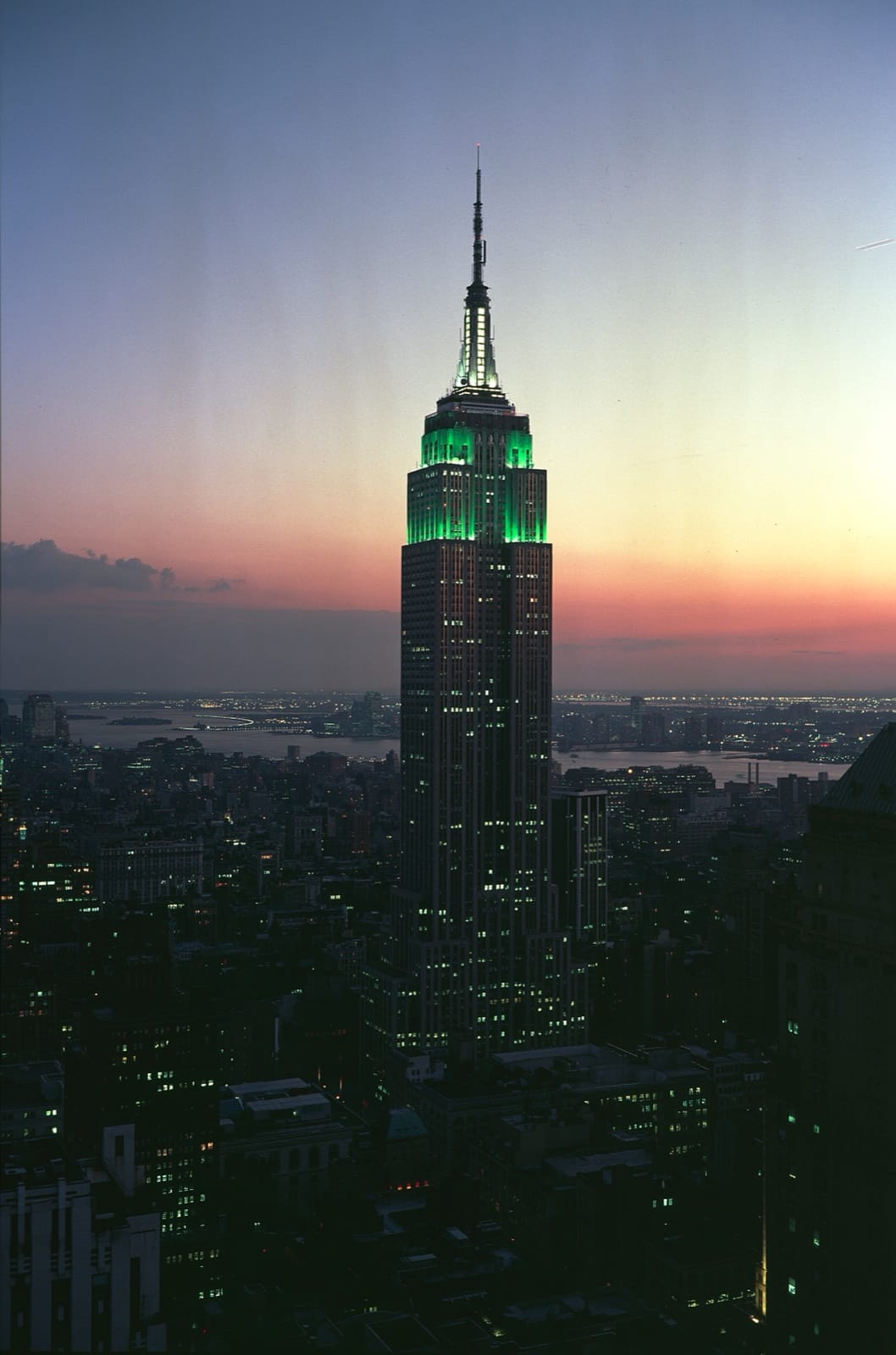
For three nights this past June, the Empire State Building - that distinctive world-renowned symbol of NYC - was lit up in auspicious green, in honour of the ‘Muslim Voices: Arts & Ideas Festival’ taking place in the city over ten days and across several venues. This fascinating event featured a groundbreaking Kuwaiti remake of Shakespeare's Richard III, Sufi music and whirling dervishes from Syria, poignant films from the Maghreb and even a weekend souk featuring an array of wonderful Middle Eastern food and crafts.
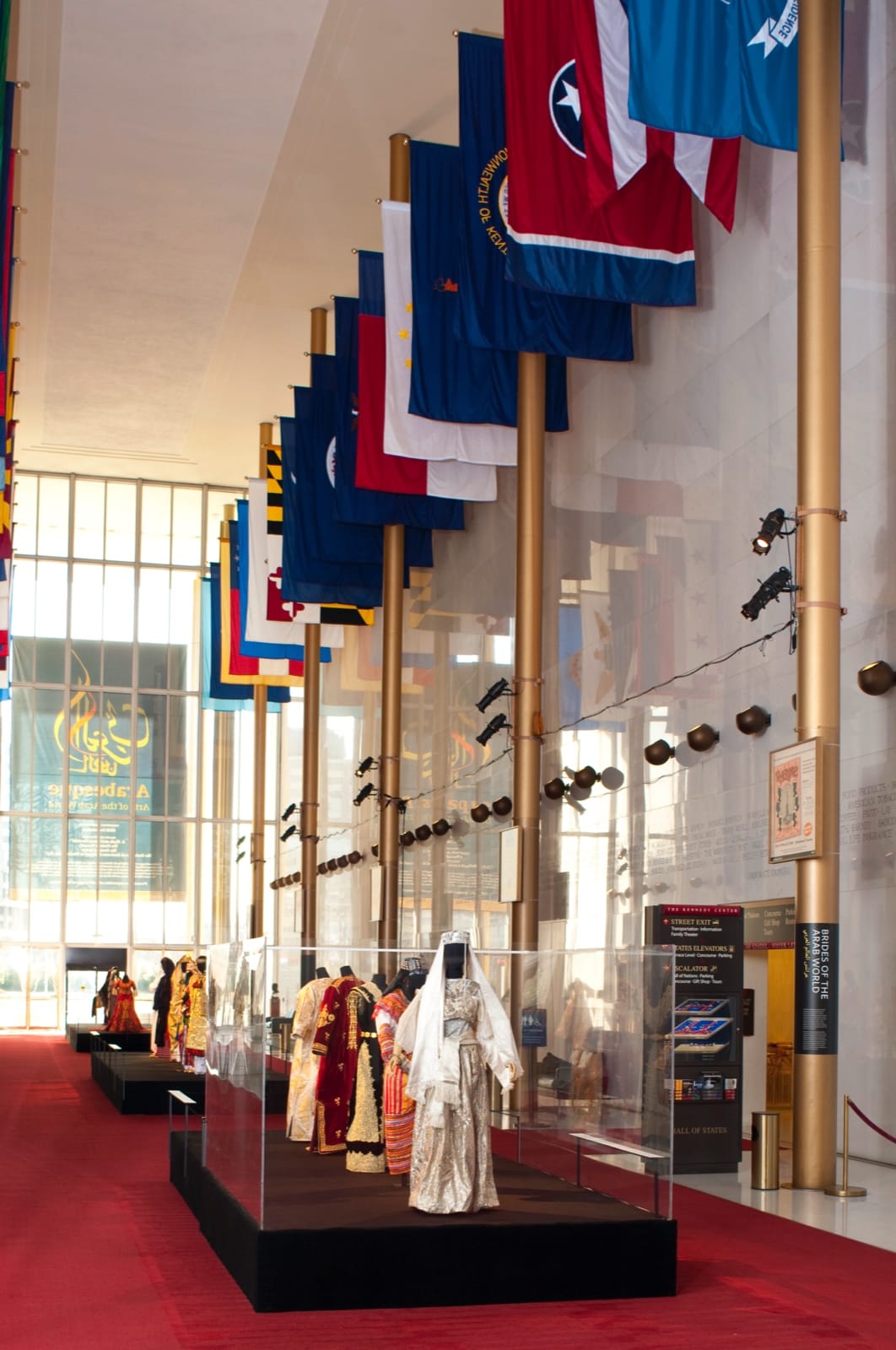
But the popular Muslim Voices festival was not the first of its kind this year to honour the richness of Arab culture in the US. In March of 2009, Washington D.C. played host to ‘Arabesque: Arts of the Arab World’ at the prestigious Kennedy Centre. Complete with literary panel discussions featuring some of today's hottest authors from Lebanon, Saudi Arabia, Jordan and Kuwait, a display of fine jewellery by Egyptian designer Azza Fahmy [Bespoke issue 4 & 6] and 'Brides of the Arab World', a fashion exhibit of wedding dresses from all 22 of the Arab League countries.
Middle Eastern culture has been playing an important part in the lifestyles of trendy US youths. Most college boys woo their first love with a copy of Khalil Gibran's The Prophet [Bespoke issue 1], while hip metropolitan dwellers share hummus plates and conversation at their neighbourhood local Lebanese restaurant. Trendy club goers have danced to the rhythms of Ramy Ayach and Cheik Faraoui, while in-the-know film buffs got a glimpse of Palestinian thespian Hiam Abbass and Lebanese heartthrob Haaz Sleiman in 2007’s hit film, The Visitor.
Lately though, this undeniable interest in Arab arts and culture has been elevated, from its former sub-culture hipster status, to a well deserved more glamorous image. And with that, great names and influential institutions have begun to interact, in a cross pollination of sorts that is allowing for an Arab Renaissance to take place, not just States-side but worldwide.
For film aficionados, the Tribeca Film Festival (TFF) recently announced a partnership with the Qatar Museums Authority that will result in Doha holding a prestigious international film festival this coming October. To mark this cultural union, filmmaker Liz Mermin's documentary Team Qatar was shown in NYC while Qatar dignitaries officially sealed their collaboration with TFF founders Robert De Niro and Jane Rosenthal. Mermin has been a prescient of trends in her previous films, from her documentation of women's resilience despite their surroundings in The Beauty Academy of Kabul, to her behind-the-scenes account of a Bollywood production in Shot in Bombay. What drew her to this particular project - about a group of students from the Middle East who travel to learn debating skills from a champion team at Oxford was a, "Western fascination with the Gulf, beyond Orientalism, which has never gone away". What captivated her was the human aspect of the story and how, “the students’ cultural pride represented in no way a rejection of what the West has to offer but just a confidence about where they come from and what they believe in.”
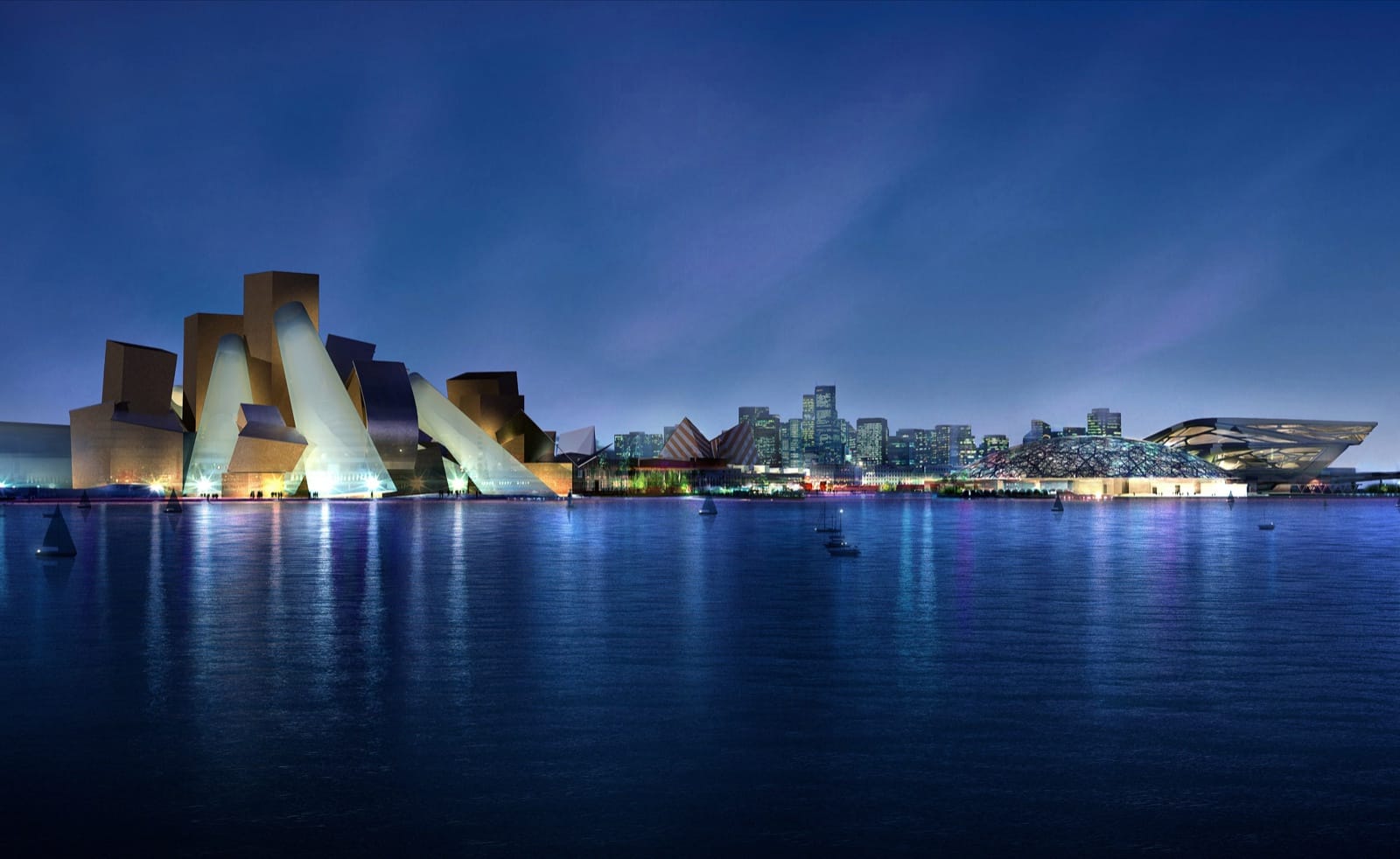
Art lovers will be delighted when the Frank Gehry designed Guggenheim Museum opens its doors in Abu Dhabi, while the academics will be pleased once NYU opens its regional campus gates in 2010. Architect I. M. Pei has outdone himself again by conceiving the structure housing the Museum of Islamic Art in Doha [Bespoke issue 14], which will play host to Doha TFF later this year. It is undeniable that this positive aspect of globalisation has created an exciting environment for all artistic and cultural exchanges between the worlds.
To realise how important the Arab experience is in the US, it's enough to walk into any bookshop and behold their front tables piled high with political writers from the Gulf, non-fiction books on Middle Eastern studies and such intimate novels as The Hakawati by Lebanese writer Rabih Alameddine [Bespoke issue 12] and The Cairo Trilogy by Naguib Mahfouz. Consequently, bookstores just can't manage to keep enough guidebooks about the region in stock.
Is this Arab Renaissance-cum-cultural exchange here to stay? Absolutely! The reason why is best found in the words of Kuwaiti-British playwright Sulayman Al-Bassam, the man responsible for Richard III: An Arab Tragedy. "Gulf countries are players in modernity and the challenges of modernity are being played out there in a big way now". He continues, "the interplay with other cultures is a central part of world politics and it is a positive development that this interplay begins to move into the sphere of arts and ideas". Al-Bassam has single-handedly allowed for Arab audiences to intrinsically understand the tale of a tyrant, while unblocking access to the play for Western audiences in a process he calls "two removes" - using colloquial Arabic subtitled in simple English. Thus he teaches that ultimately the beauty of Arab culture lies in its purism, its simplicity, its streamlined elegance. It is a lesson most welcomed in today's otherwise chaotic and confusing world.