Writer: Nadine Khalil
The fourth edition of the region’s first art fair is taking place in Beirut from September 19 – 23 and will host 40 galleries from more than 15 countries. We take a look at what’s new this year.
When I ask Laure d’Hauteville, director of the Beirut Art Fair, how she came to be involved with the art scene here 15 years ago, she laughs and asks me how much time I have for the answer.
We’re sitting, at Laure’s suggestion, in the cigar lounge at Le Gray on a Friday evening. Plush armchairs, walls of books, it’s the kind of place where time doesn’t feel like an issue.
D’Hauteville’s relationship with Lebanon didn’t begin with the Fair. “My uncle used to be the director of the Université Saint-Joseph and the Jamhour school,” she begins. “He would ask my family to shelter Lebanese people coming to France during the war, so I’ve always shared rooms with Lebanese who needed to flee the country, even before I ever came here.”
I inquire about the constant obsession with the war in the Lebanese and Arab art market - for example, “Generation War” a photography exhibition in this year’s fair curated by Katya Traboulsi and sponsored by acclaimed war journalist, Marine Jacquemin.
“Generation War is not about war,” d’Hauteville corrects me, “it’s about how to get out of a situation of war. Here, you have photographers who were born in the 1960s and were just in their 20’s when the war began.”
She explains that these were photographers who weren’t professionals but whose pictures were picked up by news agencies, because they were there. There’s a photograph of an orchestra performing near a military barrack by Patrick Baz, one of a bride and groom hidden near sandbags by Roger Moukarzel and a soldier with an AK47 slung around his soldier and a kitten in his hand by Aline Manoukian. “It’s about moments of life and happiness in between the war,” she continues.
D’Hauteville found herself in Beirut for the first time in 1991, just after the war ended, when her ex-husband was in Lebanon on a 6-month contract. She liked it so much that she stayed on until 2006, supporting herself by working on the cultural pages of French-language business magazine, Commerce du Levant.
In 1998, she established the first contemporary art fair in Beirut, Artuel, which grew out of a bank-related exhibition for Expo du Levant. It became known as ArtSud and ran until 2005.
“It was the very first art fair of its kind in the whole region. We were the first to start, before Dubai and Abu Dhabi. I was given 500 square metres to work with but the galleries were so keen to collaborate, that I ended up needing 1,200 metres.”
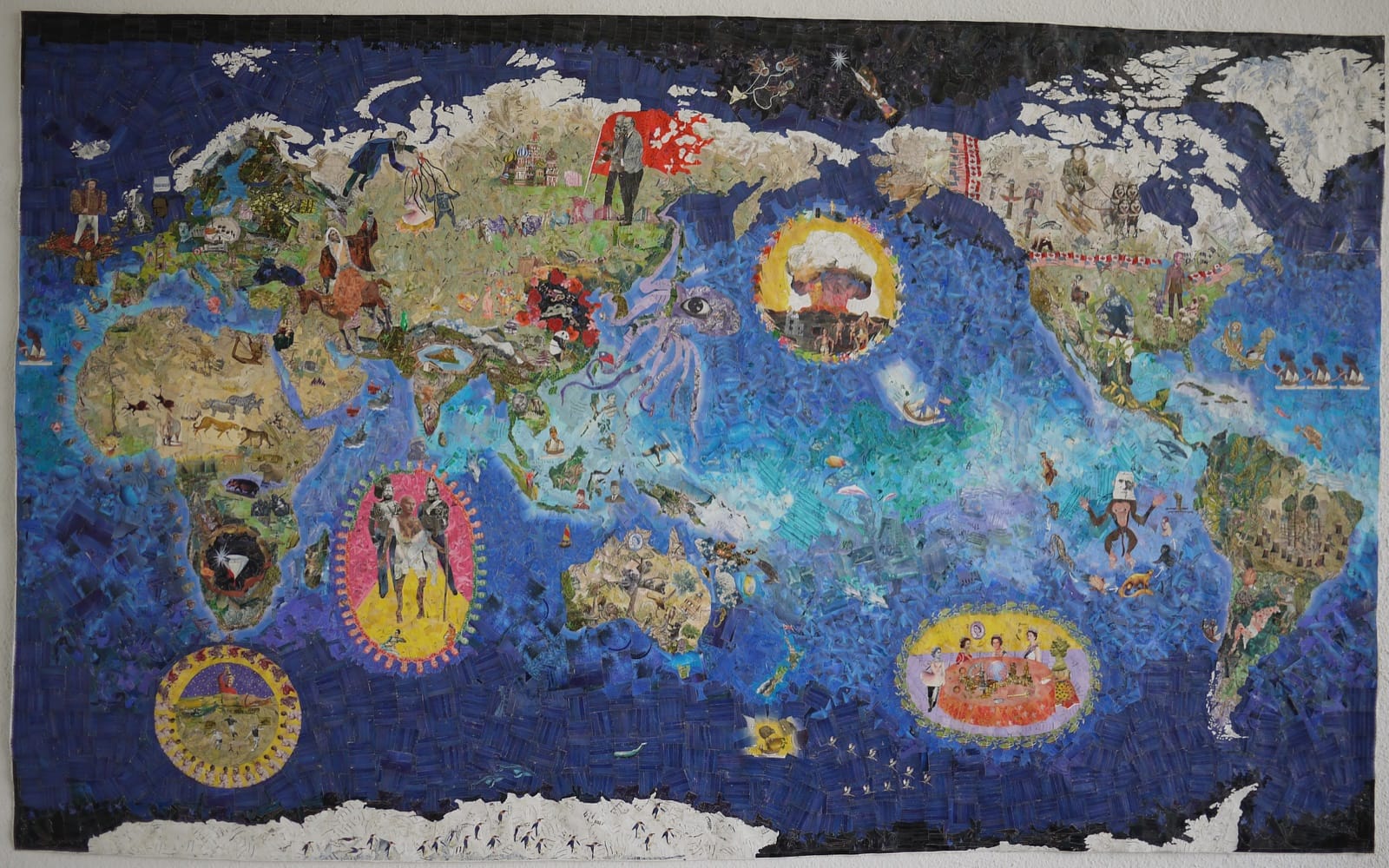
Despite her dignified air and hard nose for the business of art, as we speak, d’Hauteville gets visibly excited when talking about particular artworks. “Nadim Karam had made these elephants, which we lined up as a delegation, at the entrance of the fair,” she recalls, speaking of the 1998 fair. “It was a real sight, leading the way inside. This year, Fabien Verschaere, who creates little monsters and Jean-Marc Nahas, who is famous for his distorted faces, will be painting live on opposite sides of a 7-metre wall, before they meet for the first time.”
After briefly working on the idea of exporting ArtParis to Abu Dhabi in 2006, d’Hauteville started the Beirut Art Fair in 2010 when she realised that as a city, Beirut was more “organic” when it came to sourcing art from the region, North Africa and Southeast Asia. “Here, you have a country with 4 million Lebanese inside and 14 million outside. There’s a strong art scene and Lebanon is so open to the world. It’s a small country with a big outside.”
“We may be a small art fair,” she continues, “but we have been referenced, so you can consider us boutique.” This year, the fair will host a string of firsts, from the first BLC design platform and the first Beirut art week, in collaboration with Solidere, which will feature monumental artworks and installations scattered around the Downtown area, to the first VIP lounge and the first time Southeast Asian art is give such prominence.
The VIP lounge is part of a project that Rania Abboud, Manager of Momo’s, has wanted to do for two years. She’s commissioning two installations from the Spanish art collective, Penique Productions. One entitled “Ephemere”, where Momo’s restaurant and bar will be transformed into a living installation for dining, fashion shows and parties and decked out in made-to-measure inflatables. The second is the VIP Lounge, entitled “Blow Up,” also an inflatable, this time a cube measuring 10 x 10 x 10 metres. The interior is to be designed by Nayef Francis and all the furniture will be suspended in swing-like fashion,
“It will be a crazy installation in itself, every visitor will become art and part of the installation,” d’Hauteville explains “Penique are going to create a series of monumental bubbles that will take shape as people enter.”
As for the debut of the Southeast Asia wing this year, it’s all part of d’Hauteville’s plan to have Lebanon featured at the Singapore Art Fair next year.
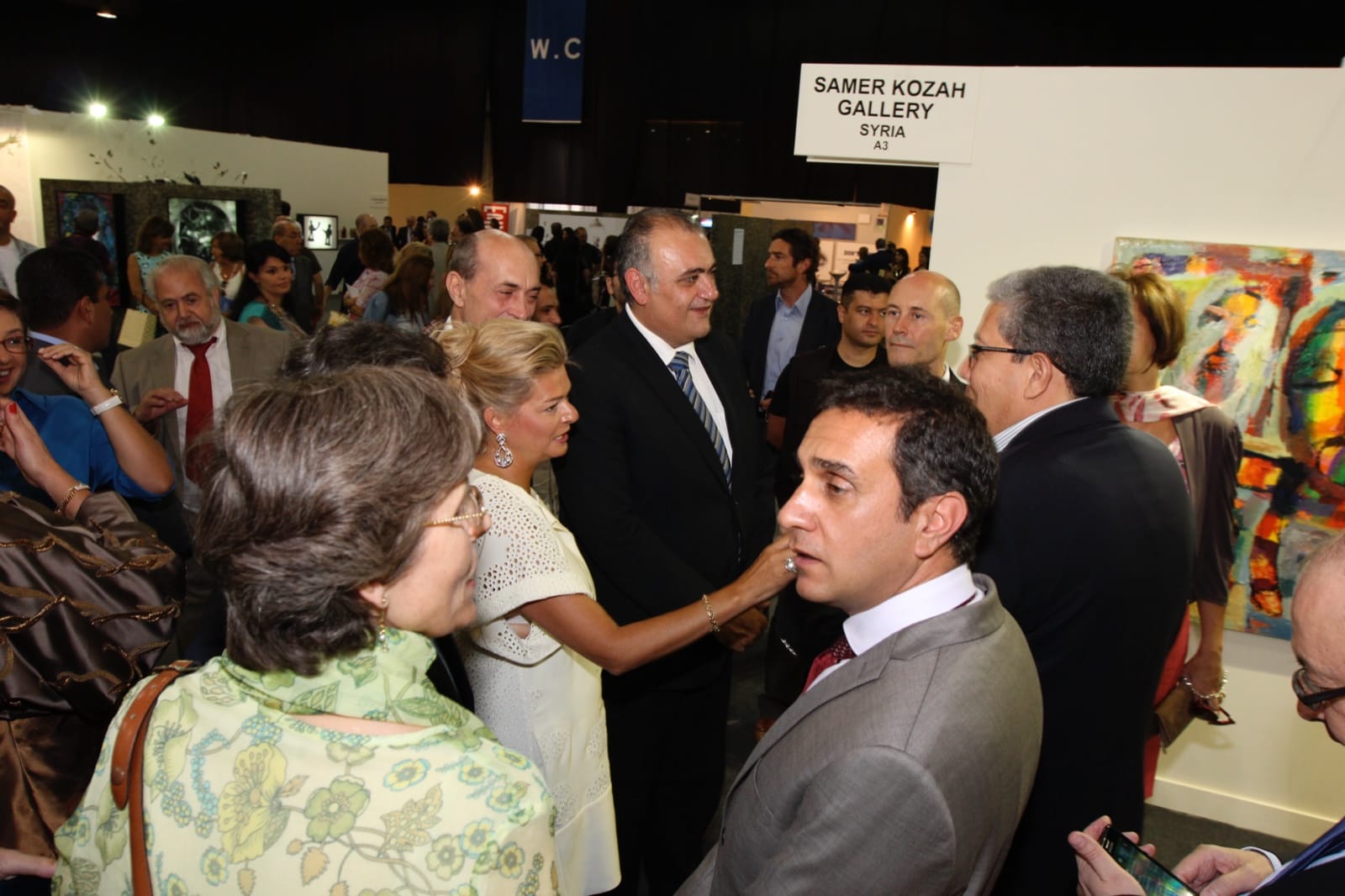
“It’s a circus, the art world,” interjects Richard Koh, an art dealer based between Singapore and Kuala Lumpur, who is curating this wing. “You move from one place to the other.”
Koh tells me their starting point was that Asian countries are plagued with similar struggles and migrations. “There’s a lot of trophy art out there,” he continues, “but also a lot of diversity. When people think of Southeast Asia, it’s Indonesia, Thailand, Singapore, the Philippines and Malaysia. Laos still has a very primitive art scene. A lot of those from Vietnam are born in the US, so they aren’t home-bred and they return as Americans. In the Philippines, it is predominantly painting. In Singapore, you have mixed media and installations, Indonesian artists are even braver, they use lightboxes and sound installations.”
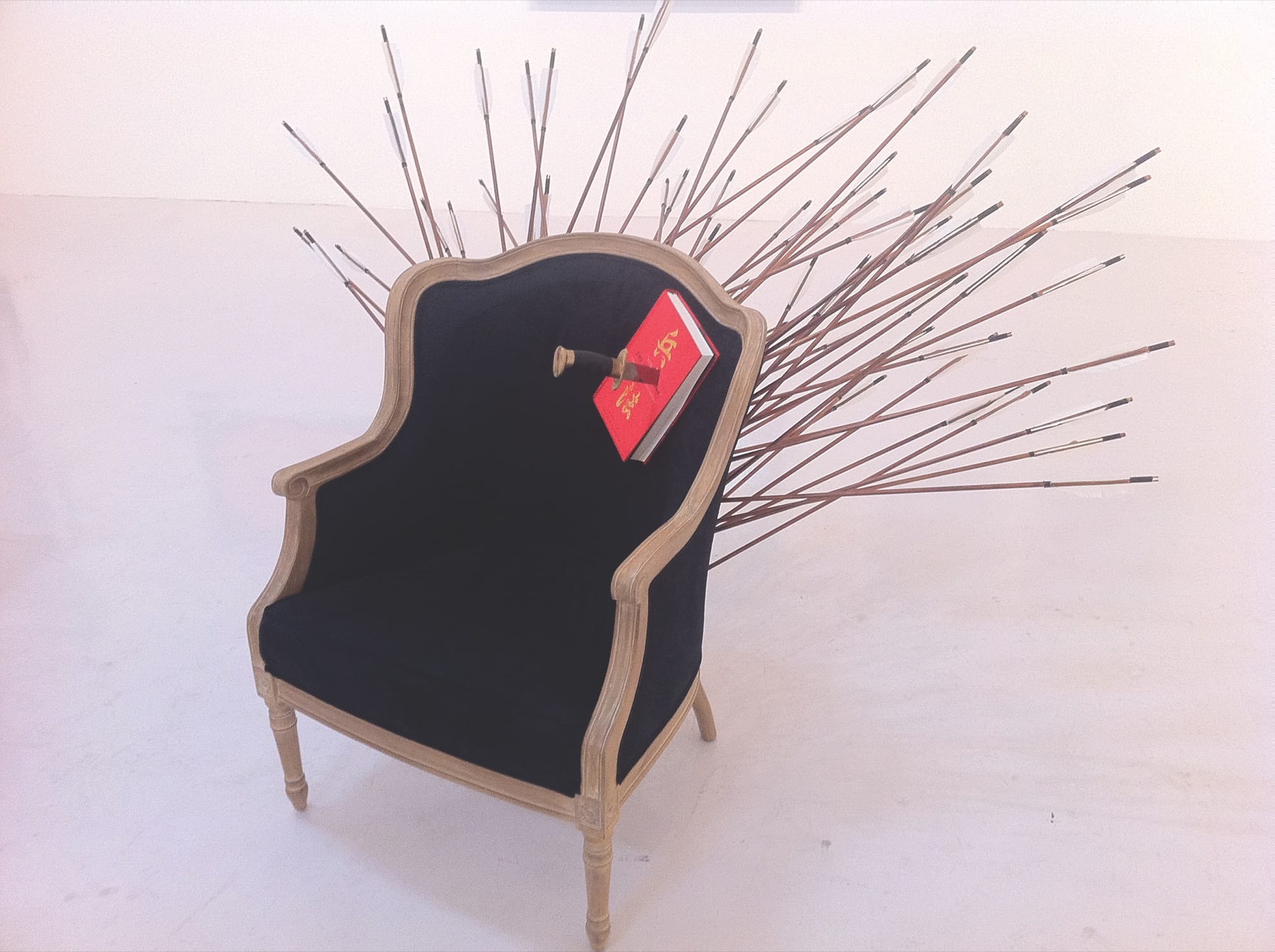
Koh plans to feature pieces like Angki Purbandono’s “King of Capsules” a skeleton on a lightbox dish surrounded by red and white pills, Ruben Pang’s “Ants in my Candy” a colourful oil painting on aluminium of a shadowy figure filled with phosphorescent, smoky wisps of colour. It almost looks like a digital print. There’s also the Vertical Submarine Collective from Singapore, whose “Armchair Philosophy” features Sun Tzu’s Art of War, stuck into the back of a suede armchair with a knife, along with dozens of arrows. “It’s about keeping enemies close to you,” Koh explains.
And so we return to the theme of war but in a more subversive way. With so many parts of the Arab world now at war, post-wars (or between wars) Beirut is, it would seem, an entirely appropriate place to start transcending those conflicts through art.