From a petite flagship store in the heart of Chelsea, De Gournay is two decades into a mission to revive the Chinoiserie and elaborate hand-painted panoramic wallpapers that were the rage of sophisticated salons in 18th century and 19th century Europe.
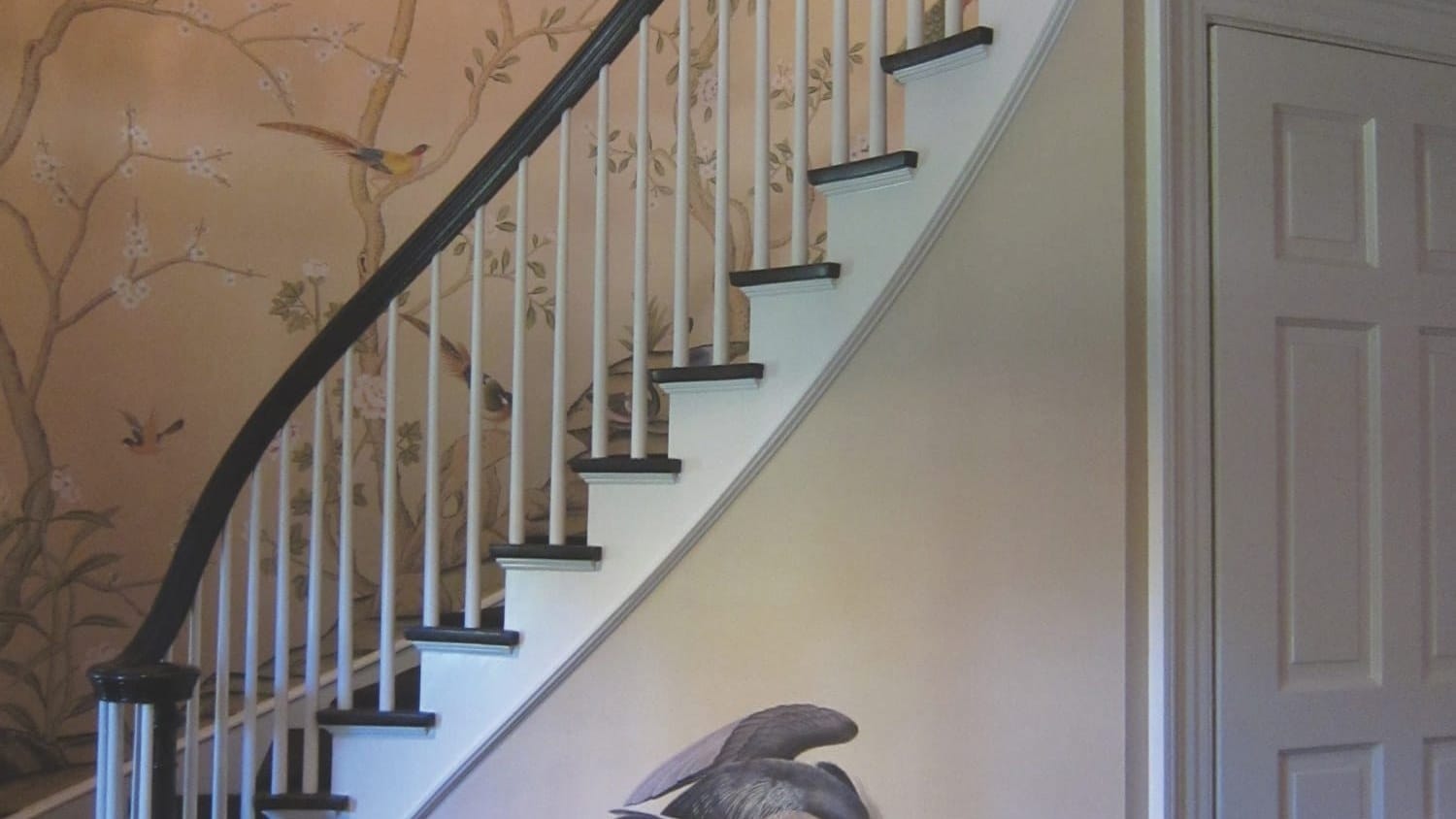
First emerging during the 1700s, when trade routes to Asia opened up allowing savvy European merchants to import exotic new wares, Chinoiserie is broadly classified as a decorative fascination with all things Oriental. Mostly Chinese but also Japanese, Burmese and Indian/Mughal, the ‘papiers peintes panoramiques’ it inspired were romanticised depictions, of Asian landscapes, full of temples, flowers, animals and vignettes of daily life. Like the wall-sized photographs of tropical beaches or snowy mountains briefly popular in the 1960s and 70s, these scenes were intended to transport viewers to somewhere far-flung and exotic.
Wildly popular with the merchant elite and aristocrats, many of the epoch’s grandest residences had at least one room filled with Asian (or at least Asian-inspired) curios and furniture, its walls clad in painted paper depictions of ‘the Orient’.
“Chinoiserie was an extremely influential exotic import from a distant land, whose impact on design can still be felt today,” says Dominic Evans-Freke, co-owner and Director of Design for De Gournay. “From furniture to architecture to looking glass mirrors, the aftermath of the epoch is endless.”
The emancipation of travel means we no longer have to rely on traders and painters to experience the Far East but in spirit at least, De Gournay’s hand-painted wallpapers and porcelains continue to celebrate that same ‘other-worldly’ beauty that so enraptured Europe.
Not all of its designs are traditional and recently, it has begun experimenting with a more abstract style in response to the demands of the new generation of client, who appreciates the splendour of a hand-painted interior but doesn’t necessarily seek to recreate a period feel.
Additionally, De Gournay’s audience is so global – indeed, its Chinoiserie and painted wallpaper now sell in the Orient itself - and so diverse, new styles were necessary.
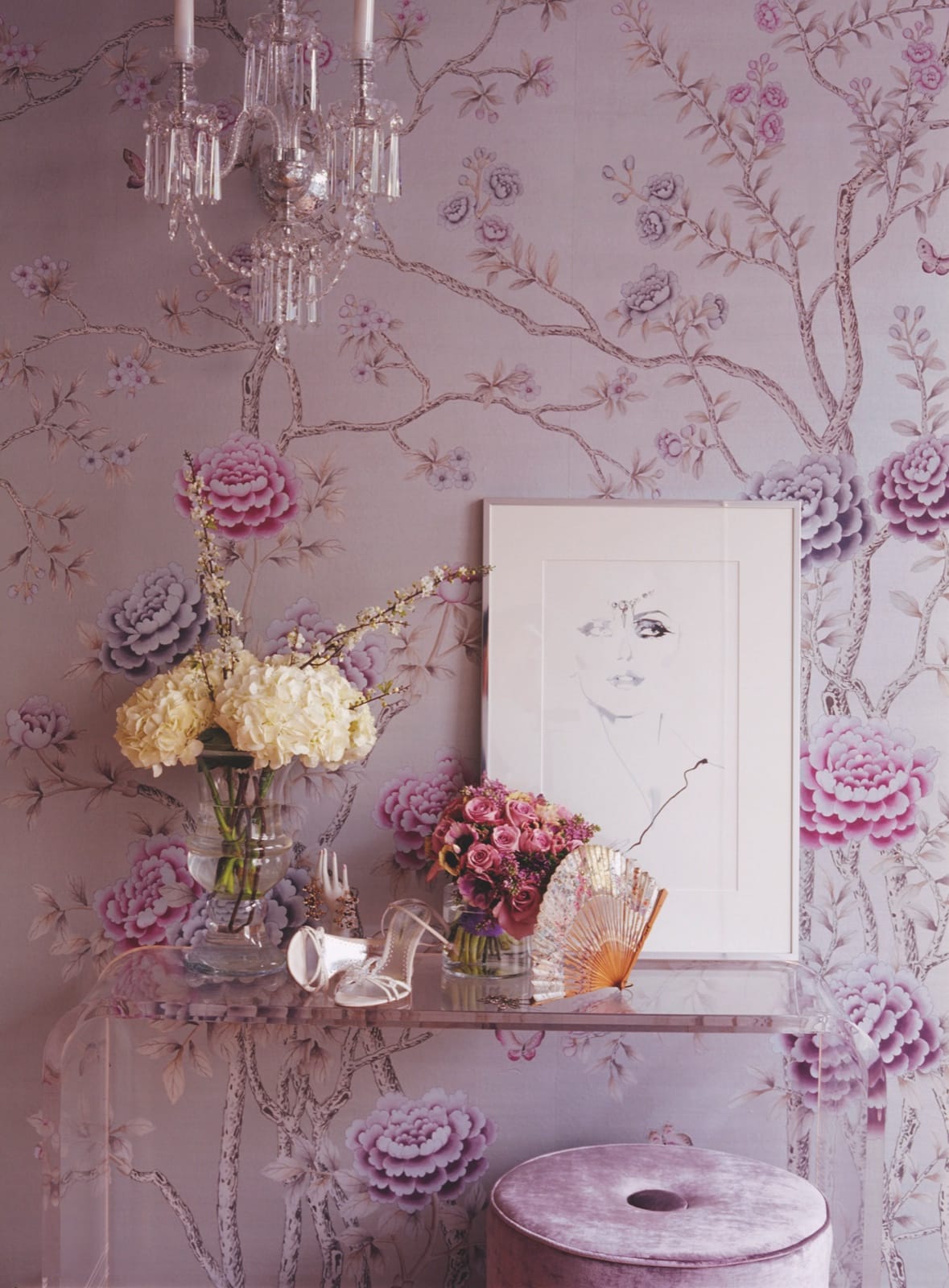
In seeming contradiction to Chinoiserie’s decadence, the company’s styles are inspired by Japanese Edo prints; strikingly simple depictions of nature, pine forests, waves, snow-covered mountain tops. Meanwhile, De Gournay’s more classical designs - giant peonies, frolicking swallows and undulant cherry blossom - remain very much in favour.
How a former financial consultant became a champion of Chinoiserie is a story in itself. Decorating his own home and disillusioned with mass-produced wallpaper, Gurney recalled an aunt whose walls were covered in old hand-painted wallpapers. Finding none on the market, Gurney and Freke-Evans decided to make their own and so in 1986, De Gournay (the original French spelling of Gurney’s family name) was born.
With delightful self-deprecation, Gurney attributes his company’s longevity to its ethos that customer is king and a healthy dose of tradition. “Essentially, we are a very old-fashioned family business, with a very simple model. We only sell products that we have manufactured ourselves,” he says. “We see ourselves as facilitating the client’s needs. For a client to feel as though they have done it all themselves, that is our aim.”
To date, clients have ranged from everyman to rock stars and royalty. Being a gentleman, Gurney does not name names. He is, however, happy to divulge that the firm is responsible for the interiors of a number of A-list fashion stores adding that its ability to blur the lines between antique and contemporary, established and cutting edge, ensure De Gournay remains as coveted in 2012 as it first was in 1986.
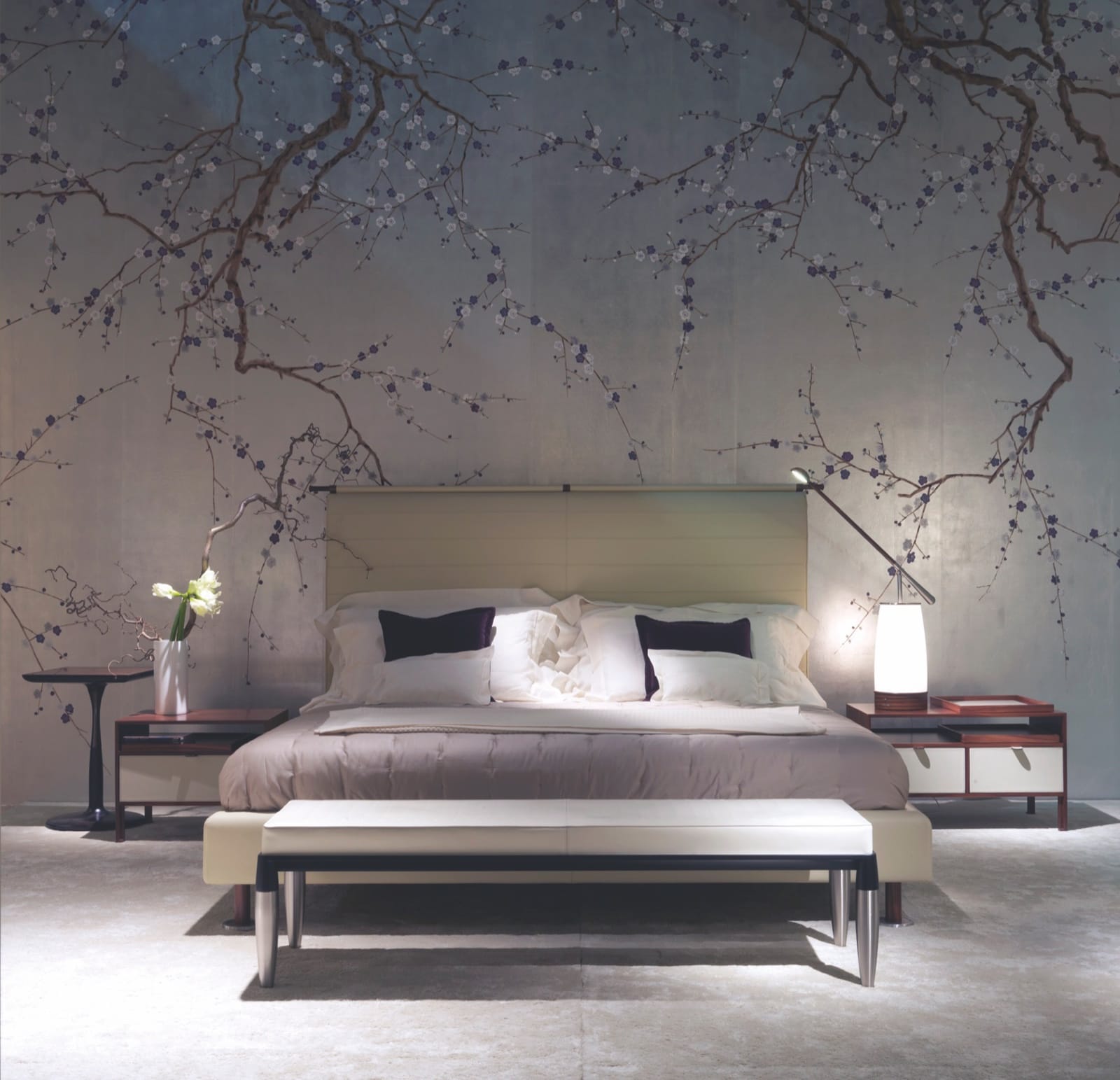
Innovations aside, De Gournay remains loyal to Chinoiserie’s heritage; wallpapers are hand-painted by Chinese artisans at a production site near Shanghai. Each scene, which is composed of 3 by 1-metre panels made of hand-spun silk, take around 10 weeks to complete and cost upwards of 600 USD each. Not cheap but when every detail is tailor-made for the room to be papered – individual touches like a client’s favourite bird or colour can be incorporated in the design - it is the epitome of bespoke design and as Freke-Evans puts it, inexpensive “given the long hours skilled artisans spend making them and the high grade of materials used.”
Apparently, plenty of people agree. Despite the current economic climate, Gurney, Freke-Evans and their team are as busy as ever embellishing the lives of those who appreciate exquisite craftsmanship and creativity and understand it comes at a price. Indeed, the more financial uncertainty grows, the more clients seem to feel the need to seek refuge within (beautifully appointed) walls, testament to the timeless appeal of rooms that allow you to travel without leaving home.