I’m walking into Waku Ghin. It’s in Marina Bay Sands, Singapore’s testament to out Vegasing, Vegas. You’d think the surreal sea of a casino below or the slender, cantilevered curve of a top floor, which spans the three towers might be my goal. Instead, I’m drawn here by a name. That name, on which Waku Ghin’s appeal rests, is Tetsuya Wakuda.
In the early 2000s, this was the name of a young man in Sydney, whose restaurant was likened to an epicurean’s version of Kurosawa’s Hidden Fortress. There were rumours of how long one would wait for a reservation at his eponymous eatery, Tetsuya’s. No less than three months, in fact, if you could get one at all. The story of how this Japanese chef became the toast of the town was equally mythic. Journeying to Australia – as a galley hand, it was said – Tetsuya studying under legendary Australian Chef, Tony Bilson, before emerging with his own take on Franco-Japanese cuisine, a revolution at the time.
Wakuda won an international award every year from 1992-2009 and his restaurant ranked in San Pellegrino’s Top 5 in the world between 2005 and 2007. Waku Ghin arrived facing great expectations but like many progeny, excels not where it emulates but where it innovates.
Tetsuya’s first restaurant was small, located out in Sydney’s aspirational inner-west suburb. By 2000, he had moved to the inner city into what, from the outside at least, could have been a secret Japanese consulate. I recall walking past it before knowing what it was, entranced by the serene compound with its single ornate house of the rising sun, amongst the skyscrapers and offices downtown.
In 2002, luck got me a seat inside. I was in Sydney and my then partner humbly enquired if it might be possible to get a reservation. A rare cancellation and what I can only assume was a bemused maître de, called us that afternoon with an unheard of offer for a same-day sitting. Just like that, I breached the Hidden Fortress.
Waku Ghin draws upon Tetsuya and, as any offspring must, departs from it. My attention is caught by the clean lines. Shibumi, the Japanese art of the minimalist, unobtrusive aesthetic, so beautiful in its subtlety, is evident in the silvery metals and raw wood used throughout the interior. As at any traditional Japanese restaurant, Waku Ghin creates intimacy by sectioning diners off into discrete groups and so my partner and I share the meal not just with another couple seated alongside us at the four-person bar but with what amounts effectively to our own chef and sommelier, who stand opposite, preparing each course and accompaniment.
I remember the wonder of a Tetsuya’s degustation. It was an elaborate menu, which offered the diner few decisions but a multitude of courses, each one an elegant synthesis of Japanese essence, French richness and Australian excellence of produce. Initially, I wondered how Waku Ghin would manage to translate Wakuda’s elegant language of taste and the simple answer is that it does so by broadening the vocabulary whilst retaining the form.
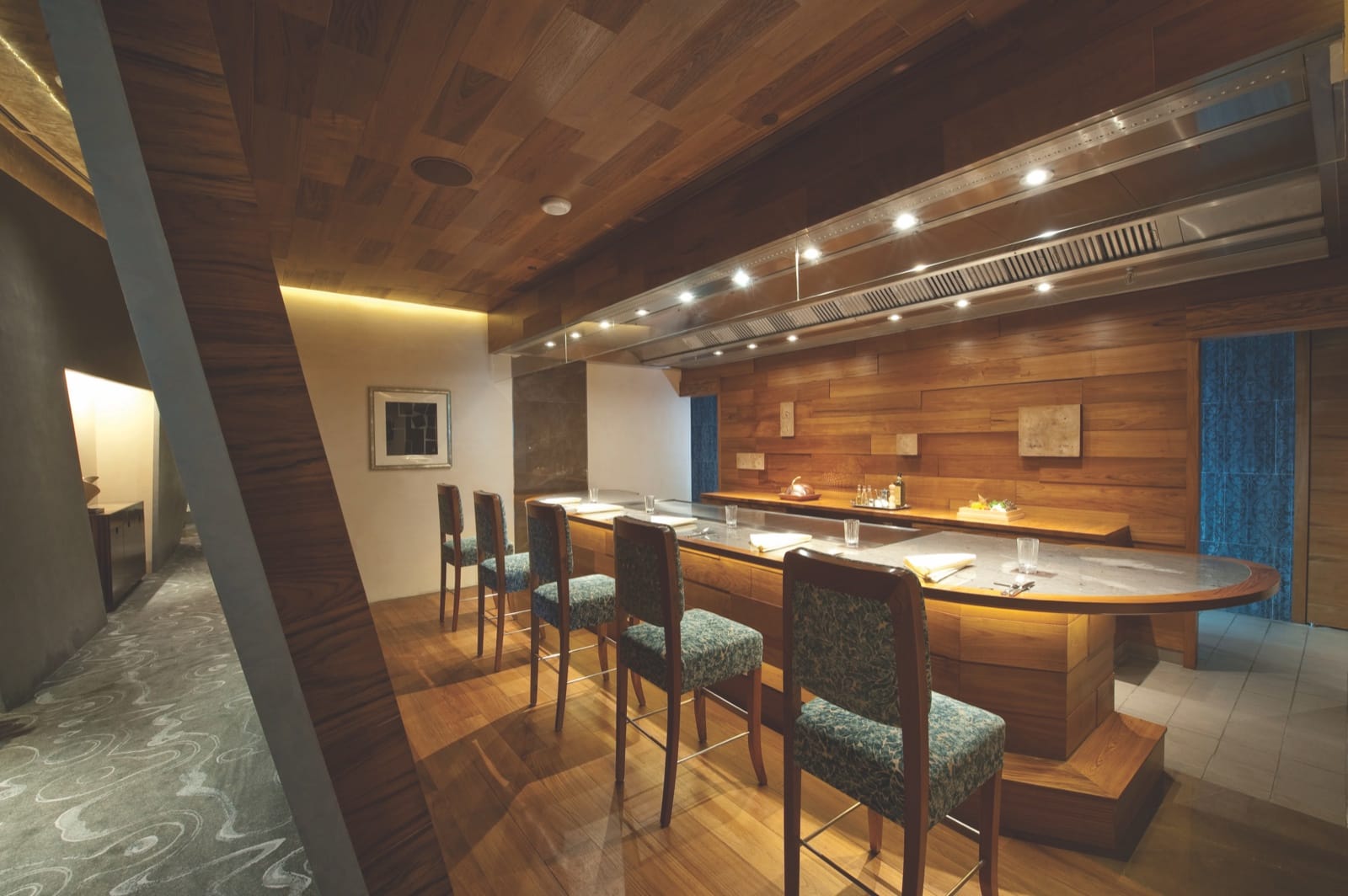
What you find in Waku Ghin is an idea, familiar to anyone who may have eaten at Tetsuya’s, gently repeated and built upon. Each of the ten courses took a familiar shape: a Kanburi salad, roasted Scampi, pasta Carbonara and Japanese Ohmi Wagyu beef from the Shiga Prefecture, all of which are enhanced by the richness of the ingredients, the salad with Chinese olives, the Scampi with Ceylon tea and grape seed oil, the pasta with white truffle grated directly into our petite bowls by the chef and the beef, with real Wasabi root, shaved into a creamy sauce.
In my memory, Tetsuya’s was distinguished by its service – I returned twice between 2001 and 2005 – in its ability to blend the discretion of the Japanese hospitality with the pleasant ease of Australian character. During my first dining experience, Wakuda himself quietly appeared and with disarming humility introduced himself, politely asking about the meal before thanking us and excusing himself. He was so serene that it took several minutes for me to realise quite how legendary the man was who had so quietly graced us with his presence.
Waku Ghin doesn’t achieve that same level of humility. That it boasts a unique ratio of staff to diner is known. The figures vary, you can roughly expect one staff member for two diners. In these surroundings, I was able to feel a closeness with our chef and, even more so, with our sommelier but ancillary staff unfortunately displayed habits that are more quintessentially Singaporean than Japanese. The mix of nationalities seemed poorly trained. The simple experience of an aperitif, for example, felt hurried and overly controlled in a way that detracted from this diner’s experience. I longed for the effortlessly smooth transition at Tetsuya’s from entrance, to bar to table. There, it felt like a slow waltz. At Waku Ghin, it felt as aggressive and staccato as the Singapore metro in rush hour.
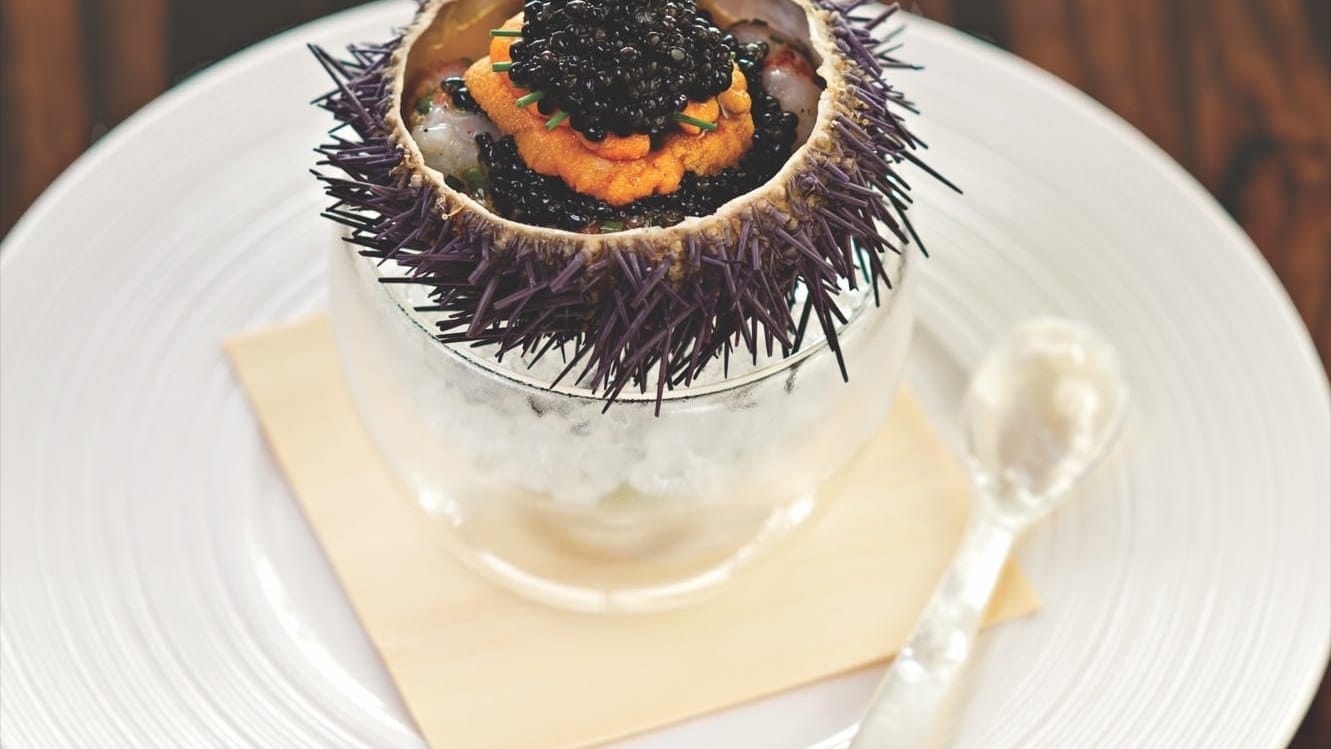
And perhaps it is here that Waku Ghin falls a little too far from the Tetsuya tree. In its observance of Japanese cuisine, French flavours and Australian produce, Tetsuya’s was perfectly framed and balanced. At Waku Ghin, it is less balanced, as is the lux-trocity that is Marina Bay Sands surrounding it, like a Darwinian experiment stuck in fast-forward. But then so does Singapore. Individual dishes soar - the braised Canadian lobster with tarragon, the Tasmanian Abalone with polenta, tomato, garlic cream or the marinated Botan shrimp, rich, pink and velvety inside a sea urchin, the foie gras of the sea, topped with Oscietra Caviar. But they crash to earth when layered one upon another. Unbound, too much is simply too much and the diner is overwhelmed. Where Tetsuya’s led me, gently, with offerings of sublime beauty, I had to carefully pick my own way through the glitz of international fare at Waku Ghin.
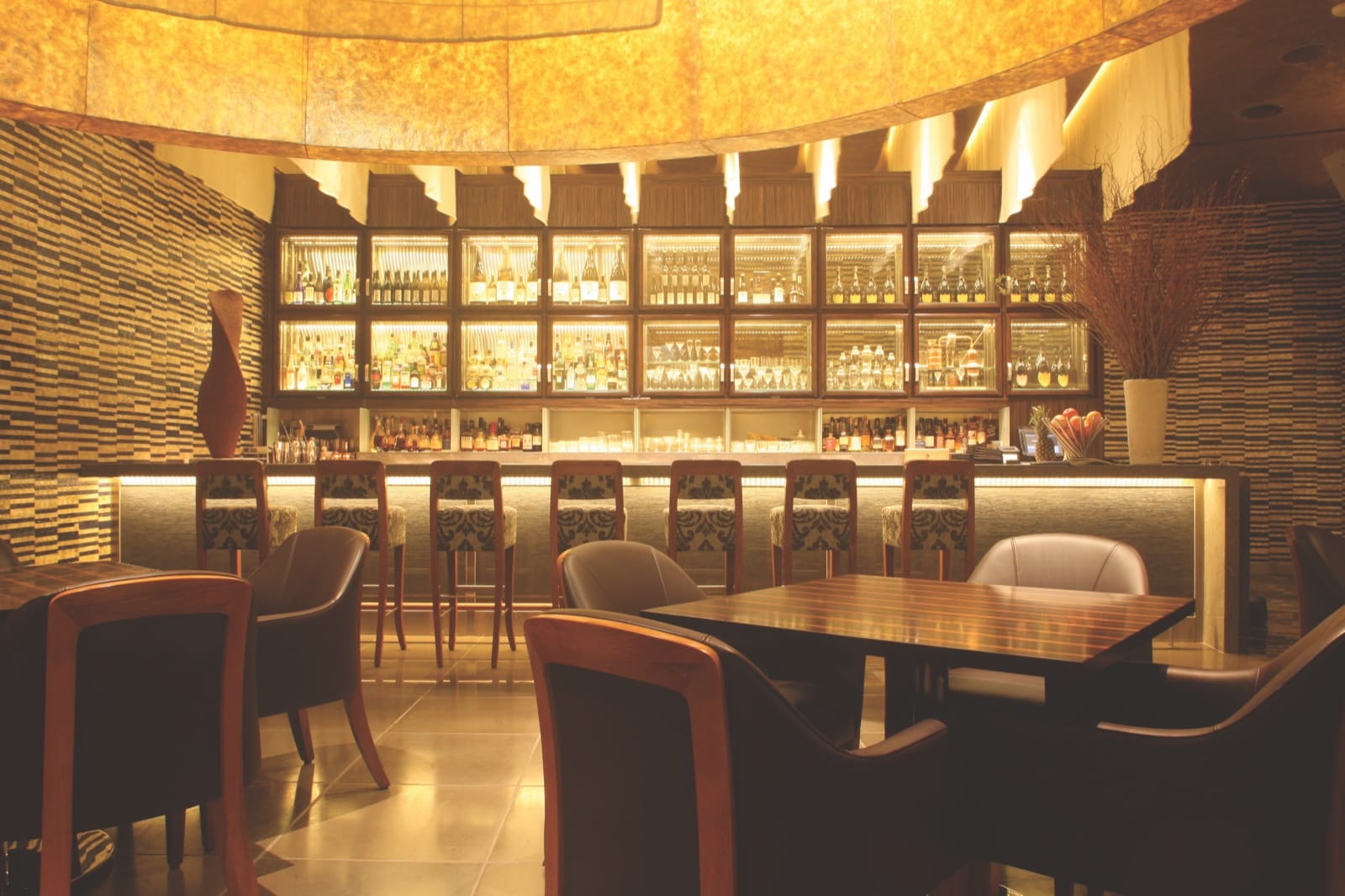
Do not mistake me. There are treasures here, clear indications that this child can eclipse his father. The Aburi of Tasmanian Petuna Ocean Trout with chilli and citrus soy, for example, is a perfect third course. Such a succulent piece with its lemon and ginger shavings that with each bite, a hint of smoke would unfurl in my mouth, filling my palate to leave me with the ghostly memory of a flavour I will rarely know again. Somen noodles, cold, firm and slippery in the mouth, so perfectly prepared with ginseng that they transport me to Meguro in a moment. When defined with Australian style or Japanese tradition, the beauty of Waku Ghin emerges from the cacophony of the glamorous dishes. Similarly, the hefty wine menu, dominated by prestige French reds and Australian enfants terribles was dwarfed by the amazing sake accompaniment suggested by our sommelier, each expertly chosen and served in a Riesling glass to allow it to evolve gently. The discovery of these simple moments of perfection are the true joy of the Waku Ghin dining experience.
As our meal ends with a return from the Japanese sublime to the Singaporean ridiculous, a quartet of desserts eaten as the Marina Bay Sands water fountains, even larger than the ones in Dubai, erupt into life. The view opens from the chef in the kitchen to midnight extravaganza as we change rooms. At over 400 USD a head, Waku Ghin is pricier than Noma and much more expensive than Tetsuya’s. I am left to wonder at the brilliance of youth and the maturity of a father.