When I first read that Rafael Aranda, Carme Pigem and Ramon Vilalta, the Catalan trio otherwise known as RCR Arquitectes, had built a project in Dubai, my first reaction was astonishment.
Not because I had any doubts about their ability. After all, we are talking about this year’s Pritzker prize winners, architects known for their exquisite manipulation of light and shadow and for buildings that insert themselves effortlessly into their surroundings. No, my surprise was because Dubai seemed like the wrong place for the trio to be building, to begin with.
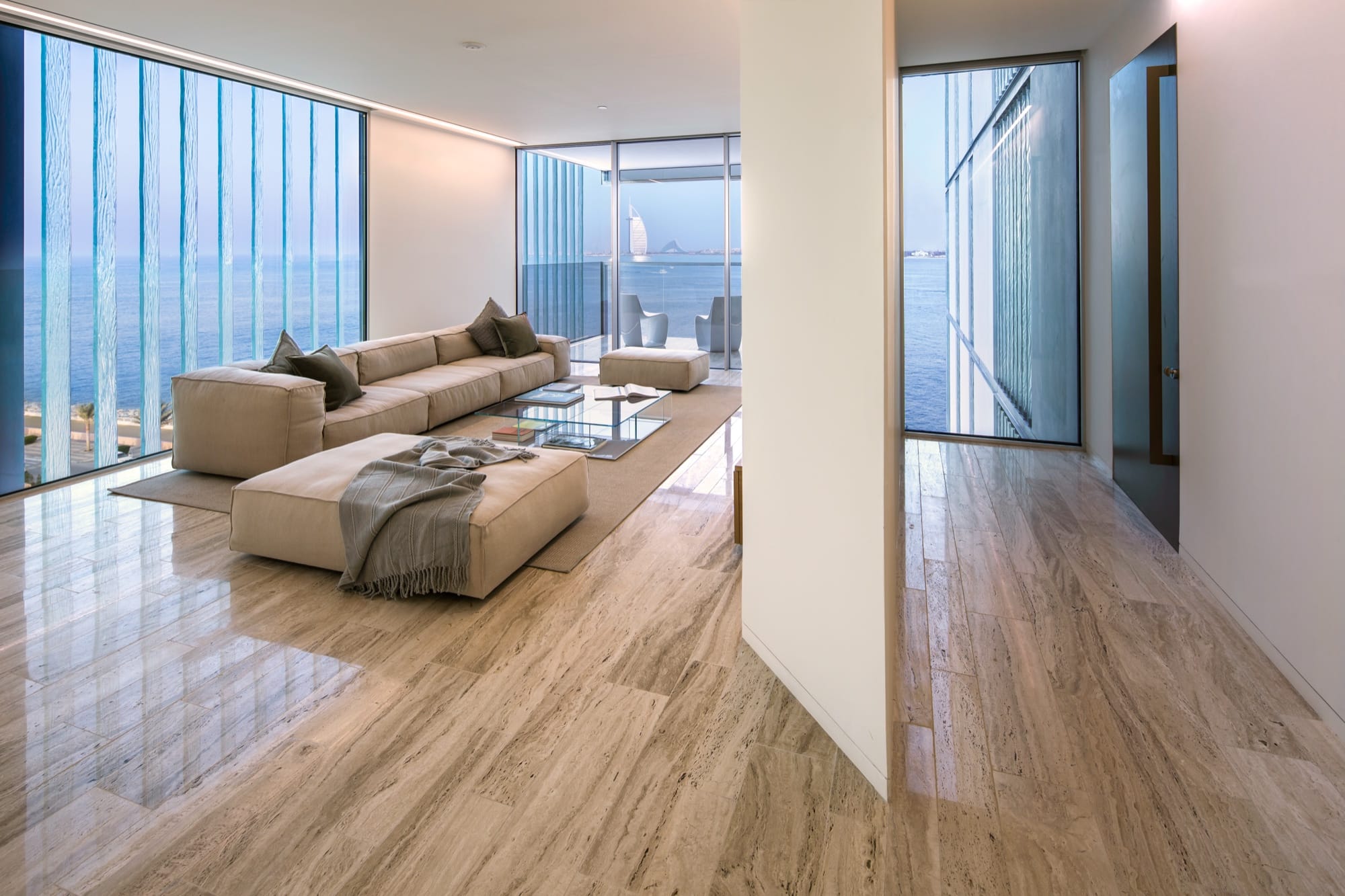
But build they have and their first project – for there are apparently more to come, amongst them a school – is Muraba, a residential tower of 46 apartments and four penthouses in that ultimate Dubai location, the Palm Jumeirah. And yes, it’s right in front of the Burj Al-Arab, too.
Before I begin to sound prejudiced, allow me to explain that reaction. You see, RCR are known for their ability to read a site geographically and historically and demonstrate a preference for building projects that almost disappear. Their Bell-Lloc Winery, for example, is so deeply embedded in the earth, that is reads more like a wine cellar or even a series of crypts than it does a winery. And while their breath-taking museum in Rodez for French painter Pierre Soulages does have more physical presence, it manages to be monumental without being overwhelming. Even when the long, low building morphs into a series of cantilevered boxes towards its rear, because it is juxtaposed against the city’s historic core, it takes on the appearance of a series of 21st century bastions and while it is obviously new, it meshes so perfectly with its surroundings that it comes across as somehow historic.
Both projects demonstrate another RCR signature, a marked preference for weightier materials, like stone, concrete and Corten steel. So what does a practice like that do when they are presented with a space that, quite literally, has no history because a decade ago, it didn’t exist? For that matter, how did an architectural practice from Olot, a town deep in the volcanic landscape of northwestern Catalonia, come to be building in the wide, open expanses of the Arabian Gulf at all?
“It all started with Ibrahim Al-Ghurair getting to know our work and calling us to ask us to take part in a competition in Dubai,” Rafael Aranda explains over the phone in careful, deliberate Catalan. “That moved onto another project and here we are. We had an initial experience in Dubai with a private developer from outside the country that never got built. When Mr Al-Ghurair appeared, the first thing that excited us was that he was a local client, which is what we tend to prefer, because we believe that collaborating with someone who is committed to a place helps a project’s success.”
Indeed, collaboration goes to the core of what RCR (the initials stand for Rafael, Carme and Ramon) are all about. As winners of the Pritzker and to a certain extent as a practice as well, they are unique in that they are a collective effort. Aranda, Pigem and Vilalta are long-term friends and from the start of their careers, they made the decision to work as a trio. You could almost say that they are the architectural world’s answer to Dumas’ Musketeers – all for one and one for all, or that in this case, many hands make light work. “There was an architectural critic once who wrote that RCR was like a jam session,” Aranda says. “We believe in shared creativity and in different points of view. It has given us a more powerful way to move forward, powerful but nevertheless serene and balanced. We have always believed that three would be better than one.” Practitioners of Modernism and possibly even to a peculiarly Catalan form of Modernism, RCR is nevertheless genetically closer to the Japanese tradition exemplified by the likes of Tadao Ando and SANAA than it is to the kind of Modernism practiced by Calatrava or Bofill, utilising a restricted, almost uniform palette of overtly industrial materials.
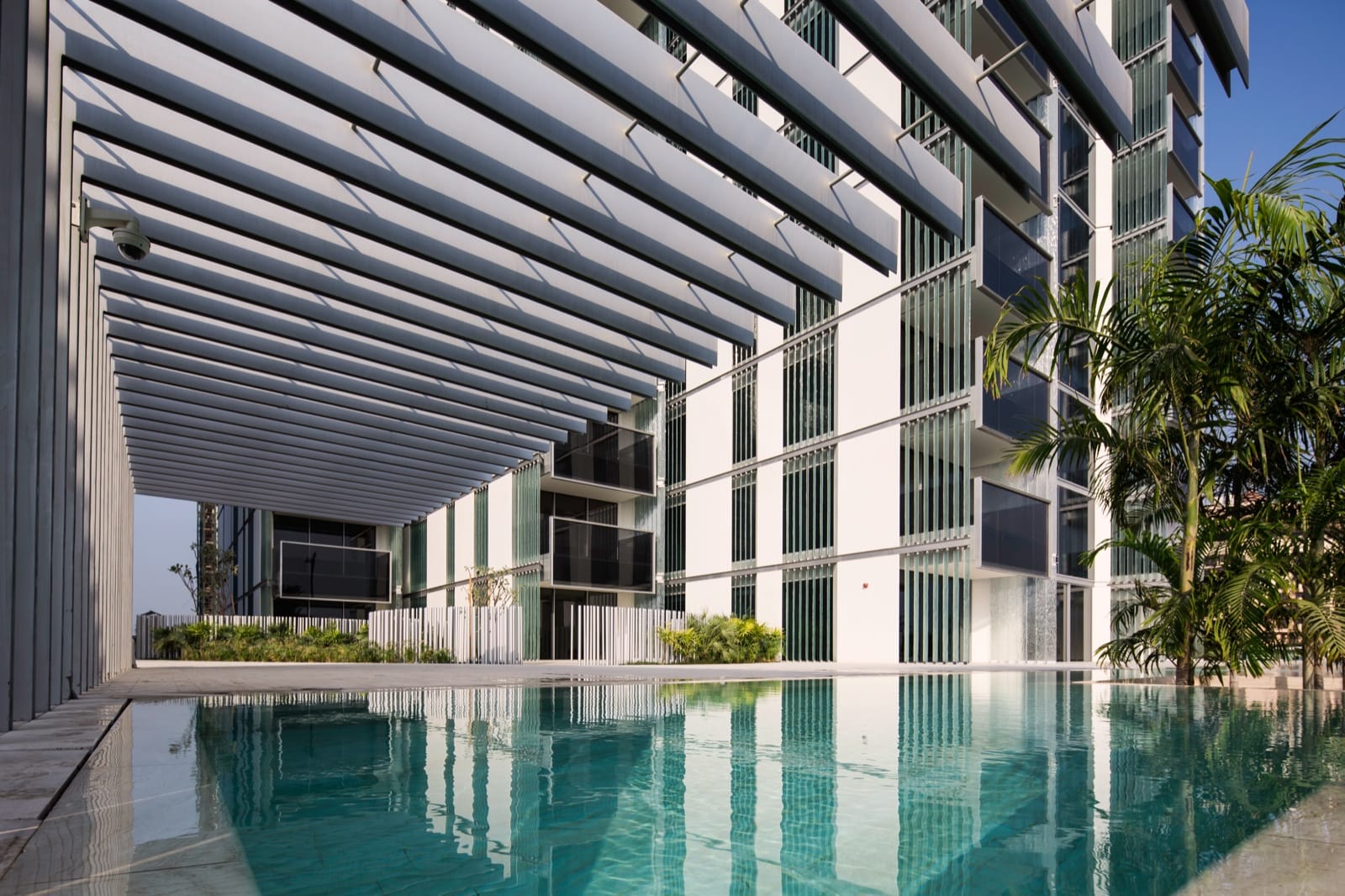
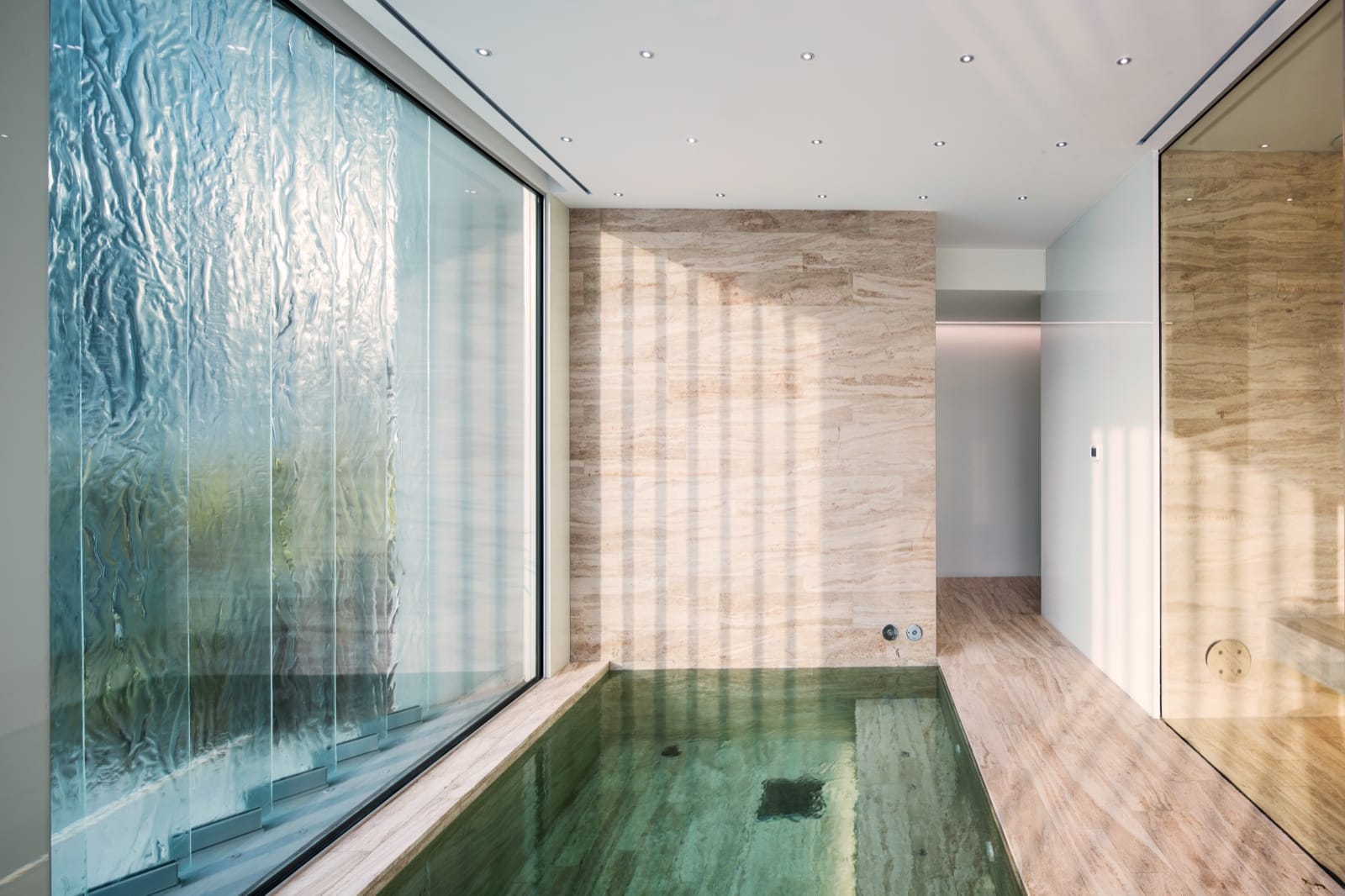
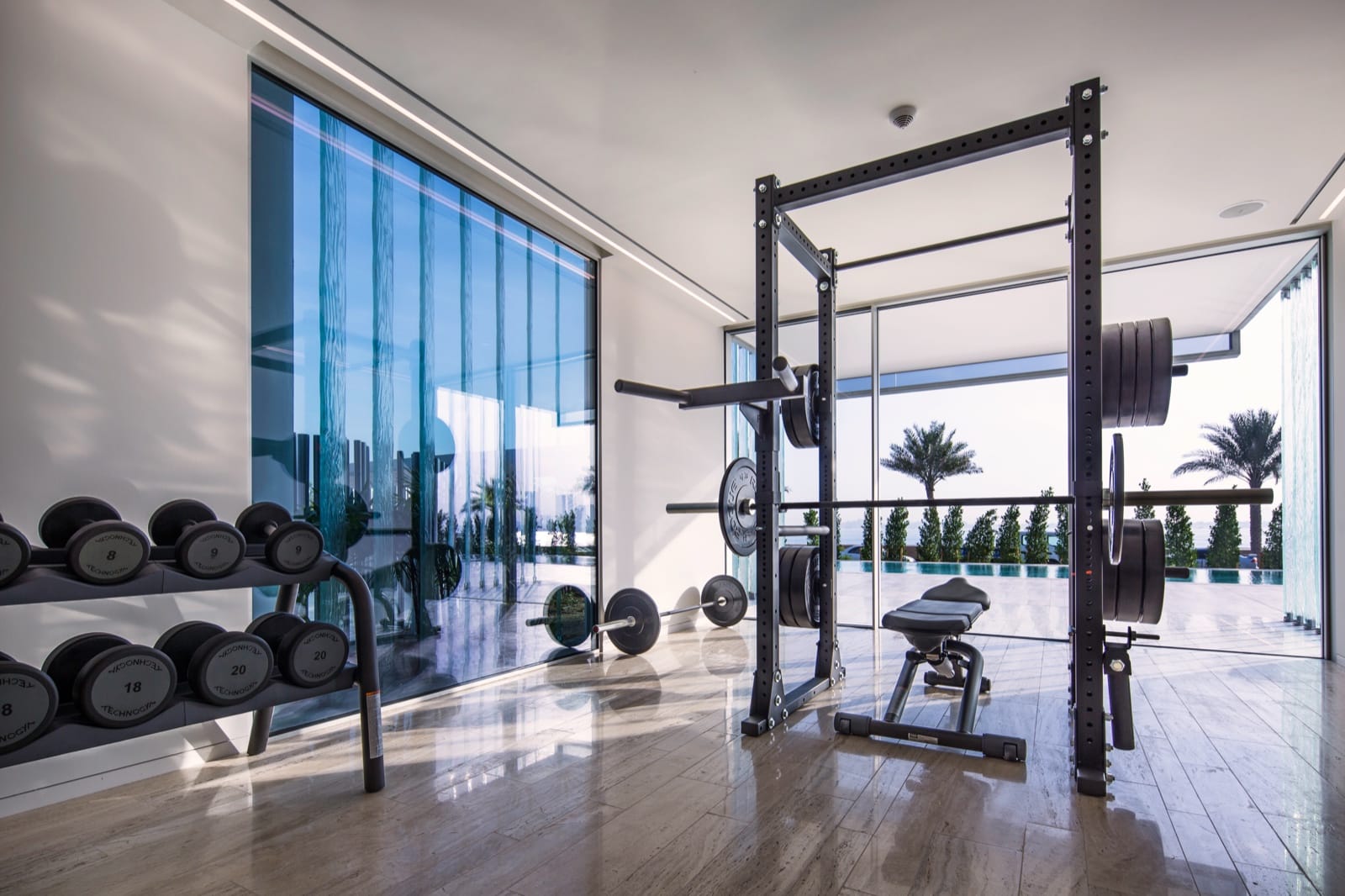
In part, this is what gives RCR’s diverse projects their consistency. It is also what makes Muraba such a visual departure. Comparatively, their Dubai foray is light, an exercise in transparency, albeit a transparency that also takes into consideration the requirements for shade and privacy specific to the region. So while the floor-to-ceiling glazing and open-plan design creates a direct connection with the exterior and opens up expansive views over the Arabian Gulf and the Dubai skyline beyond, a smart system of louvered glass slats also shields residents from the gaze of nearby towers. Interiors are angular and precise, the white walls and marble flooring, edges softened by the light, appear larger in volume than size would suggest.
“It’s true Dubai is a new city with no roots but it is strongly influenced by the traditional architecture of the desert, clean shapes, space, the thickness of walls, the way buildings are oriented towards their insides rather than their outsides, the sheltering and the filtering that the climate and the culture here requires,” Aranda continues. “Maybe Muraba is not influenced by what exists today but it is by what existed before.”
Like any architectural practice worth its salt these days, RCR are used to working internationally and therefore to responding to different contexts. They have a number of finished projects in France and Belgium – notably their 2013 collaboration with Ghent-based practice Coussée & Goris Architecten on the stark, uncompromising Hofheide Crematorium in Holsbeek and the gorgeously horizontal Ecole du Soleil, an essay in the voluptuous possibilities of concrete in Font Romeu in southern France – but it is also true that the overwhelming bulk of their work to date is to be found in the narrow Catalonian triangle formed by the cities of Olot, Girona and Barcelona. Additionally, RCR often talk about the strength they draw from their geographical and cultural origins, all of which had me wondering how easy it had been to translate their vision to such a distant and different part of the world.
“We like to think that our projects make the people who use them, think. We want to encourage reflection, to encourage people to think about the core values of life,” Aranda explains. “So yes, it did take an effort to understand both the peculiarities and the similarities of the location and of local culture and the experience of Muraba was very different but it allowed us to take a different approach because building within such a blank canvas, we had fewer restraints.”
When I mention that this last statement sounds like he’s saying that the project in Dubai may have changed the way RCR works, Aranda’s reply is a qualified assent.
“What we’ve found interesting is the non-permanent aspect of traditional desert architecture, not just buildings but also tents and the way they have of generating space by enclosing emptiness,” he says, referring to the research the trio did before taking on the project. “These are lessons that we are already applying outside of Dubai.”