LONDON & NEW YORK
Cities of edginess
When you’re wondering which of the world’s greatest capital cities to visit, you can’t consider London without contemplating New York, too. NY-LON says it all: the chemistry binding these two cities is legendary. And it’s no wonder: London and New York are the cultural hubs of the Western world, the very epitome of what Western creativity can attain and the height of what it has to offer. Bursting with museums, opera houses and the most decadent of dance venues, both cities come from a long tradition of cultural wealth. From New York’s Metropolitan Museum of Art to London’s The Tate, from the Empire State building to the Shard (currently under construction in London Bridge), from Fifth Avenue to Bond Street, these destinations showcase productivity and are renowned for their inspirational cityscapes. And it’s not only the prestigious heritage of the West’s best that make New York and London stand out – it’s their innovative spirit. Venture down a little side street in London and you’ll discover a vegan café – complete with bamboo chairs and organically sourced ingredients – that will seat only six. Ditto New York, where the walls of small, misleadingly decrepit buildings are resonant with many a spontaneous jamming session.
And the diversity of NY-LON is second to none. Europeans, Latinos, Asians, African-Americans, Aussies – all contribute to the cosmopolitan buzz that constitutes these cities. Variety seeps into the foods too; not for no reason is New York cuisine known above all for being eclectic. London streets are hotpots of Thai curries, gourmet burgers and (especially at Christmas time) German sausages.
Best of all, both NY and LON boast enormous green spaces right in the midst of the cityscape: Central Park and Hyde Park go hand in hand, each boasting coffee shops, museums and water (CP has lakes, HP the Serpentine river) amongst the nature.
STOCKHOLM & VENICE
Cities of Water
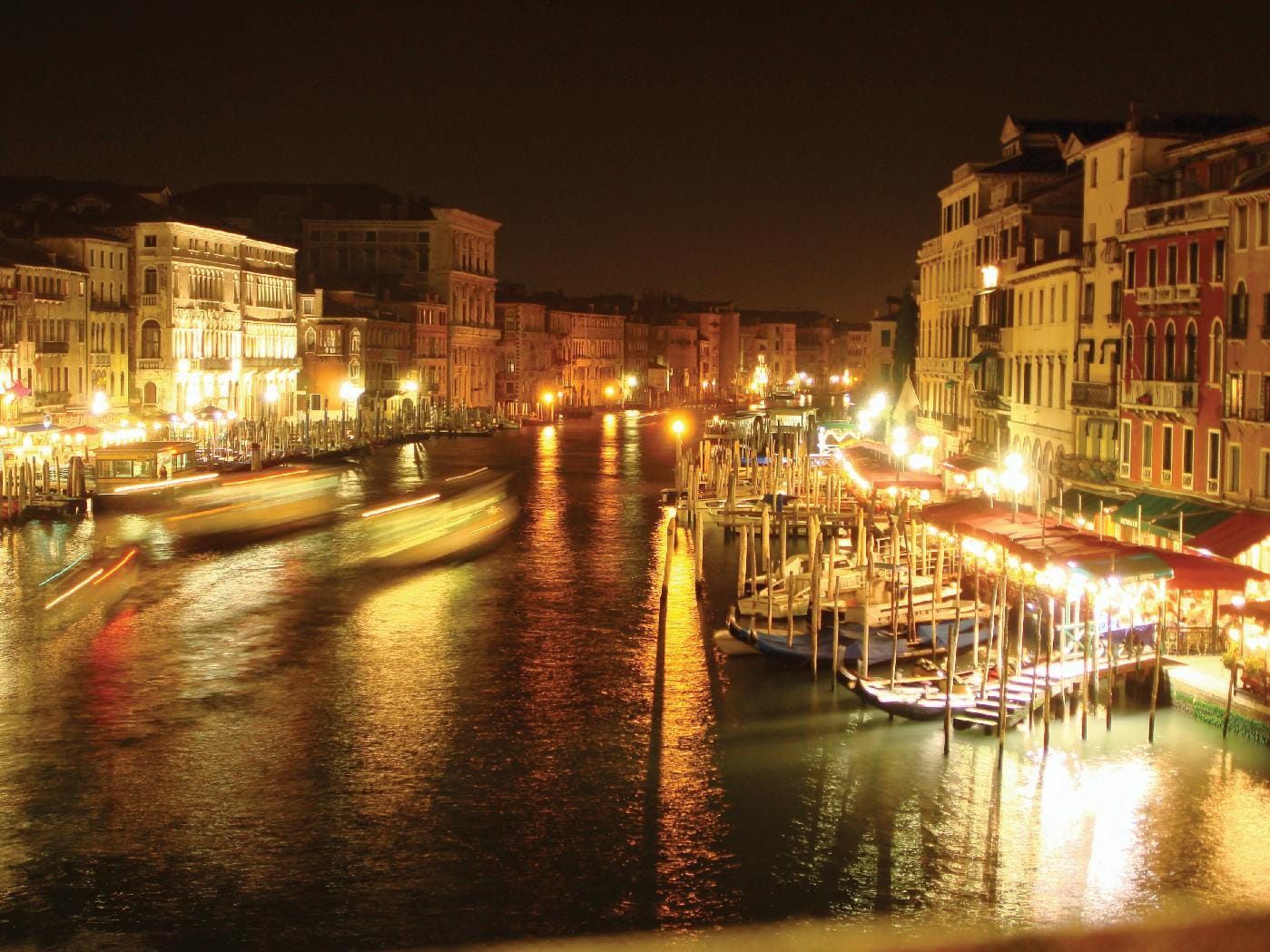
It’s no coincidence that Stockholm is also known as the ‘Venice of the North’. 117 small islands make up Venice, in comparison to Stockholm’s fourteen. Known for its beauty, its buildings and architecture, its abundant clean and open water and its many parks, Sweden’s capital has much in common with that other town of water, Italy’s Venice, which a New York Times article described as “undoubtedly the most beautiful city built by man.” In both cities, the combination of grandiose architecture and clear waters stuns. Architecturally, Venice a masterpiece of the Gothic era – epitomised by structures such as the Doge’s Palace – whereas Stockholm’s buildings are characterised by their modernity.
Stockholm has almost eight months of darkness per year; consequently the summers are exuberantly vibrant in their short-lived splendour. Every April marks the city’s wondrous transformation: a great variety of festivals invite inhabitants for leisurely strolls or energetic dancing. People enjoying waterside or on-water picnics can view enthusiastic swimmers passing by. Rather like in Venice, in fact.
Both of these outdoor cities score highly in the ‘well-being’ stakes; quality of life in each is the magnet that attracts such an abundance of tourists.Venice is famed as a city of romance, architecture and art (think Titian). As yet, it is not as well known for its edgy bars, but those are well worth mentioning. One piece of advice: go to Al Volta bar. Stocking over 1,500 wines, it is a vino lover’s dream – and every label is artistically pasted on the ceiling! For a more traditional Venetian experience, a must-visit is Caffe Florian. Opened in 1720, its views are coveted worldwide and you can enjoy being serenaded by the orchestra as you sip your espresso. Stockholm is a newer entry in the tourist must-see book and, while it receives nowhere near Venice’s 55,000 tourists per day, its popularity has rocketed over the past 20 years. A highly recommended place to stay is the First Hotel Reisen, which was built in the eighteenth century and offers spectacular views of Stockholm’s picturesque alleys and rooftops, as well as its impressive waterways. With over 30 per cent of the city area made up of waterways, boats are already a fixed part of the scenery, it follows that Stockholm is well on its way to claiming parity with Venice’s legendary romantic gondola rides. A boat trip on Lake Mälaren evokes the fairy-tale Venice as strongly as the Italian city itself, an open invitation to island hop and explore Stockholm’s diversity of food, shopping and life in general. Evidently, if it’s fashion you’re after, Venice retains its reign supreme.
HONG KONG & TOKYO
Cities with a buzz
Though Hong Kong is under Chinese jurisdiction, it is Tokyo with which it is most associated in the minds of potential visitors. Both cities boast incredible skylines that more than rival that of New York: with 7,650 skyscrapers, Hong Kong has the largest number of tall buildings in the world and is fast becoming a center for modern architecture. Although Tokyo’s metropolis has been shattered twice in history (most recently by extensive firebombing in the Second World War) its current urban landscape is one of highly contemporary architecture – to which Mount Fuji’s presence in the background creates a striking contrast. Likewise, Hong Kong’s overwhelming urbanity is offset by enormous hills that highlight its agricultural potential. While Tokyo’s cityscape is all slices and clean lines, while that of Hong Kong creates an impression of undiluted hubbub and activity.
The sheer number of citizens inhabiting either metropolis subsequently led to their state-of-the-art public transport systems, most noteworthy the extensive subways, all run with the proverbial Asian exact efficiency. The cities’ characters invoke comparison on other issues just as much. Both are at the cutting-edge of developments, industrial and economic, technological and commercial. For example the Harajuku district in Tokyo is internationally known for the style of its youth and numerous innovations in fashion. The energetic ‘can-do’ atmosphere in Hong Kong appears to be a derivative of its occupational days, when balancing the Western ways and Chinese tradition had to be flavouring every aspect of life.
Hong Kong’s culinary scene is one to behold, for a particularly luxurious experience, Pierre Restaurant at the Mandarin Oriental cannot be outdone. With three-star Michelin chef Pierre Gagnaire at the helm, your culinary senses are in for a most decadent adventure; so too are your eyes. The restaurant is lavished in opulent fabrics, copper plates, crystal chandeliers and convex mirrors. Full length windows complete the splendid setting, providing a stunning view of Victoria Harbour. For sumptuous Japanese cuisine at Michelin-star standard and in magnificently adorned private rooms, Tokyo’s Genyadana Hamadaya offers an authentic experience, complete with Geisha party and traditional garden.
One of Hong Kong’s most loved customs is the nightly multi-coloured neon light show, which deservedly attracts universal esteem. Tokyo’s vivacious Kanda Festivals, however, demonstrate that Japan is not to be outdone in the vibrancy stakes. Taking place biannually, these festivals are incredibly popular, featuring a parade of thousands of people on elaborately and flamboyantly decorated floats.
NEPAL & TIBET
Cities with spirituality
Though Hinduism is the majority religion in Nepal, the country is most associated in the traveller’s imagination with Buddhism, seeing as it was the birthplace of Siddhartha Guatama, who became the Buddha. Having suffered relatively little religious conflict, the country is remarkable for its history of tolerance.
Tibet, home to the Tibetan Buddhism of which the Dalai Lama is the father, likewise has an aura of mythical peace, greatly attracting travellers in search of spiritual enlightenment. The two counties share a border as well as a claim to Mount Everest, so it is unsurprising that you can think of one without calling the other to mind, as well.
Despite their proximity, varying cultural reflections on each country have made for significant differences, also in part due to the influence of neighbouring India. A typical national dish is Dal-bhat-tarkari, not unlike Indian lentil curry. Tibet, meanwhile, favours traditionally Chinese foods, like steamed dumplings and noodles and is also benefiting from China’s economic prowess: the Chinese government recently announced plans to build a Tibetan expressway, introduce free education to all Tibetan rural children, and generally fuel the tiny neighbour’s economy to a degree that should raise the country’s GDP. There is no such structured plan for progression in poverty stricken Nepal, where 47 per cent of the population remains illiterate.
The religious festivals on either side are extremely attractive to tourists. Nepal’s longest and most celebrated is Dashain, a day of victory over demons. Buddha Juyanti (the day of the Buddha’s birth) and Maha Shivaratri (the day of Shiva) are two other important festivals, each of which are marked with dancing, music and the consumption of local delicacies. Tibet’s festivals worship Buddha throughout the year and involve horse races, carnivals, fire and archery, as well as frolicking and prayer. Tibet and Nepal are pulsating proof to the idea that devotion is by no means a reason to frown upon revelry and merrymaking.