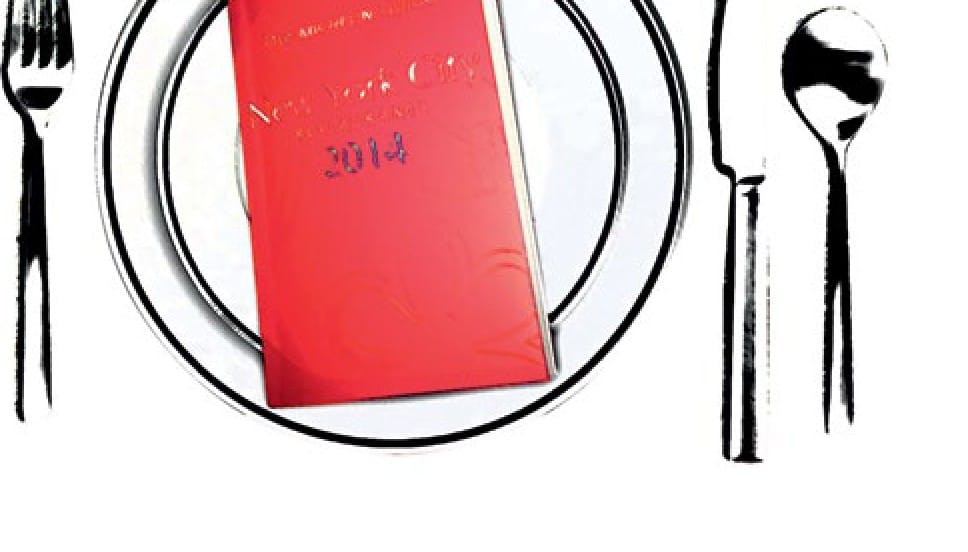
The Michelin Red Guide began life in 1900 as a guide to help drivers find a place to stay and eat as they drove around France. Its subsequent evolution has turned it into the most powerful authority on restaurants and hotels in the world, the ultimate guide for the discerning diner and the ultimate accolade for a chef. The Red Guides now cover Europe, Asia and North America, highlighting more than 45,000 establishments in 23 countries.
So highly regarded are Michelin stars that they can make or break a restaurant. They aren’t easily obtained. Or retained. Inspectors anonymously visit restaurants several times a year to ensure that standards are consistent. It’s not just the food that’s judged either but price, ambiance, view and service as well as other undisclosed criteria.
Getting a restaurant Michelin-worthy requires a tremendous amount of effort and the pressure to maintain standards are immense. No wonder then that having nurtured their first restaurant to maturity and received their star, many chefs subsequently decide to focus on creating less demanding siblings.
Gordon Ramsay is a case in point. He has been awarded fourteen Michelin stars but has also opened several unstarred establishments, amongst them GR BurGR at Planet Hollywood in Las Vegas. Ramsay has embraced the fact that once you can bandy about the ‘Michelin-starred’ prestige, people will come in droves, regardless of whether the restaurant in question has a star or not. Many awardees give in to this temptation to become brands.
Michelin-starred chef Gary Rhodes operates a number of fine-dining restaurants but has also expanded his reach beyond Michelin by opening a series of brasseries in the UK. Chefs are passionate about food at all levels and Rhodes believes his job is not only about pleasing the small percentage of people able to afford a Michelin-starred restaurant but also to offer good, affordable food to the masses.
Both Rhodes and Ramsay have restaurants in the Middle East. Rhodes is in Dubai and Abu Dhabi and Ramsay first opened in Dubai before opening in Qatar. The region is a prime target for established chefs looking to diversify. Rapidly expanding, affluent and ripe for the tapping, as the Middle East is not yet on the Michelin radar, chefs here can experiment freely with new techniques and recipes without worrying that their stars will be in danger.
Winning the Oscar of the restaurant world and the public recognition that you are at the top of your gastronomic game, is every chef’s dream. But this doesn’t mean that every restaurant that follows need aspire to the same dizzy heights. Like the best parents, the savvy Michelin chefs realise that not all their offspring are destined to be as successful as each other. But seen from multi-starred heights, that isn’t necessarily a bad thing at all.