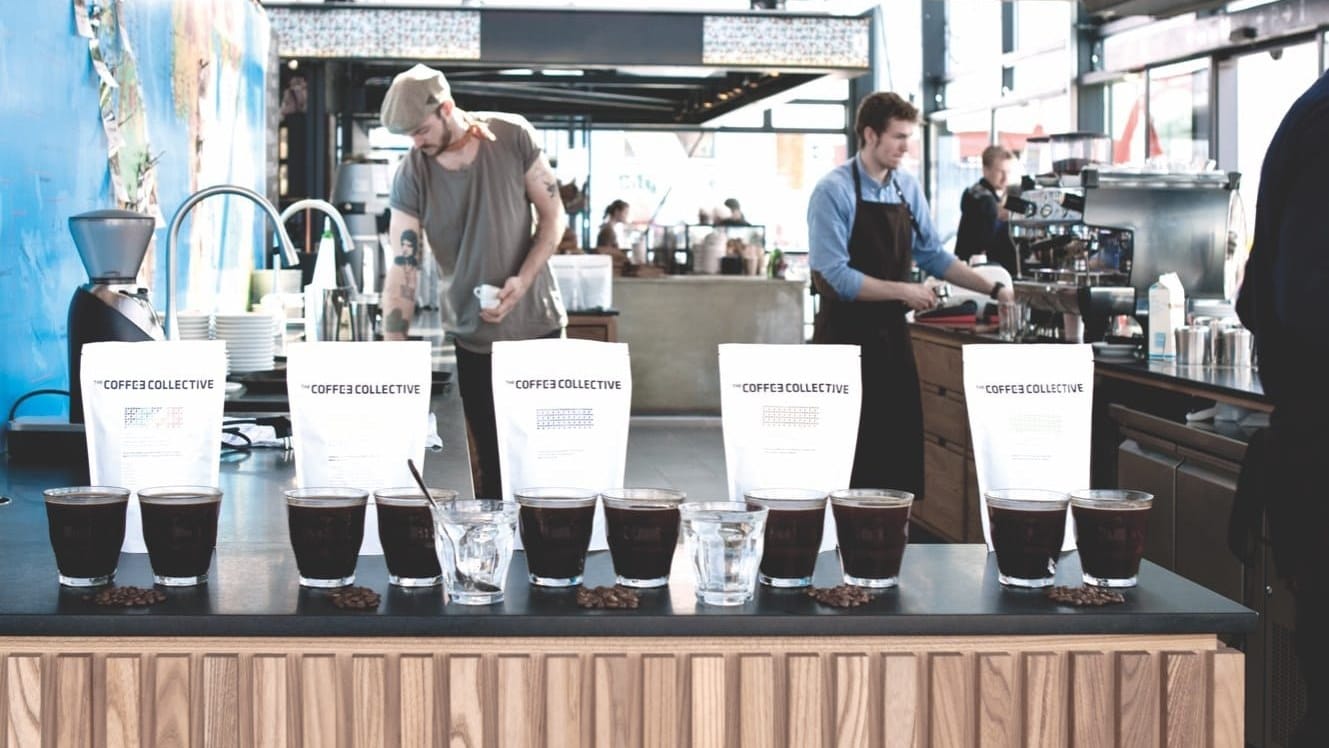
Coffee Collective is instantly recognisable by the colourful map above the counter, which shows where their coffee beans are sourced. This is not the kind of place where you’ll come across heavy, bitter, dark coffee just as it’s not the kind of place you’ll (easily) find sugar – brown or otherwise – which the baristas will tell you “destroys the aroma”. Nor is the coffee ‘made’. Rather, it is carefully crafted and comes in a bewildering variety of distinctive aromatic blends; fruity, tart, smokey and sweet. Just ask Rasmus Gamrath, chief barista and national champion at this year’s World Barista Championship.
But the secret to the success (and to the long, long lines) at Coffee Collective is not just in the perfection of the gourmet coffee served at the counter or in the ultra-advanced filter used to ensure the water tastes perfect. The real secret ingredient lies in the coffee house’s name.
Started in 2007 by four insanely enthusiastic friends, Coffee Collective aims to make a difference not just to the coffee drinkers of Copenhagen but to the farmers that produce the beans they drink. As the price of a standard cup of coffee has risen, the actual price paid to the farmers in developing countries has gone down. To change this, Coffee Collective has funnelled the entire processes of coffee-making – roasting, blending, grinding and percolating – into one unique trading model. By cutting out middlemen, the Collective not only helps ensure the quality of their coffee, they channel the savings back to the farmers.
Coffee Collective pays at least 25 per cent above the minimum fair trade price, buys directly from the same producers year after year and visits the farms annually. This translates into long-lasting relationships that enable the Collective to experiment with new treatment methods at the farm level, allowing for new flavours to develop. The perfecting continues in Copenhagen, where the beans are roasted in small quantities at the Collective’s own roastery. They roast 15 kilos at a time – compare this to the 900 kilos commercial roasteries generally roast at a time and you begin to understand how their coffees smell (and taste) more distinctive.
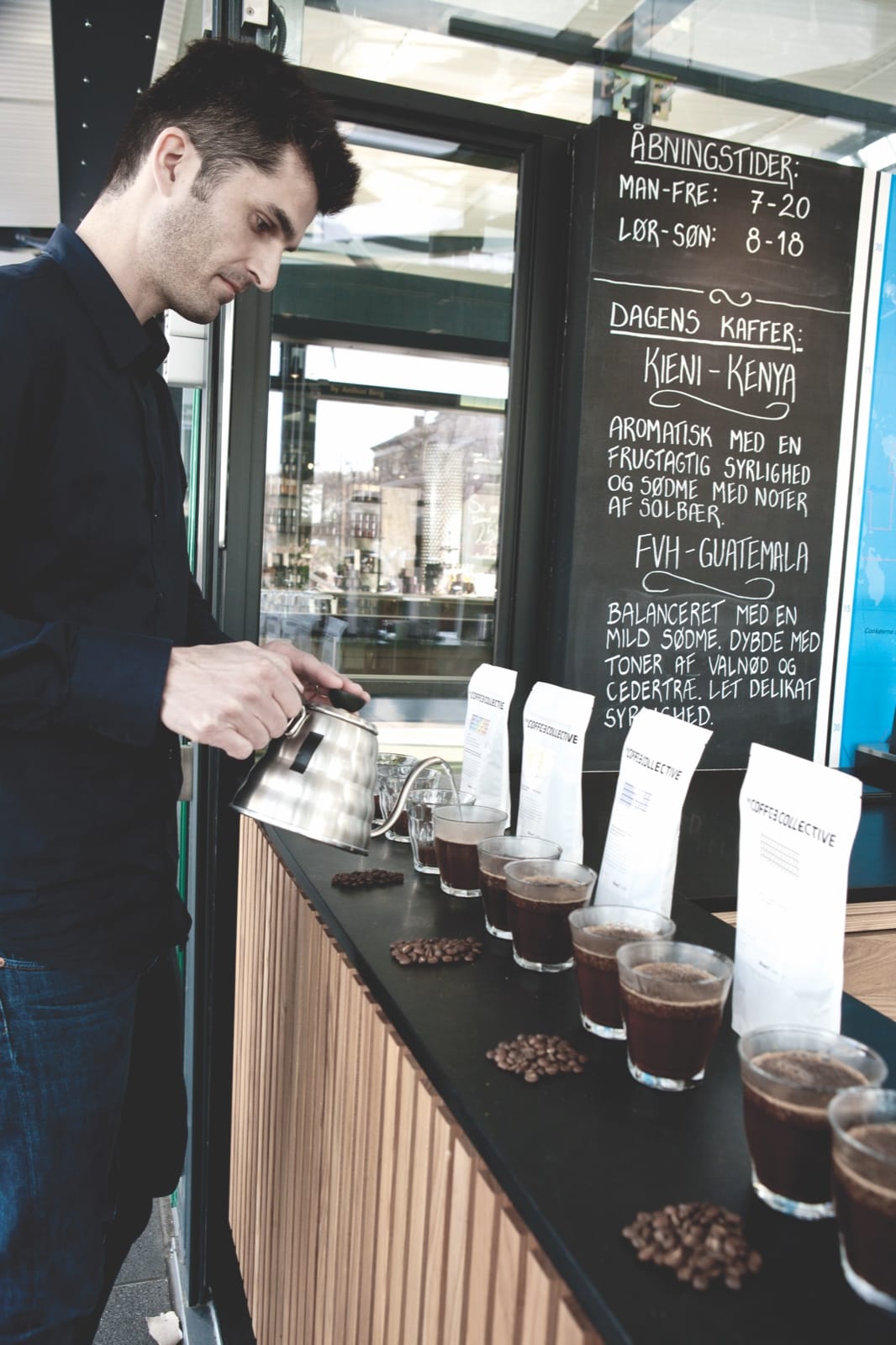
The final and most important step of coffee-making happens in the coffee shop itself, where beans are ground on demand and then brewed with scientific precision. As Gamrath explains, you can have the perfect beans, perfectly roasted and then muck everything up in 5 seconds by brewing it badly.
At Coffee Collective coffee is an education, both of the mind and of taste buds and theirs is coffee that can be enjoyed secure in the knowledge that is doesn’t just taste good, it does good, too. Coffee with consciousness.
WHAT Coffee Collective
WHERE (1) Godthåbsvej / (2) Torvehallerne, / (3) Jægersborggade, all in Copenhagen
WHY Superlative quality, ethical, fair trade coffee with no gimmicks and no tricks, it’s little wonder these guys are called the Scandinavian Kings of Coffee.