When I call Dawid Dawod on a Thursday evening for a chat, he’s out and about taking a walk. Having been blown away by his incredible portfolio, I’m not quite sure what to expect in terms of character, but I do anticipate feeling slightly intimidated. To my pleasant surprise, it’s a friendly, down-to-earth person who’s happier to talk about his family than he is about himself, who answers. Instantly at ease, a friendly conversation ensues about his background, experience, dreams and designs.
Let’s start with some introductory questions, shall we? Your name sounds Arabic yet you live in Sweden, where are you from originally?
I’m from Sweden, but my dad is originally from Iraq, hence the name, and my mother is from Poland. At the time that they met, many Middle Easterners had left their own countries, particularly Iraqis, and moved to the old Eastern Bloc to study. My father was among them and went to study art in the Academy of Art in Lodz, Poland, which is where he met my mother. After graduating, he had to leave Poland, but couldn’t go back to Iraq given that this was the time of the first Gulf War. So he moved to Sweden where my parents have remained ever since.
Where is your home?
I was born in a small village just by the coast, called Västervik but I now live far up north near the polar circle and I’m doing a Masters of Fine Arts in Industrial Design at the Umeå Institute of Design. I run my own company at the same time, but I’d like to finish my degree before turning 24. I’ve grown up and lived in Sweden all my life and consider myself predominantly Swedish.
How did you get into this type of design?
I’ve always been fascinated by products and like to dismantle things, but I was never good at maths or physics, so that kind of dashed my hopes a bit until I discovered products were drawn before they were produced. In other words, I realised I didn’t have to be an engineer to do what I wanted to do and create beautiful things.
Can you take me through your design process a little bit and define how you work? Where do you begin?
I’d like to say I gather my inspiration from nature and that sort of thing, but it doesn’t work that way. It’s a process of interviewing people and seeing what their needs are. Half of it is visualisation and creating beautiful things, but the other half is evaluating what people need and want. Henry Ford said, “If I asked people what they wanted, they would have said faster horses.” But I have to disagree with Ford because product design has to strike some emotion, so you have to actually ask people what they want.
You’ve designed everything from baby strollers to boats, dog sleds, speakers and even jewellery – may I ask if you have a favourite item or something that you aspire to create? What’s your dream design?
I would like to design a spaceship. That’s been kind of my dream. More and more people are planning to go out into space and I think there’s an opportunity for designing interiors in spaceships. Aiming for the stars right? That’s what it’s all about. Of the projects I’ve already worked on, my latest project is my favourite. It’s a mining project with Atlas Copco. I think the world is starting to understand that design can penetrate all kinds of areas, because when a mining company realises that design is important for their product, I think the rest of the world will follow.
Writers sometimes get writer’s block; do you ever suffer a similar kind of creative block? If so, how do you get your creative juices flowing again?
It doesn’t really happen in the industrial design process so much. It’s all very logical and scientific in a way. You find out what people need and you think about it. For me, it kind of solves itself.
Would you like your designs to take a certain direction in terms of anything you’d like to specialise in or will you always keep things wide-ranging?
That’s the beauty of actually being a designer because you can do everything in a way, from a super luxurious boat or a small ring. I want to be as broad as possible. The items in my portfolio are also still in the concept phase and most haven’t yet been put into production. The items that have been produced include the jewellery and the iron.
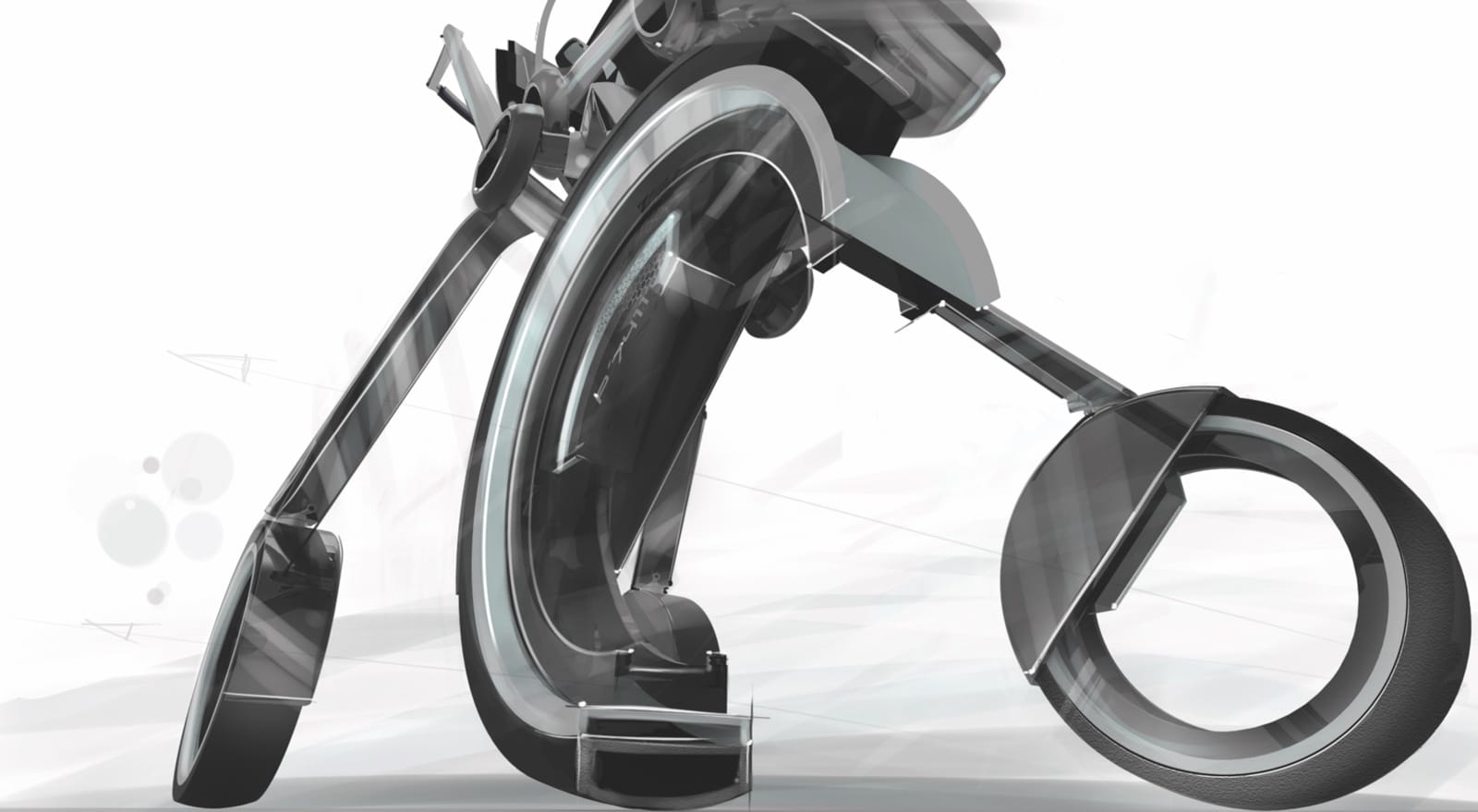
You mention that the baby stroller project is a study in both high-end materials and gender roles among new parents. Can you define what you mean by that and tell me how it featured in your design, if at all?
I got a lot of critique from that project because Sweden is one of the world’s biggest supporters of gender equality. When I did my research for strollers, I realised most were targeted towards women and of course, children, so I saw a market opportunity because there aren’t any masculine strollers out there. As such, my idea was to create a stroller that would appeal to men, who could keep their luxury cars instead of having to trade them in for larger ones due to needing space for a bulky stroller. I think this is an unfulfilled market segment. In my opinion, both partners are in charge of the child in a couple, so I’d say I’m actually supporting equality. As a designer, you can also act as a politician in that sense.
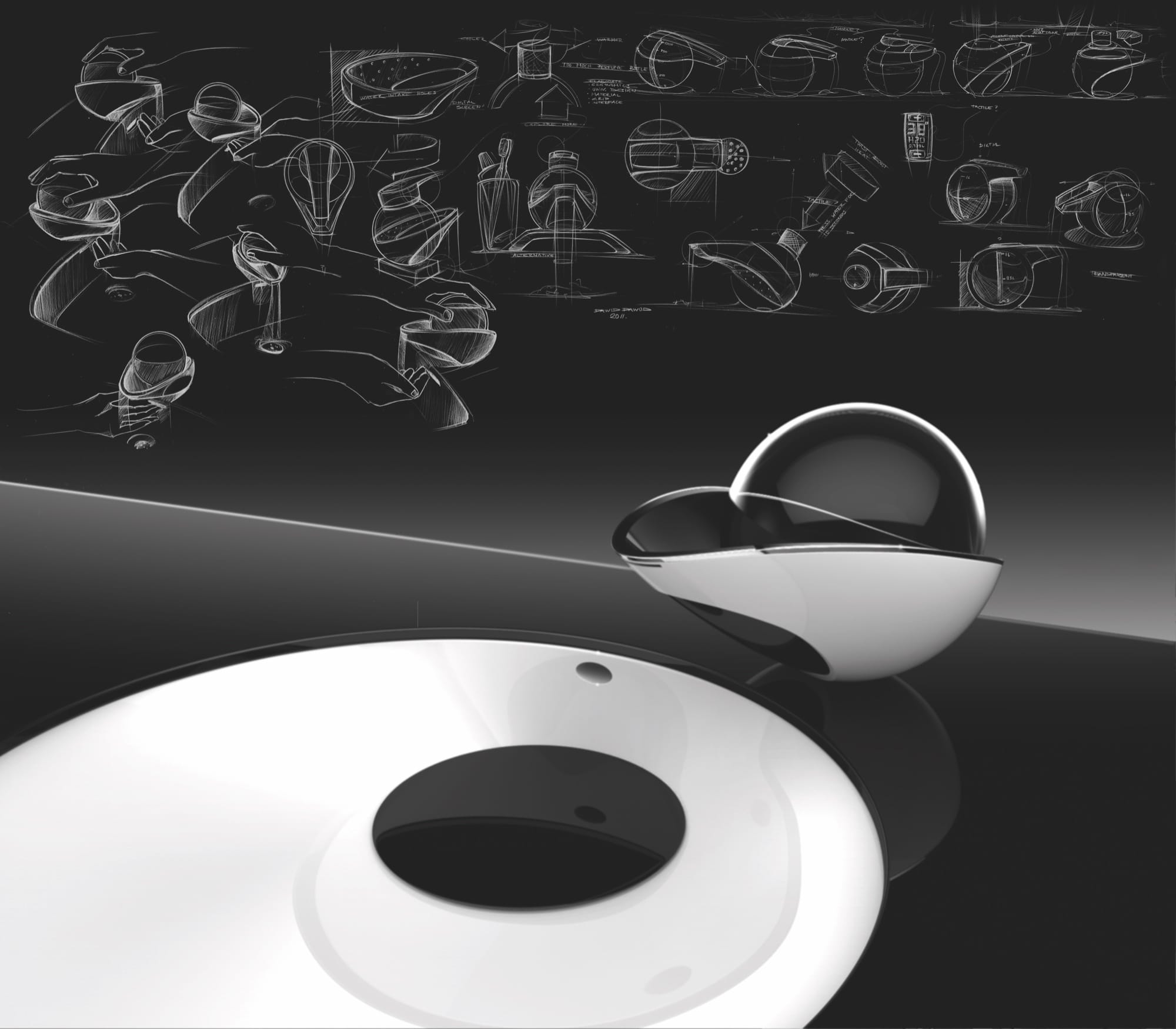
You also created the tap that raises awareness about the precise amount of water consumed. How did this idea come about and why?
The tap is actually going to be exhibited at the Nordbygg Trade Show in Stockholm at the end of March. It’s a show featuring items for home interiors, so that’s exciting. The project was a collaboration through my school with a Swedish faucet producing company. They wanted a new approach to faucets and it was up to me to come up with something, so that’s how the idea came about.
This is obviously an eco-friendly design concept, does creating things that are environmentally-aware feature a lot in your work and is it a direction you’d like your work to take on?
Of course, I think you have to think about this as a designer nowadays, it’s kind of an obligation. You can’t get away with not taking the environment into account.
I love your Polar Journey dog sled. Can you tell me a bit about this sled and how you came up with its design? How does it differ from other dog sleds?
This project is still in the concept phase, but it’s one of the first projects I did and it connects to my background because I actually have two Siberian Huskies. I love nature and the Nordic climate, so it feels like home. Sleds have looked the same for the last hundred years, so my sled introduces new materials and collapsibility options as well as providing an opportunity to use the sled for shelter during snowstorms and cold weather.
What are your hopes or aspirations for the future? And what would you consider to be your ultimate achievement?
I’d like to become as big a designer as Johnny Ives from Apple or maybe even collaborate with him because that guy sure knows how to do design!