Writer: Nadia Michel
Unbuilt
The 16th edition of the international Venice Biennale of Architecture proves we live in a time when not building is just as important as building, and the Lebanese Pavilion drives that point home.
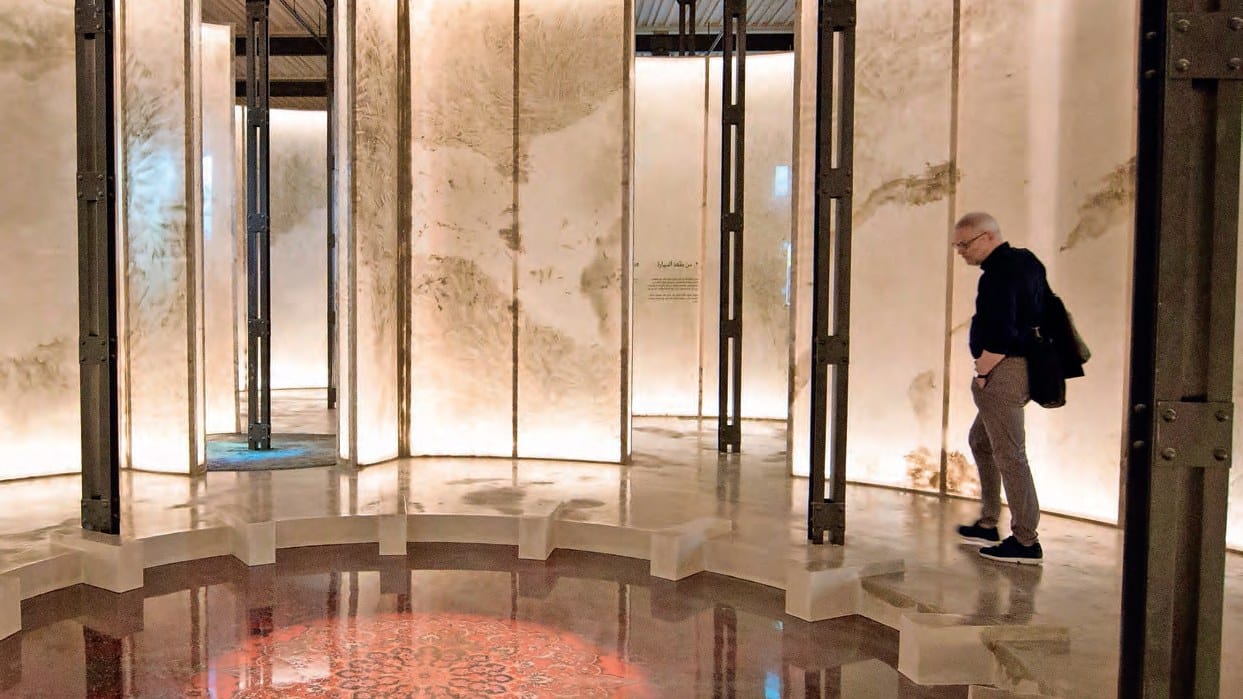
Architecture is about building, but it’s also about what is not built. At least that’s the brain-teasing premise behind Lebanon’s first entry in the Venice Biennale of Architecture, which features the work of six photographers sharing their point of view on the country’s unused and forgotten land.
It’s no secret that Lebanon (at 10,452 square kilometres with a population of over 6 million) is one of the most densely populated countries in the world (22nd in fact, of a total 233 countries, according to a UN list that presumably takes into account the 1.5 million Syrian refugees and half million Palestinian refugees currently situated in the country). It’s no wonder then that Beirut-based architect Hala Younes came up with a pavilion theme that puts the emphasis of what’s between all the buildings.
The problem of space is of course a global one, and it’s interesting to note that the designated theme at this year’s Biennale (which runs from May 26th to November 25th at various venues throughout Venice) is actually ‘Freespace’, and therefore of a similar premise. “‘The Place that Remains’ was something that was prepared before the Biennale came up with their theme,” says Younes, the curator of Lebanon’s maiden pavilion.
The images on view include aerial views of the Beirut River, which is strategically positioned as the natural extension of Greater Beirut, a territory that includes some of Lebanon’s most precious and threatened places, like the Metn Pine forest. That land, which was under Syrian occupation until 2005, has remained largely untouched due to the ongoing presence of unexploded mines. “We have to assess the resilience of our territory – its capacity to shelter us. We have to evaluate the place that remains, the place that would still host our dreams and expectations,” explains Younes in her curatorial statement.
But the ‘Freespace’ premise takes a slightly broader approach. “It’s a word that describes a generosity of spirit and a sense of humanity at the core of architecture's agenda,” according to curators Yvonne Farrell and Shelley McNamara. It also refers to the void, the opportunity that free space presents, as explained by the exhibition’s President, Paolo Baratta, who says it was conceived “with the aim of promoting the ‘desire’ of architecture”.
Here’s to hoping that Lebanon’s ‘Space that Remains’ will not spark any plans for further land exploitation among its architecturally inclined visitors.