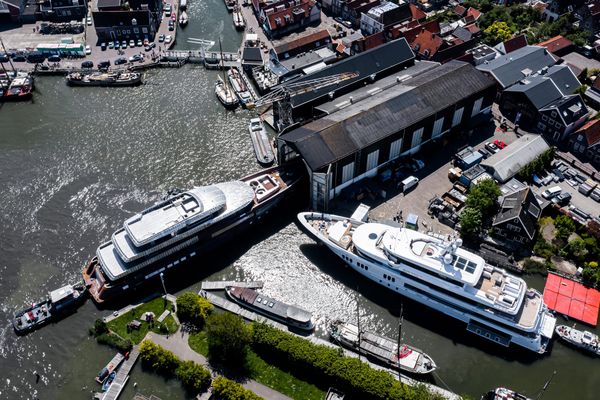
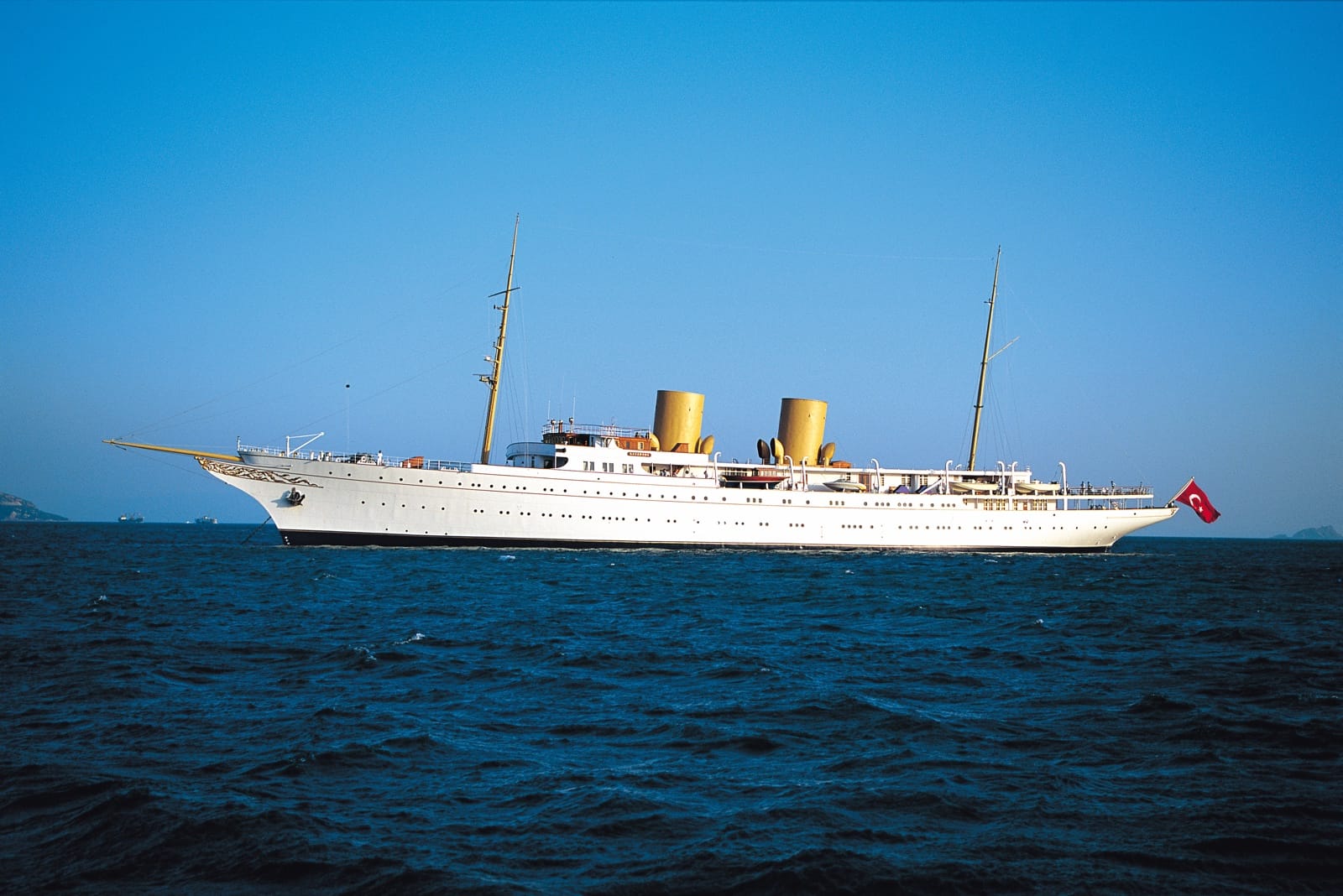
A Savarona is more commonly known as a long-necked black-feathered African swan. It is also the name of one of the most beautiful and most sizeable historic ships currently afloat. The yacht’s story began when she was commissioned in 1931 by American heiress Emily Roebling Cadwalader for the considerable sum of four million USD (55 million USD by today’s standards). Cadwalader, the granddaughter of famed engineer John Roebling who built the Brooklyn and Golden Gate bridges, had previously owned two other Savaronas but finally settled on this, the biggest.
Upon completion the Savarona was a phenomenon not just in terms of engineering, effort or style but because it was the largest privately owned ship in the world. There was one thing, though, that Cadwalader just wasn’t willing to spend on and that was access to the North American waters. Fearing potentially confiscatory import duties – a price even an heiress deemed too high – the Savarona never entered the waters of the United States of America. Obviously not content with being restricted to the Mediterranean and African seas, the heiress put the megayacht up for sale after only seven years of service. In the end, it was bought in 1938 for a cut price of 1.2 million USD.
The buyer was the Turkish government and the grounds for the acquisition were quite comical. Historical records show that the order for the purchase was given by Turkish President Mustapha Kemal Atatürk while he was hosting the then British King, Edward VII aboard the country’s state yacht, the Ertugul. Their conversation was suddenly interrupted by a bizarre noise followed by a billowing of black sooty smoke escaping from the funnels of the steam ship, only to lay a layer of dirt on the King’s fine white flannels. Embarrassed to no end, Atatürk immediately ordered the Ertugul be scrapped and an appropriate replacement found. Following the timely and reasonable deal, the Turkish flag was hoisted on the Savarona in Southampton in March 1938 before undergoing two months of minor refurbishments.
The founder of the Turkish Republic took great pleasure in his new possession. By his own account, he waited for its arrival in Istanbul with the expectancy of a “restless child.” Sadly and unbeknown to anyone, Atatürk was terminally ill and would have very little time to enjoy his new yacht. During the six weeks that he spent on the Savarona, cabinet meetings were held on board and world leaders entertained; but on November 10, 1936, he was taken by stretcher from the yacht to Dolmabahçe Palace, where he died.
Following Atatürk's death, the Savarona passed to the Turkish Naval Authorities but she did not sail again until after the Second World War, acting as a training ship until 1979 when a raging fire irrevocably damaged and almost completely destroyed the vessel. She remained thus for ten years until the decision was taken to scrap her. Fortuitously, wealthy Turkish businessman Kahraman Sadikoglu obtained a last minute stay of execution and agreed to a lease of 49 years from the government. He then set about the arduous task of restoring the Savarona to her former glory, employing an impressive 425 skilled maritime workers to achieve this feat.
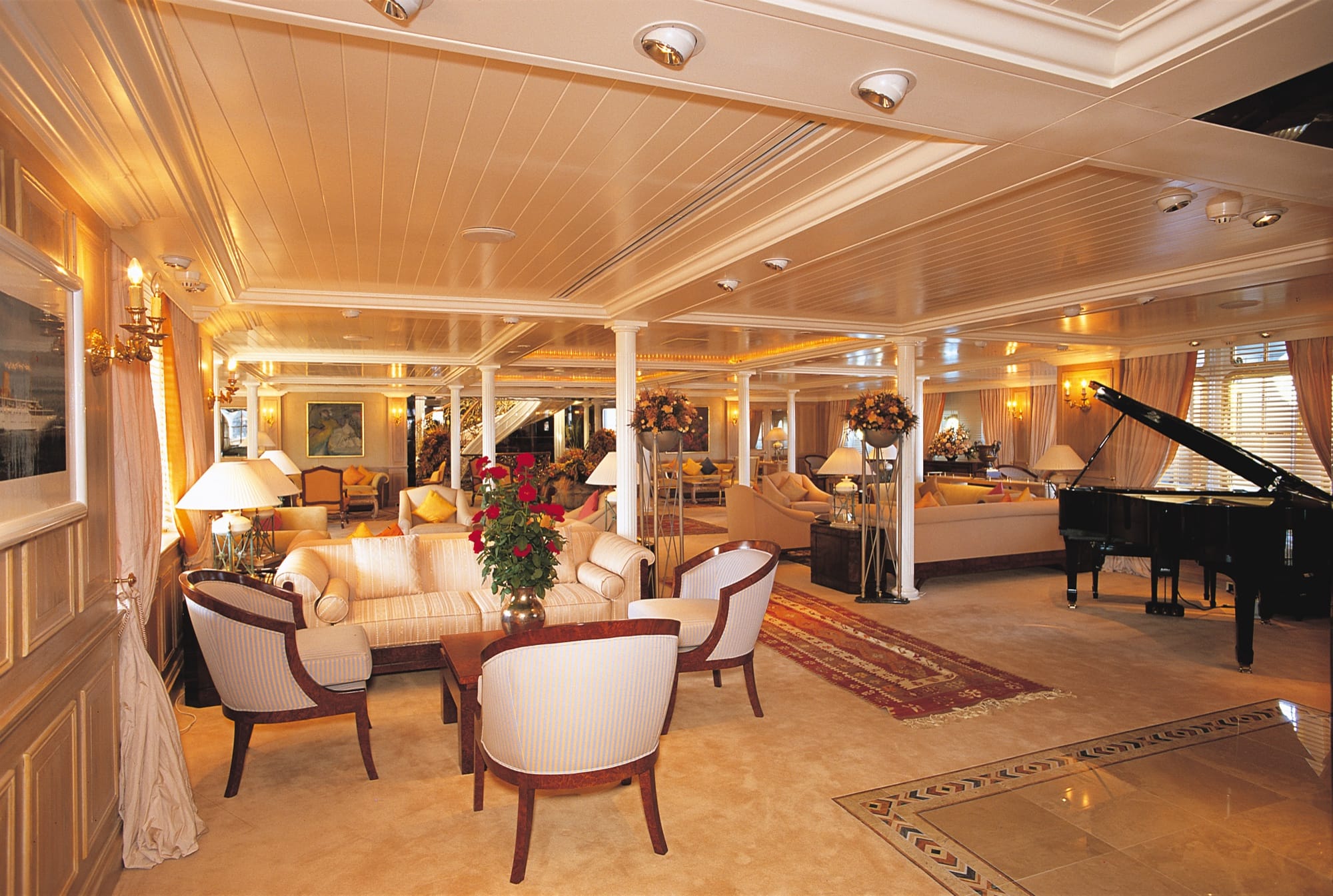
Undertaken in Tuzla, Turkey, the project took three years and millions of dollars to complete. A new interior designed by Donald Starkey resulted in breathtaking grandeur. A lavish brass staircase, one of the few remnants from its bygone era, was brought back to life, now measuring 86 metres in length and extending from the shelter deck to the upper duck and taking 20 traditionally trained metal craftsmen to form and hand-beat the staircase into its original shape.
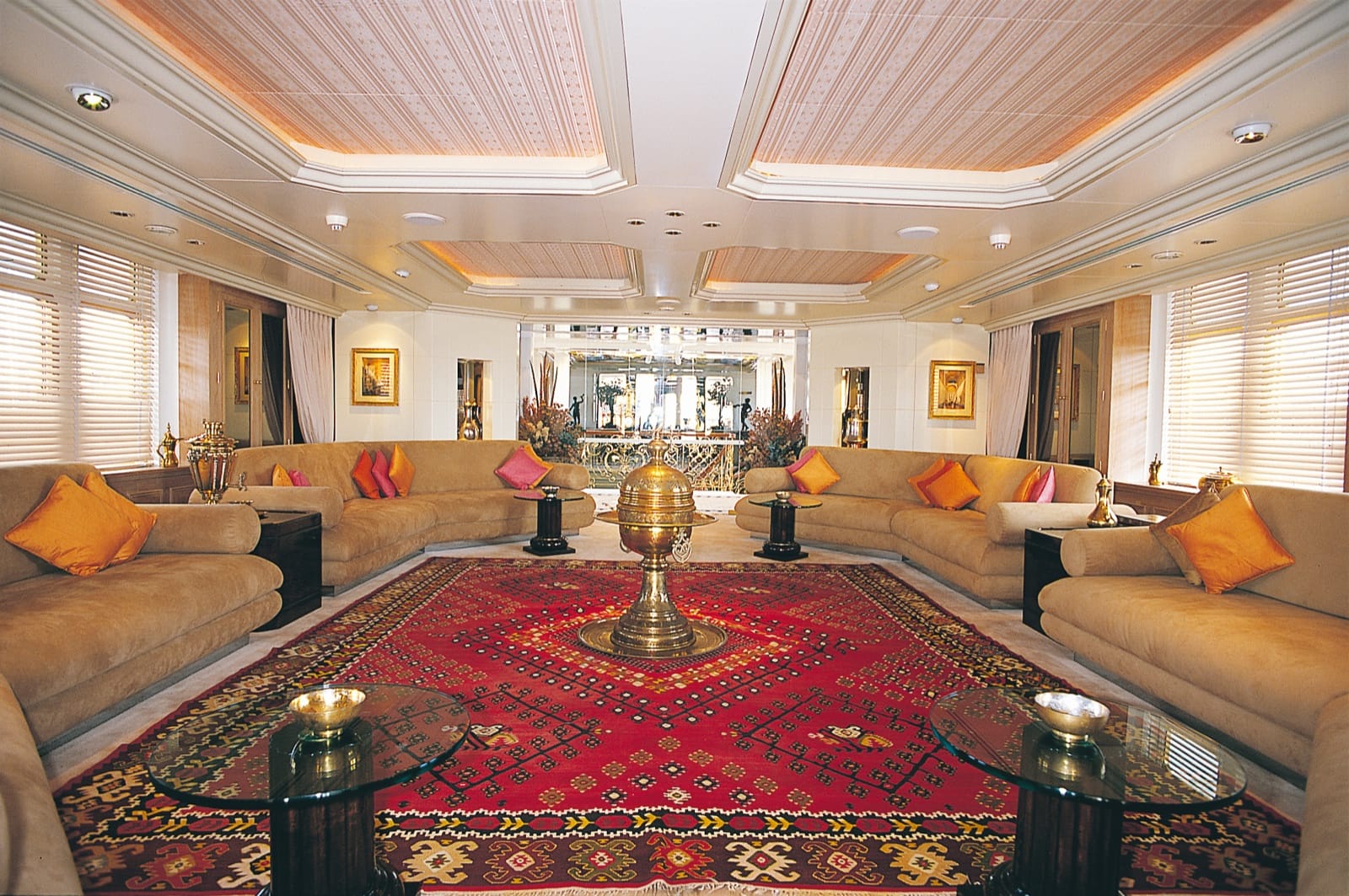
What couldn’t be recreated in style was done so in feel. The Savarona has retained its sense of high-seas splendour. Room for crew (44) outnumbers that for guests (34) ensuring pampering and top-quality service. A movie theatre with an archive of 2,500 films plus another just for computer games will help you wile away the hours; that is, after you’ve spent the day by the large swimming pool and taken time to relax in one of two Jacuzzis and sauna rooms.
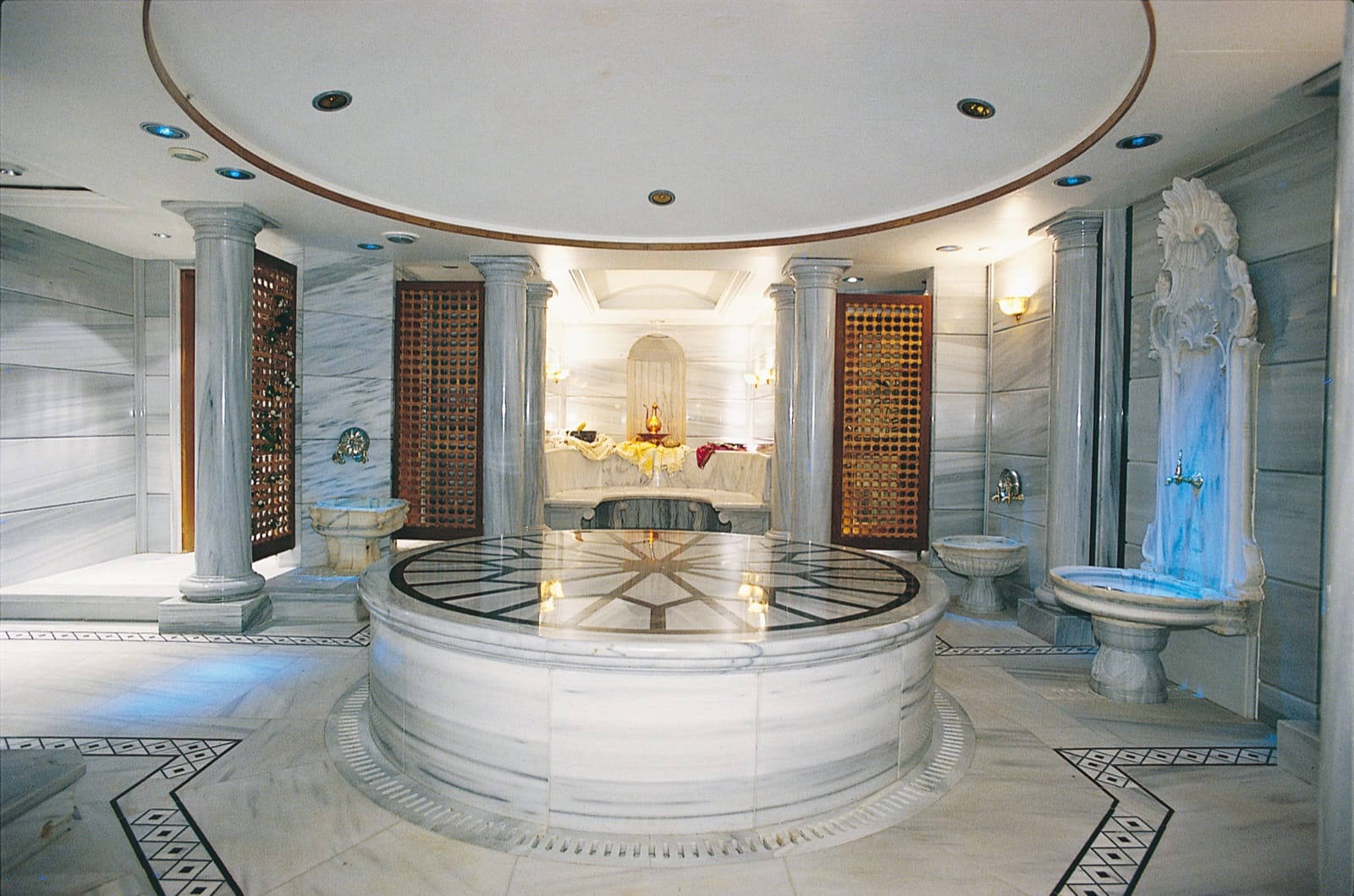
But probably a favourite will be the floor-heated Turkish bath facility which was ingeniously built to compensate for the Savarona’s original weight. In a classic case of technology catching up with the times, the mammoth steam engines fired by heavy oil were replaced by two lightweight Caterpillar diesels. With 260 tonnes to offset, Starkey decided to fit the interior with 260 tonnes of marble of which 65 tonnes were allocated to the palatial Hamam.
There are very few ships that have stood the test of time as well as the Savarona. What began as the fetish of one woman has opened up dreams of luxury cruising for many for 475,000 USD a week. A small amount to pay for such an escape into history.
SPECIFICATIONS
Length - 446ft / 136m
Beam - 52ft 6in / 16m
Draft - 20ft / 6.1m
Engines - 2 x 3,600hp
Cruising Speed - 15.5 knots
Fuel Consumption - 650 l/hr
Cabins - 17 staterooms
Contact
Edmiston Yachts
Dubai, UAE
Tel +9714 367 1249
HYPERLINK "http://www.edmistoncompany.com" www.edmistoncompany.com
HYPERLINK "mailto:Dubai@edmistoncompany.com" Dubai@edmistoncompany.com