From the cyber humans conceived in Ridley Scott’s Bladerunner to emotionally intelligent robot dogs, as we think it so we make it. Well, almost.
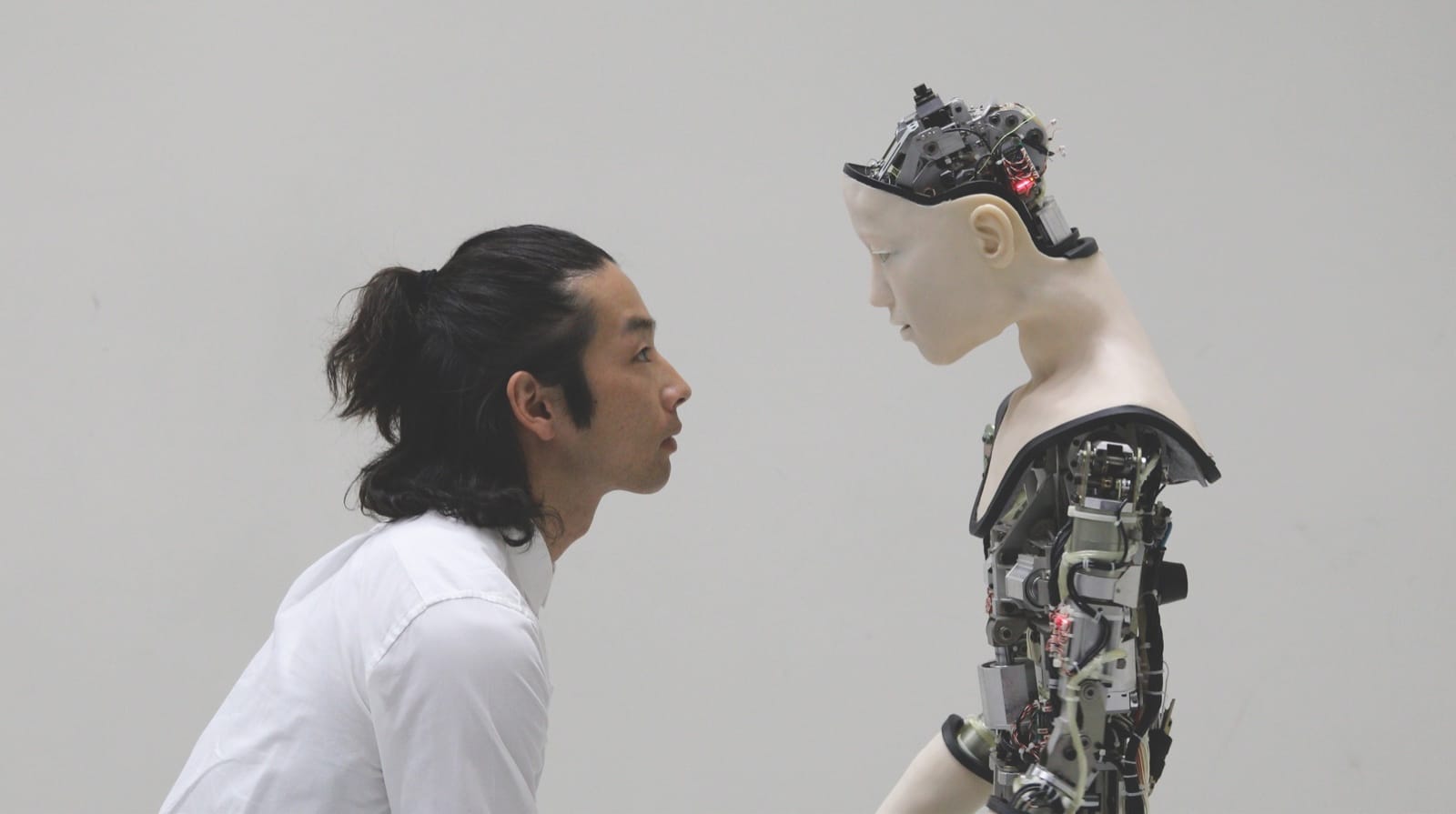
The Barbican in London’s latest exhibition, ‘AI: More Than Human’, suggests that we are not that far away from fully functioning artificial intelligence and presents an incredibly arresting survey of the creative and scientific developments in AI up to today, and the evolution of how it came to be.
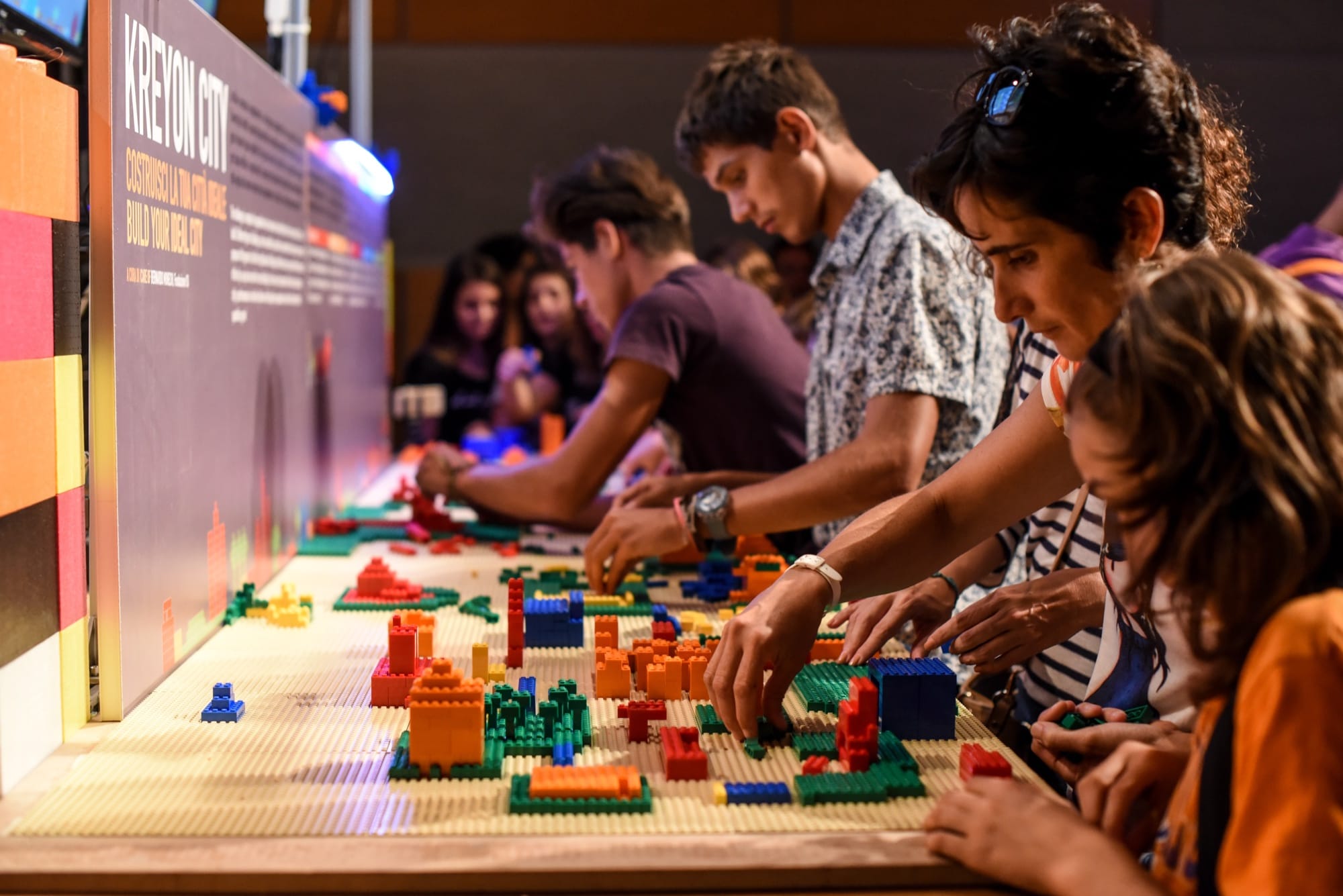
It’s a must see exhibition not just because of the subject matter but also because of the wonderfully immersive art installations and the way one can interact directly with them to experience AI’s capabilities first-hand.
The show doesn’t provide the answers to the big questions: What is consciousness? Will machines ever outsmart a human? How can humans and machines work collaboratively? But it does make us ask them, think about them and consider where we might end up in a not too distant future.
Spread through The Curve gallery and into the different levels of the building, as well as the pit room in the basement, you wander (and wonder) through sections on the history of early AI, exploring Japanese animism philosophy and the Eastern European myth of the Golem to the early innovators in computing and coding that led to where we are today: pioneers Ada Lovelace and Charles Babbage; Claude Shannon’s experimental games; Alan Turing’s groundbreaking efforts to decipher code in World War II; Deep Blue vs. chess champion Garry Kasparov.
Indeed, imagine that it was Lovelace back in 1844 who first proposed a mechanism to construct ‘a calculus of the nervous system,’ a mathematical model of how thoughts, feelings and intelligence arrive in the brain.
Yet it is when we then get to interact with the machines that ‘AI: More Than Human’ truly comes into its own. We get to play with Sony’s 2018 robot puppy, Aibo, who uses its database of memories and experiences to develop its own personality – quite incredible when you think about it, it’s so close to being a real dog. There’s a fascinating piece by artist Mario Klingemann entitled ‘Circuit Training’ which lets you take part in teaching a neural network to create a piece of art. The AI captures my image, creating a data set from which I can select the visuals produced by the network to teach it what I, a human, find interesting. The machine then constantly learns from this human interaction to create an evolving piece of live art.
Not all the art pieces work as art, however. The fascination is more in the way the AI used by some of the artists sees images, understands language and moves, as opposed to the final production – here perhaps Anna Ridler’s ‘Myriad (Tulips)’ and Alexander Mordvintsev’s interactive computer programme ‘DeepDream: The Artificial Pareidolia’ fall slightly short. Where one can be blown away and interested on a practical level is the section on AI’s capability to improve commerce, change society and enhance our personal lives – where AI’s real-life application in fields such as healthcare, journalism and retail is and will in the future continue to have great positive effect. Its real-life application in fields such as a war are rather more chilling – the display on autonomous weaponry, for example, instills nothing but fear.
Some parts of the exhibition step slightly away from AI though remain mind boggling for the average human like myself. Imagine if you will DNA – our genetic code – as a tool for storing data.
The band Massive Attack mark the 20th anniversary of their landmark album Mezzanine by encoding the album in strands of synthetic DNA in a spray paint can – a nod towards founding member and visual artist Robert del Naja’s roots as the pioneer of the Bristol Graffiti scene. Each spray can contains around one million copies of Mezzanine-encoded ink. The project highlights the need to find alternative storage solutions in a data-driven world, with DNA as a real possibility to store large quantities of data in the future.
The best sections of the ‘AI: More Than Human’ for this tech geek are where we interact with artificial intelligence. It’s here I am reminded of the power art retains to explain and sublimate complexity. Take art collective teamLab’s interactive digital installation ‘What a Loving and Beautiful World’ in The Pit, an immersive, ever-changing environment populated with Chinese characters and natural phenomena triggered by visitors. In a dark room the walls display tumbling Chinese script transmitted via projectors, and by walking towards them, touching them, you can make the characters burst into life creating sky, trees, rainbows, clouds, grass and light, hundreds of new worlds in which no two moments are ever the same.
At the entrance to The Curve, digital art and design collective Universal Everything have created a new installation, ‘Future You’, where you interact with an AI version of yourself – what’s not to love? A massive digital avatar mimics your movements onscreen. On my visit the avatar had already evolved from the primitive, childlike form with which it began learning new ergonomic abilities from everyone who’s interacted it so far.
I also enjoyed the two pieces closing the exhibition: Lawrence Lek’s open-world video game 2065 and artist and designer Es Devlin’s PoemPortraits. The former has you sit in front of video screens as if in an arcade playing the role of an AI and stroll through a speculative future, when advanced automation means that people no longer have to work and can spend all day playing video games. Art is indistinguishable from gaming. The latter is a social sculpture that brings together art, design, poetry and machine learning where you step into a photo booth, donate a single word to the piece which will be instantly incorporated into a two-line poem generated by an algorithm trained on 20 million words of poetry. This poem then forms the photographic flash that illuminates each unique PoemPortrait.
Where then does ‘AI: More Than Human’ leave us? Awestruck? Tick. Enlightened? Tick. And perhaps more than anything else it leaves that eternal question on the human condition to which our answer is always ever-evolving: what really is it that makes us human?
AI: More than Human is at the Barbican Centre, London, until August 26th