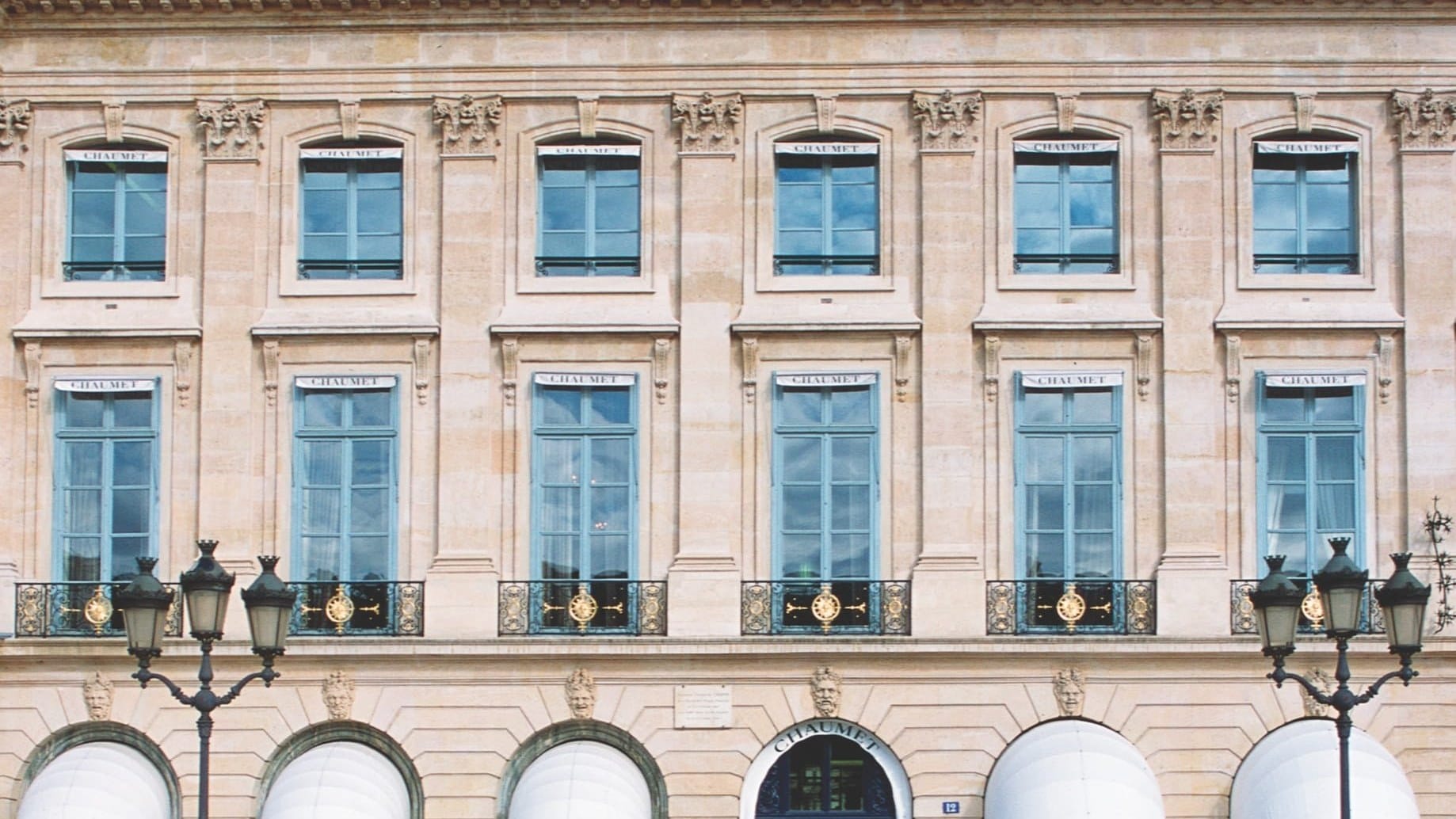
Thierry Fritsch, CEO of storied French jewellers, Chaumet, arrives late for our meeting. For all the right reasons. “The sun is back, life is beautiful, Paris is great, Been a crazy day. But I am happy to be with you now,” he says settling into his office overlooking Place Vendôme.
We’re in the Chaumet’s headquarters and directly below, in one of the grand salons, a small selection of the house’s latest high jewellery collection, Lumières d’Eau, is on display for the first time and by appointment only. Most of the collection is still in the workshop but the twelve sets, or parures, comprised of 53 pieces in all, will be ready for the September opening of the Biennale des Antiquaires, a treasure trove of the world’s most exquisite, most valued and most expensive pièces d’exception, whether this is art, antiques or jewellery.
“I was a bit late because I was with some Chinese people and they wanted to buy already. I said no, this is absolutely not possible because we want everything to be displayed and presented at the Biennale. There is no way that you can go away with one of the pieces.” He explains that those who want to buy, must pre-order, likening the process to “the little red dot that you put on paintings in an exhibition.”
Buying a piece of high jewellery is similar to buying a piece of fine art. Both are judged in terms of beauty, rarity and investment value. Haute joillerie is also somewhat like haute couture because it’s more about creativity and ideas than practicality. And often, the forms created for high jewellery collections set the overall house tone for the coming years. As one of the most important events of its kind, many high jewellery houses view the Biennale des Antiquaires as the ideal opportunity to push themselves to the limit.
“It’s all about creation. This is why we like high jewellery and the Biennale, you are free to go into pure creation,” Fritsch explains. “Sometimes high jewellery leads to the prêt-à-porter lines. It is, in a way, a laboratory for style.”
Ostensibly, pieces designed for the Biennale are made without the objective to sell them, making this a dream job for any designer, who is given carte blanche to pursue ideas unimpeded. “But in the end, it sells,” Fritsch continues. “This is what’s really rewarding because you go in new directions in terms of styles but you still find clients who like what you’ve done. In this collection, some of the sets are a little bit, I wouldn’t say too creative but a little bit intriguing. They’re strong. When you are dealing with bespoke, unique pieces, people are looking for new things, different things you don’t see anyone else wearing. It’s a powerful incentive for aggressive creativity.”
The Lumières d’Eau is the first Biennale collection by Claire Dévé-Rakoff, who became Chaumet’s Creative Director a little over two years ago. She was inspired by water, in its myriad forms. “Warbling streams, rain-drenched skies and sun-lit lakes,” states the collection’s brochure. Pieces often verge on poetry. Subtle gradations of white and yellow diamonds, yellow sapphires and aquamarines pervade the collection, often strung together using the knife-edge (fil-couteau) thread technique, which lends an exceptional luminosity to settings. Nowhere is this more apparent than in a reinterpretation of the house’s legendary Stalactite tiara of 1904.
“If there were one thing that is emblematic of Chaumet, I would say it is the tiara because this is our raison d’être,” Fritsch tells me. “This is why we exist. We are the house of tiaras.”
Indeed, Chaumet has produced more than 1,500 different types of tiara over the years, many of which were bespoke orders. One even inspires Chaumet’s current bestseller, the Josephine Ring, named after the wife of the Emperor Napoleon who was a former patron of the house. “It’s the suggestion of a tiara but worn on your finger. It’s an interesting idea.”
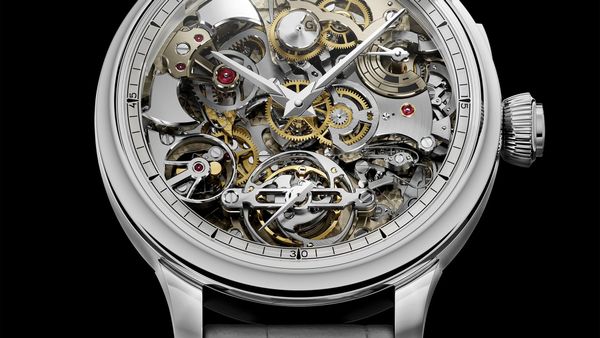
Watches also feature in many of the parures. Again, this represents a strong link to the brand’s heritage for Chaumet has been crafting jewellery for 234 years and watches for 202.
Despite the interest of that aforementioned Chinese buyer, Fritsch confirms that buyers of such exceptional pieces come from all over. “It would be easy to answer that the clients are from the Middle East or China but for high jewellery, the truth is that the clients come from all countries. When we are talking unique pieces, we are talking about a rarefied clientele and we sell to the entire world.”
Rising slowly but steadily, Chaumet remains quintessentially Parisian, which Fritsch is emphatic about. “We want to be loyal and true to our roots. We don’t want to become a global company, we want to remain Chaumet from Paris. Pas de compromis.”
Countless books and films have tried to articulate and define that elusive, easy Parisian sense of chic. Fritsch sums it up eloquently. “I would describe it as having a very classical foundation, the basics are very architectural, symmetrical and to this, you add a little provocation, craziness. It’s French and classic but with a touch of fantasy. Understated and never too much.”