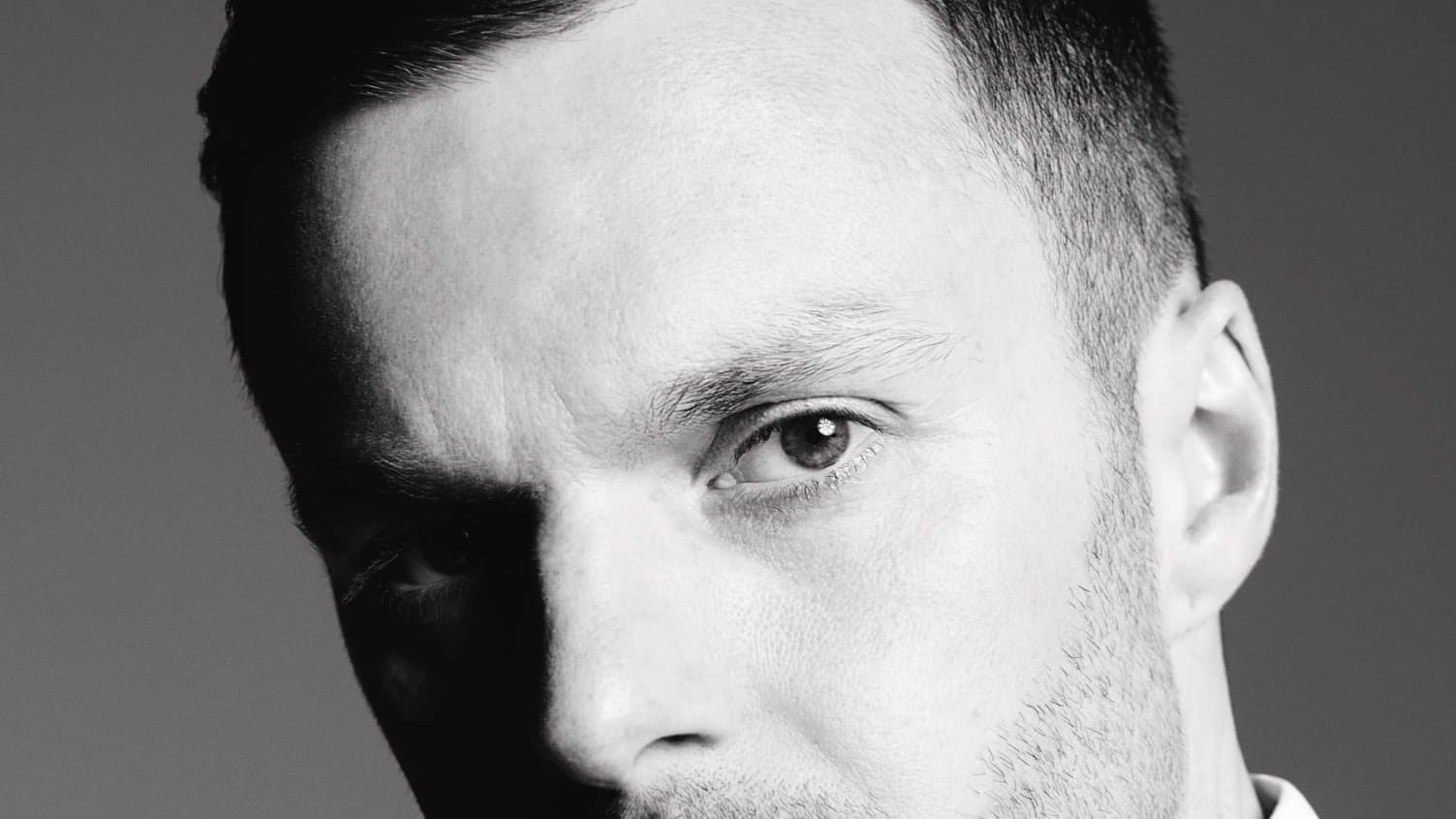
It’s been an interesting year for the duo of Belgian designers at the helm at Dior and Dior Homme. Earlier in the year, revered journalist Suzy Menkes had exclaimed on her Twitter page: “Raf Simons and Kris Van Assche represent the Belgian conquest of Christian Dior, a quintessentially French brand”, only for Raf Simons to unexpectedly resign in October after three and a half years at the helm of Dior, while Kris Van Assche, who had founded his own menswear label in 2005 before being appointed Creative Director of Dior Homme two years later, closed his eponymous label, “for the time being at least”, in May. Pressing pause to reconsider its course, he remains focused on his role at Dior Homme, where he has driven the brand through its post-Hedi Slimane era.
And an era it was – defined by ultra-slim, striking and almost stiff silhouettes. Kris Van Assche, who was Slimane’s first assistant at Yves Saint Laurent Rive Gauche Homme and later at Dior Homme, embarked on his solo path at the house by making subtle but strong changes. The models became slightly more athletic; the overall looks slightly softer.
Van Assche explains where he places emphasis, first and foremost. “At Dior Homme, I'm fortunate enough to work with an in-house atelier. The question of cut and men’s tailoring is central to my work whether sartorial or more casual. Cut is a technical issue and yet a creative one: from the construction of a suit come new ideas. Modernity lies in the cut.”
Dior Homme has been a huge and very successful menswear label for some time now but Van Assche has helped it become even more so. There is a Dior man, whether the real customer, or the ideal that Van Assche sends down the runway. As a designer, he is the translator between the real and the model for a brand that seduces so strongly with its idealist vision, dimensions and pure lines. For beyond the sleek and sober aesthetic of Dior Homme, “allure and elegance come from one's confidence,” notes Van Assche. “I don’t believe in fashion dictates. It's a very singular mix of personality and clothing. You can't approach style if you don't think freely. My responsibility as Dior Homme's creative director is to offer men ways and tools to express their singularity.”
Again, in his own case as a singular designer, his work is often considered in the context of his avant-garde predecessors, 'The Antwerp Six'. Many within this group of Belgian designers, which included Dries Van Noten and Ann Demeulemeester, had trained at Antwerp’s Royal Academy of Fine Arts, Van Assche’s alma mater. “I am Belgian, that's a fact I will not deny. And I studied in Antwerp,” he says. “Still, it doesn't stand as a résumé or as a way to qualify my style. I respect the works of the ‘Antwerp Six’ as they are called and I don't believe one can summarise their work as ‘one style’. They were and still are very different one from another.”
When discussing other characterisations that ignore singularity, such as the penchant for calling any man even loosely interested in classic tailoring a ‘dandy’, Van Assche’s aversion to generalities resurfaces yet again: “The dandy has been to some extent a strong character in the vocabulary of men's fashion, like the military. I don’t think it’s a very modern reference. I wouldn't use it as such. And, anyway, I don't like types; I only like stereotypes to deconstruct them.”
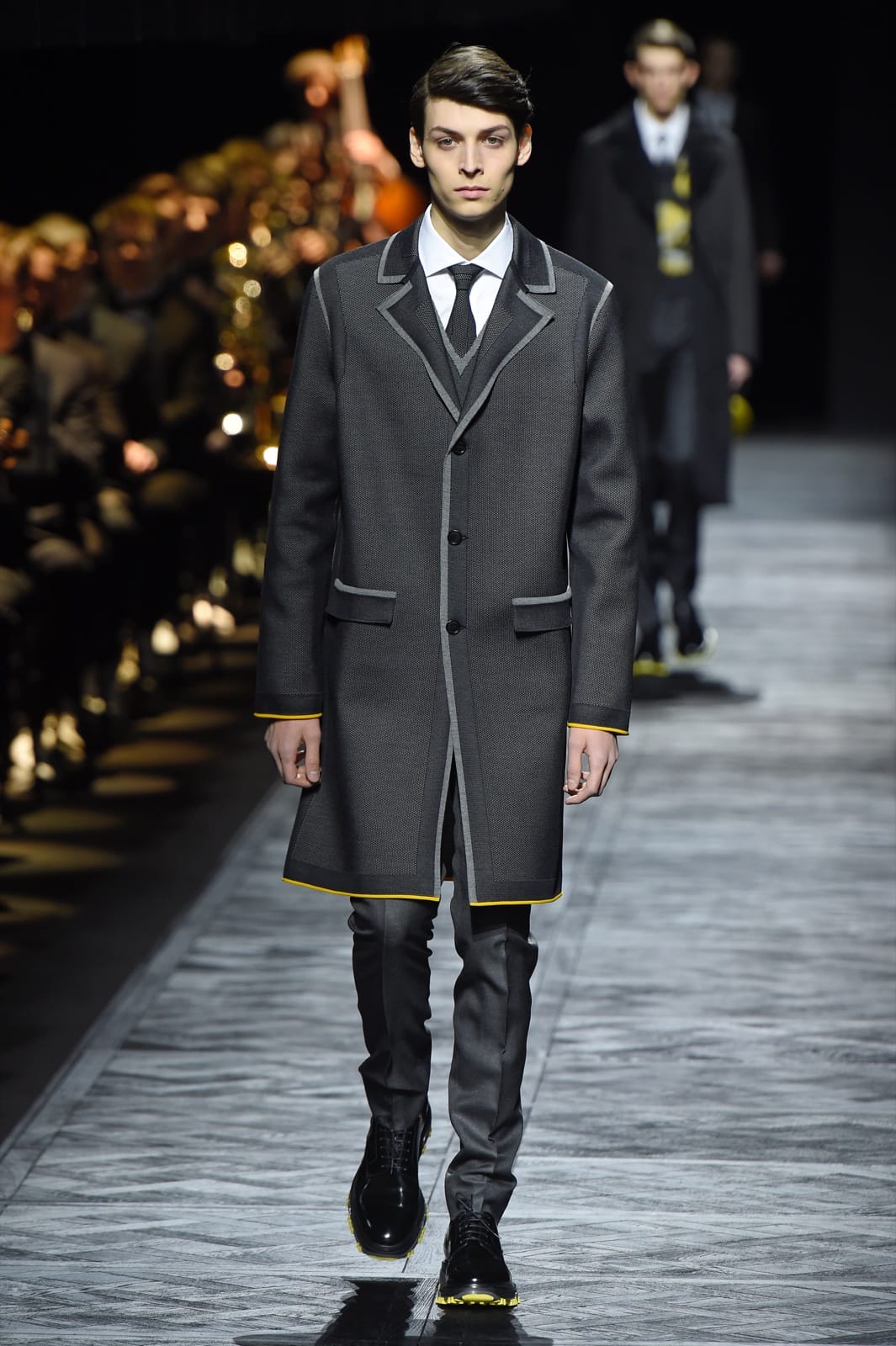
Indeed, this is what he does best – deconstruct stereotypes in order to build an ideal destined for the catwalk, only to break it down again. Consider the Winter 2015-2016 collection, for instance. “The idea behind the collection,” he elaborates, “was one of a boy riding his bike to attend a premier at the opera house. The references were obviously from different universes – the French haute bourgeoisie, streetwear and so on.” Such references could be seen in the series of stunning black-tie suits adorned, in a touch of adolescent hubris, with buttons on the chest. The fashion show was accompanied by an orchestra of more than 30 musicians and a dramatic, shadow-and-light scenography inspired by the work of fellow Belgian, choreographer Anne Teresa de Keersmaeker.
His masterful mix of streetwear, fine tailoring and sportswear is accomplished with fluidity and a deliberate approach in exploring contrasts. “Mixing codes is at the core of my work. Modernity comes from this overlaying of references. I think the traditional frontiers between formal and sportswear are not relevant anymore. At Dior Homme, I define a new luxury that combines these universes, bringing the excellence and the know-how of our tailors to the informality of sportswear. Crossing paths is always more interesting.”
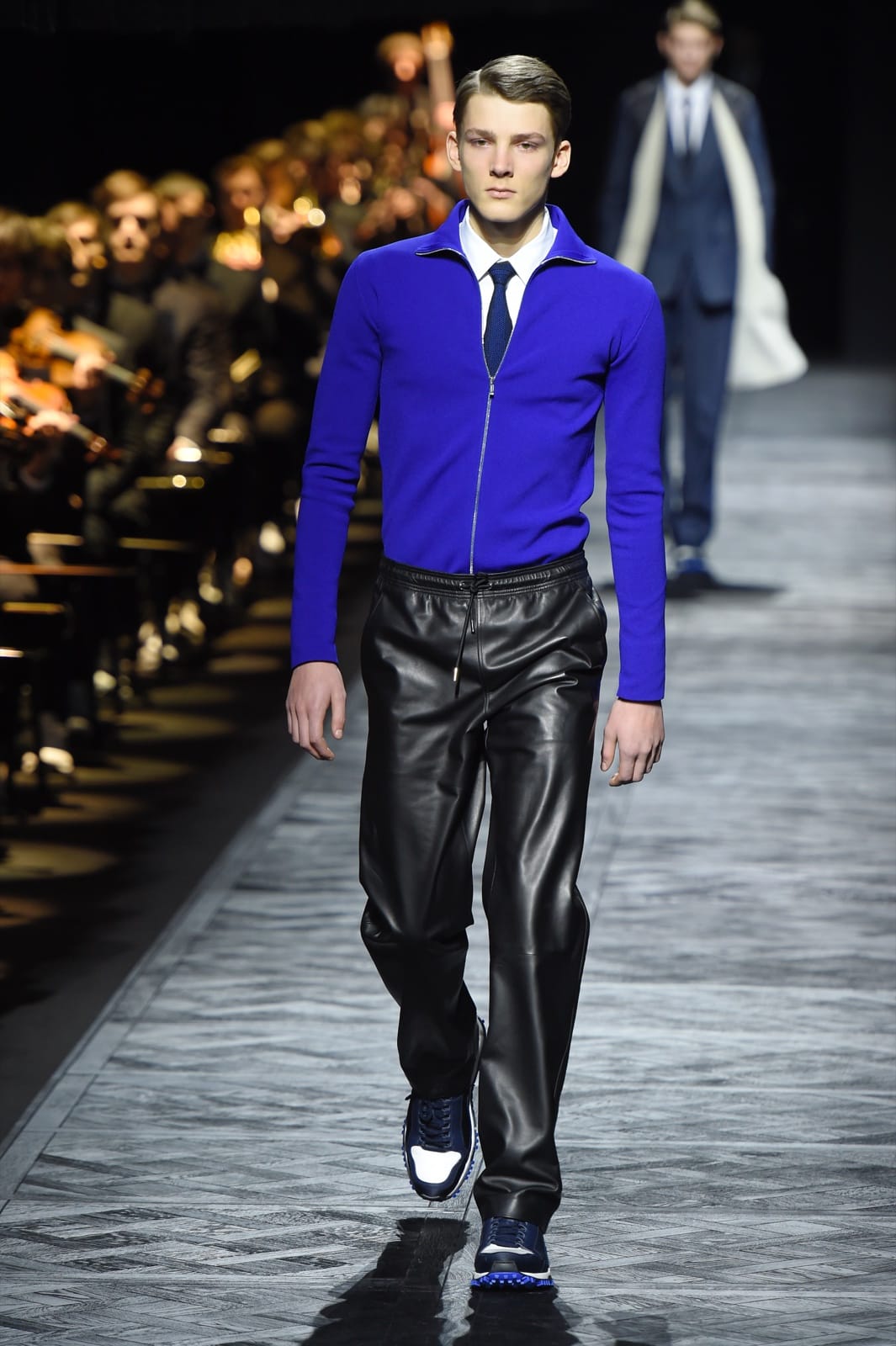
Crossing paths in style, naturally, is linked to crossing paths in material. “There is a technical beauty which comes from the fabrics and the way one uses them to build a silhouette,” resumes Van Assche. “It's all about construction and of course deconstruction: innovation in materials make this happen if one – and I believe I do – embraces it and mixes the effects, from a technical mesh used as a formal Prince of Wales to exotic leather on a bomber jacket.”
A firm believer in evolution over revolution, every Dior Homme défilé brings yet another pleasant surprise. “I don’t believe in radicalization for the sake of it – it’s a very interesting universe, one which still evolves relatively slowly. Still, as in any from of creation, innovation is central.”
WHO Kriss Van Assche
WHAT Dior Homme
SINCE 2007
WHY Even though Christian Dior never designed menswear, Van Assche has based his philosophy on him, steering clear of pushing boundaries and instead he has concentrated on construction and deconstruction in order to make men look as good as possible.