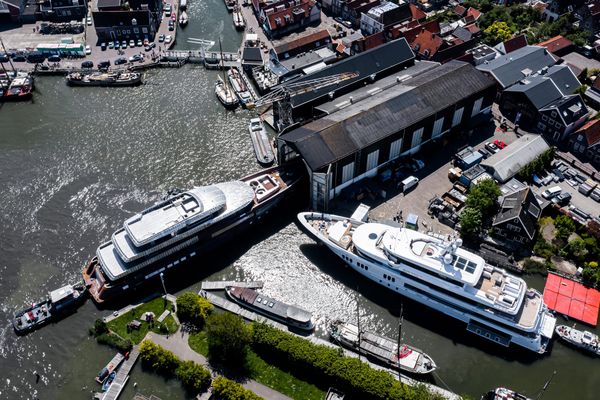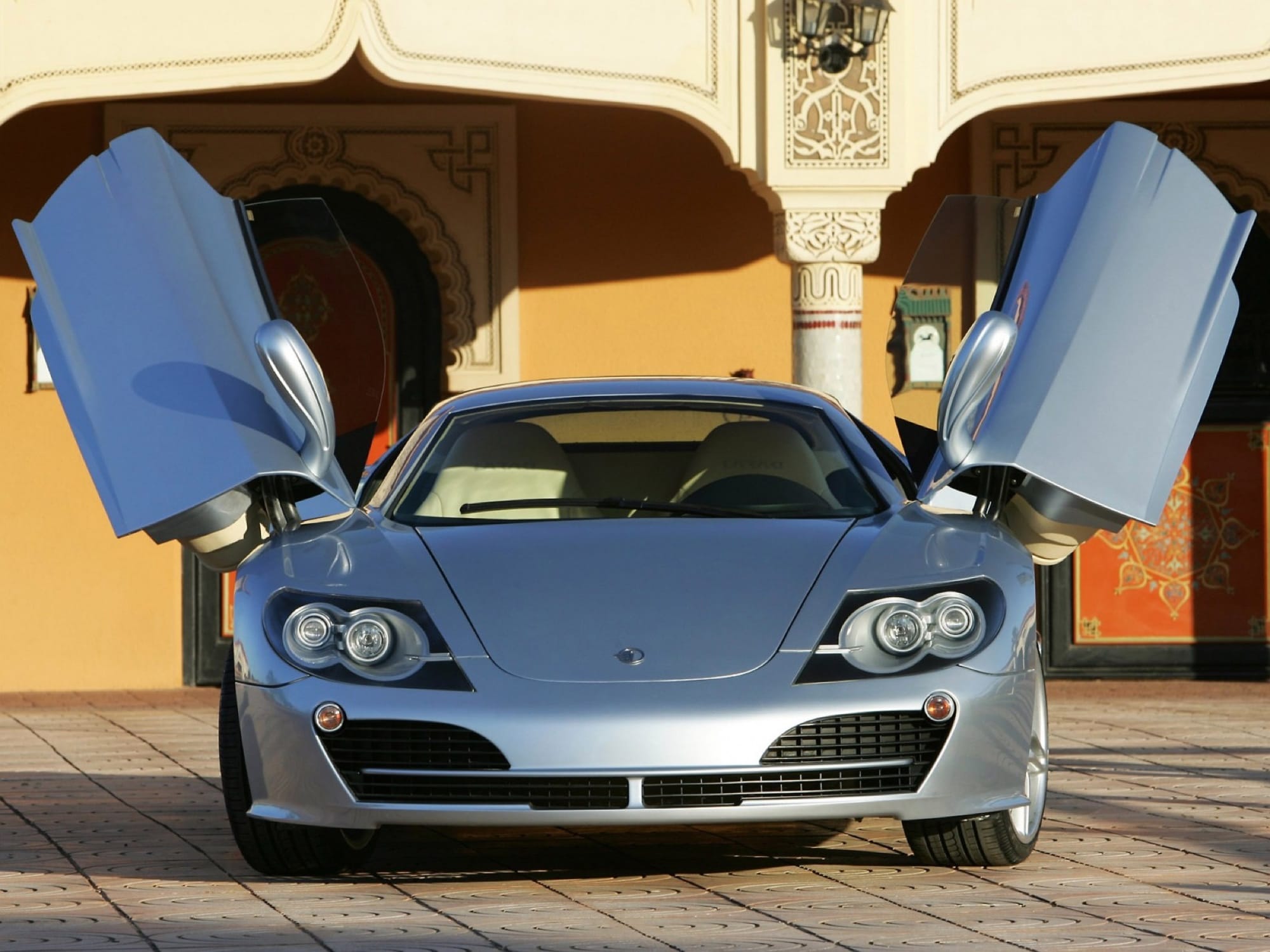
Laraki was a Moroccan manufacturer of luxurious high-performance sport cars first appearing in 2002. Its founder and chief designer was Abdeslam Laraki, a young and talented Moroccan graduate of the Espera Sbarro School in Montbéliard, as well as the Art Centre Europe in La Tour-de-Peilz (two very well regarded Swiss automotive design schools). His big break came in 1996, at the age of just 25, when, as a student at Strate Collège in Paris, Laraki exhibited at the Cannes boat show the sketches of three yachts, all of which were subsequently purchased by a French shipyard.
Two years later, he founded Design Laraki in Casablanca, part of Laraki Group, his family business with considerable stakes in the automotive industry. From there, he designed another six yachts, one of which was for the Emir of Bahrain. Yet, even though he was making waves (excuse the pun) in the yachting industry Laraki yearned to start his own car brand. Finally in 2002, he valiantly revealed his first such product at the Geneva Motor Show.
The Laraki Fulgura, named after the Italian word for lightning, was an awkward first attempt, to say the least. Evo magazine of the U.K. called it “a blatant copy of the Ferrari 360,” which was probably a little harsh but unlike Dutch manufacturer Koenigsegg, who was aiming to pick up where the McLaren F1 left off, the Laraki Fulgura was not a product of state-of-the-art engineering. Rather, it was a stylistic exercise based on the frame and mechanicals of a Lamborghini Diablo - a car that had been discontinued in 2001 for the far superior Murciélago. In order to silence his detractors, Laraki looked to improve both the internals and externals of his supercar, unveiling a completely redesigned supercar every year, with even a second model appearing in 2005: a 2+2 sportscar called the Borac (meaning fighter in Serbian). But with tear-inducing price tags and questionable performance, Laraki had no takers.
Ultimately at the end of 2005, Abdeslam gave up on his car brand. You could say that the final nail in the coffin was to peg his automotive future to that of Dubai’s. As the designer stated in his manifesto, “The Laraki brand is epitomised by Dubai... The cars will be manufactured in the Dubai free trade zone [at the Emirates Automotive Park adjoining the Dubai Autodrome], positioned in the geographical centre of the world’s supercar markets… Dubai portrays the Laraki brand image by spectacular growth, style, universal high quality and as a technology centre for the Arab world.” The rest, as they say, is history… R.I.P Laraki Cars, we applaud you for your courage.
Caption
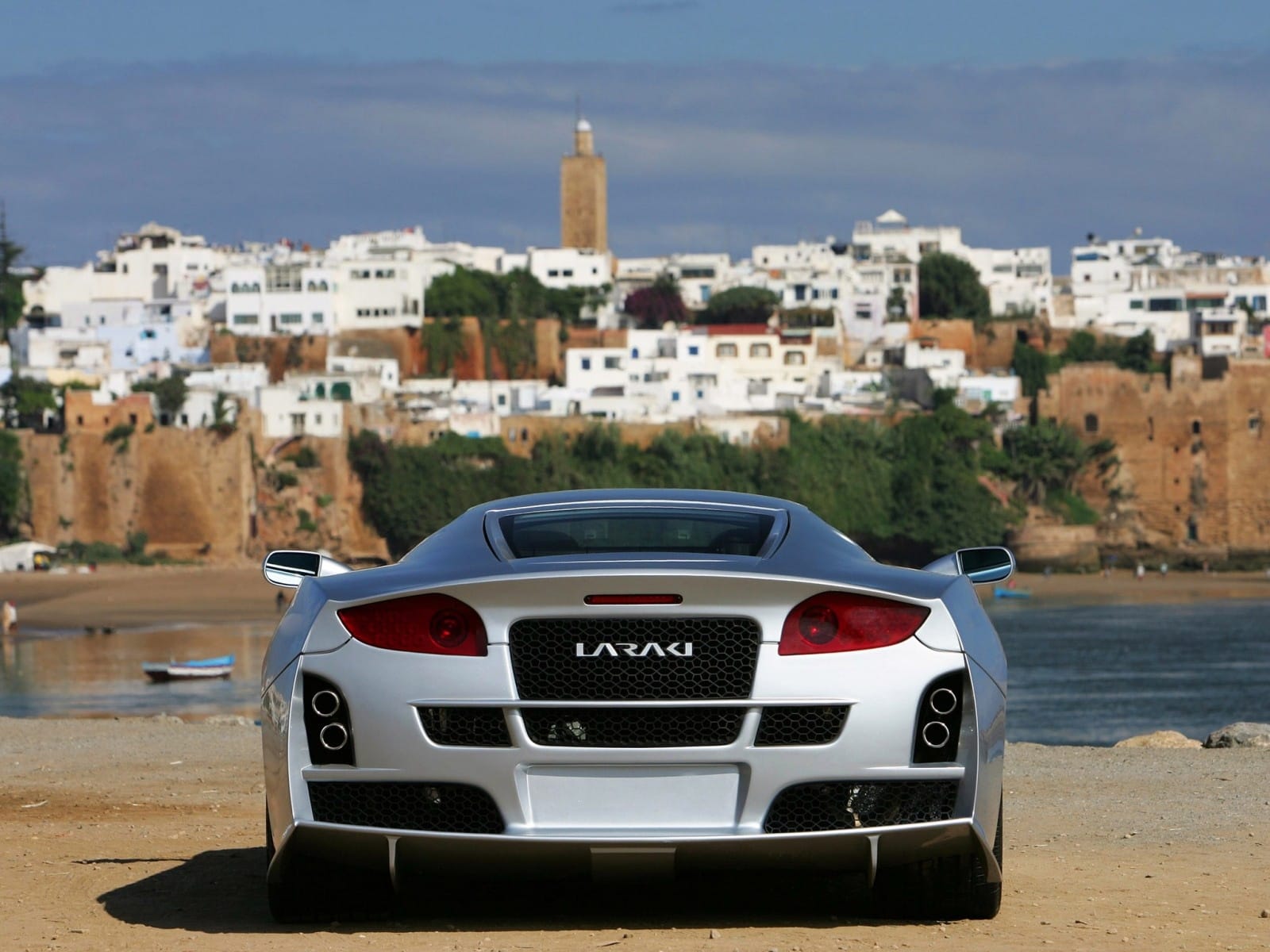
Right: The final version of the Fulgura employed the power of 680bhp Mercedes-sourced 6-litre V12 teamed with four turbochargers, enough to give a claimed 350 km/h top speed.